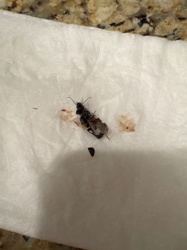
Stonefly Identification Guide
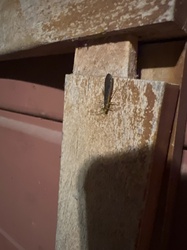
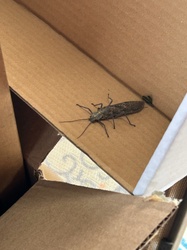
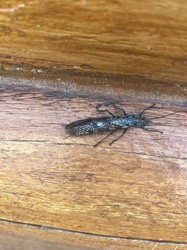
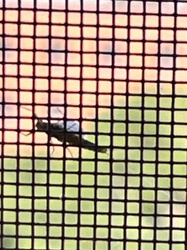
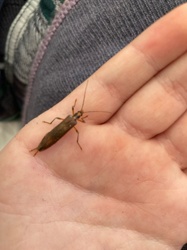
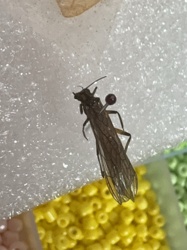
Recognize this flat-bodied stream insect by its two long tail filaments and wings that wrap flat over the back.
Read the full Stonefly encyclopedia entry →Key Visual Features
Stoneflies are elongated, somewhat flattened insects tied to clean, flowing water. Identification points include:
- A body length that varies widely by species, from under half an inch to over 2 inches
- A flattened, elongated body shape, an adaptation for the nymphs to grip rocks in current
- Two pairs of membranous wings that fold flat and are held close over the back, extending past the tip of the abdomen — noticeably longer than the body itself
- Two long, thin tail filaments (cerci) projecting from the rear of the abdomen
- Long, thread-like antennae
- Coloring generally in muted browns, greys, yellows, or blacks, without bright patterning
Where and When You'd See It
Stoneflies require cold, clean, well-oxygenated streams and rivers for their aquatic nymph stage, so adults are found on streamside rocks, vegetation, and bridges near fast-flowing water. Many species emerge in early spring, including some cold-tolerant species active in late winter, while others emerge through summer and into fall depending on the species. Adults are typically weak fliers and are often seen crawling on rocks or low plants rather than flying long distances, staying close to the same stream that produced them.
Similar-Looking Bugs
- Caddisflies have hairy wings held in a steeper tent shape and long antennae, but lack the paired tail filaments seen on stoneflies.
- Mayflies also show two or three long tail filaments, but their wings stand upright and triangular above the body rather than folding flat, and their front wings are much larger than the hind wings.
- Dobsonflies and alderflies are generally larger and lack the long paired tail filaments, with more heavily veined, mottled wings.
Quick ID Checklist
- Flattened, elongated body shape
- Two long, thin tail filaments at the rear
- Wings folded flat and close over the back, extending beyond the abdomen tip
- Long thread-like antennae
- Found on rocks and vegetation beside cold, clean, fast-moving streams
Frequently asked questions
What is the easiest feature to spot on a stonefly?
The two long, thin tail filaments extending from the rear of the abdomen, combined with wings folded flat over the back, are the clearest identifying combination.
How do stoneflies differ from mayflies?
Mayflies hold their wings upright and triangular above the body, while stoneflies fold their wings flat and close over the back; mayfly front wings are also much larger than the hind wings.
Why are stoneflies only found near certain streams?
Their nymphs need cold, well-oxygenated, flowing water to develop, so adults are concentrated near streams and rivers with that kind of clean water quality.
What season is best for finding stoneflies?
Many species emerge in late winter through spring, though the exact timing varies by species, with some present through summer and fall.
Stonefly identified by the community
Recent Stonefly finds identified with Bug Identifier.