Thrips Identification Guide
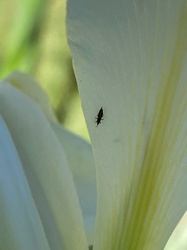
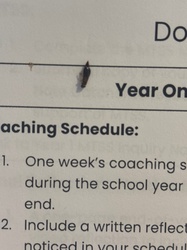
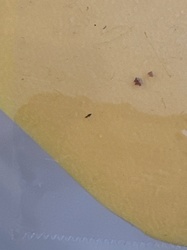
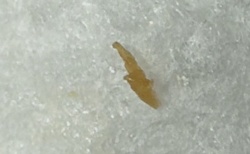
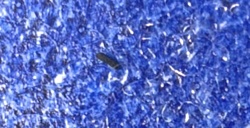
Identify thrips by their extremely slender, elongated bodies and fringed wings that are best seen up close or under magnification.
Read the full Thrips encyclopedia entry →Key Visual Features
Thrips are tiny, slender insects, typically only 1/25 to 1/8 inch long, making them among the smallest insects commonly noticed on plants.
- Body: Long, narrow, and cigar-shaped, often tapering slightly at both ends, in colors ranging from pale yellow and tan to dark brown or black.
- Wings: When present, two pairs of narrow wings fringed with fine hairs along the edges, giving them a feathery appearance under magnification; wings are held flat along the back at rest.
- Legs: Short and inconspicuous relative to body length.
- Antennae: Short, segmented, and often held forward.
- Movement: Quick, erratic movements including short bursts of flight, crawling rapidly across leaf surfaces when disturbed.
Where and When You'd See It
Thrips are found on flowers, leaves, and buds of a wide range of plants, including garden ornamentals, vegetables, and houseplants. They tend to hide within tight spaces such as unopened flower buds, leaf folds, and along leaf veins. Thrips are most active in warm weather, from late spring through summer, and are more noticeable on light-colored flowers where their movement stands out. Because of their tiny size, they are often easier to detect through the silvery, stippled damage left on leaves and petals than by spotting the insect itself; tapping a flower over white paper can help dislodge them for a closer look.
Similar-Looking Bugs
Thrips are sometimes confused with:
- Aphids – Aphids are larger, pear-shaped, and soft-bodied, lacking the thin, elongated form and fringed wings of thrips.
- Fungus gnats – Fungus gnats are true flies with a single pair of wings and a more mosquito-like body, much larger than thrips.
- Spider mites – Mites have eight legs and no wings, and are typically viewed as tiny moving dots rather than elongated insects.
- Small leafhoppers – Leafhoppers have a wedge-shaped body and strong jumping legs, unlike the slender, less mobile-legged thrips.
Quick ID Checklist
- Extremely small, slender, cigar-shaped body
- Narrow wings fringed with fine hairs (visible under magnification)
- Found tucked into flower buds, leaf folds, and along veins
- Quick, erratic crawling and short flights when disturbed
- Best detected by tapping flowers over white paper to see tiny moving specks
Frequently asked questions
Why are thrips so hard to see?
Their extremely small, slender bodies, often under 1/8 inch, blend easily into plant surfaces and tight spaces like flower buds, making magnification or tapping a flower over white paper the easiest way to spot them.
What is the best way to check a plant for thrips?
Gently tap or shake a flower or leaf over a sheet of white paper; thrips will fall off and appear as tiny, fast-moving slivers against the light background.
How do fringed wings help identify thrips?
Under a hand lens, thrips wings show a distinctive feathery fringe of fine hairs along the edges, a feature not found on the wings of aphids, gnats, or leafhoppers.
Can thrips be confused with spider mites?
They can at a glance since both are tiny, but mites have eight legs and no wings and move more slowly, while thrips have six legs, narrow fringed wings, and move in quick, darting bursts.
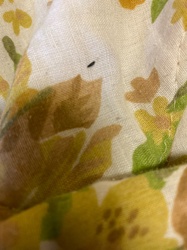
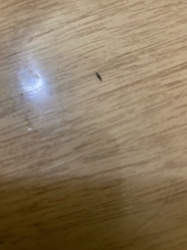
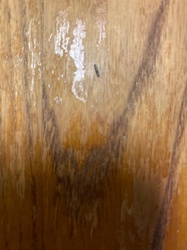
Thrips identified by the community
Recent Thrips finds identified with Bug Identifier.