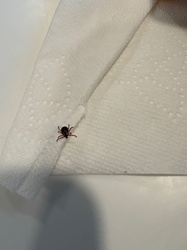
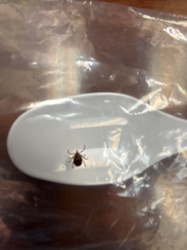
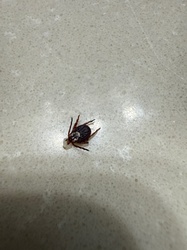
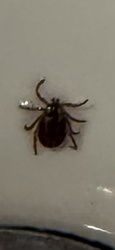
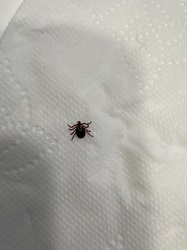
American Dog Tick Identification Guide
Learn how to recognize the American dog tick by its ornate silvery markings and reddish-brown body.
Read the full American Dog Tick encyclopedia entry →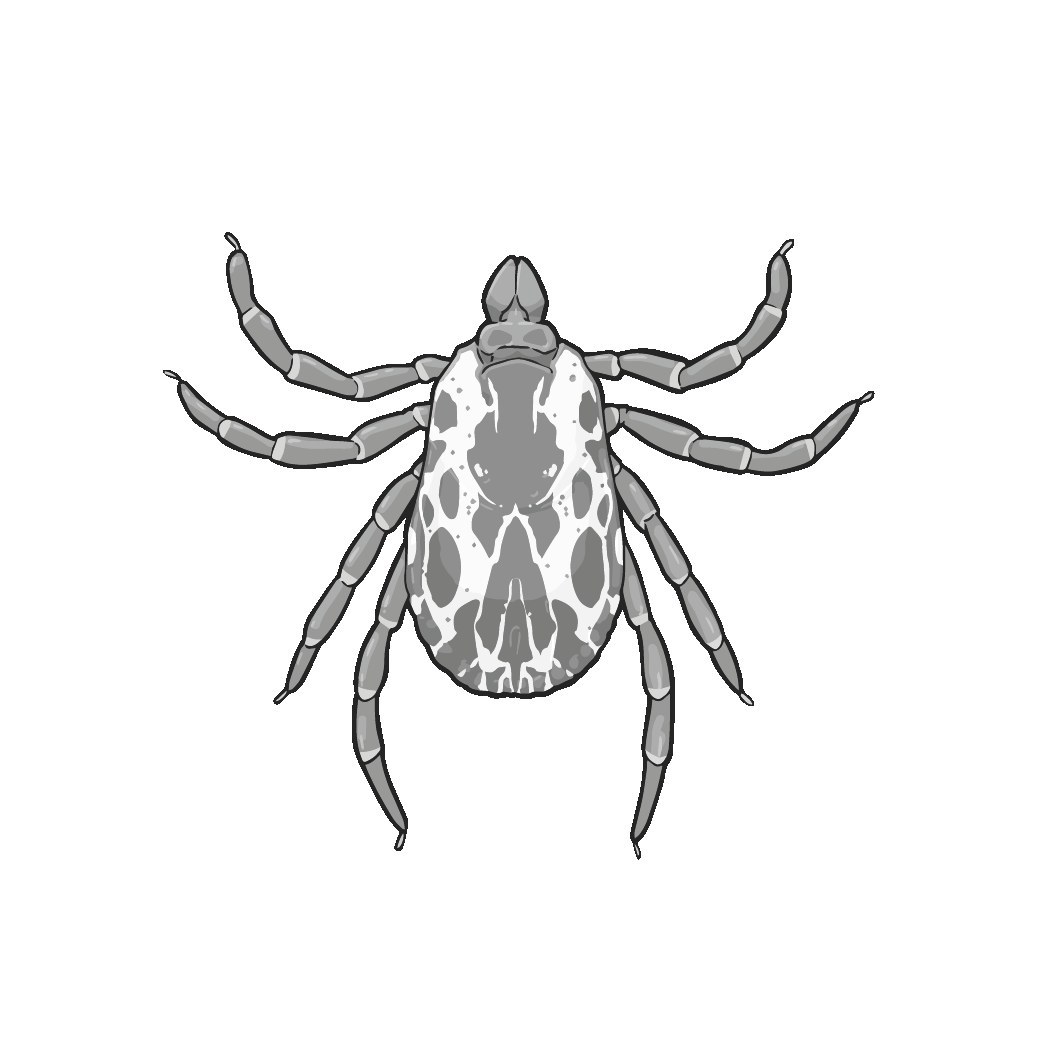
Key Visual Features
The American dog tick (Dermacentor variabilis) is one of the larger and more boldly patterned hard ticks.
- Size: Unfed adults measure about 3/16 to 1/2 inch (5-15 mm); after a full blood meal, females can swell to over 1/2 inch and turn a slate-gray color.
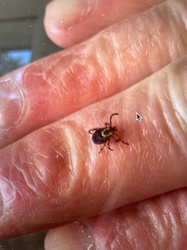
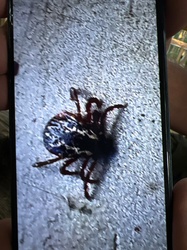
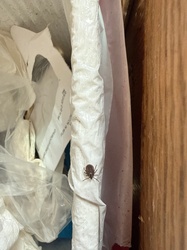
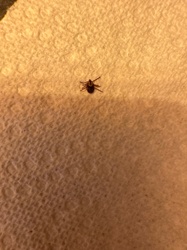
- Color: Reddish-brown body with a distinctive pattern of silvery-white or grayish markings on the scutum (the hard shield behind the head).
- Body shape: Flattened, oval, and broadest toward the rear when unfed; males have the ornate pattern covering nearly the whole back, while females show it only on the smaller shield near the head.
- Legs: Eight legs in adults (six in the larva stage), each ending in a small claw used for gripping vegetation and hosts.
- Head/mouthparts: A short, visible mouthpart (capitulum) at the front, used to grip onto a surface — ticks do not have true antennae.
- Markings: The ornate silver-and-brown pattern on the scutum is the single most useful field mark for this species.
Where and When You'd See It
American dog ticks favor open, grassy or brushy habitats — roadsides, trails, fields, and the edges of woods — rather than dense forest interiors. They are most active from spring through mid-summer in many regions, with activity tapering off in hot, dry weather. Ticks perch on low vegetation with their front legs extended, a behavior called "questing," waiting for a host to brush past.
Similar-Looking Bugs
- Blacklegged tick: Smaller, darker overall, lacks the bold silvery ornamentation, and has a more teardrop-shaped, unmarked body.
- Rocky Mountain wood tick: Very similar ornate pattern but is generally found at higher elevations in the Rocky Mountain region and has subtle differences in the shape of markings visible only under magnification.
- Soft ticks: Lack a hard dorsal shield entirely and have a wrinkled, leathery, rounded body instead of the flattened plated look of the American dog tick.
Quick ID Checklist
- Reddish-brown body with silvery-white ornate markings on the back
- Flattened, oval shape that broadens toward the rear
- Eight legs (adult), each tipped with a small claw
- Found questing on grass and brush at knee height or lower
- Most active in warmer months in open, grassy habitats
Frequently asked questions
What is the easiest way to tell an American dog tick from other ticks?
Look for the bold silvery-white marbled pattern against a reddish-brown background on the shield behind the head — this ornate coloring is more pronounced than in most other common hard ticks.
Do American dog ticks look different before and after feeding?
Yes. Unfed ticks are flat and reddish-brown with visible markings, while a fully fed female becomes swollen, rounded, and grayish, obscuring much of the pattern.
Where are American dog ticks typically found?
They favor open habitats like grassy fields, trail edges, and roadsides rather than deep woodland, where they wait on low vegetation for a passing host.
How can you tell males from females in this species?
Males show the ornate silvery pattern across nearly their entire back, while females have it confined to a smaller shield near the head, with the rest of the body a plain grayish-brown.
American Dog Tick identified by the community
Recent American Dog Tick finds identified with Bug Identifier.