European Hornet Identification Guide
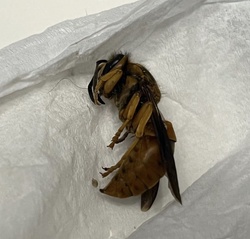
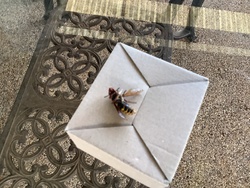
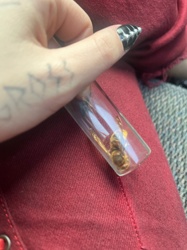
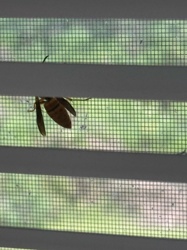
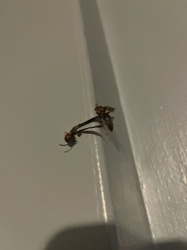
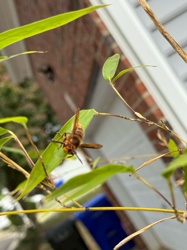
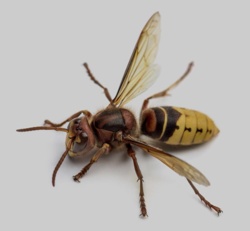
Recognize the European Hornet by its large size and reddish-brown-and-yellow coloring.
Read the full European Hornet encyclopedia entry →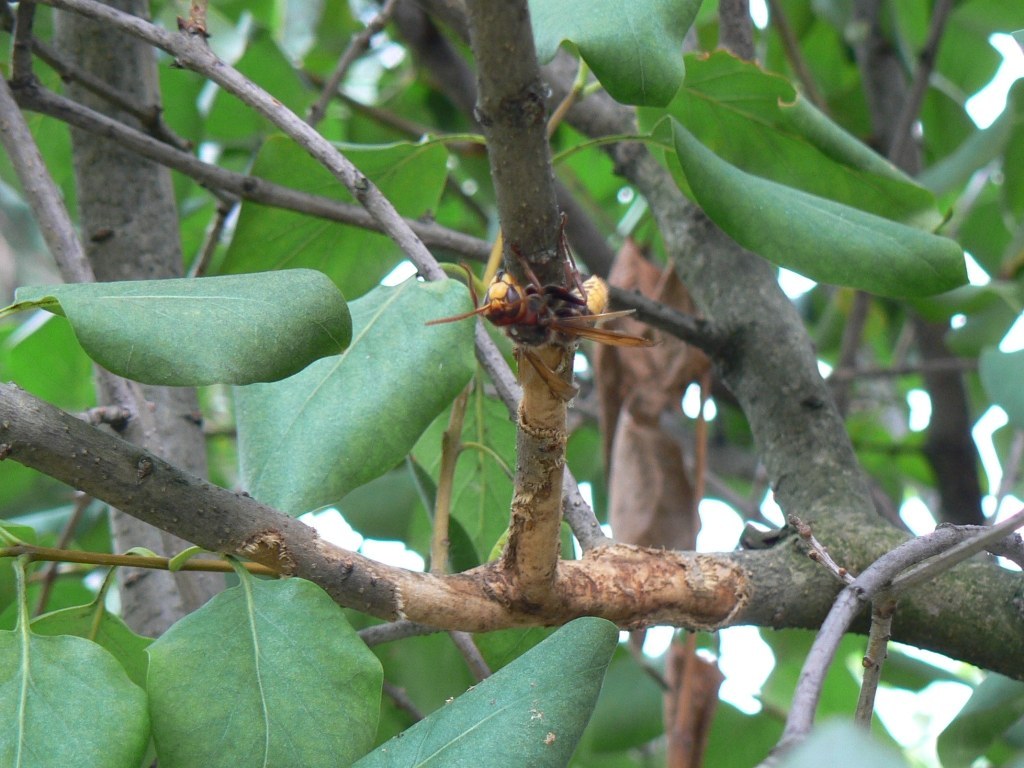
Key Visual Features
- The largest social wasp native to Europe, with workers around 18-25 mm and queens up to 35 mm long.
- Coloring is distinctive: a reddish-brown thorax and head paired with a yellow abdomen marked with brown or black stripes and spots.
- Body is smooth and only lightly haired, with a clearly pinched waist typical of wasps.
- Wings are amber-tinted and folded lengthwise along the body at rest.
- Head is large with prominent eyes and strong mandibles adapted for capturing prey.
- Overall build is noticeably bulkier and more robust than a common yellowjacket.
Where and When You're Likely to See It
- Native to Europe and parts of Asia, and also established in parts of North America; typically found in wooded areas, forest edges, parks, and gardens with mature trees.
- Nests are usually built in hollow trees, but can also appear in wall cavities, attics, or other sheltered voids.
- Active from spring through autumn, with colonies growing largest by late summer.
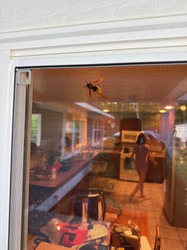
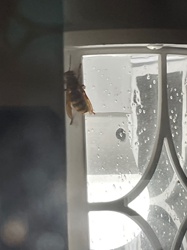
- Unlike many wasps, European Hornets remain active into the evening and are sometimes drawn to outdoor lights after dusk.
- Often seen foraging on tree sap, ripe fruit, or flying around porch lights and windows at night.
Similar-Looking Species
- Yellowjackets are considerably smaller and have crisper, brighter black-and-yellow banding rather than the reddish-brown-and-yellow pattern of the hornet.
- The Asian hornet (where present) is darker overall, with a mostly black-brown body and a single orange-yellow band near the tip of the abdomen, and yellow-tipped legs.
- Giant cicada killer wasps are similarly large but have a more mottled black-and-yellow pattern with a distinctly different, boxier head shape.
- Common wasps and paper wasps lack the reddish-brown thorax that is characteristic of the European Hornet.
Quick ID Checklist
- Large size: 18-35 mm depending on caste.
- Reddish-brown head and thorax combined with a yellow-and-brown striped abdomen.
- Amber-tinted wings folded along the body.
- Nest located in a hollow tree or sheltered cavity.
- Active at dusk and sometimes attracted to lights, unlike most wasps.
Frequently asked questions
How is a European Hornet different from a common wasp?
It is much larger and shows a reddish-brown thorax and head rather than the crisp black-and-yellow pattern typical of smaller wasps.
Why do I see this hornet near lights at night?
Unlike most social wasps, European Hornets remain active after dark and can be drawn toward artificial lighting.
Where do European Hornets build their nests?
They most often nest inside hollow trees, though they will also use wall cavities, sheds, or other sheltered, enclosed spaces.
Is the European Hornet the same as the Asian hornet?
No, they are different species; the Asian hornet is darker overall with a single pale band near the abdomen tip, while the European Hornet has a reddish-brown thorax and more extensive yellow-brown striping.
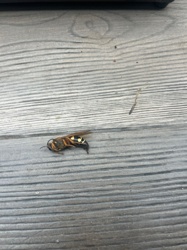
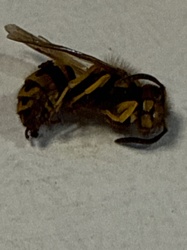
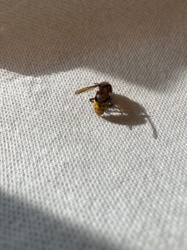
European Hornet identified by the community
Recent European Hornet finds identified with Bug Identifier.