Green Bottle Fly Identification Guide
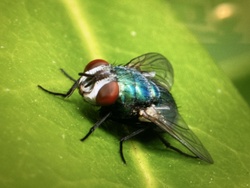
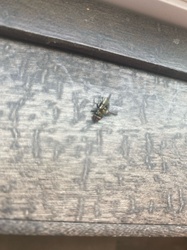
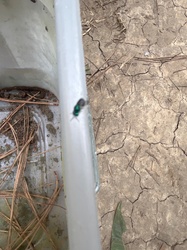
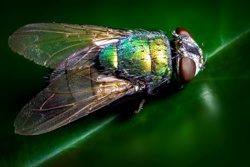
Spot the green bottle fly by its glossy metallic green body, reddish eyes, and fast, darting flight.
Read the full Green Bottle Fly encyclopedia entry →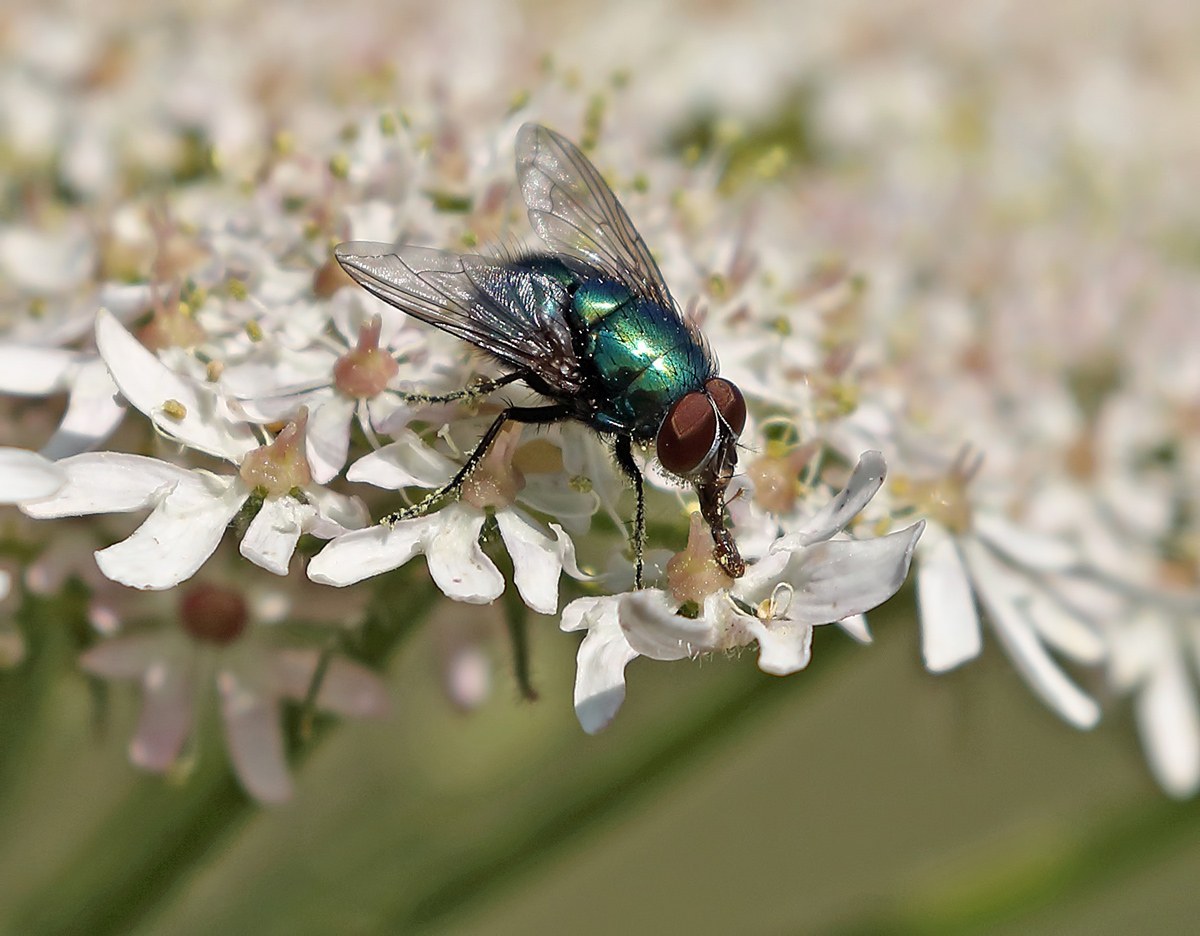
Key Features
- Compact, stocky fly about 8-11mm long, similar in size to a house fly but more robust
- Bright, shiny metallic green body, sometimes with coppery or golden highlights depending on the angle of light
- Body has a smooth, glossy appearance with fewer, less prominent bristles than a blue bottle fly
- Large reddish-brown to reddish compound eyes covering much of the head
- Clear wings with a faint yellowish tint at the base, held out to the sides when at rest
- Legs are black and relatively short
Where and When to Look
- Found in a wide range of outdoor habitats, including gardens, fields, and urban areas, especially in sunny, open locations
- Active from spring through fall in temperate climates, with peak activity during warm summer months
- Often seen resting on flowers, foliage, fences, or sunlit surfaces, moving quickly when disturbed
- Attracted to areas with decaying organic matter, where it may be seen briefly investigating before moving on
Similar-Looking Bugs
- Blue bottle flies are similar in size and body shape but show metallic blue rather than green coloring, and tend to have denser bristling
- Sweat bees and other metallic green insects can superficially resemble a green bottle fly from a distance, but bees have four wings, a narrower waist, and different antennae compared to a fly's two wings and short, stubby antennae
- Other blow fly species can share the metallic green sheen; overall size, bristle pattern, and eye color are used to separate closely related species, though some require close examination to distinguish confidently
Quick ID Checklist
- Bright, shiny metallic green body
- Compact, house-fly-sized but stockier build
- Reddish compound eyes
- Clear, faintly yellow-tinted wings held out at rest
- Fast, darting flight when disturbed
Frequently asked questions
What is the most obvious feature of a green bottle fly?
Its bright, glossy metallic green body is the most distinctive identification feature.
How big is a green bottle fly compared to a house fly?
It's roughly similar in length but appears stockier and more robust, with a shinier, more colorful body.
Could a green bottle fly be mistaken for a bee?
At a glance the metallic green color can cause confusion, but flies have only two wings and short antennae, while bees have four wings and longer, elbowed antennae.
When are green bottle flies most active?
They are most commonly seen from spring through fall, with peak numbers during warm summer weather.
Green Bottle Fly identified by the community
Recent Green Bottle Fly finds identified with Bug Identifier.