Honey Bee Identification Guide
Learn to identify a honey bee by its fuzzy golden-brown and black banded body and its role in large, organized hive colonies.
Read the full Honey Bee encyclopedia entry →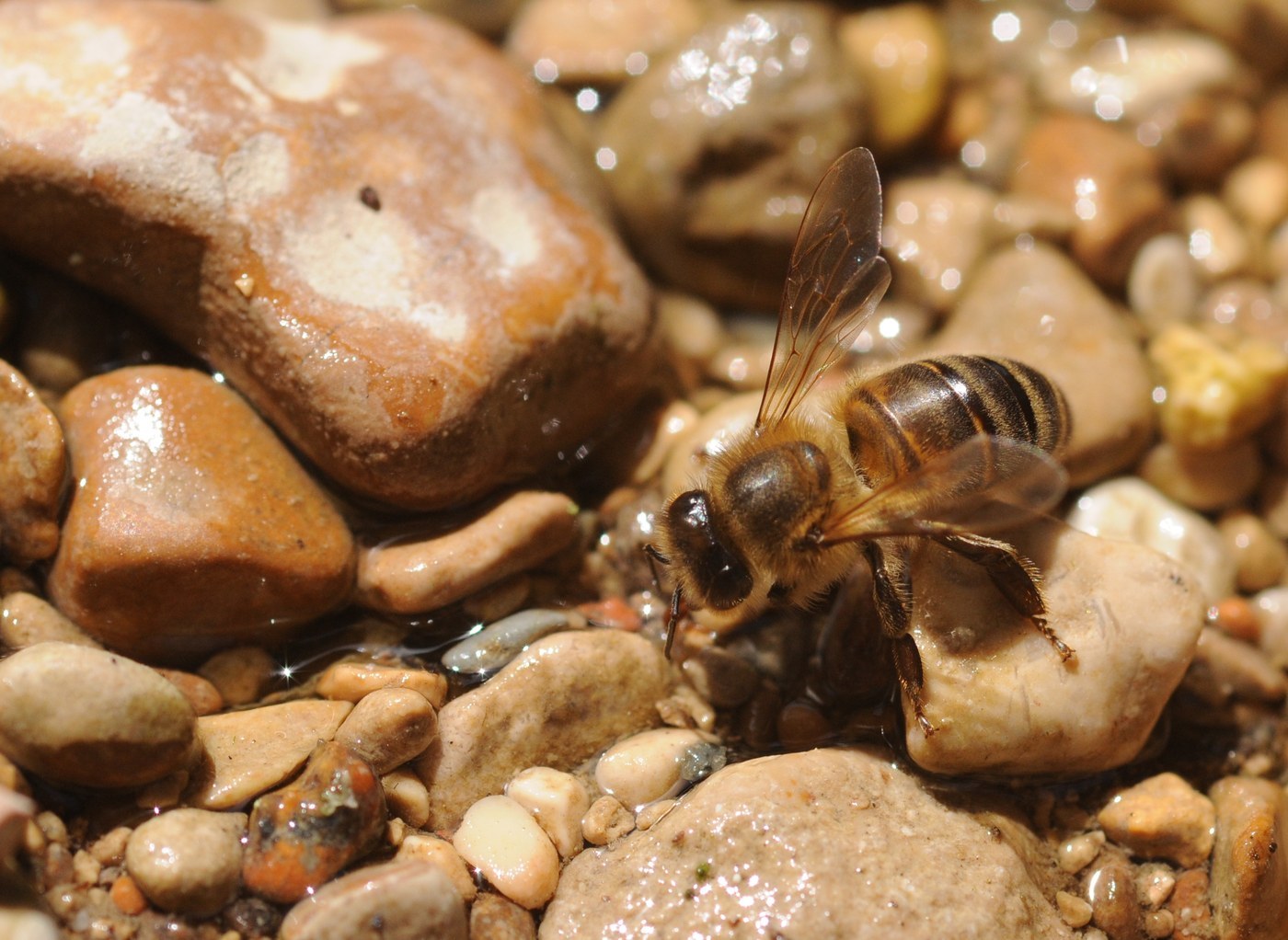
Key Visual Features
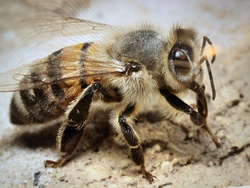
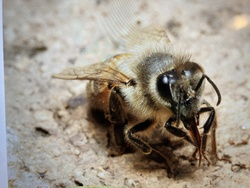
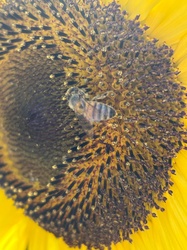
The honey bee is a fuzzy, banded insect built for pollen and nectar collection, easily told apart from wasps by its softer, hairier appearance.
- Size: About 1/2 to 5/8 inch (12–15 mm) long for workers; queens are noticeably longer and larger-bodied.
- Color: Golden-brown to amber with alternating darker brown or black bands across the abdomen.
- Body shape: Slightly stout, oval body covered in fine branched hairs, especially dense on the thorax.
- Legs: Six legs, with the hind legs of worker bees featuring a flattened, hairy section (the pollen basket) used to carry collected pollen.
- Wings: Two pairs of translucent wings, smaller relative to the body than a wasp's, folded flat along the back at rest.
- Head: Large compound eyes on the sides, plus a long, straw-like tongue (proboscis) used for reaching nectar deep within flowers.
- Antennae: Bent, elbowed antennae, shorter and less noticeable than an ant's.
Where and When You'll See Them
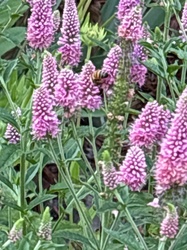
Honey bees live in large, organized colonies, either in man-made hives or natural cavities such as hollow trees, and forage widely across gardens, meadows, orchards, and agricultural areas rich in flowering plants. They are active during daylight hours, especially on warm, sunny days, and forage most heavily from spring through late summer when flowers are abundant. Activity slows in cooler months as colonies cluster together inside the hive to conserve warmth.
Similar-Looking Insects
- Bumblebees: Much rounder and fuzzier overall, with a stockier body and broader black-and-yellow bands, lacking the sleeker banded abdomen of a honey bee.
- Yellow jackets: Smooth, shiny, and largely hairless with a slender waist and bright yellow-and-black bands, unlike the fuzzy, duller-colored honey bee.
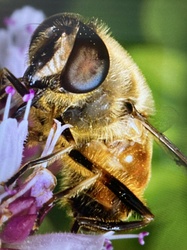
- Hover flies: Mimic bee coloring with yellow-and-black bands but have only one pair of wings, large fly-like eyes, and short, stubby antennae instead of elbowed ones.
Quick ID Checklist
- Fuzzy, golden-brown and black banded abdomen
- Stout oval body, densely hairy thorax
- Flattened pollen basket on hind legs
- Two pairs of wings folded flat at rest
- Found near flowering plants, active in large organized colonies
Frequently asked questions
How do I tell a honey bee from a bumblebee?
Honey bees have a slimmer, less fuzzy abdomen with narrower stripes, while bumblebees are noticeably rounder, fuzzier, and bulkier overall with broader bands of color.
What is the fuzzy patch on a honey bee's back legs?
That is the pollen basket, a flattened, hairy section on the hind legs of worker bees used to carry collected pollen back to the hive.
How can I distinguish a honey bee from a hover fly that looks similar?
Check the wings and eyes: honey bees have two pairs of wings and elbowed antennae, while hover flies have only one pair of wings, large rounded eyes, and short antennae, since flies are not closely related to bees.
Where do honey bees typically build their colonies?
They nest in enclosed cavities such as hollow trees or man-made hives, forming large, organized colonies rather than the smaller nests built by many solitary bee species.
Honey Bee identified by the community
Recent Honey Bee finds identified with Bug Identifier.