Human Bot Fly Identification Guide
Identify the human bot fly by its stout, dark bumblebee-like body, small head, and habit of hovering quietly near mammals in tropical and subtropical regions.
Read the full Human Bot Fly encyclopedia entry →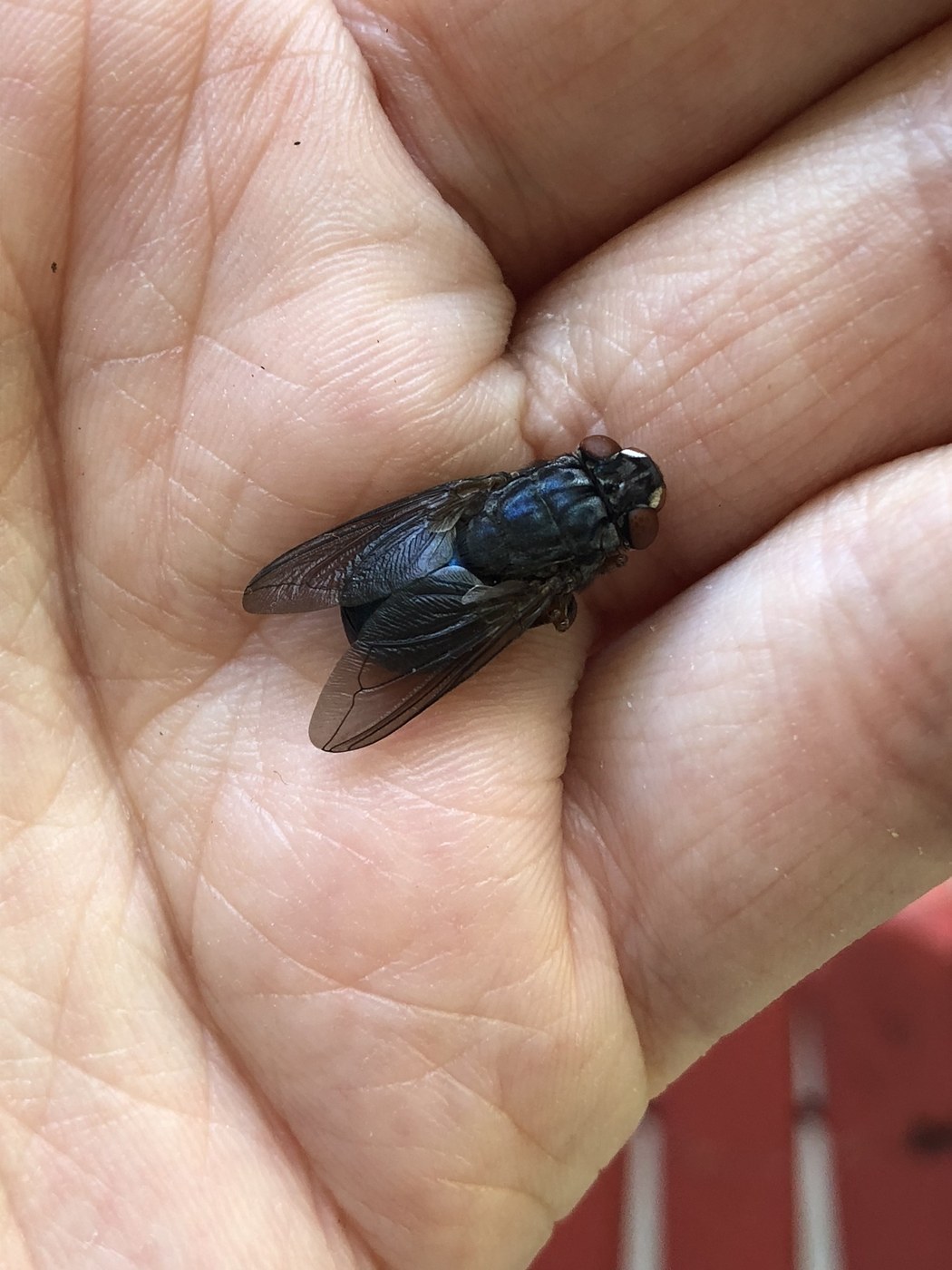
Key Visual Features
The human bot fly is a large, robust fly native to Central and South America, well known for its distinctive bee-like disguise.
- Size: Fairly large, around 12-18 mm long.
- Color: Predominantly dark blue-black to gray body with a pale, often orange or yellowish, hairy thorax and a metallic blue sheen on the abdomen.
- Body shape: Thick and robust, with a rounded abdomen and a noticeably small head relative to the rest of the body.
- Wings: Clear to smoky-tinted, proportionally modest in size compared to the bulky body, held flat over the back at rest.
- Legs: Sturdy, dark, and moderately hairy.
- Antennae: Very short and inconspicuous, tucked closely to the small head.
- Distinctive traits: Like other bot flies, adults have vestigial, non-functional mouthparts, so they are never seen feeding and have a notably quiet, unobtrusive presence compared to buzzing house or blow flies.
Where and When You'll See Them
The human bot fly is found in warm, humid regions of Mexico, Central America, and South America, typically in forested or semi-forested areas near where mammals (its hosts) are common. Adults are most active during the day in warm, humid conditions and tend to fly and hover quietly rather than buzzing loudly, often resting on vegetation in shaded, humid microhabitats between flights. They are most commonly encountered in the warmer months typical of their tropical and subtropical range.
Similar-Looking Bugs
- Bumblebees: The closest visual match thanks to the fuzzy thorax and dark, rounded body, but the human bot fly has only one pair of wings, a much smaller head, and no stinger.
- Other bot fly species: Many bot flies share the general stout, hairy body plan; the human bot fly is distinguished by its specific coloring — a pale, orangish hairy thorax paired with a dark, metallic-blue abdomen — and its geographic range in Latin America.
- Blow flies: Smaller, shinier, and typically metallic green or blue all over, lacking the bulky, bee-mimicking build of the human bot fly.
Quick ID Checklist
- Large (12-18 mm), robust body with a small head
- Pale, hairy orange-yellow thorax and dark metallic-blue abdomen
- One pair of wings, quiet hovering flight, no buzzing
- Found in warm, humid forested regions of Central and South America
- Rests on shaded vegetation between flights, active by day
Frequently asked questions
How is the human bot fly different from a common bumblebee?
Despite the similar fuzzy, rounded look, the human bot fly has just one pair of wings, a much smaller head in proportion to its body, and no stinger, while bumblebees have two pairs of wings and a defensive stinger.
Where in the world would I see a human bot fly?
It's native to warm, humid regions of Mexico, Central America, and South America, typically found in forested or semi-forested areas.
What does the coloring of a human bot fly look like?
It typically shows a pale, hairy orange-to-yellow thorax paired with a darker, metallic blue-black abdomen, a combination that helps distinguish it from other bot fly species.
Why is the human bot fly so quiet compared to other large flies?
Its flight is notably subdued and hovering rather than loudly buzzing, and since adults don't feed, they spend much of their time resting quietly on vegetation between short flights.
Human Bot Fly identified by the community
Recent Human Bot Fly finds identified with Bug Identifier.