Inchworm Identification Guide
Learn how to recognize an inchworm by its distinctive looping crawl and slender, twig-like body.
Read the full Inchworm encyclopedia entry →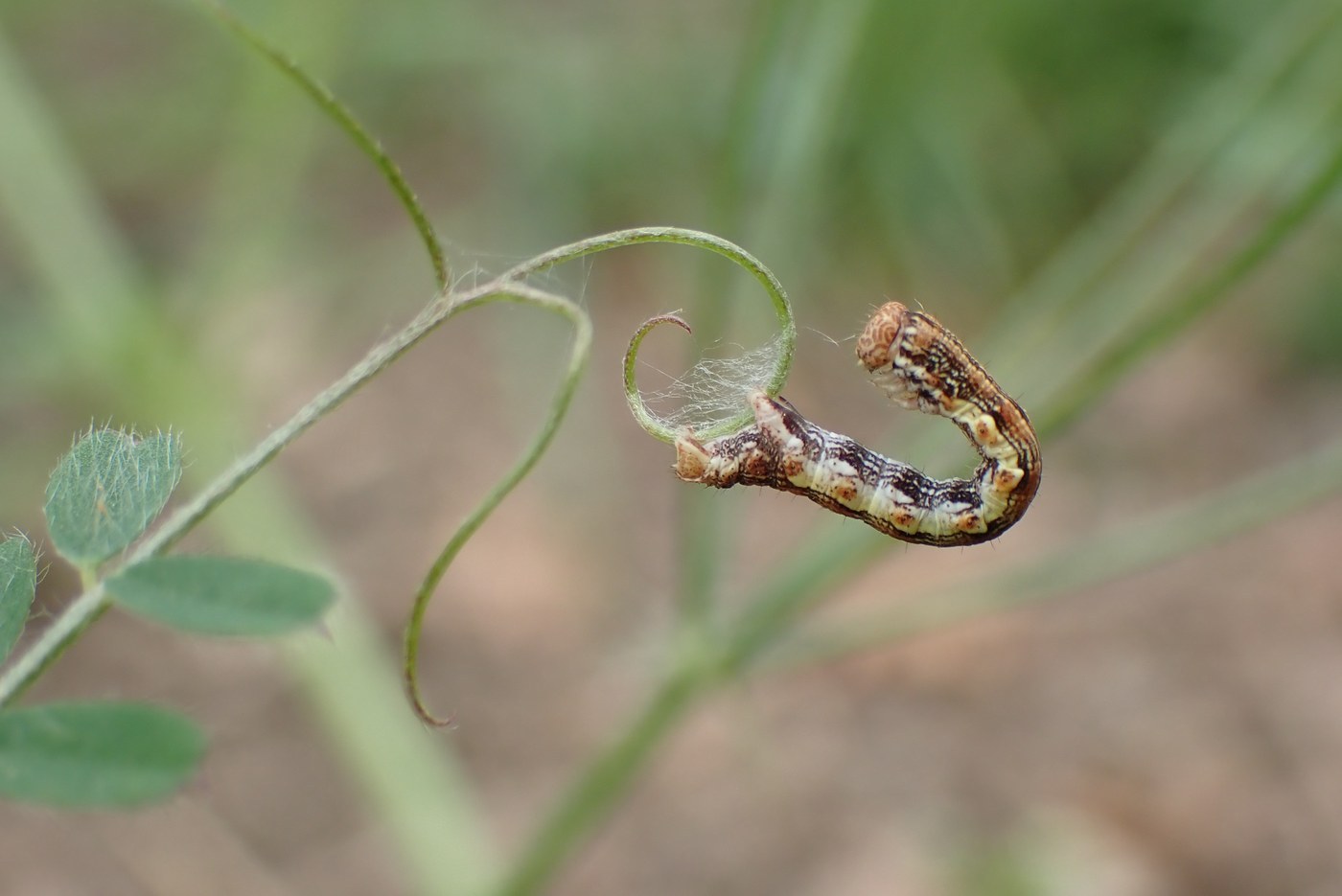
Key Visual Features
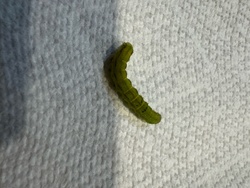
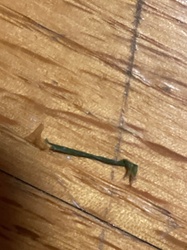
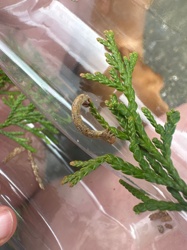
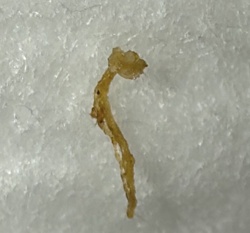
- Slender, smooth, elongated body typically green, brown, or gray, often patterned to resemble a small twig
- Lacks the full set of fleshy prolegs found on most caterpillars — inchworms only have legs at the very front and very back of the body, with a bare gap in between
- Grows to roughly 1 to 2 inches long depending on species, with a thin, stick-like profile
- Often holds its body stiffly outward at an angle when disturbed, enhancing its camouflage as a twig
- Head is small and rounded, blending into the narrow body
- Coloring and texture frequently mimic bark or stems, including bumps or ridges on some species
Where and When You'd See Them
- Found on a wide variety of trees and shrubs, hanging from silk threads or resting motionless on branches
- Common from spring through fall, with different species active at different points in the season
- Often first noticed dangling in midair on an invisible silk strand after being disturbed or dropping from foliage
- Found in forests, orchards, parks, and garden trees and shrubs almost anywhere host foliage grows
Similar-Looking Bugs
- Cabbage loopers move with the same looping gait but are usually plain green with pale stripes and are found on garden vegetables rather than trees.
- Typical caterpillars (like swallowtail or monarch larvae) have a full row of fleshy prolegs along the entire body, allowing a smooth rippling crawl instead of the inchworm's arched looping motion.
- Stick insects are true adult insects with six long legs and no looping crawl, and are generally much larger and thinner overall than an inchworm.
- Twig-mimicking beetles or other larvae may share coloring but lack the characteristic loop-and-stretch movement unique to inchworms.
Quick ID Checklist
- Thin, twig-like body, often green, brown, or gray
- Legs only at the front and back, with a bare gap in the middle
- Distinctive looping crawl: arches the middle up, then stretches forward
- Often seen dangling from a silk thread
- Holds body rigidly outward when still, mimicking a twig
Frequently asked questions
Why does an inchworm move in a looping motion?
Because it lacks the middle set of prolegs that most caterpillars use to grip along their whole length, it has to grip with its front legs, pull its rear end forward into a loop, then stretch out again to move forward.
How do I tell an inchworm from a regular caterpillar?
Check the underside for legs along the whole body — a regular caterpillar has fleshy prolegs continuously from front to back, while an inchworm only has legs at the two ends with a bare gap in between.
Why do inchworms dangle from threads?
When disturbed or ready to drop to a new spot, inchworms release a silk strand and lower themselves through the air, a behavior that often makes them easy to notice hanging beneath a tree.
What does it mean if an inchworm looks like a twig?
Many inchworm species have color and texture that mimics bark or stems, and they often hold their body stiffly at an angle from a branch to blend in as camouflage.
Inchworm identified by the community
Recent Inchworm finds identified with Bug Identifier.