
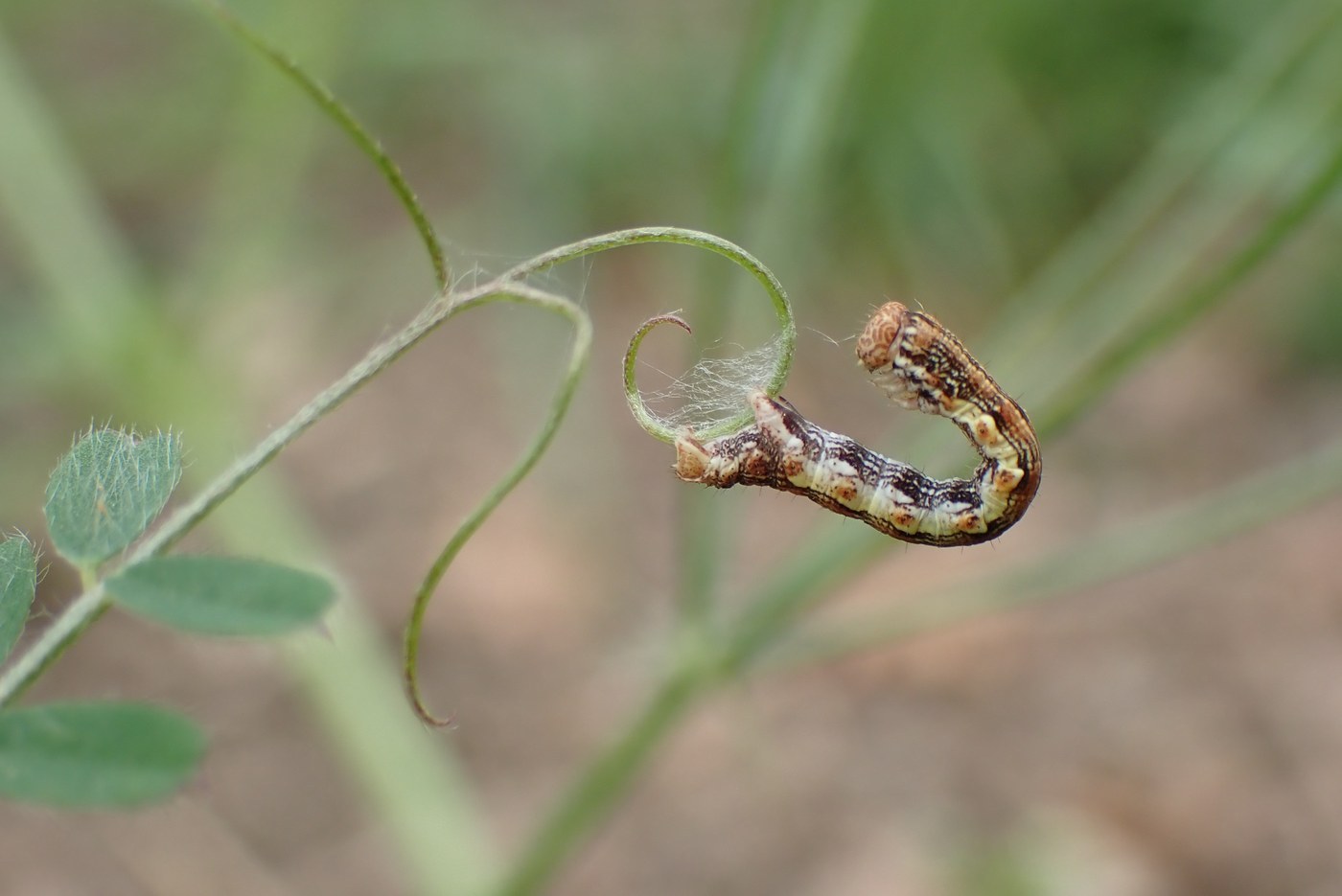
Inchworm
Geometridae spp.
A slender, twig-mimicking caterpillar that travels by looping its body into an arch and releasing a strand of silk to drop and dangle at the slightest disturbance.
- Size
- 1-5 cm (0.4-2 in) long depending on species
- Habitat
- Trees, shrubs, and low vegetation nearly worldwide
- Danger
- Nuisance pest
Spotted a bug like this?
Identify any bug or insect from a photo, free.
Overview
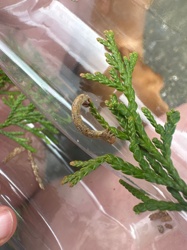
Inchworm is the common name applied broadly to the caterpillars of geometrid moths, a huge and diverse family that includes thousands of species worldwide. What unites them is a distinctive style of locomotion: lacking a full set of prolegs along the middle of the body, inchworms move by extending their front end forward, then drawing their hind end up to meet it, arching the body into a loop with each step, a motion that gives the family its scientific name, Geometridae, meaning "earth measurer."
Many inchworm species are remarkably effective at camouflage, holding their body rigidly outstretched at an angle from a twig to mimic a small stick or leaf petiole, an adaptation that helps them avoid detection by visually hunting predators. As a group, inchworms are important herbivores in forest and garden canopies and, at times, can occur in large enough numbers to noticeably defoliate host trees.
How to Identify
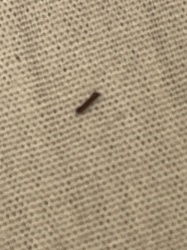
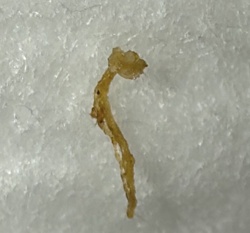
- Slender, smooth-bodied caterpillar lacking the full complement of prolegs found on most other caterpillars
- Moves with a distinctive looping gait, arching the body upward as it draws the hind end forward
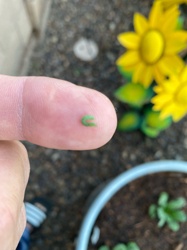
- Coloration highly variable by species, often green, brown, or gray to match twigs or leaves
- Frequently holds the body rigidly outstretched at an angle, mimicking a twig, when at rest
- Readily drops from foliage on a silk thread when disturbed
- Size varies widely by species, generally from about 1 to 5 cm at maturity
Habitat & Range
Geometrid caterpillars occur nearly worldwide on an enormous range of host plants, including deciduous and coniferous trees, shrubs, and garden plants. Different species are active at different times of year depending on region and host plant phenology, with many temperate species most common in spring as new leaves emerge, and others active into fall.
Behavior & Diet
Inchworms feed on the leaves or needles of their host plants, and their looping gait, while slower than the crawling of many other caterpillars, is well suited to their twig-mimicking lifestyle and to navigating narrow branches. When disturbed, many species drop from the plant on a silk safety line and can climb back up once the threat passes. As abundant leaf-feeders, inchworms are an important food source for many songbirds, particularly during the nesting season when protein-rich caterpillars are fed to nestlings in large quantities.
Life Cycle
Female geometrid moths lay eggs on or near host plants, and the emerging caterpillars pass through several instars while feeding on foliage before pupating, often in a cocoon on the ground, in leaf litter, or in a folded leaf. Depending on species and climate, geometrid moths may overwinter as eggs, pupae, or occasionally as adults, and produce one to several generations per year. The specific timing and number of generations varies enormously across the thousands of species included under the common name "inchworm."
Frequently asked questions
Why do inchworms move in loops?
They lack a full set of middle prolegs, so they move by extending the front of the body forward and then drawing the hind end up to meet it, creating a looping gait.
What does 'inchworm' actually refer to?
It is a common name for the caterpillars of the moth family Geometridae, which includes thousands of species with this looping locomotion.
Why do inchworms hang from silk threads?
They drop from foliage on a silk line as an escape response when disturbed, and can climb back up afterward.
How do inchworms avoid predators?
Many species camouflage themselves by holding their body rigid at an angle from a twig, mimicking a small stick.
Inchworm guides
In-depth guides for identifying, understanding, and living alongside Inchworm.
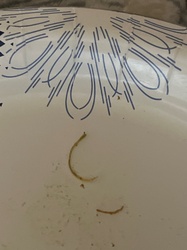
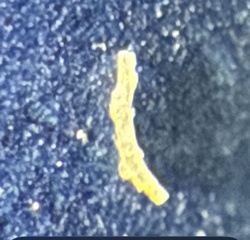
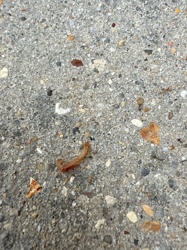
Inchworm identified by the community
Real finds identified with Bug Identifier.
Other bugs you may enjoy
Bagworm
Trees and shrubs, especially conifers and ornamental landscaping
Armyworm
grasslands, pastures, and cereal crop fields
Zebra Longwing Caterpillar
Tropical and subtropical hammocks with passionflower vines
Tomato Hornworm
Gardens and fields with tomato, pepper, and other nightshade plants
Tent Caterpillar
Deciduous trees such as cherry, apple, and other rosaceous species
Tobacco Hornworm
tobacco, tomato, and pepper plants in gardens and fields
Woolly Bear Caterpillar
Gardens, meadows, roadsides, and woodland edges across North America
Sod Webworm
Turfgrass lawns, golf courses, pastures
Spiny Oak-slug Caterpillar
Deciduous forests and woodland edges with oak and other hardwoods
Saddleback Caterpillar
Deciduous trees and shrubs in eastern and southern North America
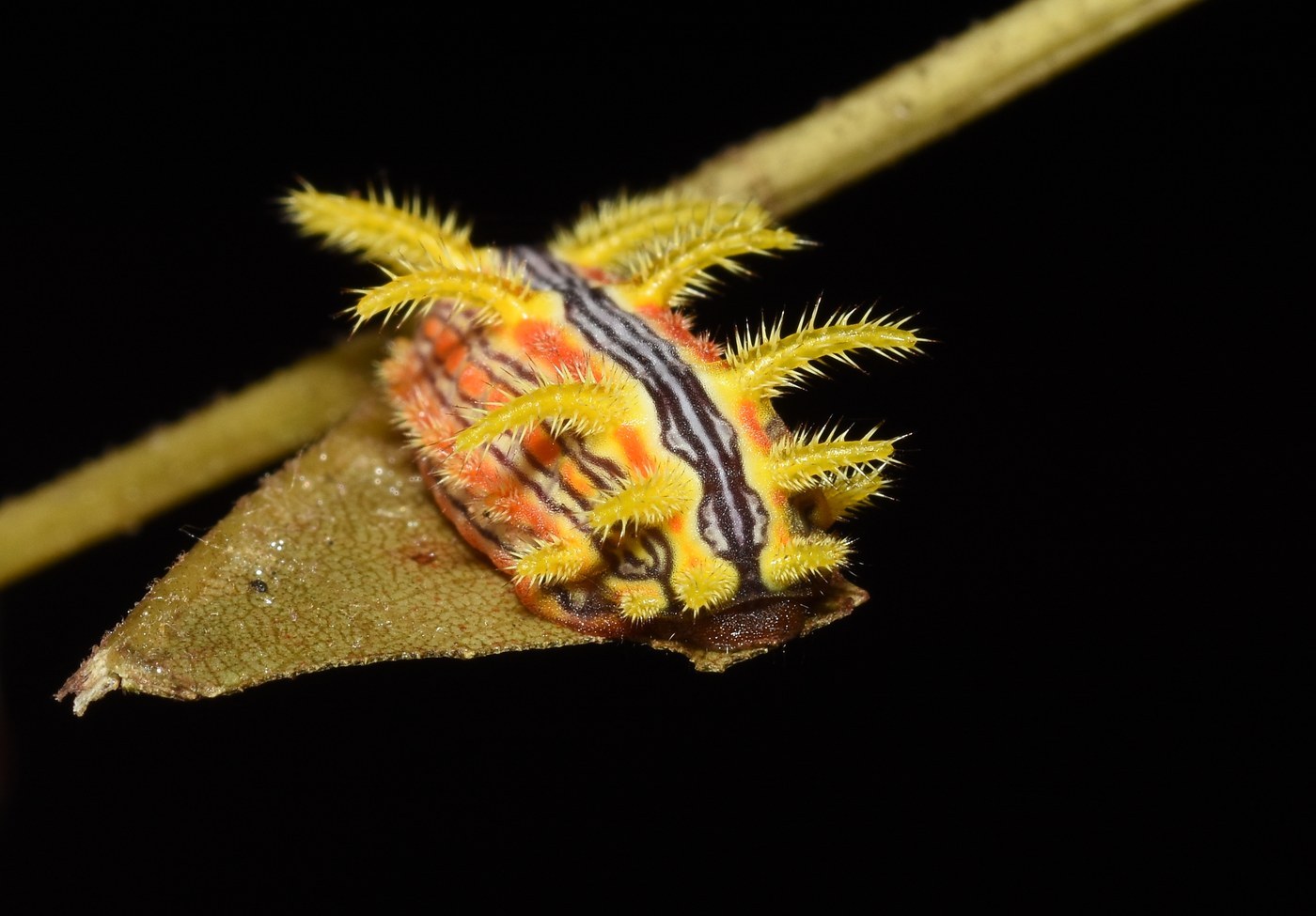
Stinging Rose Caterpillar
Gardens and woodlands with rose, dogwood, or oak
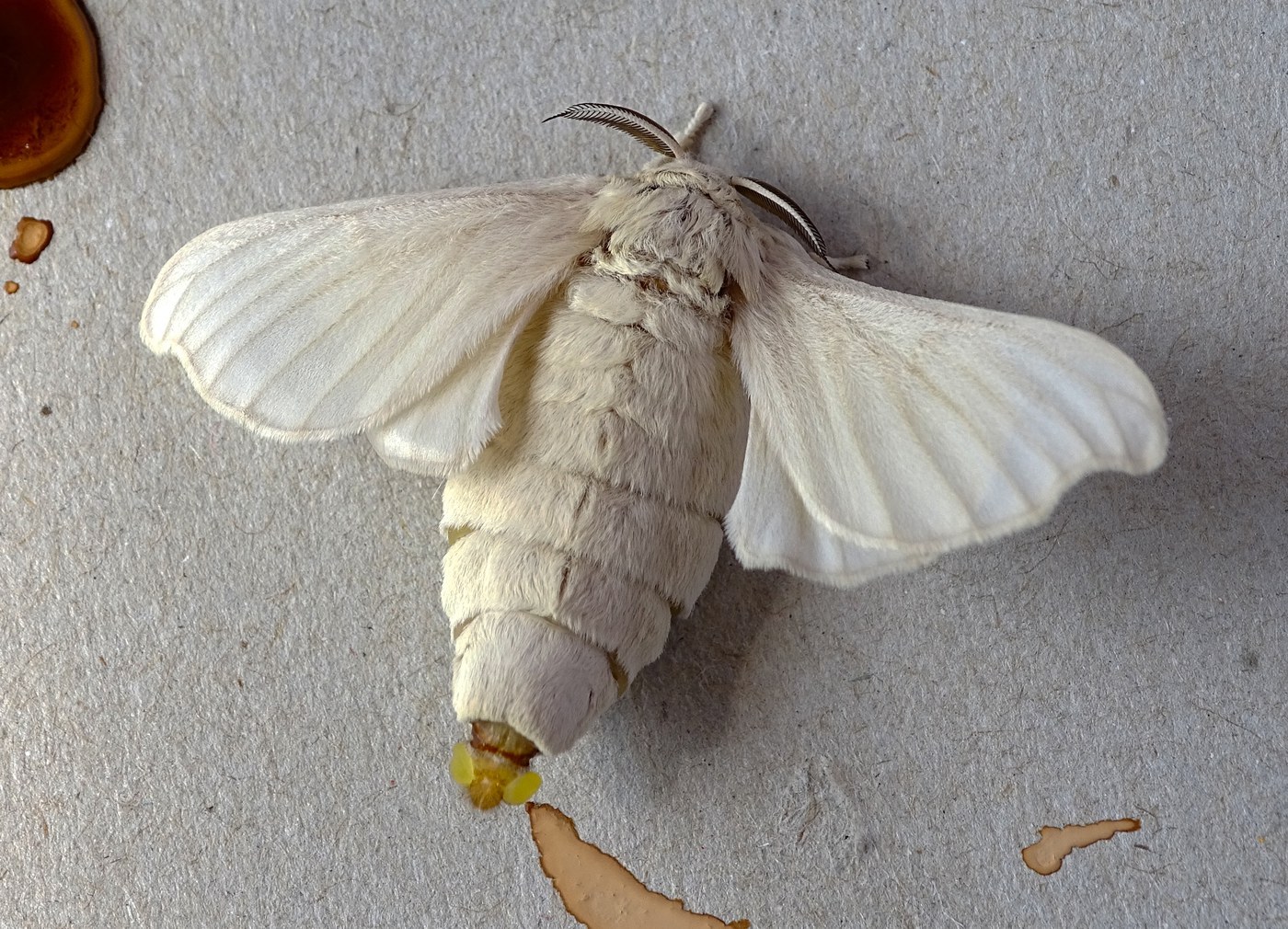
Silkworm
Reared exclusively in captivity on mulberry leaves; no independent wild population