Jerusalem Cricket Identification Guide
Distinguish this large, flightless ground insect by its bald, humanlike head, banded abdomen, and heavy nocturnal crawl.
Read the full Jerusalem Cricket encyclopedia entry →Key Visual Features
The Jerusalem cricket is a large, unusual, wingless insect in the order Orthoptera, easily identified once its unique combination of features is known.
- Size: Large-bodied, typically 1 to 2.5 inches long.
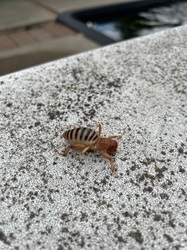
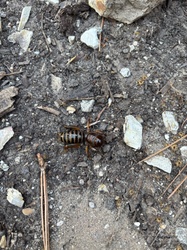
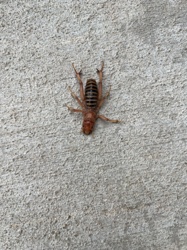
- Color: Glossy amber to tan-orange head and thorax, contrasting with an abdomen banded in alternating pale tan/cream and dark brown or black segments.
- Body shape: Heavy, robust build with a disproportionately large, rounded, hairless head often compared to a tiny human face, tapering to a segmented abdomen.
- Wings: No functional wings in adults, making the species entirely flightless.
- Legs: Thick, strong, spine-lined legs suited for digging and pushing through loose soil; hind legs are somewhat enlarged but not built for long jumps like true crickets.
- Antennae: Long, slender, thread-like antennae projecting from the head.
- Behavior: Moves with a slow, lumbering, deliberate gait rather than the quick hops of true crickets; can produce a soft drumming or rasping sound by tapping the abdomen against the ground.
Where and When You'd See One
Jerusalem crickets are native to western North America, inhabiting loose, sandy, or well-drained soils in deserts, grasslands, chaparral, and gardens. They spend most of their life underground in burrows and are almost entirely nocturnal, surfacing after dark, especially following rain or when soil is disturbed. They are most frequently encountered from spring through fall, occasionally found crossing open ground, sidewalks, or driveways at night.
Similar-Looking Bugs
- Mole cricket: Shares a soil-dwelling lifestyle, but has clearly modified, broad, shovel-like front legs for digging, a feature the Jerusalem cricket lacks; mole crickets also tend to have small residual wings.
- True field or house crickets: Much smaller, typically winged, with long jumping hind legs and a narrower head; Jerusalem crickets are wingless and do not jump.
- Camel cricket: Smaller, strongly humpbacked, with a mottled brown color and long antennae, lacking the smooth glossy amber head and bold abdominal banding.
- Cockroaches: Flattened body with a shield-shaped pronotum covering the head from above, unlike the fully exposed, rounded head of a Jerusalem cricket.
Quick ID Checklist
- Large, bald, glossy amber-orange head resembling a small human face
- Abdomen banded in alternating cream and dark segments
- Fully wingless, heavy, robust body
- Thick spiny legs used for digging rather than jumping
- Slow crawling gait, most active at night after rain or soil disturbance
Frequently asked questions
Why does this insect look like it has a human face?
Its unusually large, smooth, rounded, hairless head with prominent features gives it a face-like appearance, which is a major reason for its distinctive common name and folklore.
Can a Jerusalem cricket jump like other crickets?
No, despite being related to true crickets, it does not have the long, powerful jumping hind legs of typical crickets and instead moves with a slow, deliberate crawl.
Where is the best place to spot one?
Look in loose, sandy, or well-drained soil in deserts, grasslands, or garden beds in western North America, especially at night or after rain when they surface from their burrows.
How is a Jerusalem cricket different from a mole cricket?
Mole crickets have distinctly broadened, shovel-shaped front legs adapted for digging and often retain small wings, while Jerusalem crickets have standard-shaped spiny legs and are completely wingless.
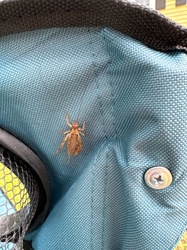
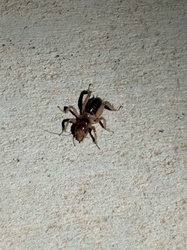
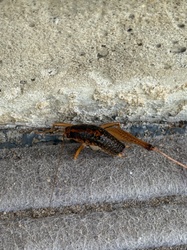
Jerusalem Cricket identified by the community
Recent Jerusalem Cricket finds identified with Bug Identifier.