Brown Marmorated Stink Bug Identification Guide
Distinguish this widespread introduced stink bug by its marbled brown pattern and banded antennae.
Read the full Brown Marmorated Stink Bug encyclopedia entry →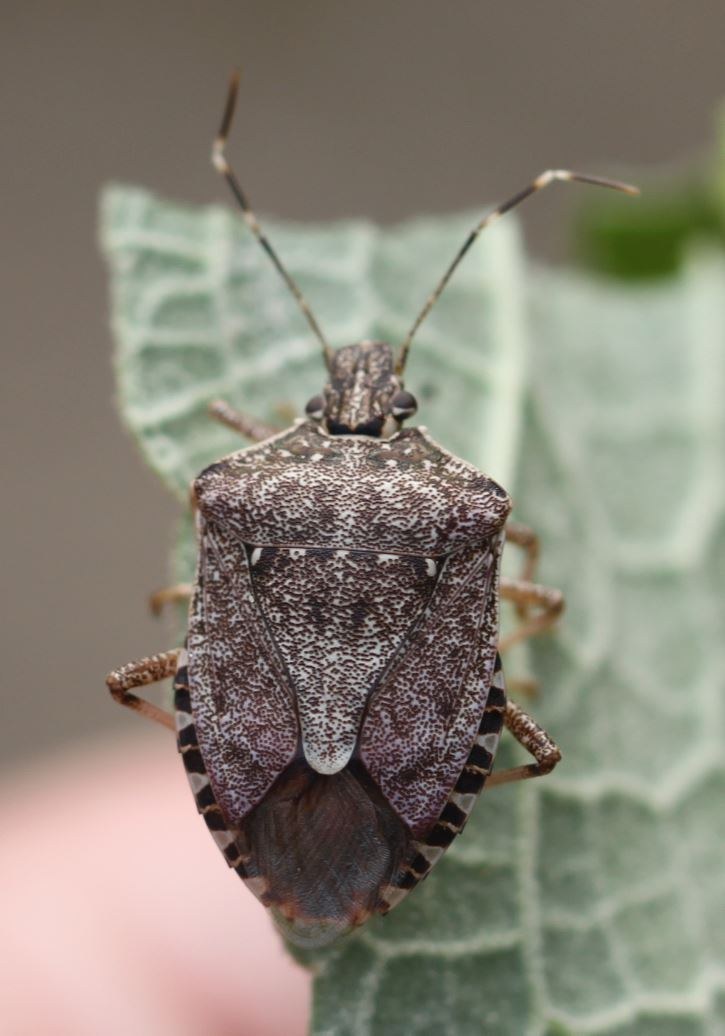
Key Features
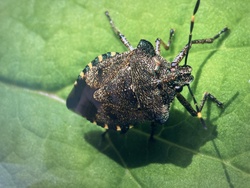
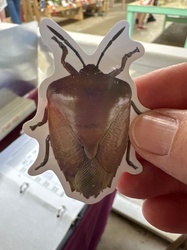
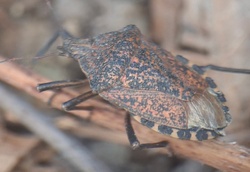
- Shield-shaped body, about 1.2–1.7 cm (0.5–0.7 inches) long, similar in outline to other stink bugs but with a distinctly mottled ("marmorated," meaning marble-patterned) brown-and-gray coloring
- Alternating light and dark bands along the outer edge of the abdomen, visible past the folded wings when viewed from above
- Antennae show alternating light (whitish) and dark bands, particularly noticeable on the last two segments — a key distinguishing feature from many other brown stink bugs
- Legs also show faint lighter banding, especially near the joints
- Triangular scutellum plate on the back, typical of true bugs, with small white or pale marks near its tip
- Underside is generally pale, sometimes with light mottling, and the body appears relatively flat and broad-shouldered from above
Where & When to Spot One
- Native to East Asia; now widely established as an introduced species across much of North America and parts of Europe
- Found on a broad range of trees, shrubs, and garden plants, as well as on the exterior (and sometimes interior) of buildings
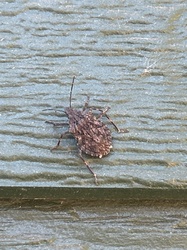
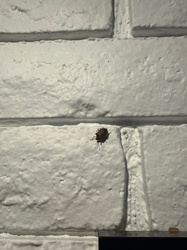
- Active from spring through fall outdoors; in autumn, large numbers often gather on sunny, light-colored exterior walls as they seek sheltered places to spend the winter
- Adults may reappear indoors on warm winter days, having overwintered inside wall voids, attics, or other sheltered spaces, and can be found sluggishly moving around windows
Similar Species
- Many native brown stink bug species look broadly similar, but lack the clear light/dark banding on the antennae and abdomen edge that marks this species
- Rough Stink Bug has a more textured, spiny-shouldered outline compared to the smoother-shouldered Brown Marmorated Stink Bug
- Squash bugs are more elongated and uniformly dark, without the marbled mottling or banded antennae
- Spined Soldier Bug is a similar shield shape with more pronounced pointed shoulder spines and lacks the fine marbled brown pattern
- The banded antennae combined with the alternating light/dark pattern along the abdomen edge are the most reliable field marks for confirming this specific species
Quick ID Checklist
- Mottled brown-and-gray "marbled" body pattern
- Banded (light/dark) antennae, especially near the tips
- Alternating light/dark marks along the abdomen edge
- Shield-shaped body with a triangular scutellum
- Often seen gathering on sunny exterior walls in autumn
Frequently asked questions
What does "marmorated" mean in this bug's name?
It refers to the marble-like, mottled pattern of its brown and gray coloring.
How can I tell it apart from other brown stink bugs?
Look for the alternating light and dark bands on the antennae and along the edge of the abdomen, which most other brown stink bug species lack.
Why do I see large numbers on the outside of buildings in fall?
They gather on sunny, light-colored walls in autumn while seeking sheltered spots to spend the winter.
Where did this species originate?
It's native to East Asia and has since become widely established in North America and parts of Europe.
Brown Marmorated Stink Bug identified by the community
Recent Brown Marmorated Stink Bug finds identified with Bug Identifier.