Granary Weevil Identification Guide
Identify this flightless, uniformly dark weevil that lives its entire life around stored grain.
Read the full Granary Weevil encyclopedia entry →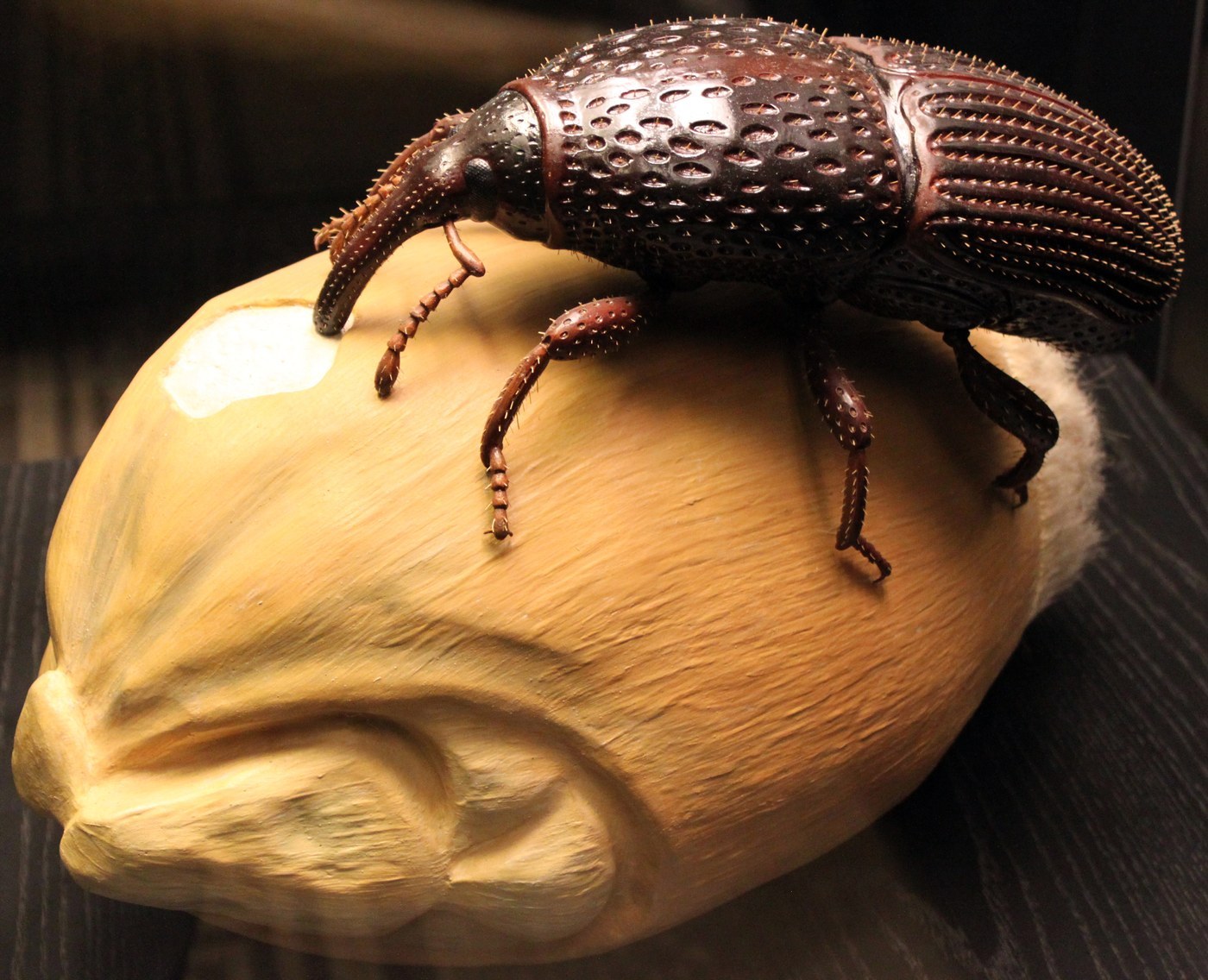
Key Visual Features
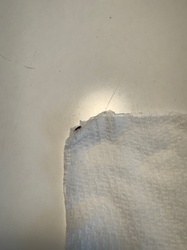
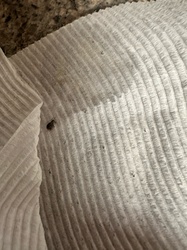
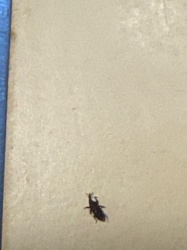
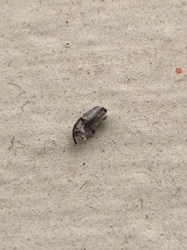
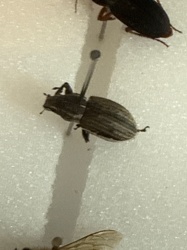
The granary weevil is a small beetle, roughly 3-5 mm long, with a uniformly dark reddish-brown to nearly black body and a long, slender, curved snout typical of weevils. Unlike some related species, its wing covers lack pale spots or markings, giving it a plain, solid coloration overall. The elytra are marked with fine, parallel grooves or striations running lengthwise, and the pronotum is covered in small, elongated pits that give it a slightly rough, textured appearance. A defining structural feature is that the wing covers are fused together and the beetle has no functional hind wings, meaning it cannot fly.
Where and When You're Likely to See Them
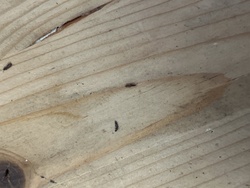
Granary weevils are found almost exclusively in and around stored grain, including wheat, barley, oats, and other cereal products, in granaries, mills, warehouses, and home pantries. Because they depend entirely on stored food products and indoor or sheltered conditions, they can be present year-round wherever suitable grain is stored, without a strong seasonal pattern tied to outdoor weather. Look for them crawling slowly on grain surfaces, inside storage containers, or in cracks and crevices near grain storage, since their inability to fly means they spread primarily by crawling or being transported with infested grain.
Similar-Looking Bugs
The granary weevil is very similar to the rice weevil, but it can be distinguished by its lack of pale spots on the elytra, its slightly larger and more uniformly dark body, and its inability to fly due to fused, non-functional wing covers. Other stored-product beetles such as flour beetles or grain beetles lack the elongated snout altogether, making the presence of a distinct weevil snout the quickest way to separate this species from non-weevil grain pests.
Quick ID Checklist
- Small beetle, 3-5 mm long, uniformly dark reddish-brown to black
- Long, curved snout with elbowed antennae
- No pale spots on the wing covers, unlike the rice weevil
- Fused elytra and no functional wings, so it cannot fly
- Found exclusively in and around stored grain products indoors
Frequently asked questions
Can granary weevils fly?
No, their wing covers are fused together and they lack functional hind wings, so unlike the rice weevil they cannot fly and instead move by crawling.
How is a granary weevil different from a rice weevil?
The granary weevil lacks the pale spots sometimes seen on a rice weevil's wing covers, is generally a bit larger, has a more uniformly dark body, and cannot fly.
Where would I typically find granary weevils?
They are found almost entirely in and around stored grain products like wheat, barley, and oats, in places such as granaries, mills, warehouses, and pantries.
Is there a specific season when granary weevils appear?
Since they live in sheltered indoor grain storage conditions, they can be present year-round rather than following an outdoor seasonal pattern.
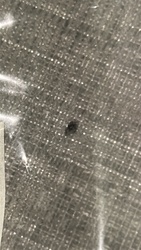
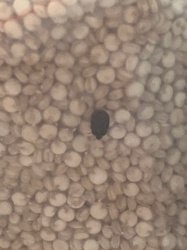
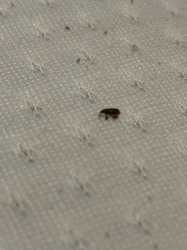
Granary Weevil identified by the community
Recent Granary Weevil finds identified with Bug Identifier.