Lanternfly (Spotted Lanternfly) Identification Guide
Learn the distinctive spotted wings and color-changing look of the spotted lanternfly across its life stages.
Read the full Lanternfly (Spotted Lanternfly) encyclopedia entry →Key Visual Features
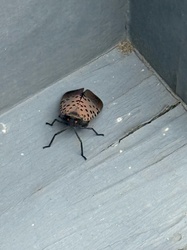
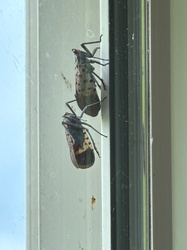
- Adult body is roughly 1 inch (2.5 cm) long with a moth-like resting posture, wings held tent-like over the body.
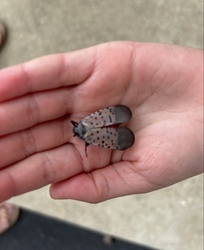
- Forewings are pale gray to tan with distinct black spots and a lace-like black pattern near the wingtips.
- Hindwings, visible mainly in flight or when wings are spread, show a bright red-orange patch with black spots, a black band, and white edging.
- Legs and head are dark, and the body is stout compared to true flies, reflecting its relation to planthoppers rather than flies.
- Antennae are short and inconspicuous.
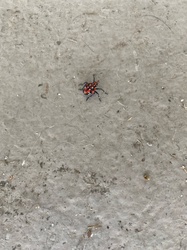
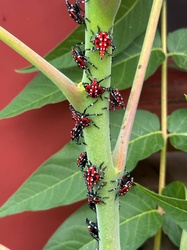
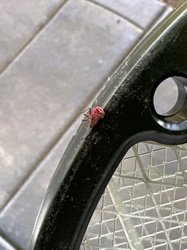
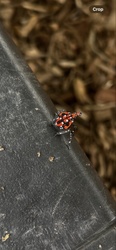
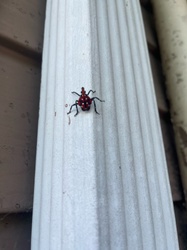
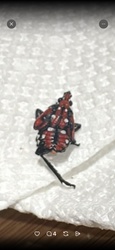
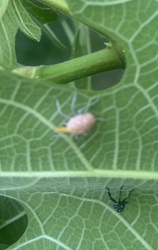
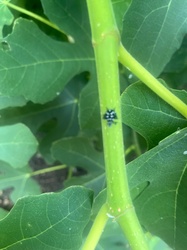
- Immature nymphs look very different from adults: early nymphs are small, wingless, and black with white spots, while late-stage nymphs turn red with white spots and black markings before the final molt to a winged adult.
Where and When You'd See It
- Found on tree trunks, vines, and other plant surfaces, often in large clustered groups.
- Adults are most visible from mid-to-late summer through fall; nymphs appear in spring and early summer.
- Frequently seen resting on bark with wings folded, hopping or flying short distances when disturbed.
- Associated with wooded edges, vineyards, and areas with a mix of trees, though they can turn up on many plant and non-plant surfaces including buildings and vehicles.
Similar-Looking Species
- Other planthoppers can share the general wedge-shaped, moth-like resting posture, but lack the specific combination of black-spotted gray forewings and red-and-black hindwings.
- Some moths have spotted wing patterns, but true moths have feathery or thread-like antennae and a different wing-folding posture, and lack the hopping planthopper gait.
- Early black-and-white spotted nymphs can be mistaken for small beetles or other true bugs, but the red coloring that develops in later nymph stages combined with the eventual spotted adult wings is distinctive.
Quick ID Checklist
- Gray, black-spotted forewings folded tent-like over the body at rest.
- Bright red-orange and black hindwings revealed in flight or when wings are spread.
- Stout, wedge-shaped body about an inch long.
- Nymphs progress from black-with-white-spots to red-with-white-spots before adulthood.
- Often found in clusters on tree trunks or vines.
Frequently asked questions
How can I tell a spotted lanternfly from a moth?
Lanternflies have short, inconspicuous antennae and a distinct hopping gait, while moths have longer feathery or thread-like antennae and typically do not hop; the red-and-black hindwing pattern is also unique to the lanternfly.
Why do young lanternflies look so different from adults?
They pass through several wingless nymph stages that change color as they grow, starting black with white spots and turning red with white spots and black markings before molting into the fully winged, gray-spotted adult.
What surfaces are lanternflies typically found on?
They are commonly seen resting in clusters on tree trunks, vines, and other bark-like surfaces, though they can also land on buildings, vehicles, and outdoor furniture.
What time of year are adult lanternflies most visible?
Adults with full spotted wings are most commonly seen from mid-summer through fall, while the wingless nymph stages appear earlier in spring and early summer.
Lanternfly (Spotted Lanternfly) identified by the community
Recent Lanternfly (Spotted Lanternfly) finds identified with Bug Identifier.