Non-Biting Midge Identification Guide
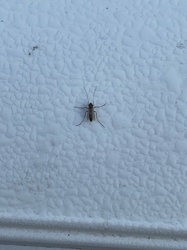
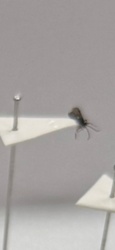
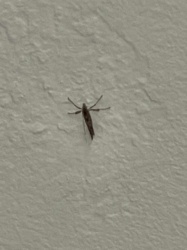
Recognize non-biting midges by their mosquito-like look, feathery antennae on males, and habit of forming dense swarms near lights and water.
Read the full Non-Biting Midge encyclopedia entry →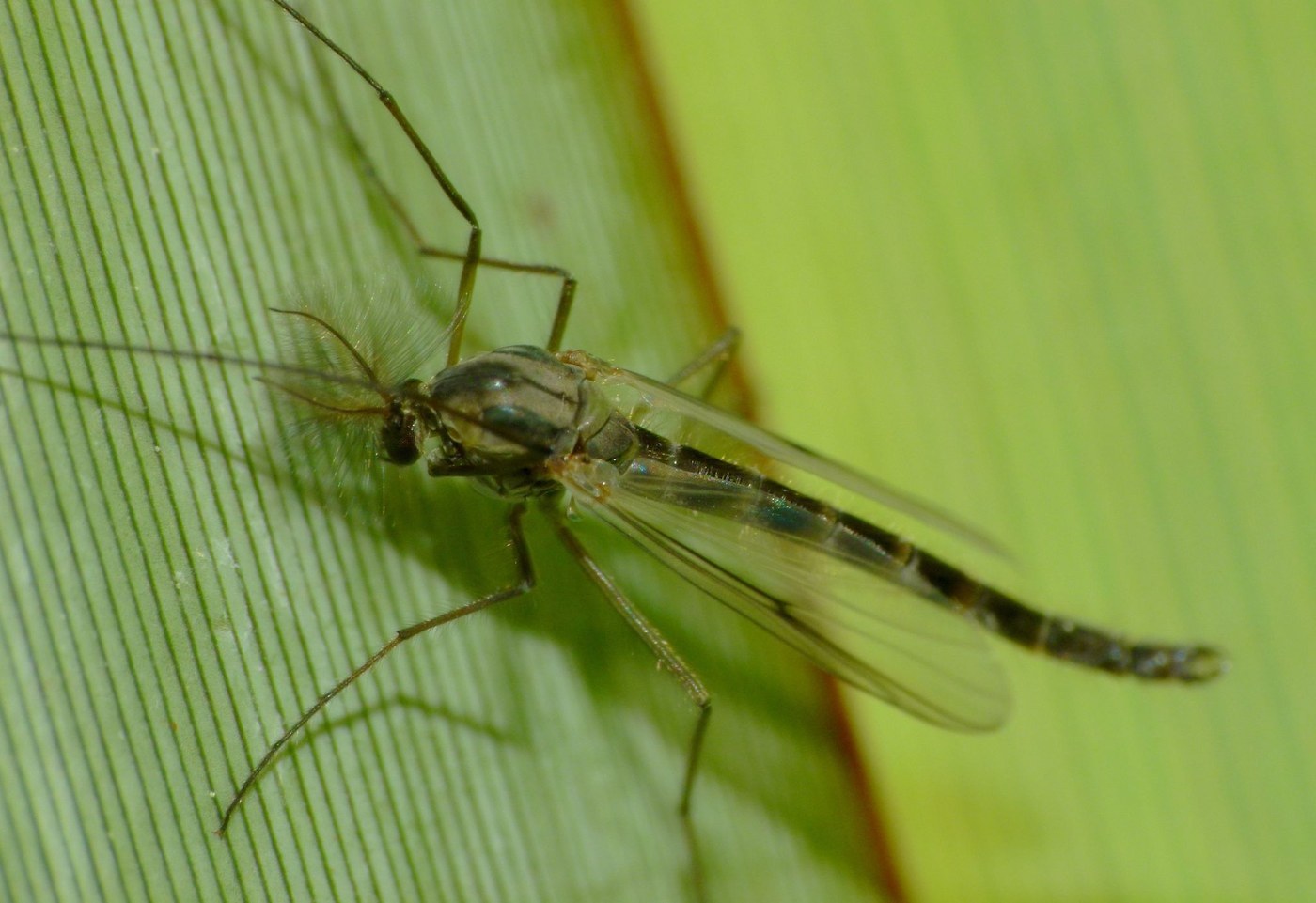
Key Visual Features
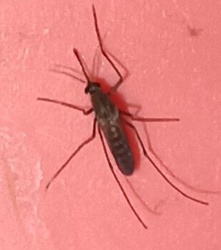
Non-biting midges (family Chironomidae) closely resemble mosquitoes at a glance but lack piercing mouthparts entirely.
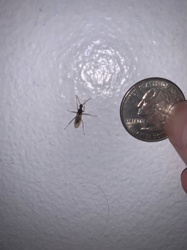
- Size: Typically 2-10 mm, varying widely by species, generally slender and delicate.
- Color: Often pale green, tan, gray, or black; some species have a faintly banded abdomen.
- Body shape: Slim and elongated, similar in outline to a mosquito but without the long, forward-pointing proboscis.
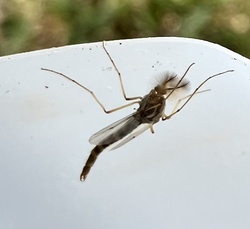
- Wings: Narrow, translucent or lightly scaled, held roof-like or flat over the body at rest, without the dense wing scales seen on mosquitoes.
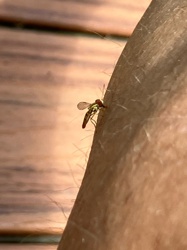
- Legs: Long and thin, often held out or slightly raised, sometimes with the front pair extended forward while resting.
- Antennae: Highly distinctive in males — large, bushy, plumose (feather-like) antennae used to detect swarming females; females have simpler thread-like antennae.
Where and When You'll See Them
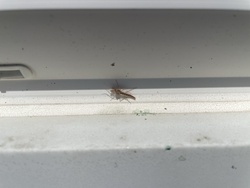
Non-biting midges develop as aquatic larvae in ponds, lakes, slow rivers, and even ornamental water features, so adults are abundant near any standing or slow-moving freshwater. They are famous for forming large, visible mating swarms — dense columns of insects hovering over a landmark like a tree or rooftop — especially at dusk in spring and summer. They're also strongly attracted to porch and streetlights at night, often clustering on walls and screens in huge numbers near lakes and rivers.
Similar-Looking Bugs
- Mosquitoes: The closest look-alike; mosquitoes have a visible elongated proboscis for piercing and scaled wings, while non-biting midges have no proboscis and hold their front legs forward at rest.
- Biting midges (no-see-ums): Much smaller and stouter with a humpbacked thorax, whereas non-biting midges are slender and mosquito-shaped.
- Crane flies: Considerably larger with very long, stilt-like legs and a single pair of narrow wings, easily distinguished by overall size.
Quick ID Checklist
- Mosquito-like silhouette but no visible biting proboscis
- Males have bushy, feathery antennae
- Front legs often held raised or extended forward at rest
- Forms large mating swarms near landmarks at dusk
- Abundant near ponds, lakes, and slow rivers; drawn to lights
Frequently asked questions
How can I tell a non-biting midge from a mosquito without catching it?
Watch the front of the head: mosquitoes have a long, needle-like proboscis projecting forward, while non-biting midges have no such structure and instead often hold their front pair of legs raised or extended.
Why do non-biting midges form huge swarms?
Those dense, hovering clouds are mating swarms made up mostly of males, which gather over a visual marker like a bush or rooftop at dusk to attract females passing through.
Do non-biting midges look different between males and females?
Yes, males are easiest to identify by their large, bushy, feather-like antennae, while females have much simpler, thread-like antennae and are less commonly seen in swarms.
Where do non-biting midge larvae live?
The larvae, sometimes called bloodworms for their reddish color in some species, live in the mud and sediment of ponds, lakes, and slow-moving freshwater, which is why adults are so common near these habitats.
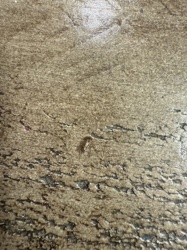
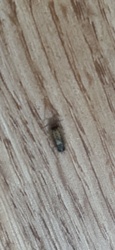
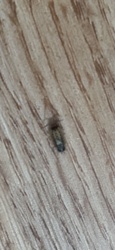
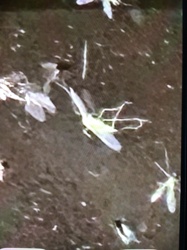
Non-Biting Midge identified by the community
Recent Non-Biting Midge finds identified with Bug Identifier.