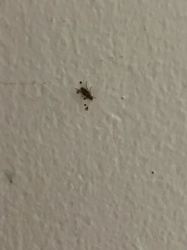
Phorid Fly Identification Guide
Identify phorid flies by their small humpbacked body and quick, erratic running motion rather than sustained flight.
Read the full Phorid Fly encyclopedia entry →Key Visual Features
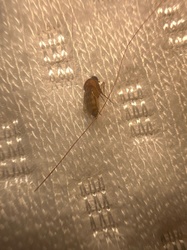
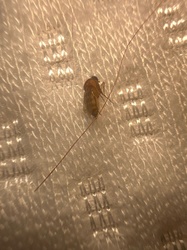
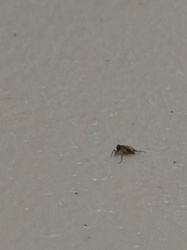
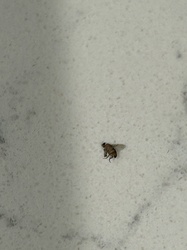
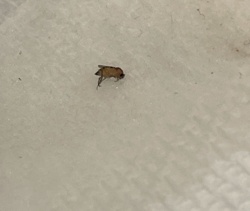
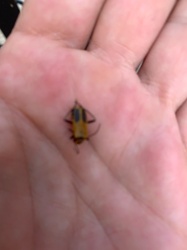
Phorid flies (family Phoridae) are tiny flies, usually under 0.15 inches long, best known for their distinctive humped shape and scurrying movement.
- Body: Small and compact with a noticeably arched or humpbacked thorax, giving rise to the common nickname "humpbacked fly."
- Color: Typically dark brown, black, or tan, with a somewhat glossy appearance.
- Legs: The hind legs are notably enlarged and flattened compared to the front and middle legs, an adaptation associated with their quick running behavior.
- Wings: Clear with a few heavy veins concentrated near the leading edge, becoming faint toward the wing tip.
- Head: Small and rounded, tucked closely against the humped thorax.
Where and When You'd See Them
Phorid flies can be found year-round in warmer climates and from spring through fall elsewhere, often indoors as well as outdoors. They are strongly associated with decaying organic matter, damp soil, drains, and decomposing plant or animal material, since many species develop as larvae in these environments. Rather than flying steadily, adult phorid flies are famous for their rapid, erratic running across surfaces such as countertops, windowsills, or soil before taking short, quick flights. This scurrying behavior, combined with their small size, is one of the most useful field clues.
Similar-Looking Bugs
- Fruit flies: Fly more readily and steadily rather than running erratically; lack the humped thorax.
- Fungus gnats: Have longer, more visible antennae and a slimmer, less humped body; tend to fly rather than scurry.
- Drain flies (moth flies): Covered in dense hair giving a fuzzy, moth-like look, quite different from the smooth, humped phorid body.
- Gnats in general: Usually more delicate and long-legged, without the characteristic quick scuttling gait.
Quick ID Checklist
- Tiny, dark, glossy fly under an eighth of an inch long
- Distinct humped or arched thorax profile
- Enlarged, flattened hind legs
- Runs rapidly and erratically across surfaces before short flights
- Found near decaying organic matter, damp soil, or drains
Frequently asked questions
Why are phorid flies called humpbacked flies?
Their thorax is distinctly arched or humped in profile, which is a reliable visual feature separating them from most other small flies.
What behavior helps identify a phorid fly?
Phorid flies are known for scurrying rapidly and erratically across surfaces in short bursts rather than flying steadily, a habit that stands out even before you get a close look at the body.
How do phorid flies differ from fruit flies?
Phorid flies have a humped back, enlarged hind legs, and a running gait, while fruit flies have a rounder body without a hump and tend to fly rather than scuttle.
Where do phorid fly larvae typically develop?
Larvae are associated with decaying organic material, damp soil, and similar moist decomposing matter, which is why adults are often seen near such sources.
Phorid Fly identified by the community
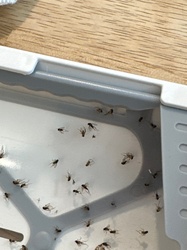
Recent Phorid Fly finds identified with Bug Identifier.