
Phorid Fly
Phoridae spp.
A tiny, hump-backed fly best known for scuttling erratically across countertops and floors rather than taking flight, drawn to anything rotting or moist.
- Size
- 0.5–6 mm (most under 3 mm)
- Habitat
- decaying organic matter, drains, compost, and indoor spaces
- Danger
- Nuisance pest
Spotted a bug like this?
Identify any bug or insect from a photo, free.
Overview
Phorid flies make up the large family Phoridae, with thousands of species worldwide, many so small and similar that reliable identification often requires microscopic examination of the wing veins. The most familiar member indoors is the tiny house-dwelling species sometimes called the coffin fly because of its historical association with decomposing remains found in sealed spaces, though the vast majority simply breed in kitchen drains, garbage, compost, and rotting plant material.
Their defining trait is a pronounced hump on the thorax, which gives the fly a distinctive silhouette next to the flatter-backed fruit fly it is frequently confused with. Rather than flying steadily, phorid flies dash short distances on foot in quick, erratic bursts, a behavior that quickly gives away their identity even before the wing venation can be checked.
Ecologically the family is remarkably diverse: while many species are scavengers on decaying material, others are specialized parasitoids, including the notorious ant-decapitating flies of the genus Pseudacteon that lay eggs inside fire ants.
How to Identify
- Small, usually 2–4 mm, dark brown to black body
- Distinctive humped, arched thorax visible from the side
- Wings held flat over the body at rest, with heavy veins concentrated near the leading edge
- Moves in quick, darting runs across surfaces instead of flying steadily
- Lookalikes: fruit flies (Drosophilidae) lack the pronounced hump and fly more readily; fungus gnats have longer legs and antennae
Habitat & Range
Phorid flies turn up wherever moist, decaying organic material accumulates — kitchen and floor drains, garbage disposals, compost bins, potted plant soil, and decomposing carcasses or plant matter. They are found on every continent except Antarctica and are common both outdoors in leaf litter and gardens and indoors in homes, restaurants, and hospitals.
Behavior & Diet
Larvae and adults alike are drawn to sources of decay, feeding on bacteria and organic residue in slime layers that build up inside drains and disposal units. Adults are strong runners but weak, reluctant fliers, preferring to scuttle across a surface before finally taking short hops into the air. Some species are important decomposers that speed the breakdown of organic waste, while parasitoid species in the genus Pseudacteon play a natural role in regulating fire ant colonies by laying eggs in worker ants.
Life Cycle
Females lay dozens of tiny eggs directly into moist organic matter such as drain slime or decaying plant material. Larvae are legless maggots that feed within this material for roughly one to two weeks before pupating, often in a hardened, teardrop-shaped puparium near the food source. Under warm indoor conditions a full generation from egg to adult can complete in under two weeks, allowing populations to build up rapidly around an unnoticed breeding site.
Frequently asked questions
Why do phorid flies run instead of fly?
Their wing muscles favor short bursts, so scuttling on foot across a surface is more efficient for them than sustained flight, which they use only for brief hops.
What tells a phorid fly apart from a fruit fly?
Look at the thorax from the side: phorid flies have a distinct hump, while fruit flies have a smoother, more rounded profile and tend to fly rather than run.
Where do phorid flies breed indoors?
Common indoor breeding sites include slime buildup in floor and sink drains, garbage disposals, and overly moist potted plant soil.
Are all phorid flies scavengers?
No, while many feed on decaying organic matter, some species are parasitoids that develop inside other insects, including certain ants.
Phorid Fly guides
In-depth guides for identifying, understanding, and living alongside Phorid Fly.
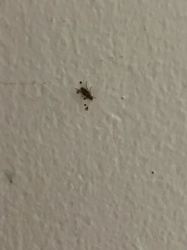
Phorid Fly identified by the community
Real finds identified with Bug Identifier.
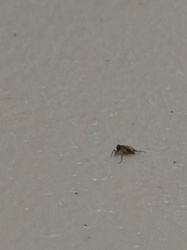


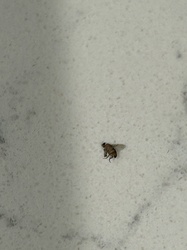
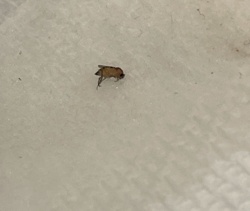
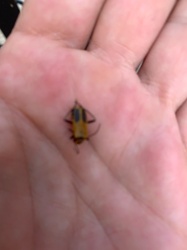
Other bugs you may enjoy
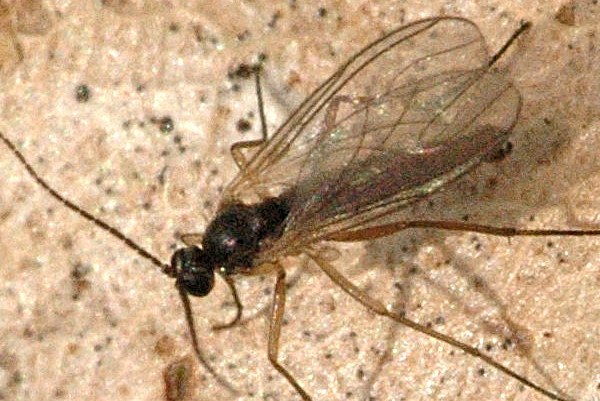
Aphid Midge
Gardens, greenhouses, and crops with aphids
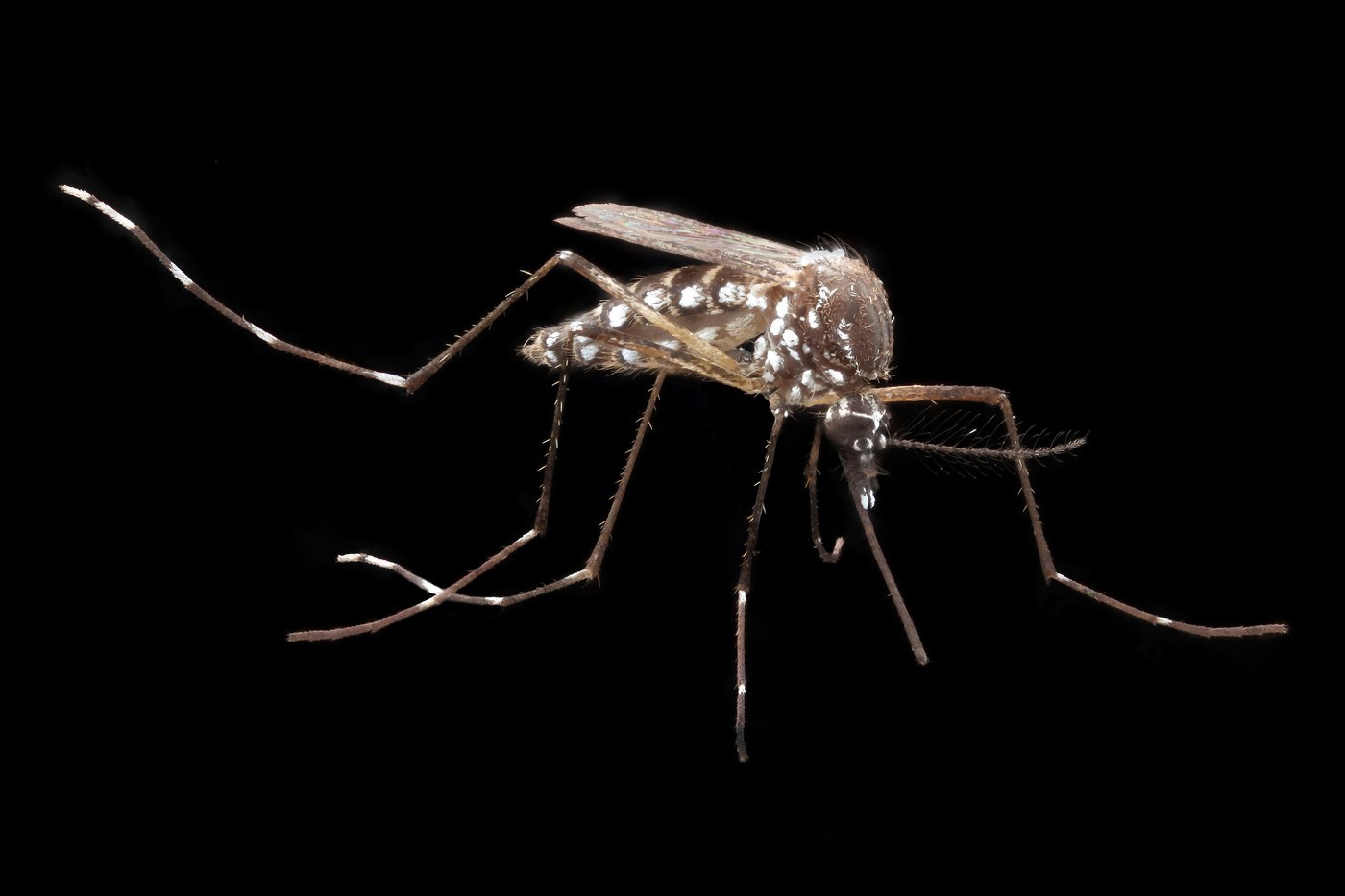
Yellow Fever Mosquito
Urban and peri-urban areas near small artificial water containers in tropical and subtropical regions worldwide
Root Maggot
Garden and field soil around the roots of cole crops and other vegetables
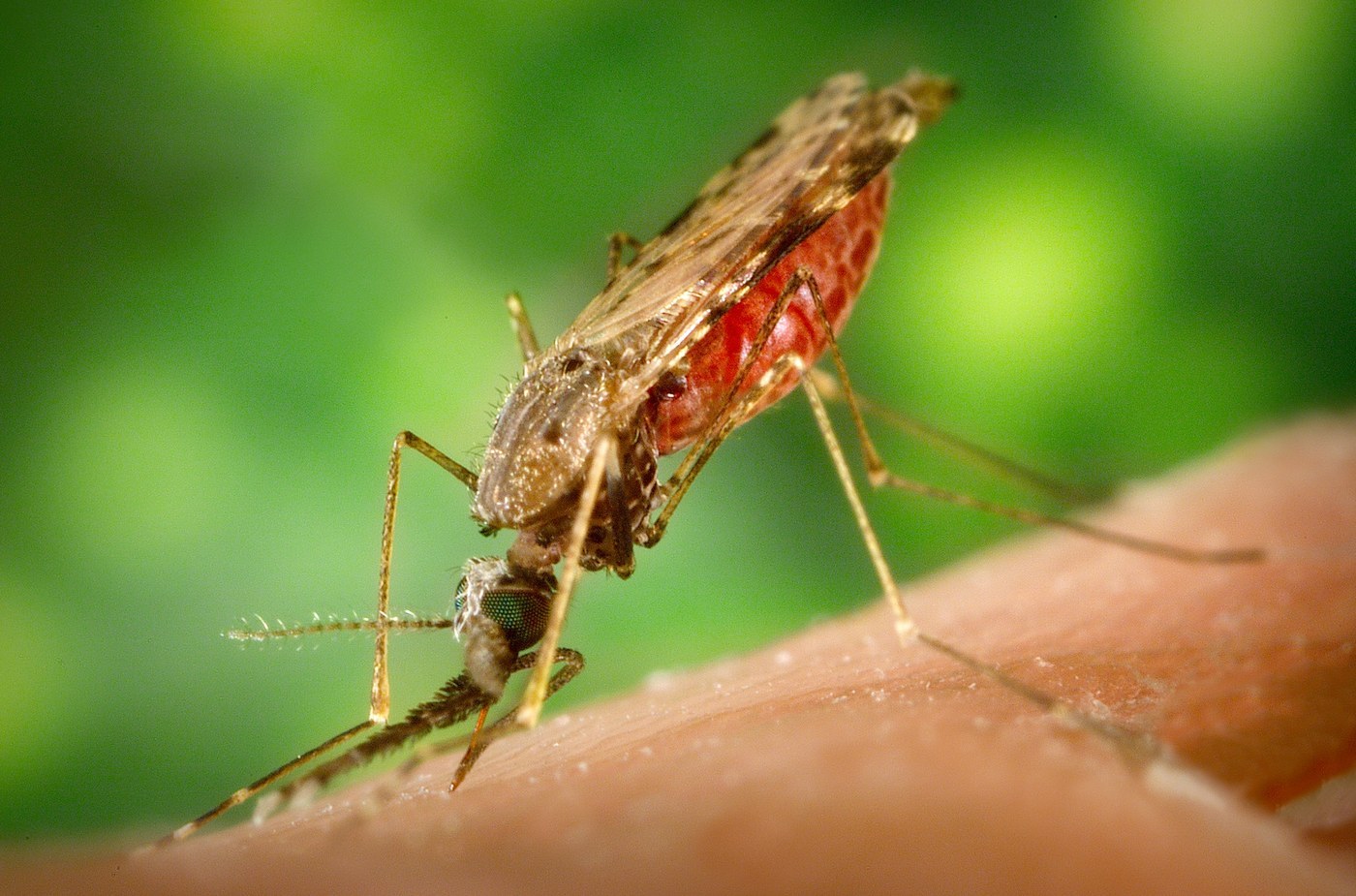
Anopheles Mosquito
Clean, still or slow-moving freshwater habitats such as marshes, ponds, and rice paddies
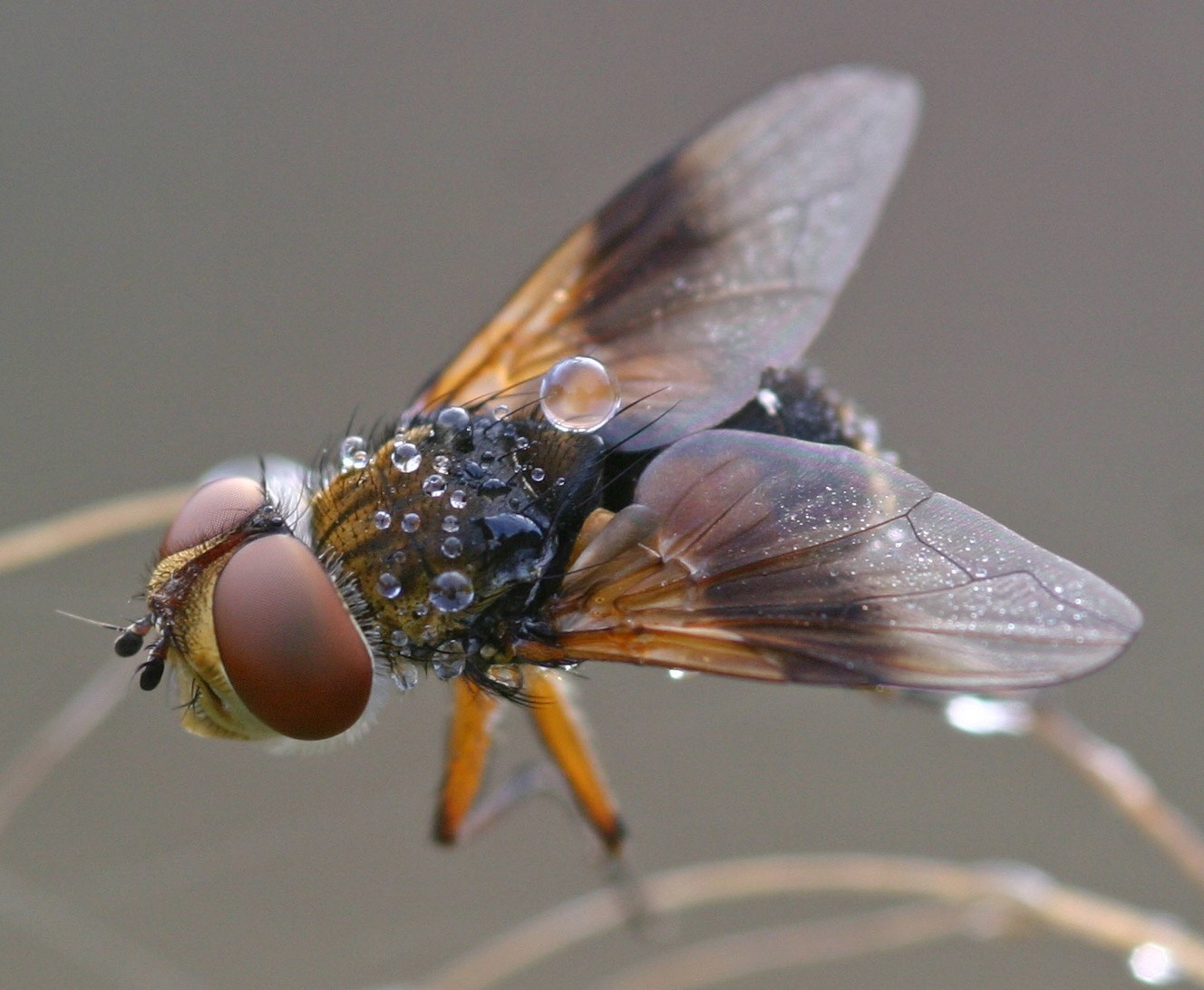
Tachinid Fly
Gardens, meadows, and woodlands wherever host caterpillars and other insects occur
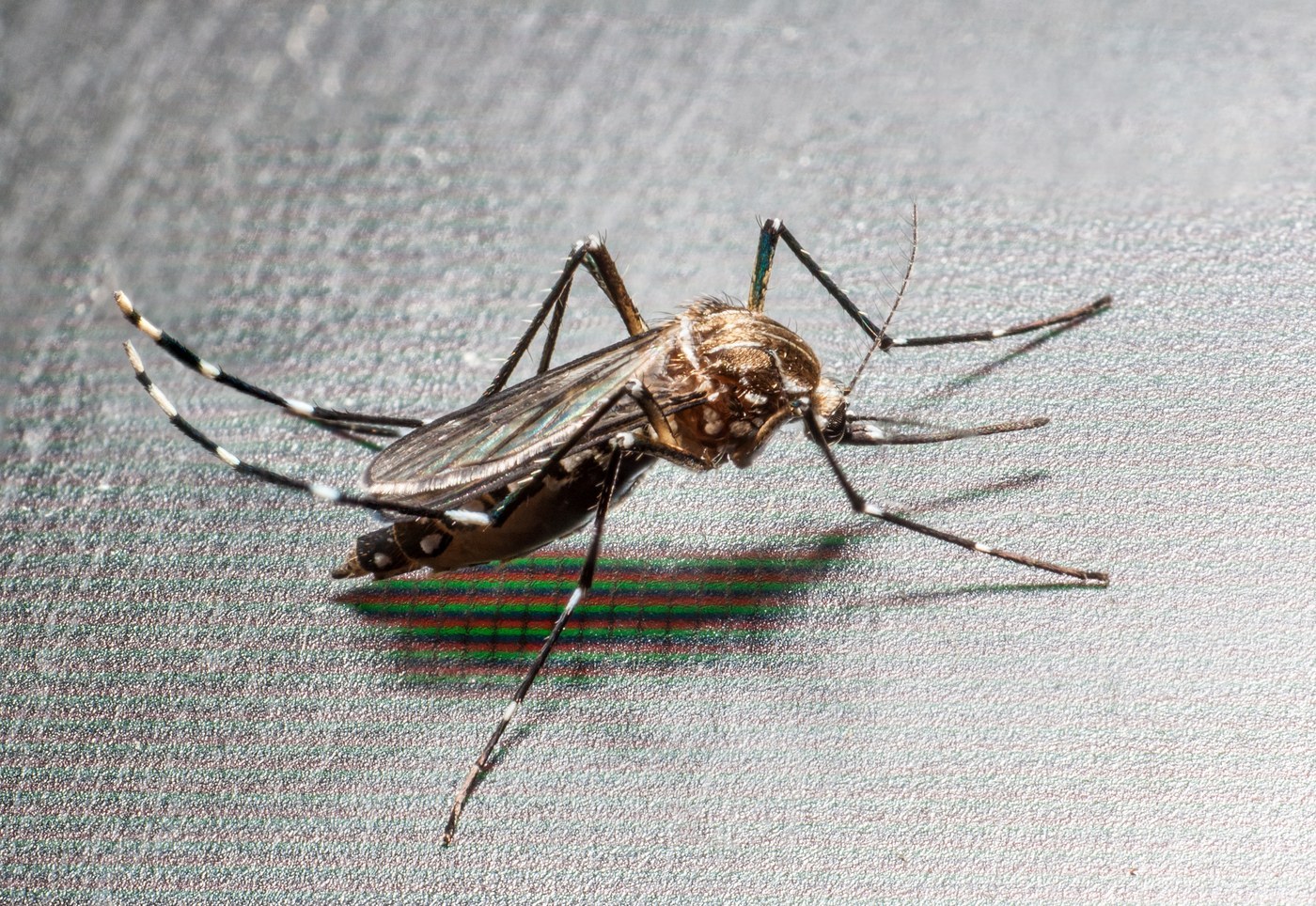
Asian Tiger Mosquito
Shaded urban and suburban areas near small water-holding containers, tires, and tree holes; native to Southeast Asia, now widespread
Tsetse Fly
Wooded savanna, riverine thickets, and forest edges across sub-Saharan Africa
Vinegar Fly
Around overripe fruit, compost, and fermenting materials worldwide
Yellow Dung Fly
Pastures and fields with fresh cattle dung
Screwworm Fly
Warm, humid lowlands of the Americas, especially near livestock and wildlife wounds
Soldier Fly
Wetland margins, decaying organic matter, and vegetation near water
Punkie
near marshes, mudflats, ponds, and other standing water