Snout Beetle Identification Guide
Recognize this weevil group by its elongated, downward-curving snout with tiny chewing mouthparts at the very tip.
Read the full Snout Beetle encyclopedia entry →
Key Visual Features
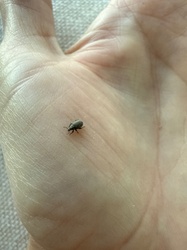
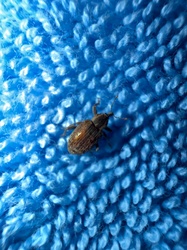
Snout beetles, commonly known as weevils, form one of the largest beetle groups and are instantly recognizable by their elongated snout.
- Size: Mostly small, ranging from about 0.1 to 0.5 inches (2-13 mm) in common species, though some larger species reach an inch or more.
- Color: Varies widely — dull brown, gray, or black in many common species, though some show scaly patterns of white, tan, or iridescent green/blue scales that can wear off with age.
- Body shape: Compact, oval to rounded body, often somewhat humped or convex, with the head extended forward into a narrow snout.
- Wings: Hardened elytra cover the abdomen, sometimes fused in flightless species; textured with rows of pits or ridges in many species.
- Legs: Moderate-length legs, sometimes with slightly thickened femora; some species can tuck legs in and "play dead" when disturbed.
- Antennae: Distinctly elbowed (geniculate) antennae that arise partway along the snout and bend sharply, ending in a small club — a defining weevil feature.
- Snout: The signature trait — a narrow, elongated rostrum extending forward from the head, often curved downward, with tiny chewing mouthparts located right at its tip.
Where and When You'd See One
Snout beetles are found nearly everywhere plants grow — gardens, crop fields, forests, and grasslands — since most species feed on specific host plants as both larvae and adults. They're most commonly noticed from spring through fall, often found on leaves, stems, seed pods, or fruit, moving slowly or feigning death (falling and lying motionless) when disturbed. Many are nocturnal, hiding in leaf litter or soil by day and feeding at night.
Similar-Looking Bugs
- Longhorn beetles: Have very long antennae but no snout, and the antennae are not elbowed; snout beetles have a short, clubbed, elbowed antenna arising from a long snout instead.
- Bark beetles: Small and cylindrical but lack an elongated snout, with the head largely hidden beneath the thorax.
- Leaf beetles: Similar in size and sometimes color, but have a normal short head without any snout projection and straight (non-elbowed) antennae.
- Ground beetles: Larger, flatter, faster-moving, and entirely lacking a snout, with long straight antennae and a predatory rather than plant-feeding lifestyle.
Quick ID Checklist
- Elongated, often downward-curving snout with mouthparts at the tip
- Elbowed antennae arising from partway along the snout, ending in a small club
- Compact, oval, hard-bodied beetle
- Found on leaves, stems, or seed pods of host plants
- Often feigns death, dropping and lying motionless when disturbed
Frequently asked questions
What is the defining feature of a snout beetle?
The elongated snout, or rostrum, extending from the front of the head with tiny chewing mouthparts at its very tip, is the hallmark feature that separates weevils from all other beetle families.
Why are a snout beetle's antennae shaped the way they are?
Weevil antennae are distinctly elbowed, arising partway along the snout and bending sharply before ending in a small club, unlike the straight antennae found in most other beetle groups.
What should I do if a snout beetle stops moving when I get close?
That stillness is typical behavior — many snout beetles feign death by dropping and lying motionless when disturbed, which is itself a helpful identification clue.
How can I tell a snout beetle from a leaf beetle?
Look at the head: snout beetles have an obvious elongated, often curved snout with the mouthparts at the very tip, while leaf beetles have a normal short head with no snout projection at all.
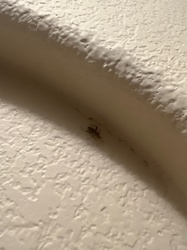
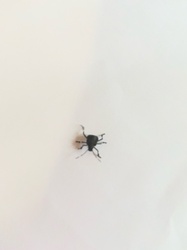
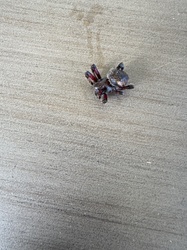
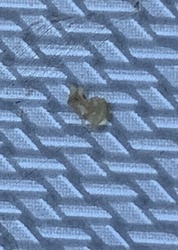
Snout Beetle identified by the community
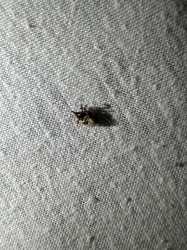
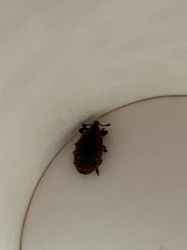
Recent Snout Beetle finds identified with Bug Identifier.