Tussock Moth Identification Guide
A furry, stout-bodied moth group best known for its tufted caterpillars, with adult males often showing feathery antennae and drab, camouflaged wings.
Read the full Tussock Moth encyclopedia entry →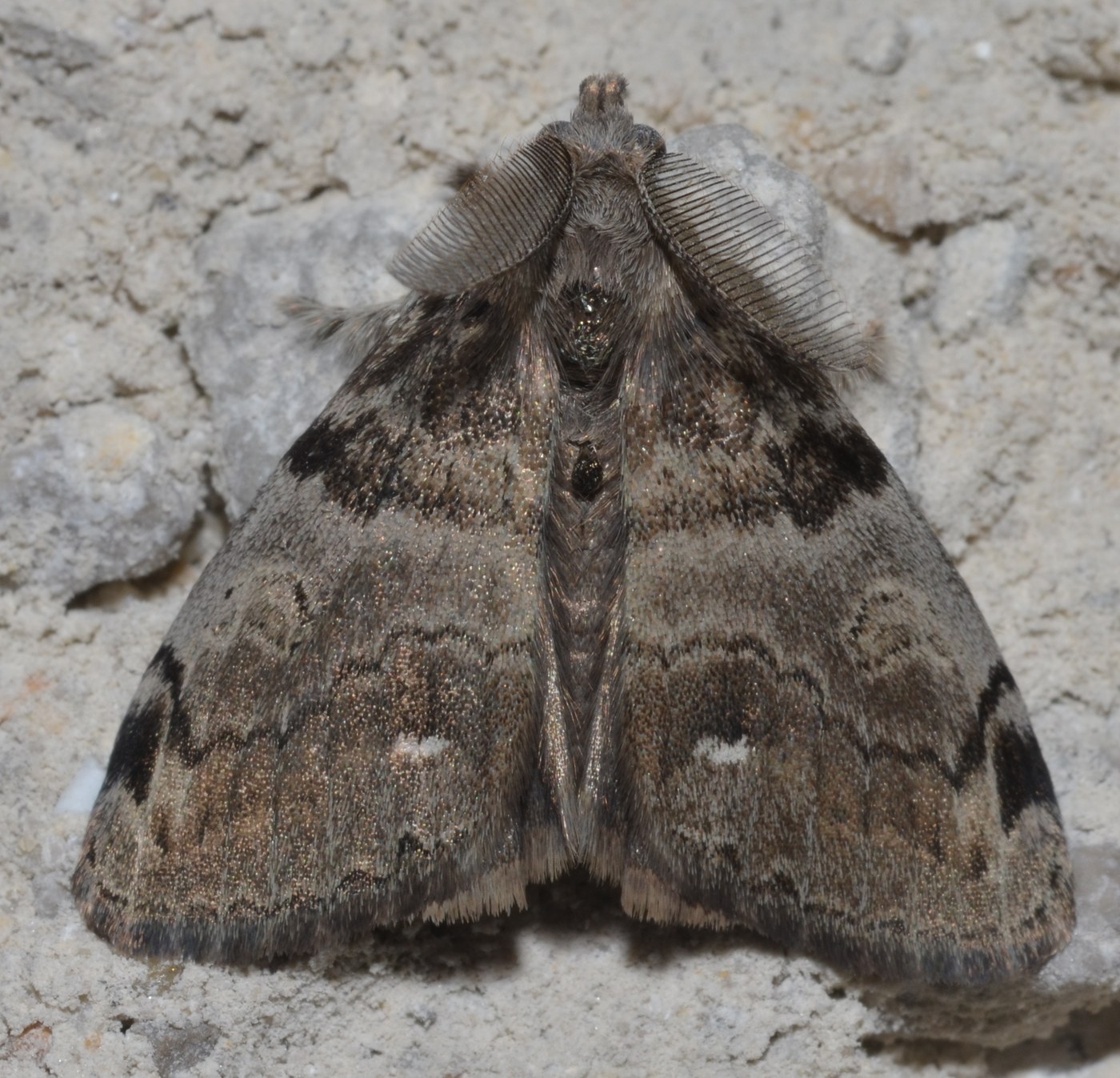
Key Visual Features
Tussock moths (family Erebidae, subfamily Lymantriinae) share several recognizable traits, though appearance varies by species:
- Size: Small to medium, with wingspans typically ranging from 2.5-4.5 cm (1-1.8 in).
- Color: Forewings usually in muted shades of gray, brown, or tan, often with subtle wavy dark lines or blotches for camouflage against bark.
- Body: Distinctly stout and furry, covered in dense hair-like scales, giving a plush appearance.
- Antennae: Males typically have broad, feathery (bipectinate) antennae used to detect female pheromones; females often have thinner antennae.
- Females: In several tussock moth species, females are flightless or nearly wingless, with small stubby wings and a bloated abdomen, quite different from the winged males.
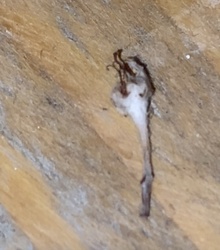
- Resting posture: Wings held flat or tent-like over the body, with the furry legs often visible at the front.
Where and When You're Likely to See It
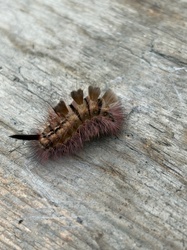
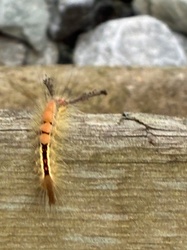
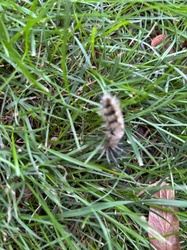
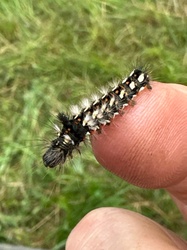
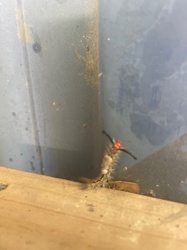
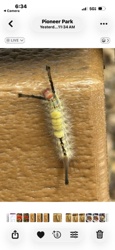
Tussock moths are found in woodlands, forest edges, parks, and gardens with deciduous or mixed trees. Adults fly mainly at night in summer and early fall, and males are readily drawn to porch lights and moth traps, while flightless females typically remain near the cocoon from which they emerged, waiting for males to find them by scent. The caterpillars, easily recognized by their dense tufts of hair-like bristles, are often more commonly noticed than the adults, feeding on tree and shrub foliage in the warmer months.
Similar-Looking Moths
- Underwing moths: Larger, with brightly colored hindwings hidden beneath dull forewings; tussock moths lack this flash coloration.
- Gypsy-type moths and other Lymantriinae relatives: Very closely related and can look almost identical; separating exact species often depends on subtle wing pattern differences.
- Owlet moths in general: Share a similar drab palette, but tend to have slimmer, less furry bodies than tussock moths.
Quick ID Checklist
- Stout, furry body with plush texture
- Muted gray-brown-tan mottled forewings
- Broad, feathery antennae in males
- Some females flightless with reduced wings
- Nocturnal males drawn to light
Frequently asked questions
Why do some tussock moth females appear wingless?
In several species within this group, females have evolved small, non-functional wings and cannot fly, instead releasing pheromones near their cocoon to attract flying males.
How do I tell a male tussock moth from other drab brown moths?
Look for the broad, feathery antennae and dense, furry body scales, which are more pronounced than in most other similarly colored owlet moths.
Are tussock moth adults commonly seen, or mostly the caterpillars?
The distinctively tufted, hairy caterpillars tend to be noticed far more often than the comparatively plain, camouflaged adult moths.
When is the best time to spot adult tussock moths?
Adults are most active on warm summer and early fall nights, with males frequently showing up at outdoor lights after dark.
Tussock Moth identified by the community
Recent Tussock Moth finds identified with Bug Identifier.