Western Conifer Seed Bug Identification Guide
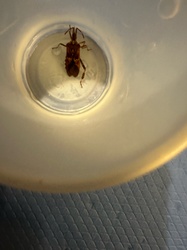
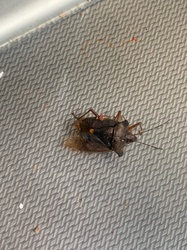
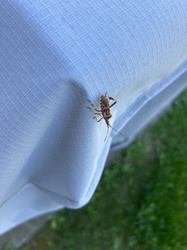
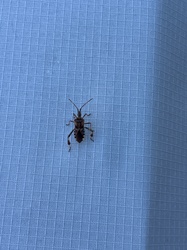
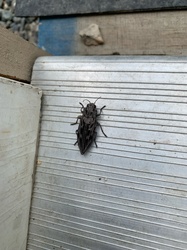
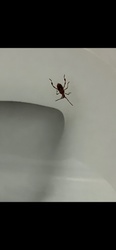
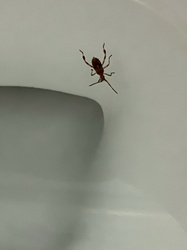
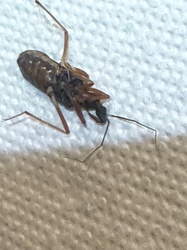
Recognize the western conifer seed bug by its mottled brown body, leaf-shaped hind legs, and strong association with conifer trees.
Read the full Western Conifer Seed Bug encyclopedia entry →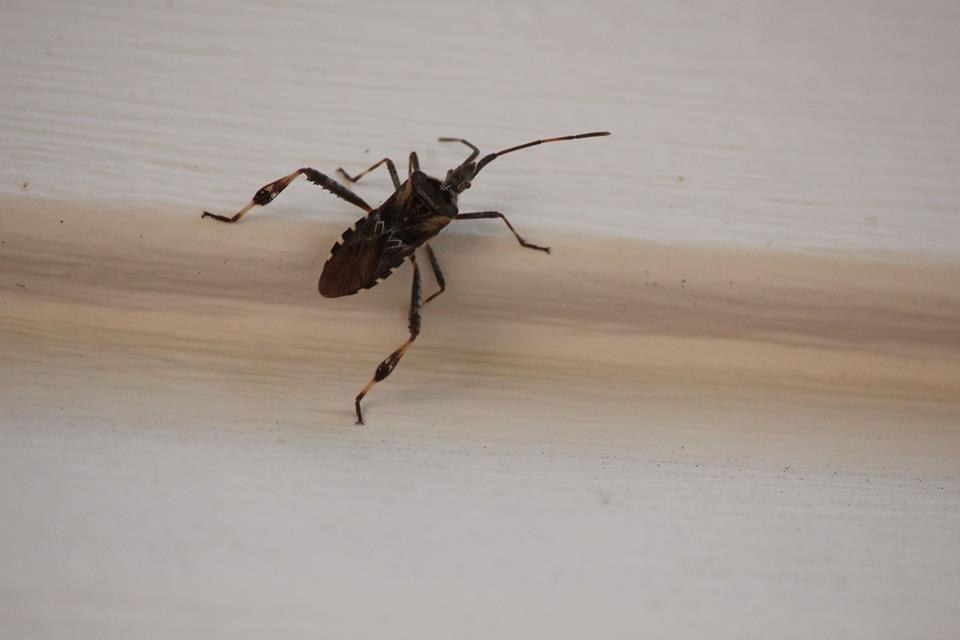
Key Visual Features
The western conifer seed bug (Leptoglossus occidentalis) is a large leaf-footed bug closely tied to pine and other conifer trees, easily identified by its size and distinctive hind leg shape.
- Size: About 16-20 mm (roughly 5/8 to 3/4 inch) long, one of the larger leaf-footed bugs
- Color: Mottled brown to reddish-brown with darker and lighter patches
- Body shape: Elongated oval, narrower at the head end and broader through the midsection
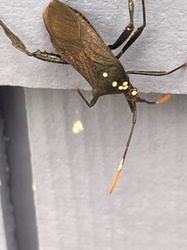
- Wings: Leathery forewing bases with clear membranous tips, folded flat; a pale, zigzag or W-shaped stripe often crosses the middle of the back where the wings meet
- Legs: Hind legs feature a noticeably flattened, leaf-shaped expansion on the tibia, while front and middle legs remain slender
- Antennae: Four-segmented, moderately long, brownish
- Markings: Alternating light and dark bands are often visible along the exposed edges of the abdomen beyond the folded wings
Where and When You'd See It
This species is strongly associated with conifer trees such as pine, where it feeds on developing seed cones. It is active outdoors from spring through fall in coniferous forests, woodlands, and areas with ornamental conifer plantings. As temperatures drop in autumn, adults commonly seek sheltered spaces such as tree bark crevices, woodpiles, and building exteriors to pass the colder months, sometimes appearing indoors in cooler weather before returning outdoors in spring.
Similar-Looking Bugs
- Other leaf-footed bugs (Coreidae): Share the general leaf-shaped hind leg trait, but the western conifer seed bug tends to be larger and more strongly linked to conifer habitats specifically.
- Assassin bugs: Narrower head and body with a curved beak, lacking the flared hind leg segment.
- Stink bugs: Broader, shield-shaped outline rather than the elongated form typical of this species.
- Squash bugs: Similar brownish coloring and size but with straighter, non-flared hind legs and a stronger association with vine crops rather than conifers.
The combination of large size, mottled brown coloring, a pale zigzag stripe across the back, and flattened hind legs, together with a habitat centered on conifer trees, makes this species fairly distinctive among leaf-footed bugs.
Quick ID Checklist
- Large leaf-footed bug, 16-20 mm long, mottled brown coloring
- Flattened, leaf-shaped expansion on the hind legs
- Pale zigzag or W-shaped stripe across the back
- Found on and around conifer trees, especially pines
- Seeks sheltered crevices or structures in cooler months
Frequently asked questions
How can I tell a western conifer seed bug from other leaf-footed bugs?
Its larger size, mottled brown coloring, and strong association with conifer trees, especially pines, help distinguish it from other leaf-footed bug species with similar leaf-shaped hind legs.
What is the size of a western conifer seed bug?
Adults are relatively large for a leaf-footed bug, typically measuring 16-20 mm, about 5/8 to 3/4 inch long.
What plants are western conifer seed bugs associated with?
They are closely tied to conifer trees such as pines, where they feed on developing seed cones.
Why might I see a western conifer seed bug near buildings in fall?
As cooler weather approaches, adults look for sheltered spots such as bark crevices or building exteriors to spend the colder months before becoming active outdoors again in spring.
Western Conifer Seed Bug identified by the community
Recent Western Conifer Seed Bug finds identified with Bug Identifier.