Carpenter Bee Identification Guide
Learn how to tell a carpenter bee apart from a bumble bee by its shiny, hairless abdomen and habit of drilling into wood.
Read the full Carpenter Bee encyclopedia entry →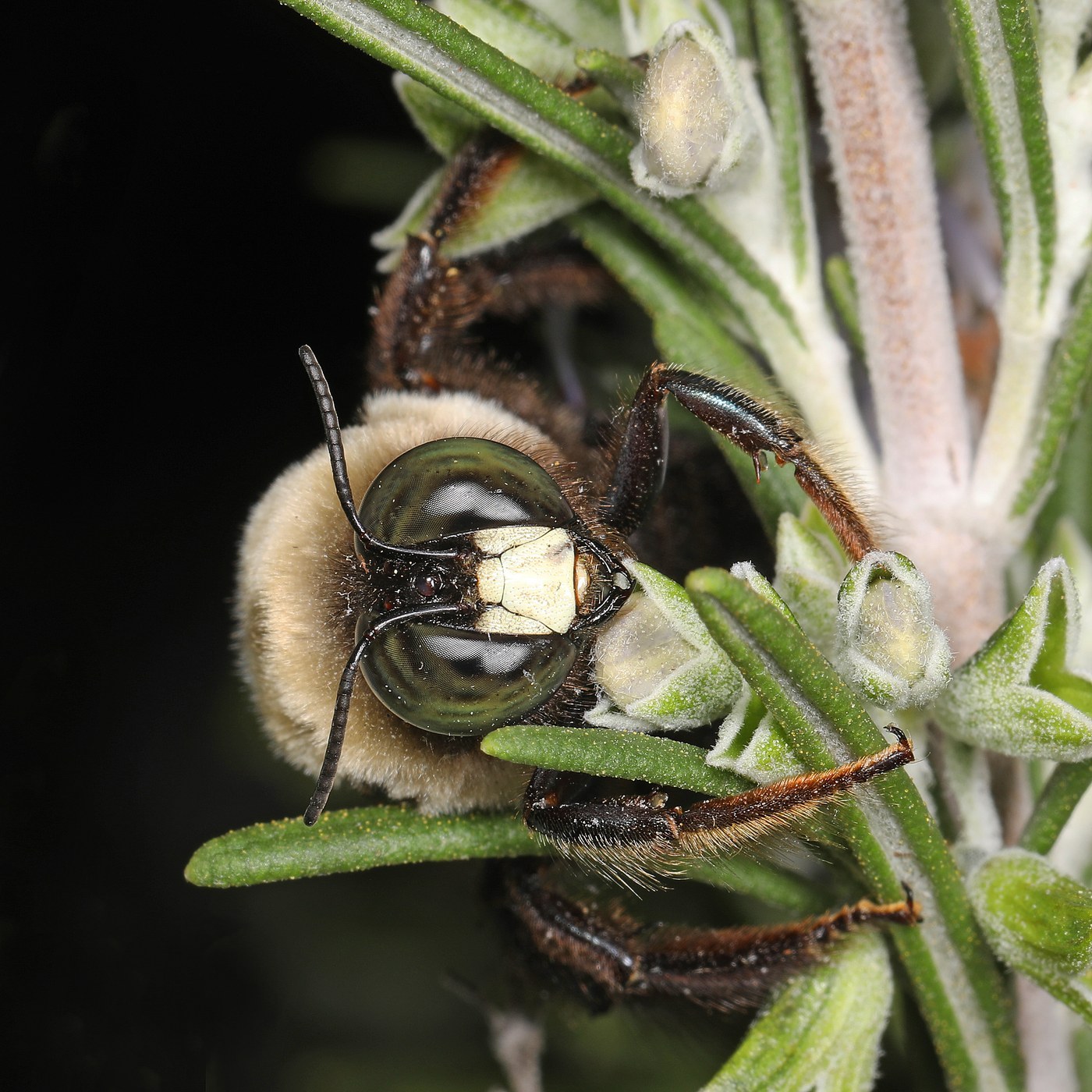
Key Visual Features
Carpenter bees are large, robust bees that are often mistaken for bumble bees at first glance.
- Size: Roughly 0.75-1 inch (19-25 mm) long, among the largest bees in most regions.
- Body shape: Thick, rounded body with a broad thorax.
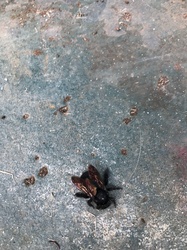
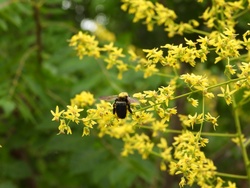
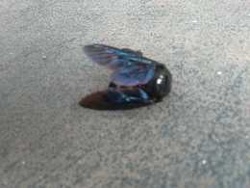
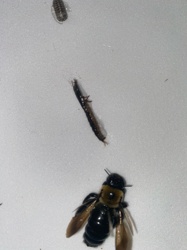
- Coloring: The thorax is covered in dense yellow, black, or white hairs, but the abdomen is smooth, shiny, and black with almost no hair — this is the single best clue that separates it from a bumble bee, whose abdomen is fuzzy all over.
- Wings: Dark, smoky-tinted wings that appear almost black or metallic blue-purple in certain light.
- Legs and antennae: Legs are black and relatively stout; antennae are short, dark, and elbowed.
- Males vs. females: Males often have a pale yellow or white patch on the face, while females have an all-black face.
Where and When You'll See It
Carpenter bees are named for their habit of excavating tunnels in bare, unpainted, or weathered wood such as eaves, decks, fence posts, and dead tree limbs. They are solitary, though several females may nest near one another. Look for perfectly round entrance holes about the diameter of a pencil, often with a pile of fine sawdust beneath them. Adults are most active on warm, sunny days from spring through late summer, visiting flowers for nectar and pollen. Males are frequently seen hovering territorially near nest sites, darting at anything that passes by.
Similar-Looking Bugs
- Bumble bee: Has a fully hairy, rounded abdomen (no shiny bare patch) and tends to nest in the ground or in cavities rather than drilling wood.
- Digger bee / mining bee: Smaller overall, with a hairier abdomen and ground-nesting habits rather than wood-boring.
- Robber fly mimics: Some flies mimic bee coloring but have only one pair of wings and large, forward-facing eyes instead of a bee's compound eyes set to the sides.
Quick ID Checklist
- Large, chunky bee about an inch long
- Fuzzy thorax paired with a bare, glossy black abdomen
- Dark, smoky wings
- Round, smooth-drilled holes in bare wood nearby
- Male hovers and patrols near the nest entrance
Frequently asked questions
How can I tell a carpenter bee from a bumble bee?
Look at the abdomen: a carpenter bee's abdomen is smooth, shiny, and mostly bald, while a bumble bee's abdomen is covered in hair from top to bottom.
What kind of holes do carpenter bees make?
They excavate nearly perfectly round holes about pencil-width in bare or weathered wood, often with fine sawdust scattered just below the entrance.
Are the bees hovering near a hole in wood male or female?
The bees that hover and patrol near a nest entrance are typically males; they lack a stinger and are simply guarding the territory.
What time of year are carpenter bees active?
They are most visible from spring through late summer, especially on warm, sunny days when they visit flowers and work on nest tunnels.
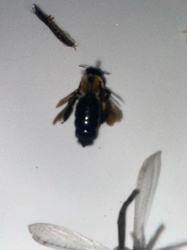
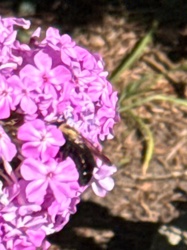
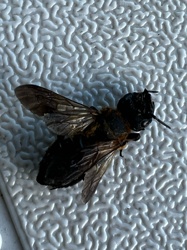
Carpenter Bee identified by the community
Recent Carpenter Bee finds identified with Bug Identifier.