Cellar Spider Identification Guide
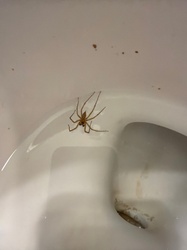
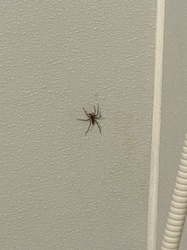
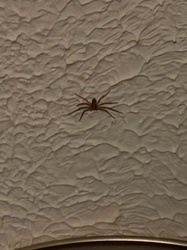
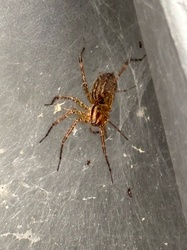
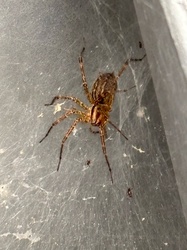
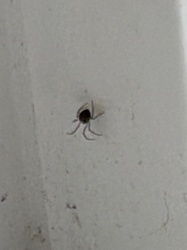
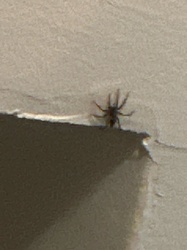
Identify a cellar spider by its extremely long thin legs, small pale body, and loosely tangled web in dark corners.
Read the full Cellar Spider encyclopedia entry →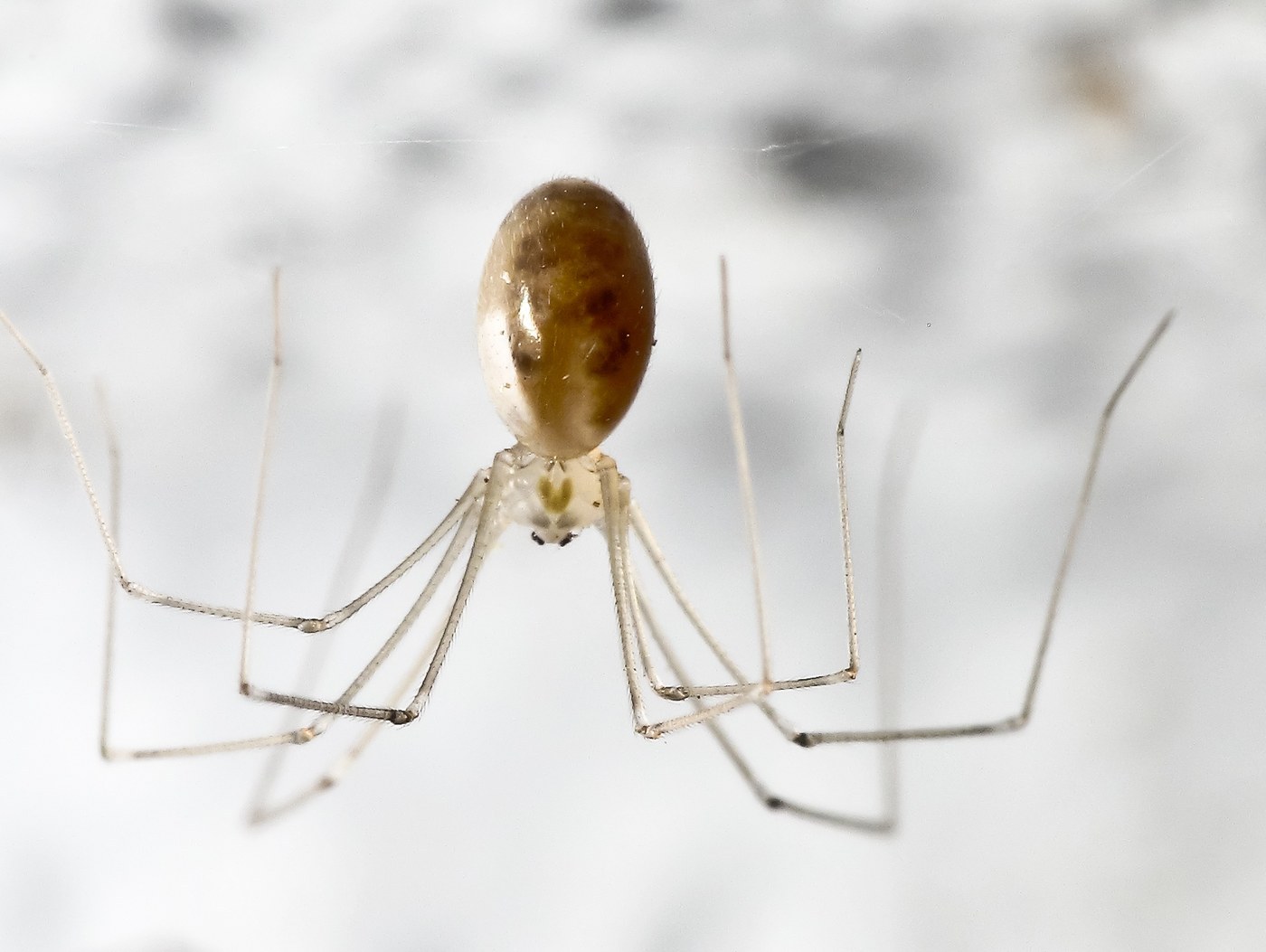
Key Visual Features
Cellar spiders, sometimes called "daddy longlegs spiders," are known for their extremely long, delicate legs relative to their small body.
- Size: The body itself is small, roughly 2-10mm, while the legs can extend several times that length, giving an overall leg span that looks much larger.
- Color: Pale tan, gray, or light brown, often somewhat translucent in appearance.
- Body shape: Small, elongated, oval abdomen with a narrow front section (cephalothorax), giving a delicate, spindly overall look.
- Legs: Extremely long and thin compared to the body, a defining feature that separates it at a glance from most other household spiders.
- Eyes: Small clusters of eyes on the front of the cephalothorax, though not usually a prominent identifying feature given the spider's small size.
- Web: Builds a loose, irregular, tangled web rather than a neat orb shape.
Where and When You'll See It
Cellar spiders favor dark, undisturbed, and often damp locations such as basements, cellars, garages, crawl spaces, and corners of ceilings. They construct messy, irregular webs in these quiet spots and tend to remain in the same web for extended periods. They can be found indoors year-round, and when disturbed, they often respond by rapidly vibrating their whole body and web, a behavior sometimes called "whirling," which can make them harder to see clearly.
Similar-Looking Bugs
- Harvestmen (true daddy longlegs): Not spiders at all; harvestmen have a single fused, oval body segment with no distinct waist and do not spin webs, unlike the cellar spider's two-part body and web-building habit.
- American house spider: Has a much rounder, bulkier abdomen and comparatively shorter legs, along with a more compact tangle-style web.
- Other web-building spiders: Most build neater, more structured webs, while the cellar spider's web is notably loose and irregular.
Quick ID Checklist
- Small pale body, 2-10mm, with extremely long thin legs
- Loose, irregular, tangled web rather than a neat orb
- Found in dark, undisturbed spots like basements and cellars
- Rapid body-vibrating "whirling" behavior when disturbed
- Two distinct body segments, unlike the single fused body of a harvestman
Frequently asked questions
Is a cellar spider the same as a daddy longlegs?
The name is often used loosely, but true daddy longlegs (harvestmen) are a different group entirely with a single fused body segment and no web, while cellar spiders are true spiders with a two-part body that build loose, tangled webs.
Why does a cellar spider vibrate rapidly when I approach its web?
This fast whirling motion is a natural startle response some cellar spiders use when disturbed, which can make the spider appear blurry and harder to pinpoint.
Where in a home are cellar spiders most likely to be found?
They favor dark, quiet, often damp areas such as basements, cellars, garages, and corners of ceilings, where they build loose, irregular webs and tend to stay put for long periods.
How can I tell a cellar spider from an American house spider?
Cellar spiders have a much smaller, more delicate body with proportionally very long, thin legs, while American house spiders have a rounder, bulkier abdomen and comparatively shorter legs.
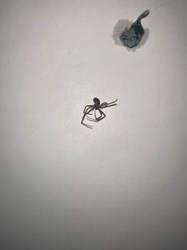
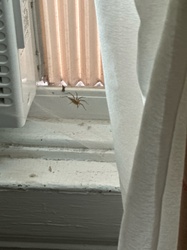
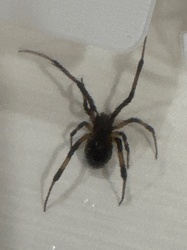
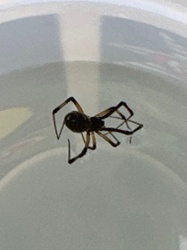
Cellar Spider identified by the community
Recent Cellar Spider finds identified with Bug Identifier.