Flea Identification Guide
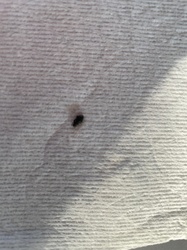
Identify a flea by its tiny, laterally flattened body, dark reddish-brown color, and powerful jumping hind legs.
Read the full Flea encyclopedia entry →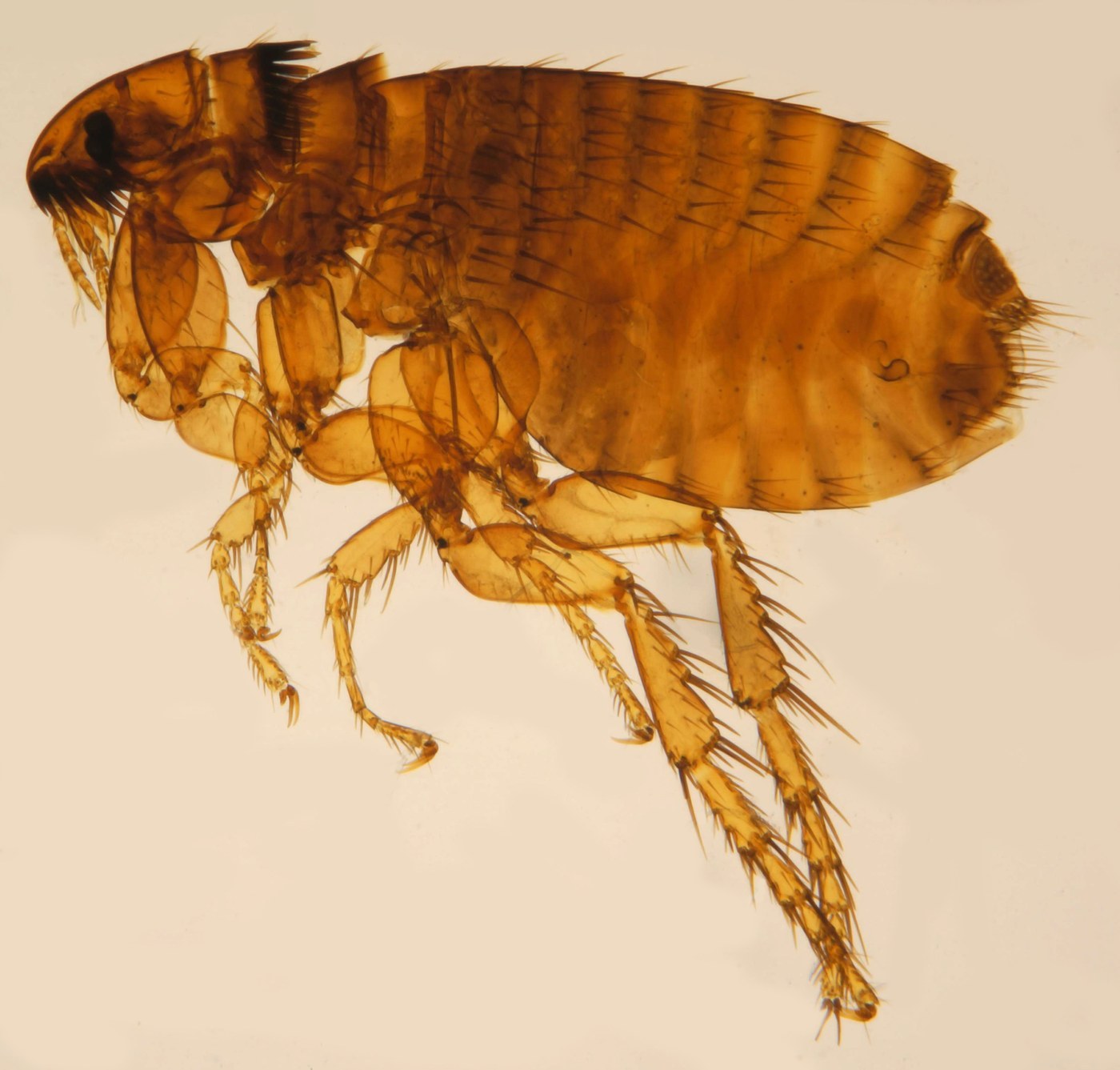
Key Visual Features
Fleas are tiny wingless insects with a body built for squeezing through fur and jumping long distances.
- Size: Very small, typically about 1/16 to 1/8 inch (roughly 1.5–4 mm) long.
- Body shape: Flattened side-to-side (laterally compressed), which is a key difference from lice and gives fleas a narrow, wedge-like profile when viewed head-on.
- Color: Reddish-brown to dark brown, with a hard, shiny exoskeleton.
- Legs: Six legs total, with the hind pair notably long and muscular, adapted for powerful jumping.
- Other features: Covered in backward-pointing bristles and spines that help them move through hair or fur in one direction, and they have no wings at any life stage.
- Head shape: Small, rounded head set low against the thorax, with short, clubbed antennae that fold into grooves on the sides of the head.
Where and When You'll See Them
Fleas are most often spotted on the fur of animals, in pet bedding, along baseboards, and in carpeted areas where pets rest. Outdoors, they can be found in shaded, humid spots where animals frequently pass through, such as under porches or in yard debris. They can be present indoors year-round in heated homes, while outdoor populations tend to be most active in warm, humid months.
Similar-Looking Bugs
- Small dark beetles: Some tiny beetles are similarly sized and colored, but they are flattened top-to-bottom rather than side-to-side and typically have visible wing covers.
- Lice: Also small and wingless, but lice are flattened dorsoventrally (top-to-bottom), move more slowly, and lack the flea's jumping hind legs.
- Springtails: Similar in size but jump using a spring-like tail structure rather than long legs, and have a softer, less shiny body.
- Ants: Some very small ants can be mistaken for fleas at a glance, but ants have a distinctly segmented, narrow-waisted body and typically move by walking rather than jumping.
Quick ID Checklist
- Tiny, under 1/8 inch long
- Body flattened side-to-side, giving a narrow profile
- Reddish-brown, shiny, hard exoskeleton
- No wings at any stage
- Long, powerful hind legs used for jumping
Frequently asked questions
How can I tell a flea from a small beetle?
Look at the body from the front or back—fleas are flattened side-to-side (narrow when viewed head-on), while beetles are flattened top-to-bottom and usually have visible hardened wing covers.
Do fleas have wings?
No, fleas are wingless at every life stage; they rely entirely on their strong hind legs to jump rather than fly.
What makes a flea's body shape unique?
Its laterally flattened, narrow shape lets it move efficiently between hairs on a host's body, something a top-to-bottom flattened insect like a louse cannot do as easily.
Where are fleas most commonly spotted?
On animal fur, in pet bedding, carpets, and shaded areas of yards where animals rest, especially during warm, humid periods.
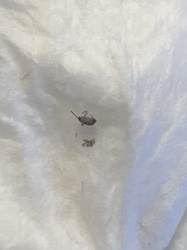
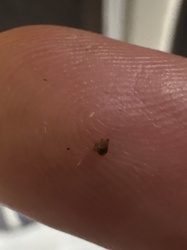
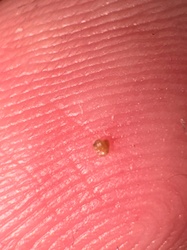
Flea identified by the community
Recent Flea finds identified with Bug Identifier.