Crane Fly Identification Guide
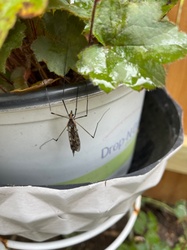
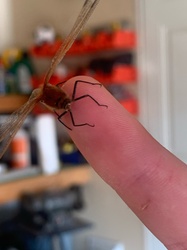
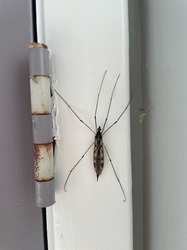
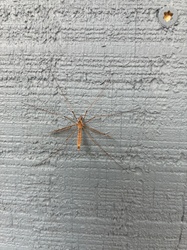
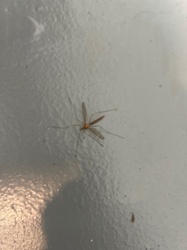
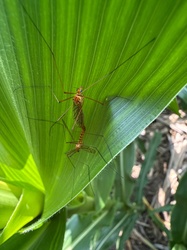
Identify a crane fly by its long, dangling legs, slender body, and mosquito-like appearance without the bite.
Read the full Crane Fly encyclopedia entry →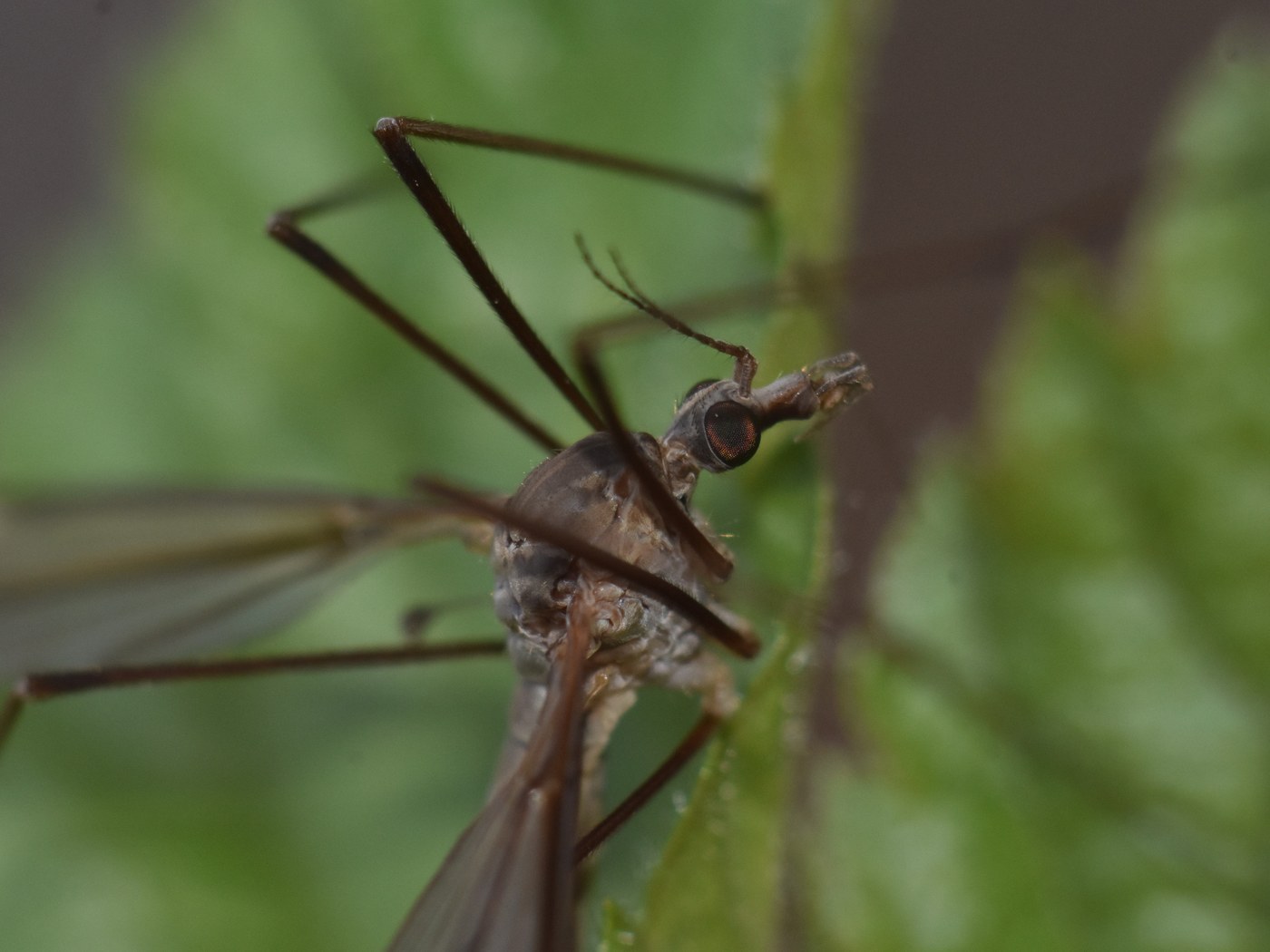
Key Visual Features
Crane flies are often mistaken for oversized mosquitoes, but a closer look reveals distinct features.
- Size: Body length typically 1.2 to 2.5 cm (about 0.5 to 1 inch), with a leg span that can be considerably wider.
- Body shape: Slender, elongated body with a narrow thorax and abdomen.
- Legs: Extremely long, thin, and fragile-looking legs that dangle loosely and detach easily if grabbed.
- Wings: One pair of long, narrow, translucent wings held out to the sides at rest, plus a pair of small knob-like halteres (balance organs) behind the wings, typical of true flies.
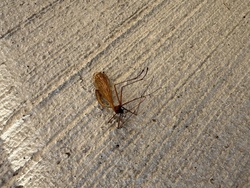
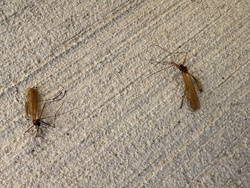
- Color: Usually tan, brown, or gray, sometimes with darker wing veining or faint patterning.
- Head: Small head with a short, blunt snout-like projection — much shorter and thicker than a mosquito's piercing mouthparts.
Where and When You'd See One
Crane flies are common around moist environments and are frequently seen indoors as accidental visitors.
- Damp grassy areas, gardens, meadows, and near ponds or streams
- Attracted to lights at night and often found resting on walls, screens, or ceilings indoors
- Most abundant in late summer and fall in many regions, though timing varies by species and climate
- Larvae ("leatherjackets") develop in moist soil or decaying vegetation, separate from the winged adult stage
Similar-Looking Bugs
- Mosquitoes are much smaller, with a distinct piercing proboscis and scaled wings, unlike the blunt head and clear wings of a crane fly.
- Mayflies have short-lived, upright wings and long tail filaments extending from the abdomen, which crane flies lack.
- Wasps and hornets have a narrow waist and two pairs of wings, whereas crane flies have only one pair of true wings plus tiny halteres.
- Daddy long-legs spiders are arachnids with eight legs and no wings, easily separated from the winged, six-legged crane fly.
Quick ID Checklist
- Very long, thin, easily detachable legs
- Slender body with one pair of narrow wings
- Small knob-like halteres behind the wings
- Short, blunt head without a piercing mouthpart
- Found near damp areas or resting indoors near lights
Frequently asked questions
How can I tell a crane fly from a giant mosquito?
Crane flies have a short, blunt head without a piercing mouthpart, while mosquitoes have a distinct thin proboscis; crane flies are also generally larger with longer, more fragile legs.
Why do crane fly legs fall off so easily?
Their legs are thin and fragile, and they can detach as a defensive response when grabbed or restrained, similar to how some other arthropods shed limbs.
Do crane flies have two pairs of wings?
No, they have one pair of true wings and a second pair reduced to small, knob-like halteres used for balance during flight, a trait shared with all true flies.
Where do crane fly larvae live?
The larval stage, sometimes called a leatherjacket, develops in moist soil or decaying vegetation, quite different in appearance from the winged adult.
Crane Fly identified by the community
Recent Crane Fly finds identified with Bug Identifier.