Earwig Identification Guide
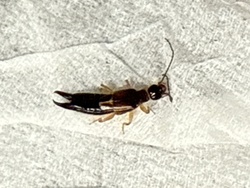
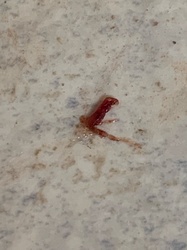
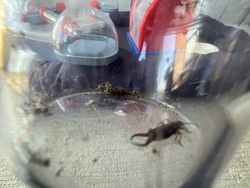
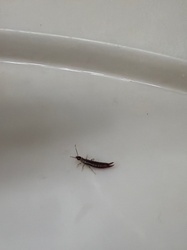
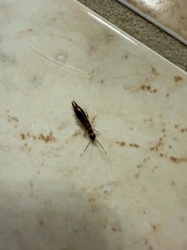
Recognize an earwig by its slender, reddish-brown body and the pair of pincer-like appendages (cerci) at its rear.
Read the full Earwig encyclopedia entry →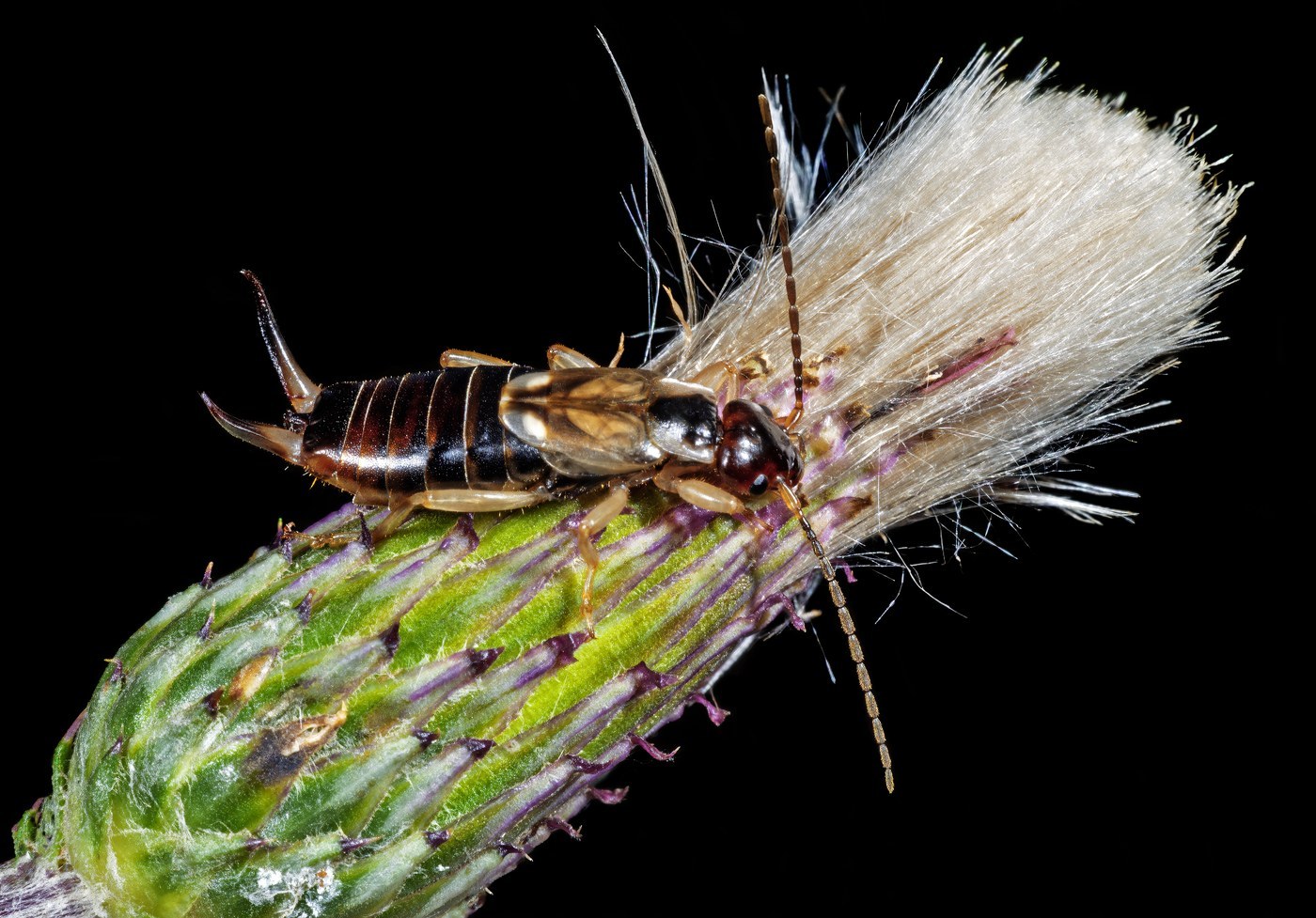
Key Visual Features
Earwigs are elongated, fast-moving insects best known for the pincer-like structures at the tip of their abdomen.
- Size: About 1/2 to 1 inch (13–25 mm) long, depending on species.
- Color: Reddish-brown to dark brown, often with lighter brown or yellowish legs.
- Body shape: Slender, flattened, and elongated, allowing easy movement into tight cracks and crevices.
- Pincers (cerci): A pair of forceps-like appendages at the rear of the abdomen — curved and more pronounced in males, straighter and less curved in females. This is the single most recognizable identifying feature.
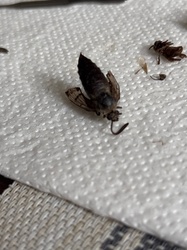
- Wings: Some species have short, leathery forewings covering a small portion of the back, with the hind wings (when present) folded beneath in a fan pattern; many individuals appear wingless or rarely fly.
- Antennae: Thin, segmented, and roughly half the length of the body.
- Legs: Six legs built for quick scurrying rather than jumping.
Where and When You'll See Them
Earwigs are most active at night and spend daylight hours hidden in cool, moist, dark places such as under mulch, stones, bark, leaf litter, or in cracks around building foundations. They are commonly found in gardens and can turn up indoors, especially in bathrooms or basements, when seeking shelter. Activity is highest in warm, humid months, with populations often peaking in late spring through summer.
Similar-Looking Insects
- Silverfish: Similar elongated shape but have three long, thin tail bristles instead of pincers, and a scaly silver appearance.
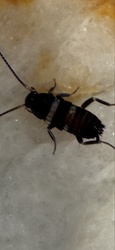
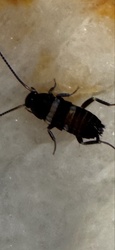
- Rove beetles: Can have a similarly slender dark body but lack pincers at the rear and instead have short wing covers exposing a flexible abdomen.
- Ground beetles: Generally broader and more oval, without the distinctive rear forceps of an earwig.
Quick ID Checklist
- Slender, reddish-brown body about 1/2–1 inch long
- Pincer-like cerci at the rear (curved in males, straighter in females)
- Thin, segmented antennae about half the body length
- Often appears wingless or has only short forewings
- Nocturnal; found under mulch, bark, or in damp, dark crevices
Frequently asked questions
What is the pincer at the back of an earwig used for?
The forceps-like cerci are used primarily in defense displays and interactions with other earwigs, and their shape — curved versus straighter — is also a simple way to distinguish males from females.
Do all earwigs have wings?
Some species have short forewings with hind wings folded beneath, but many earwigs are rarely seen flying and are more often observed running or hiding in crevices.
How can I tell a male earwig from a female?
Males typically have noticeably curved pincers, while females have straighter, less curved pincers, making the cerci shape a quick way to tell the sexes apart.
Where do earwigs hide during the day?
They favor dark, moist, tight spaces such as under mulch, stones, loose bark, or leaf litter, emerging mainly at night when they are most active.
Earwig identified by the community
Recent Earwig finds identified with Bug Identifier.