Click Beetle Identification Guide
Learn to recognize this elongated beetle by its signature clicking flip when placed on its back.
Read the full Click Beetle encyclopedia entry →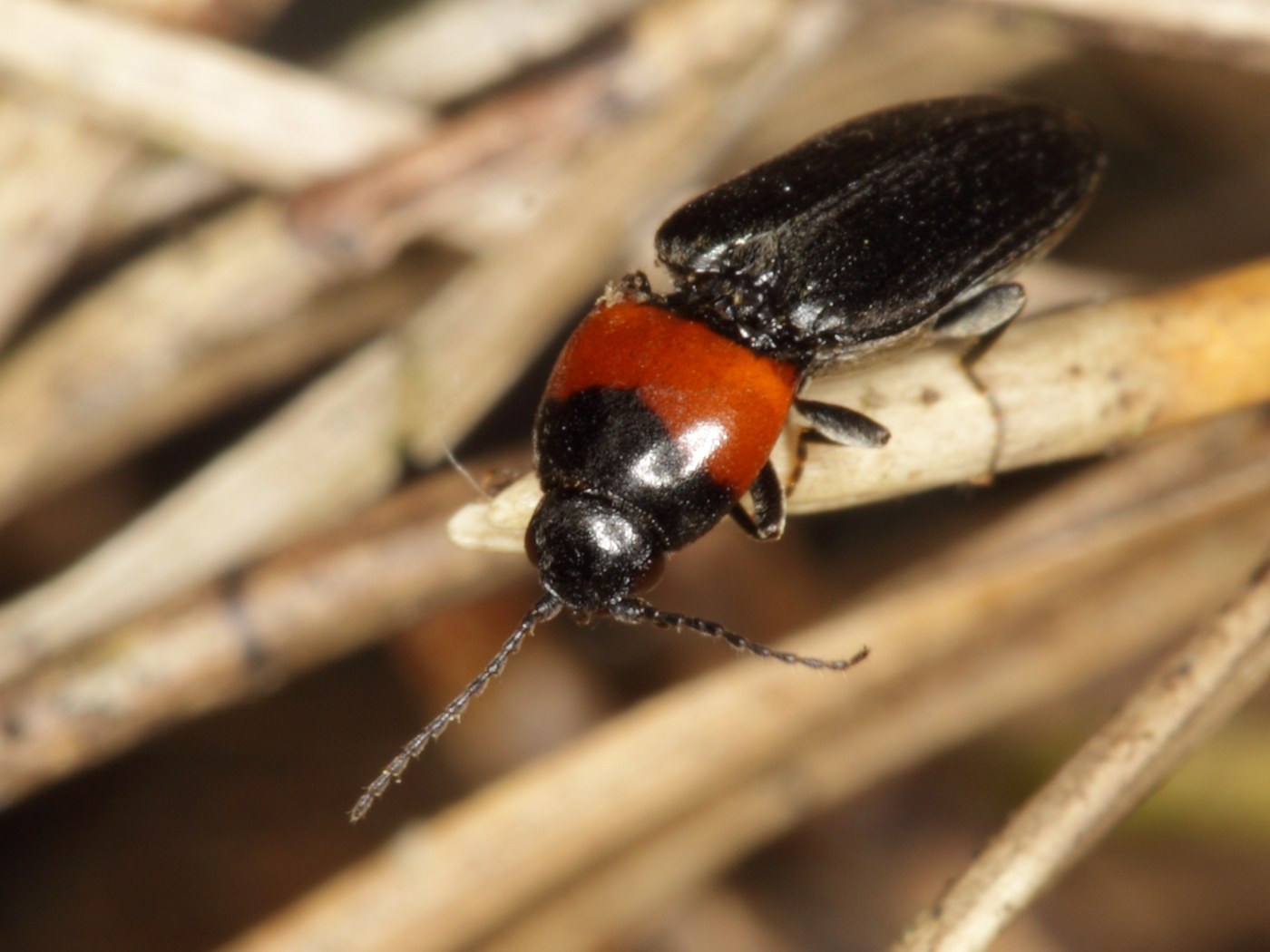
Key Visual Features
Click beetles (family Elateridae) are named for their unusual ability to snap their bodies with an audible click, and this behavior pairs with a few consistent physical traits:
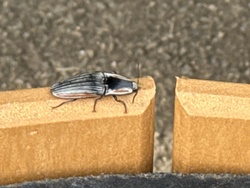
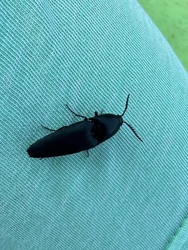
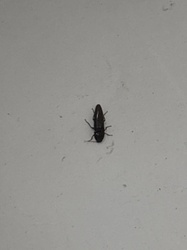
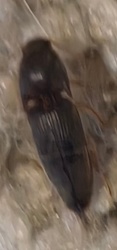
- Elongated, narrow body that tapers slightly at both ends, giving a streamlined, bullet-like outline
- Brown, black, or gray coloring, often somewhat dull or matte, though some species show subtle mottling or a faint sheen
- A distinct spine on the underside of the thorax that fits into a matching groove — this mechanism is what produces the click when the beetle flips itself upright
- Flattened underside, allowing the beetle to lie flat when it falls or is placed on its back
- Short legs and antennae relative to body length, often held close to the body rather than extended
- Size generally ranging from about 1 to 3 cm (0.4–1.2 inches), depending on species
Where and When You'd See It
Click beetles are found in gardens, fields, woodlands, and grassy areas, often resting on plant stems, foliage, or tree bark. They are most active from late spring through summer. Many species are nocturnal and are drawn to outdoor lighting at night, making porch lights and windows common places to encounter them. Their larvae, known as wireworms, live underground in soil and are rarely seen above ground, developing there over one or more years before emerging as adults.
Similar-Looking Bugs
- Ground beetles: similarly elongated and dark-colored, but ground beetles lack the thoracic spine-and-groove mechanism and cannot perform the signature clicking flip
- Longhorn beetles: have noticeably longer antennae, often as long as or longer than the body, compared to the shorter antennae of click beetles
- Darkling beetles: rounder and more uniformly convex in shape, without the tapered, streamlined silhouette or clicking ability of click beetles
Quick ID Checklist
- Elongated, tapered, bullet-shaped body
- Dull brown, black, or gray coloring
- Able to flip from its back to its feet with an audible click
- Short legs and antennae held close to the body
- Found on foliage, bark, or near lights at night in warmer months
Frequently asked questions
How can I confirm an insect is a click beetle?
The clearest test is behavioral: if placed on its back, a click beetle will arch its body and snap a spine-and-groove mechanism on its underside to flip itself upright with an audible click, a trait unique to this family.
What do click beetle larvae look like?
Larvae, called wireworms, are slender, hard-bodied, and yellowish-brown, living underground in soil and looking quite different from the elongated adult beetle.
When are click beetles most commonly seen?
They are most active from late spring through summer, and many species are nocturnal, often attracted to outdoor lights at night.
How is a click beetle different from a longhorn beetle?
Click beetles have relatively short antennae and a tapered, streamlined body with the signature clicking mechanism, while longhorn beetles have very long antennae, often exceeding body length, and cannot perform the clicking flip.
Click Beetle identified by the community
Recent Click Beetle finds identified with Bug Identifier.