
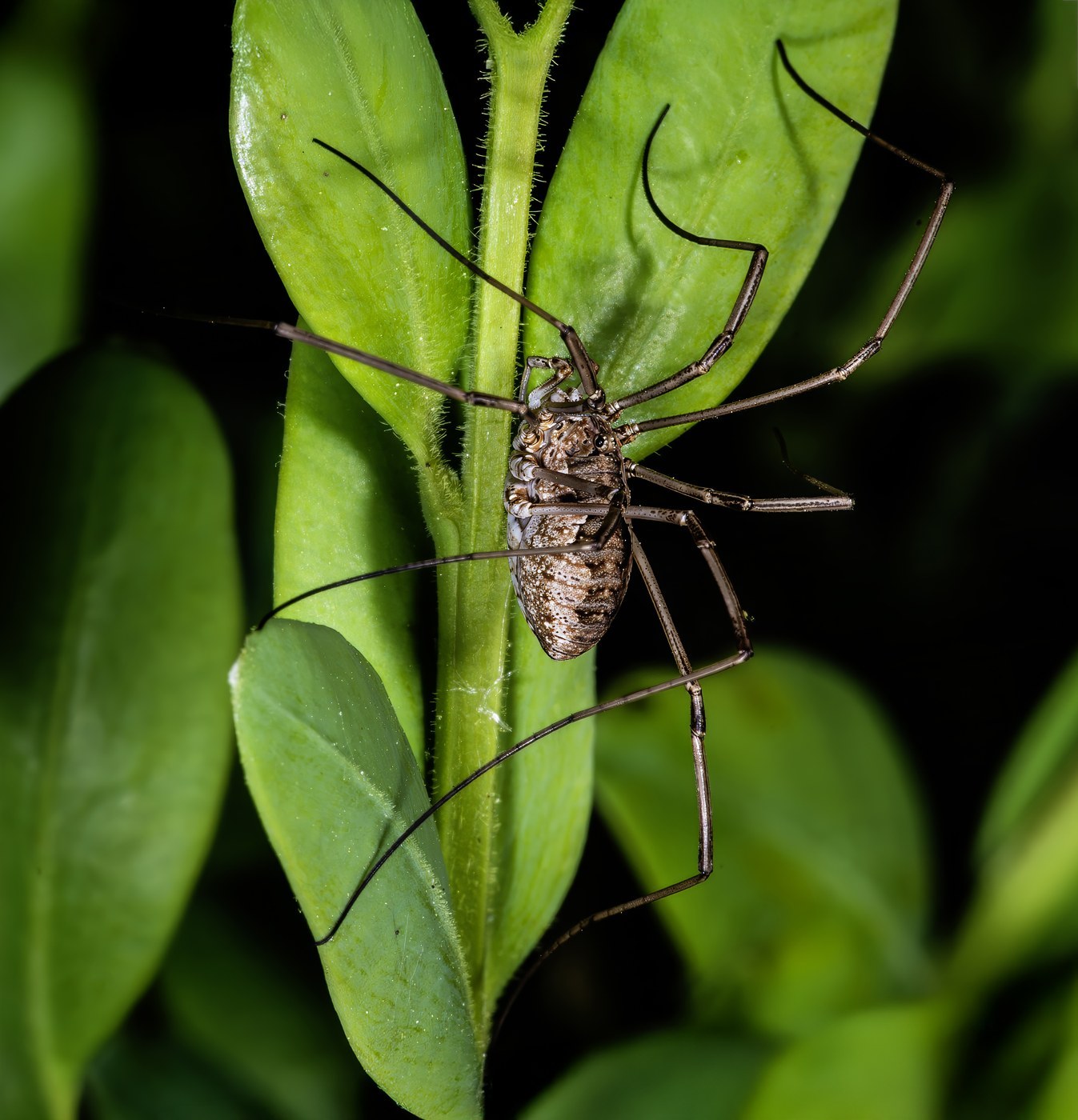
Harvestman
Phalangium opilio
An arachnid built almost entirely of legs, with a single compact, oval body segment and no waist separating it into two parts like a true spider. Common in gardens and forests worldwide, it scuttles along on impossibly long, thin legs scavenging for food after dark.
- Size
- Body 2–10 mm, with legs spanning up to 5–8 cm in some species
- Habitat
- Gardens, forest floors, meadows, and cool, damp corners of buildings worldwide
- Danger
- Harmless
Spotted a bug like this?
Identify any bug or insect from a photo, free.
Overview
Harvestmen, commonly known as daddy longlegs, belong to the arachnid order Opiliones, a group distinct from true spiders despite superficial similarity. Phalangium opilio is one of the most widespread and frequently encountered species across North America, Europe, and beyond, often seen in gardens, meadows, and woodland during the warmer months.
A persistent piece of folklore claims harvestmen are extremely venomous but physically unable to deliver a bite; in reality they have no venom glands and no fangs at all, so the claim has no basis in their actual anatomy.
How to Identify
- Single, fused, oval body segment with no visible narrow waist, unlike true spiders whose body is clearly divided into two parts
- Extremely long, thin legs, often many times the length of the body
- Two simple eyes mounted on a small raised turret (ocularium) in the middle of the back
- No silk-producing spinnerets and no ability to build webs
- No fangs and no venom glands of any kind
- Body color usually brown, tan, or gray, often with mottled patterning
Habitat & Range
Harvestmen are found nearly worldwide except in polar regions, inhabiting gardens, forest floor leaf litter, meadows, and shaded moist areas under logs and rocks. They are also commonly seen on the outside walls of buildings, porches, and basements, especially in cool, damp corners, most active from late spring through fall in temperate climates.
Behavior & Diet
Harvestmen are omnivorous scavengers and opportunistic predators, feeding on small insects, mites, decaying plant matter, fungi, and other organic debris. Unlike spiders, they do not spin webs or inject venom to subdue food. When grabbed by a predator, a harvestman may shed a leg through autotomy to escape, and many species can also release a foul-smelling defensive fluid from scent glands. In their ecosystems they serve a dual role as decomposers and generalist predators of very small invertebrates.
Life Cycle
In temperate regions, females typically lay eggs in soil or leaf litter in autumn, which overwinter and hatch the following spring into nymphs that closely resemble small adults. Harvestmen undergo gradual (incomplete) metamorphosis, with no pupal stage, molting several times as they grow larger through the summer. Most temperate species complete a single generation per year, with adults commonly dying off by the first hard frost.
Frequently asked questions
Is a harvestman the same as a spider?
No. Harvestmen belong to a separate arachnid order, Opiliones, and differ from true spiders in having a single fused body segment, no silk glands, and no venom glands.
Is the myth about harvestmen being extremely venomous true?
No. Harvestmen have no venom glands and no fangs at all, so the popular claim has no basis in their actual anatomy.
What do harvestmen eat?
They are omnivorous scavengers, feeding on small insects, mites, decaying plant and animal matter, and fungi.
How does a harvestman defend itself?
It may shed a leg to escape a predator's grasp and can release a foul-smelling fluid from scent glands as a deterrent.
Harvestman guides
In-depth guides for identifying, understanding, and living alongside Harvestman.
Other bugs you may enjoy
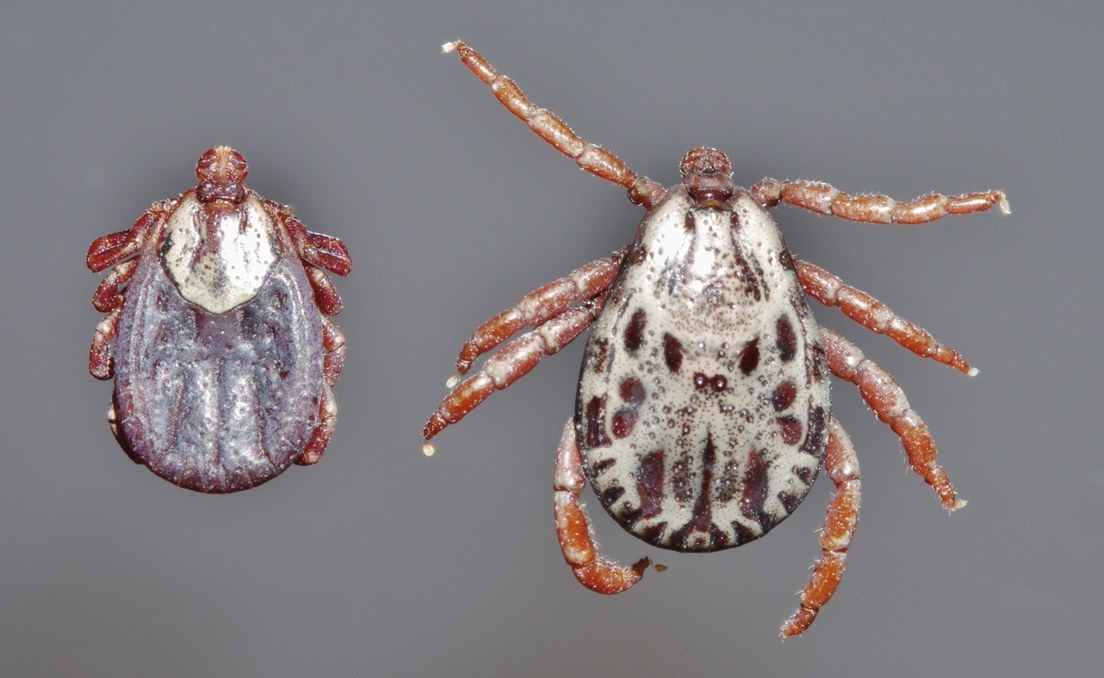
Wood Tick
Grassland, shrub-steppe, and open woodland of western North America
Yellow Scorpion
Arid scrubland, rocky slopes, and desert margins
Whip Spider
Tropical caves, rainforest leaf litter, and under bark
Water Mite
Ponds, lakes, streams, and other freshwater bodies
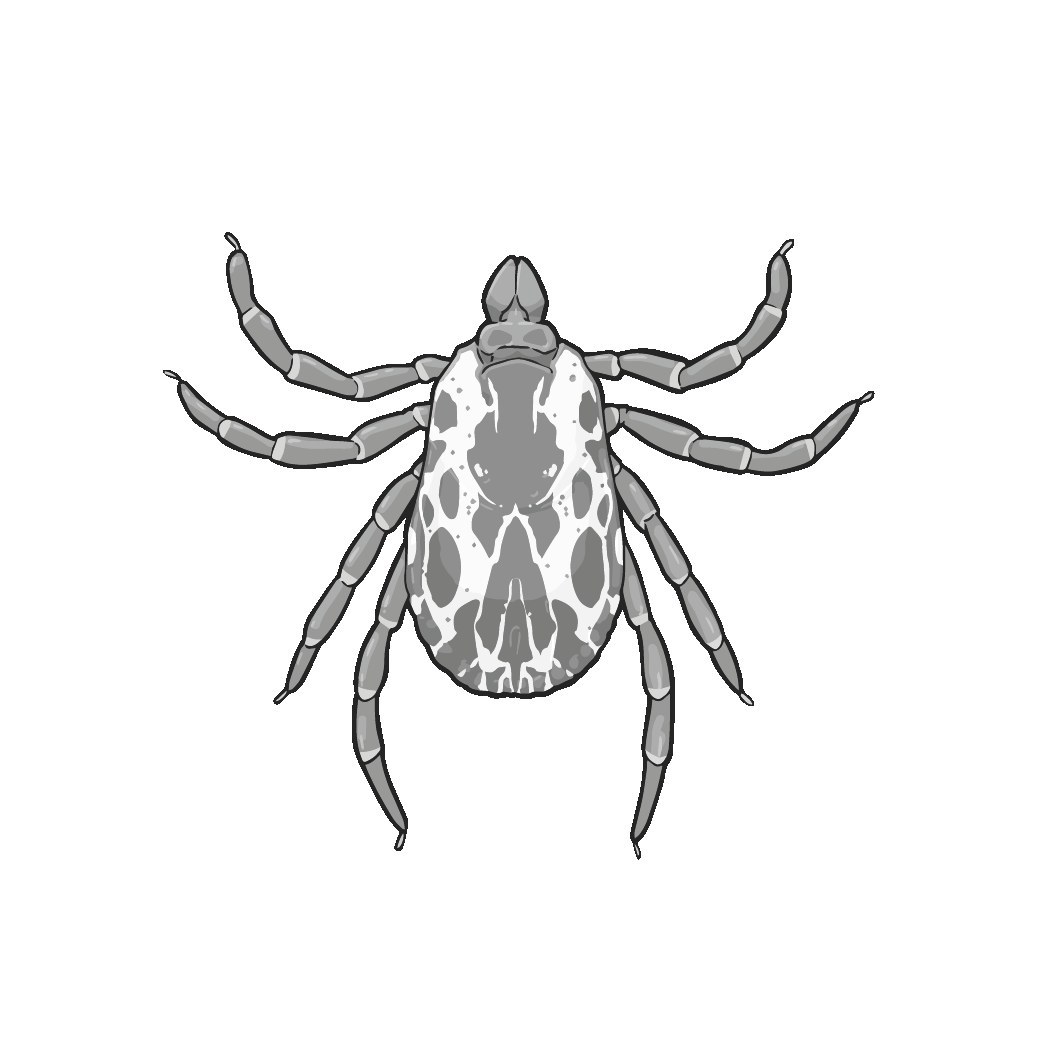
American Dog Tick
Grassy fields, trails, and low vegetation near woodlands
Arizona Bark Scorpion
Rocky desert terrain, tree bark, and structures in the Southwest
Tick
Tall grass, brush, woodland edges, and animal trails
Soil Mite
Soil, leaf litter, moss, and decaying organic matter worldwide
Rocky Mountain Wood Tick
Sagebrush shrublands, grasslands, and montane forest edges
Two-Spotted Spider Mite
Undersides of leaves on garden plants, crops, and houseplants
Spider Mite
Undersides of leaves on garden plants, houseplants, and field and orchard crops worldwide
Whip Scorpion
Tropical and subtropical caves, tree bark, and rock crevices worldwide