
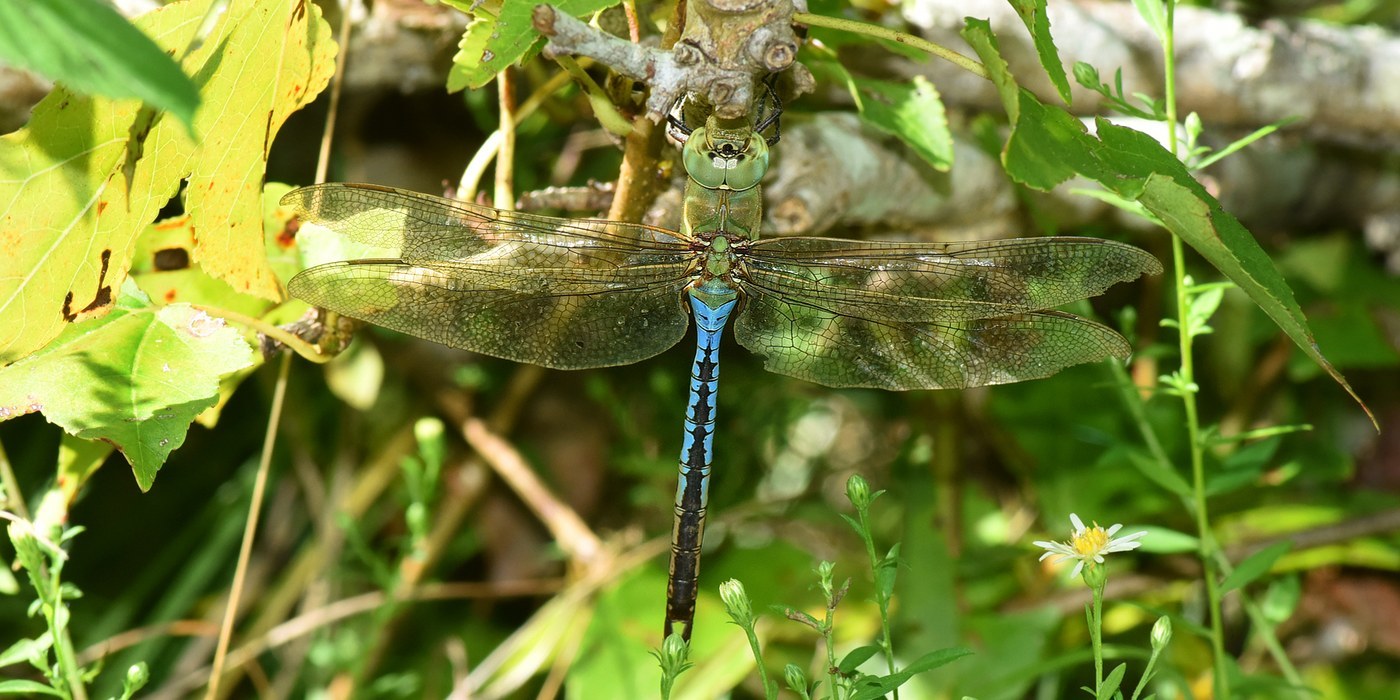
Common Green Darner
Anax junius
A large green-and-blue dragonfly and the official state insect of Washington, best known among dragonfly watchers for an annual migration that spans multiple generations.
- Size
- 7–8 cm (2.8–3.1 in) long, wingspan up to 11 cm
- Habitat
- ponds, lakes, marshes, and slow streams across nearly all of North America
- Danger
- Harmless
Spotted a bug like this?
Identify any bug or insect from a photo, free.
Overview
The common green darner is among the largest and most familiar dragonflies in North America, ranging from southern Canada through the United States into Central America. Its bright green thorax paired with a long, blue-striped abdomen (in males) makes it easy to pick out as it cruises over ponds and open fields.
Researchers have used the common green darner as a model species for studying insect migration, since it is one of the few dragonflies confirmed to complete a genuine multi-generational migratory cycle: individuals that fly south in autumn are not the same ones that return north the following spring, but rather their offspring.
How to Identify
- Large dragonfly, body length 7–8 cm with a wingspan up to about 11 cm
- Bright green thorax in both sexes
- Males have a blue abdomen with a dark dorsal stripe; females and immature individuals tend toward brown or reddish abdomens
- A rounded, target-like mark on top of the face (frons)
- Distinguished from other darners by combining a green thorax with this facial bullseye pattern
Habitat & Range
Common around ponds, lakes, marshes, and slow streams across nearly all of North America, from Canada to Central America, and occasionally observed migrating well offshore or over Pacific islands.
Behavior & Diet
An agile, fast-flying predator that captures mosquitoes, midges, and other small flying insects in mid-air. Males patrol stretches of open water to court females and deter rivals. Populations in different parts of its range show either a migratory life history, flying long distances seasonally, or a resident life history, overwintering as an aquatic nymph in milder climates.
Life Cycle
Eggs are inserted into aquatic plant stems. The predatory aquatic nymphs feed on other invertebrates and occasionally small fish or tadpoles, developing over months to more than a year depending on temperature. After a long series of molts, nymphs crawl out of the water to transform into winged adults; in migratory populations, this new generation makes the return flight north in spring.
Frequently asked questions
Is this the same species as the green darner dragonfly?
Yes, common green darner and green darner dragonfly both refer to Anax junius.
Why is it considered a special study species for migration?
It is one of the few dragonflies confirmed to complete a true multi-generational migration, tracked using techniques such as wing tagging and isotope analysis.
What does it eat?
Adults hunt small flying insects on the wing, while aquatic nymphs prey on other invertebrates and small aquatic animals.
Where can it be found?
Around ponds, lakes, marshes, and slow streams across nearly all of North America.
Common Green Darner guides
In-depth guides for identifying, understanding, and living alongside Common Green Darner.
Other bugs you may enjoy
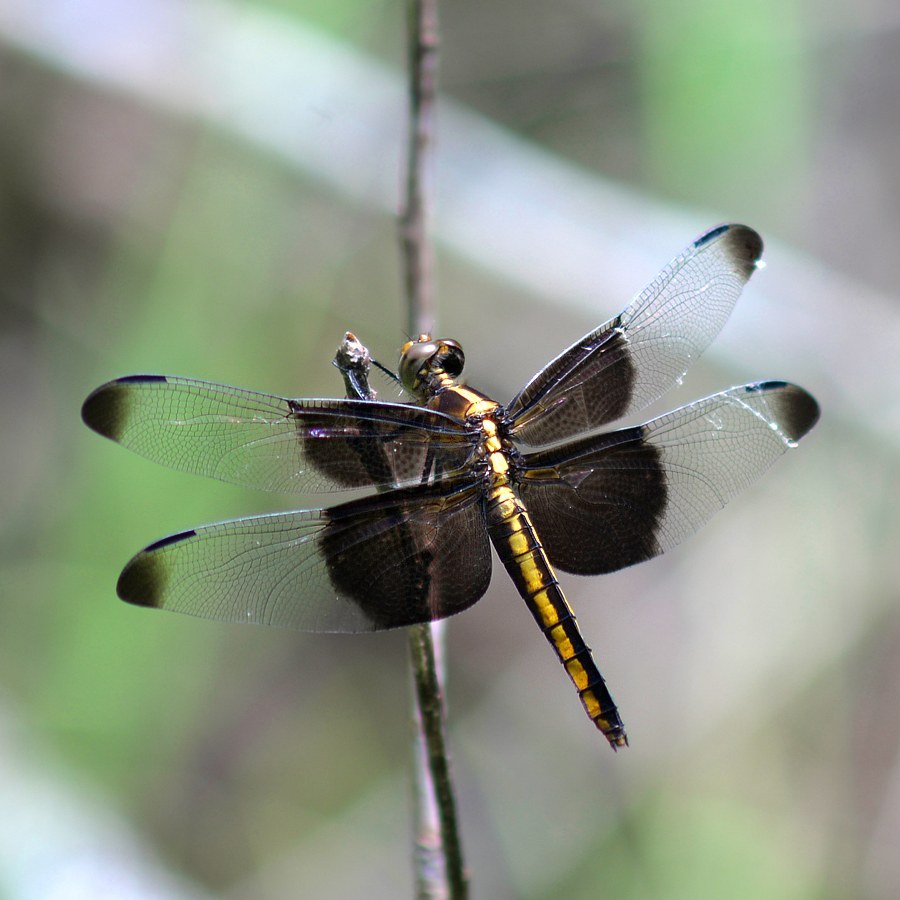
Widow Skimmer
ponds, lakes, and slow-moving streams with open shoreline vegetation across much of the United States
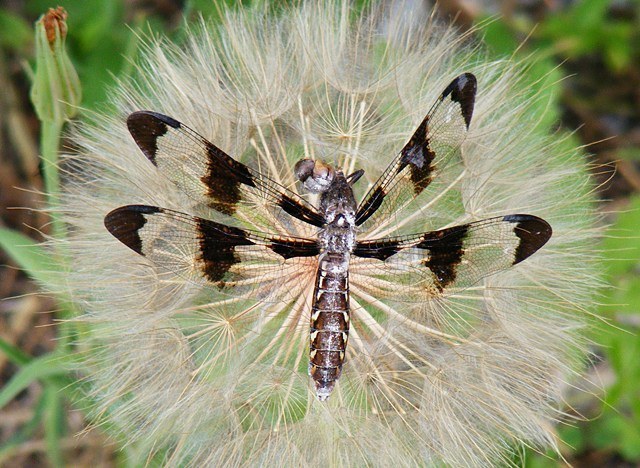
Twelve-spotted Skimmer
Ponds, lakes, and slow streams with open, sunny shorelines
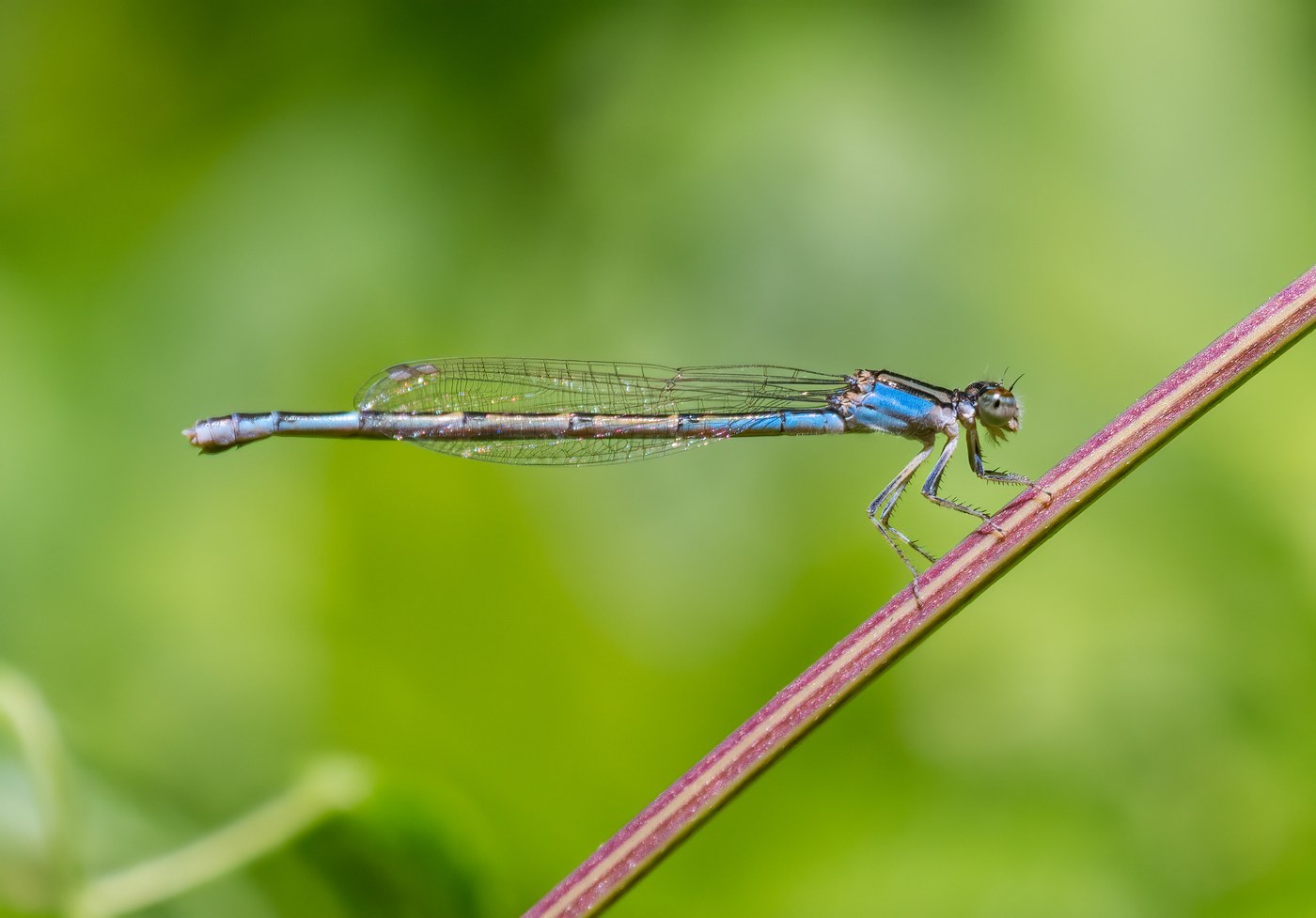
Azure Bluet
ponds, lakes, and slow streams with abundant aquatic vegetation
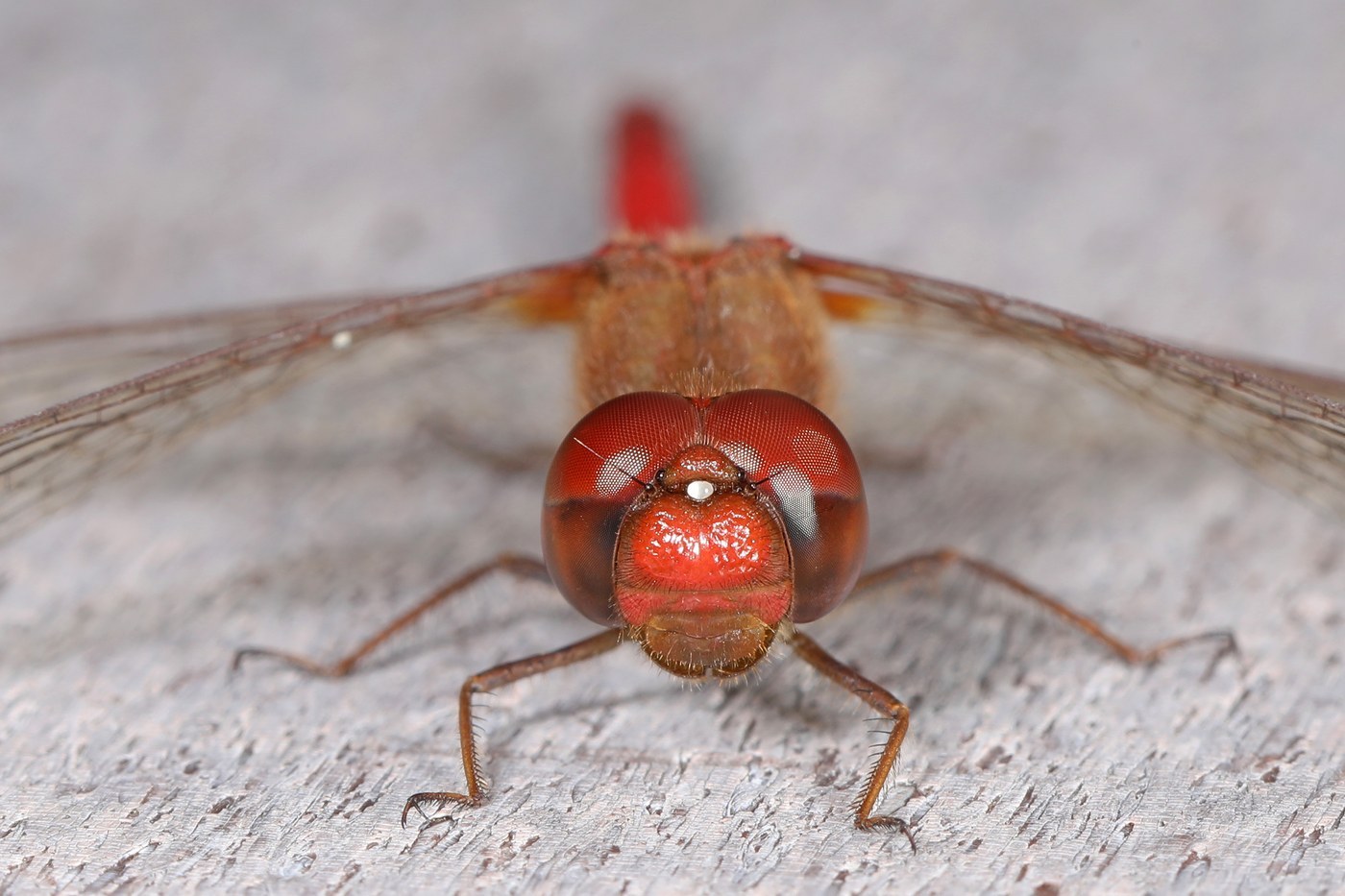
Autumn Meadowhawk
Ponds, marshes, and slow streams, often lingering into late fall
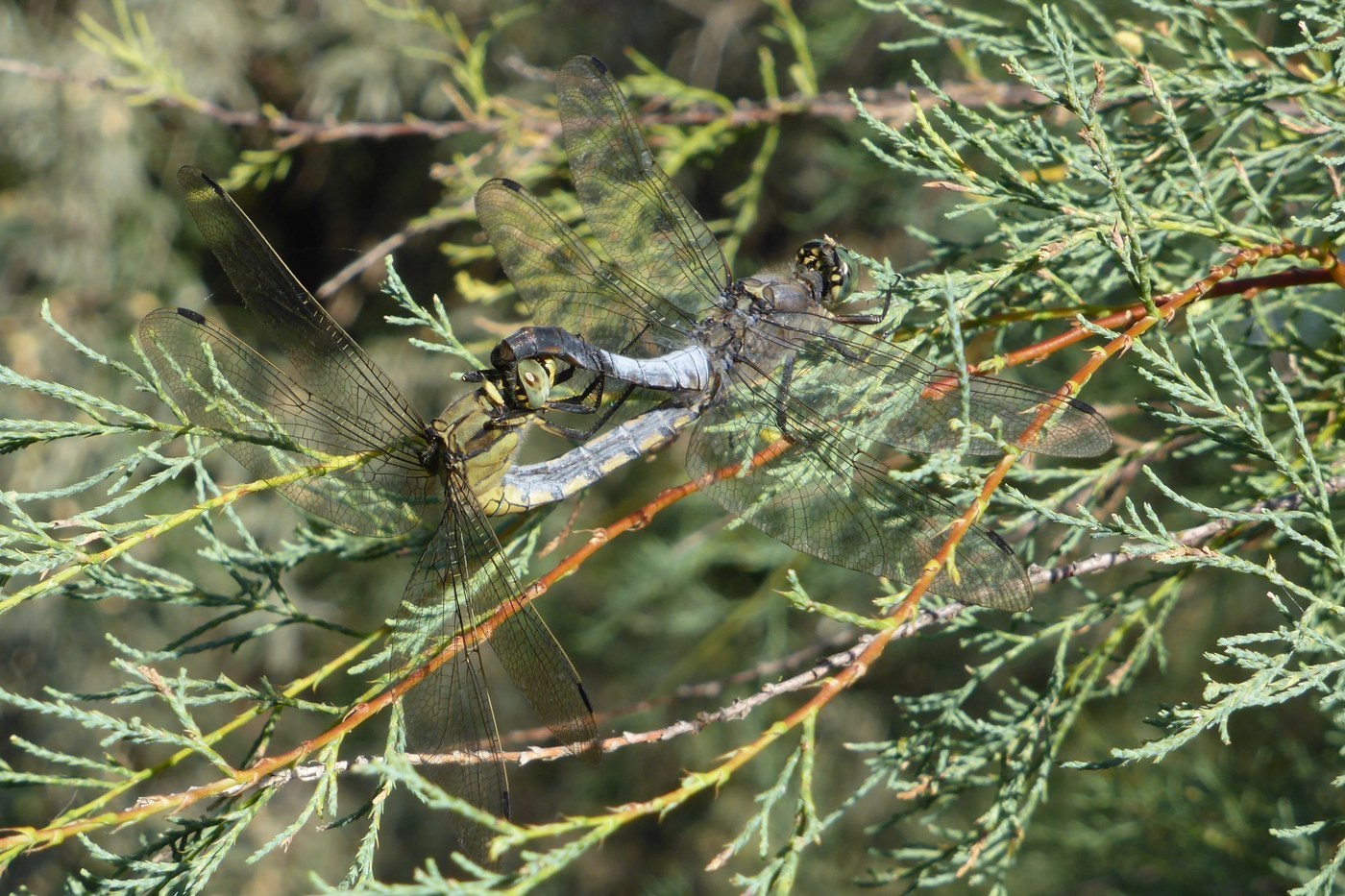
Spangled Skimmer
Ponds, lakes, and marshes with open sunny shorelines
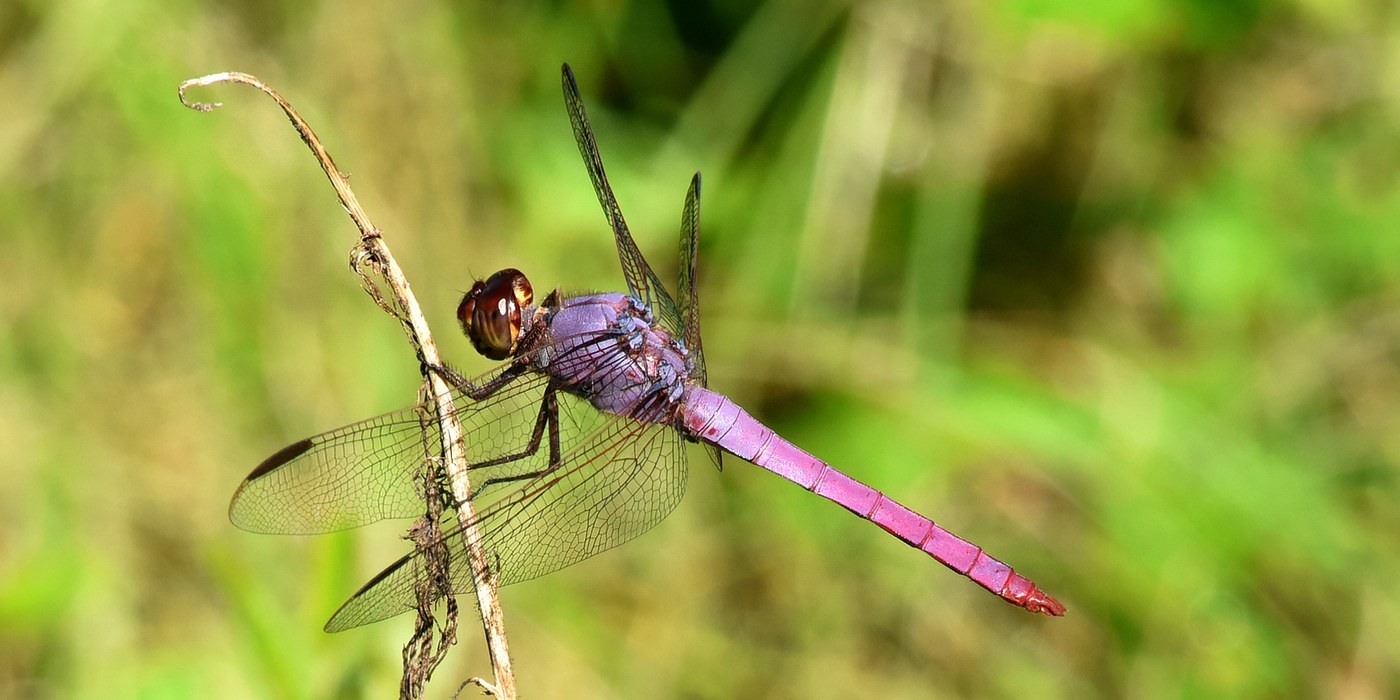
Roseate Skimmer
Ponds, ditches, and canals across the southern United States
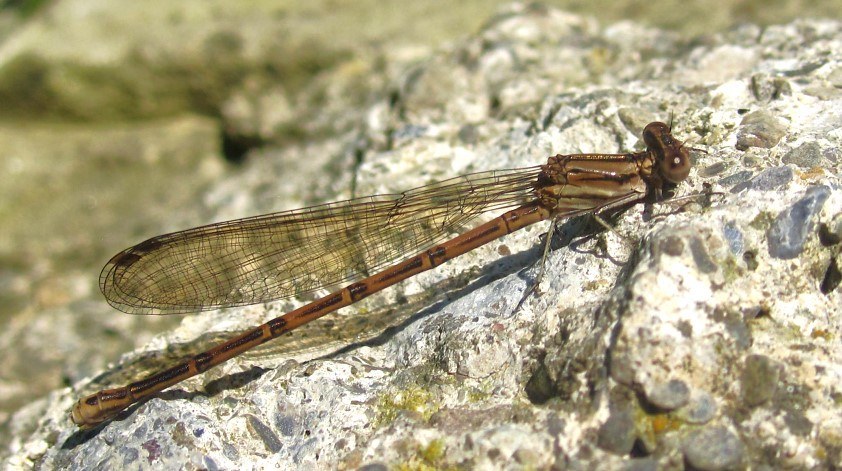
Variable Dancer
streams, rivers, and pond margins, especially in wooded or partly shaded settings
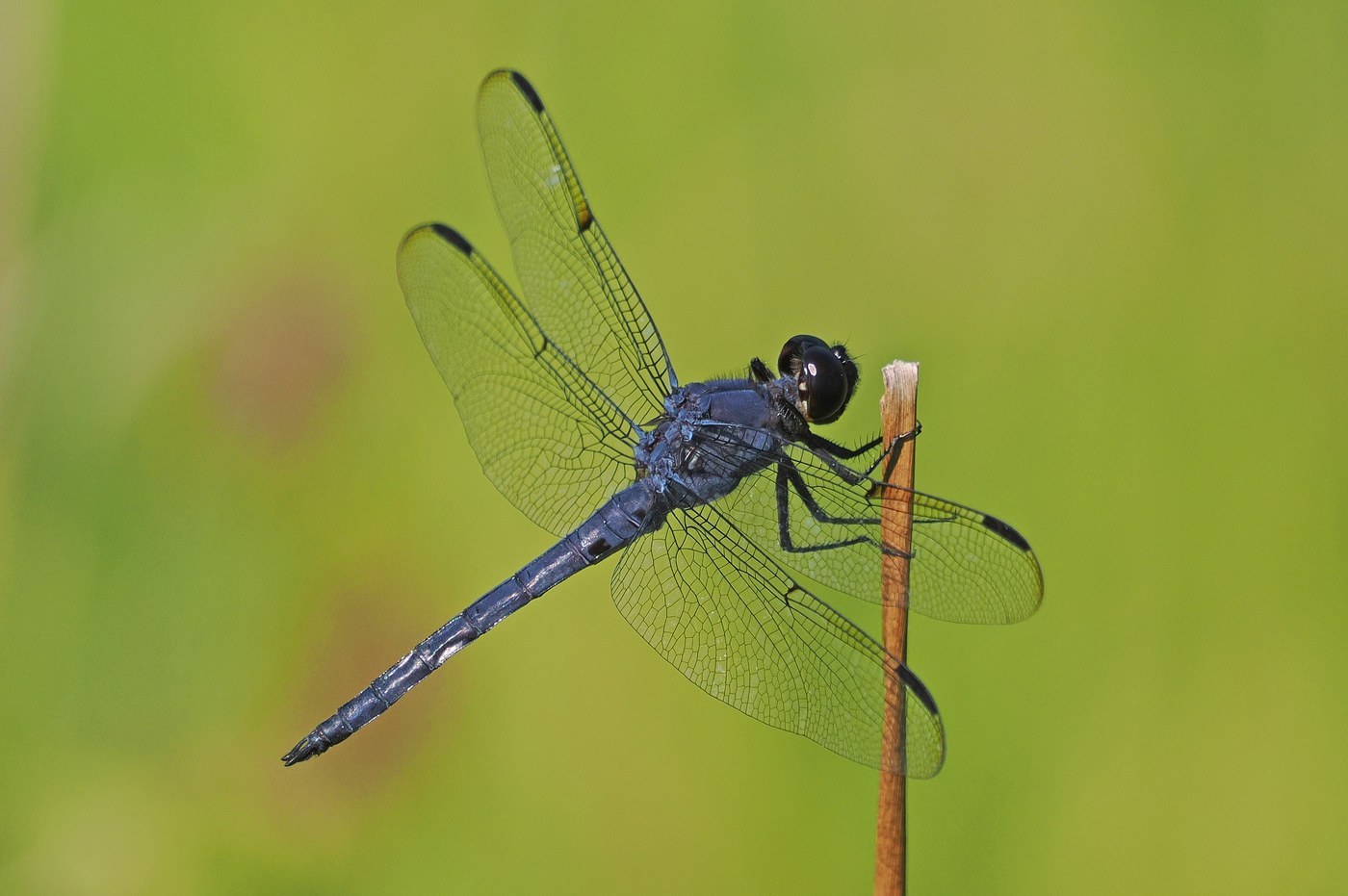
Slaty Skimmer
Still or slow-moving ponds, lakes, and marshes with open shoreline
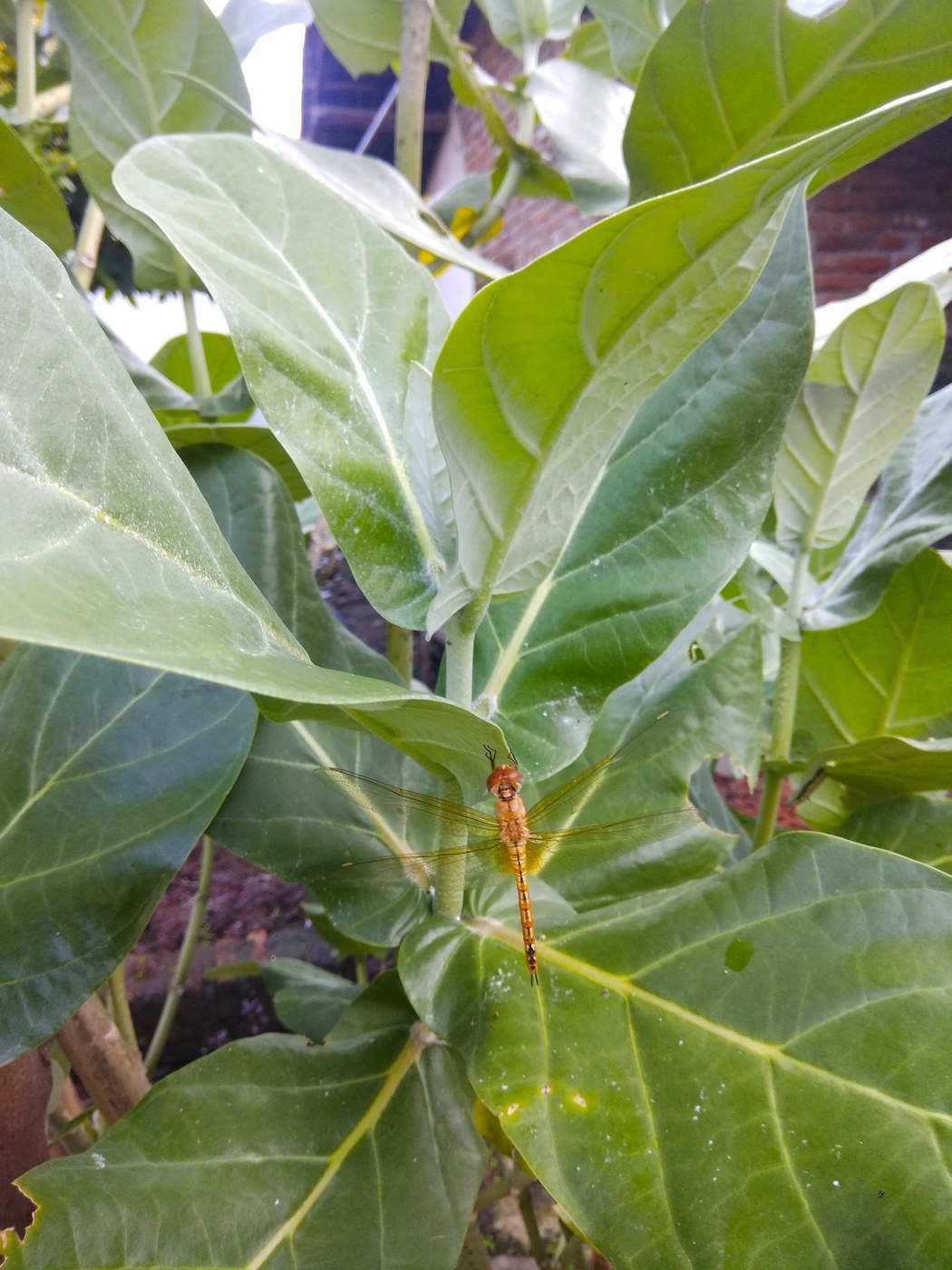
Wandering Glider
Temporary pools, open fields, and coastlines nearly worldwide
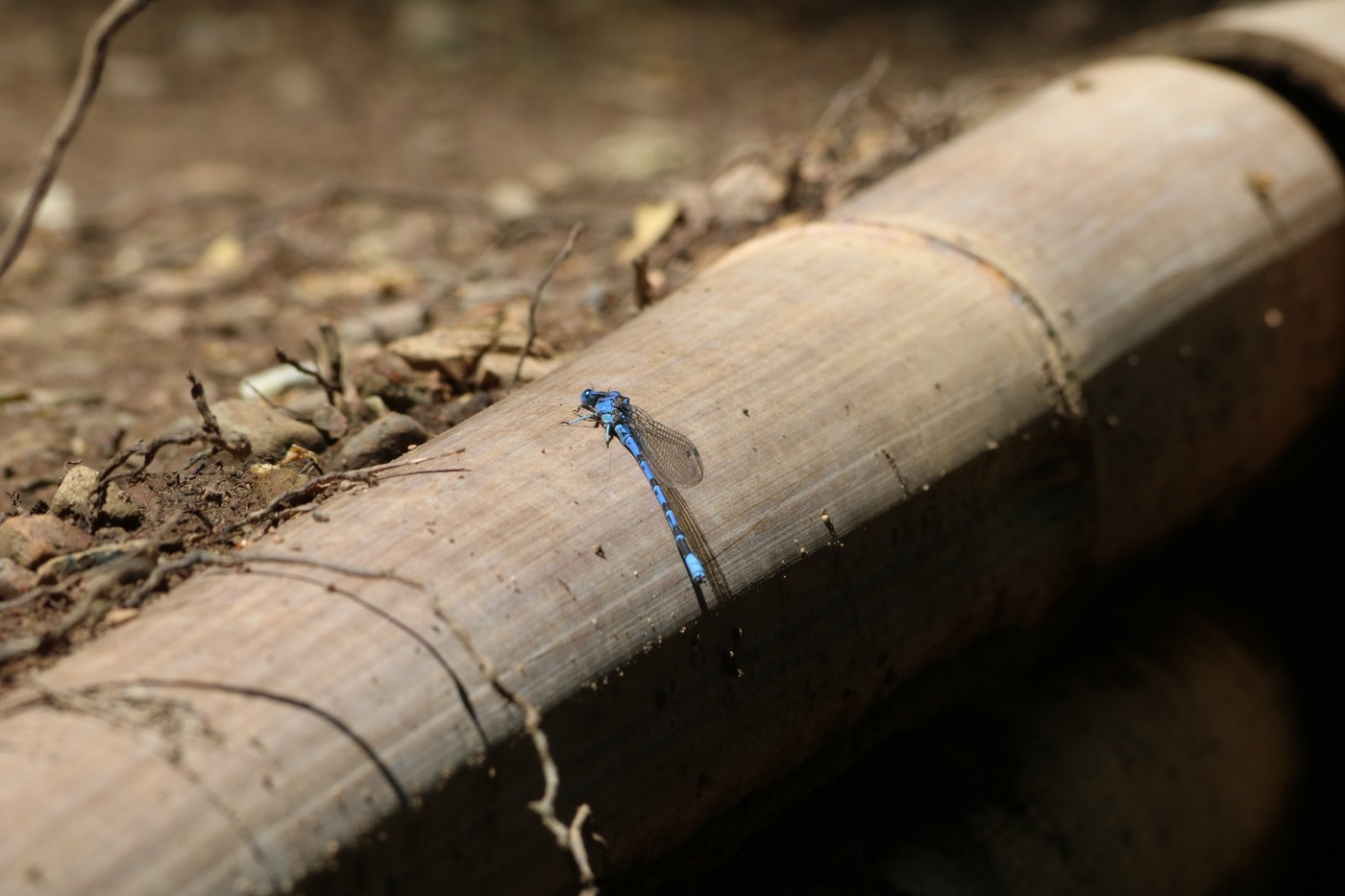
Vivid Dancer
rocky streams, seeps, and spring-fed creeks, often near thermal or warm springs
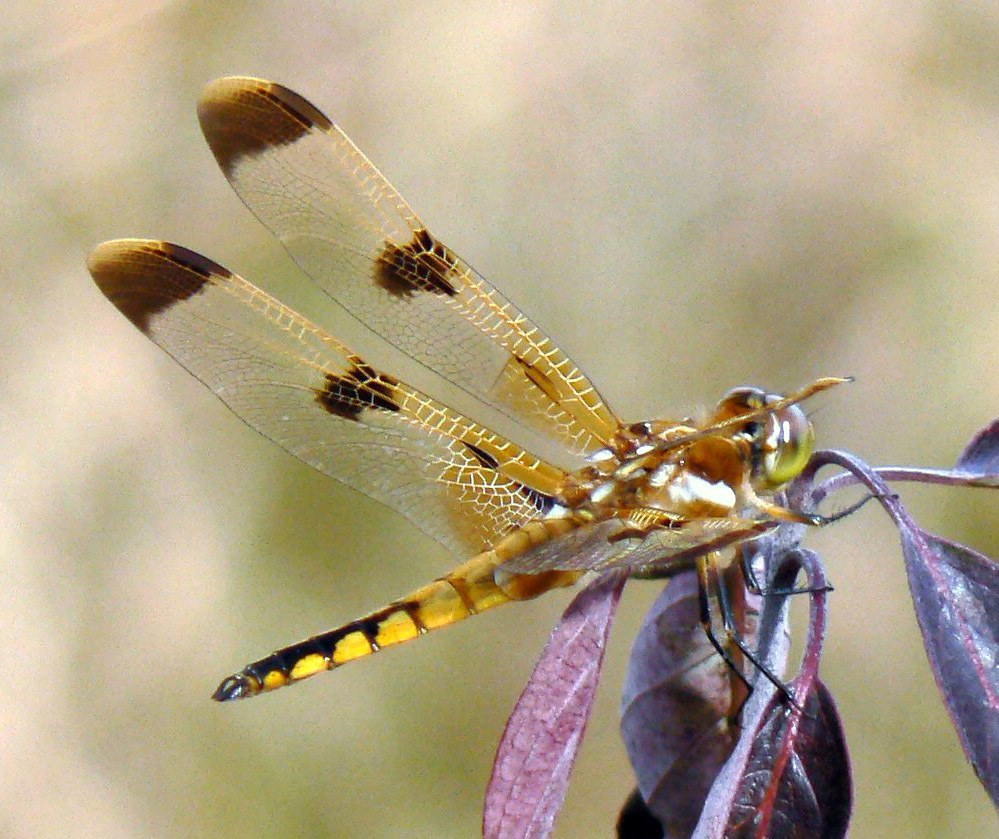
Painted Skimmer
Ponds, marshes, and slow-moving vegetated waters, including temporary pools
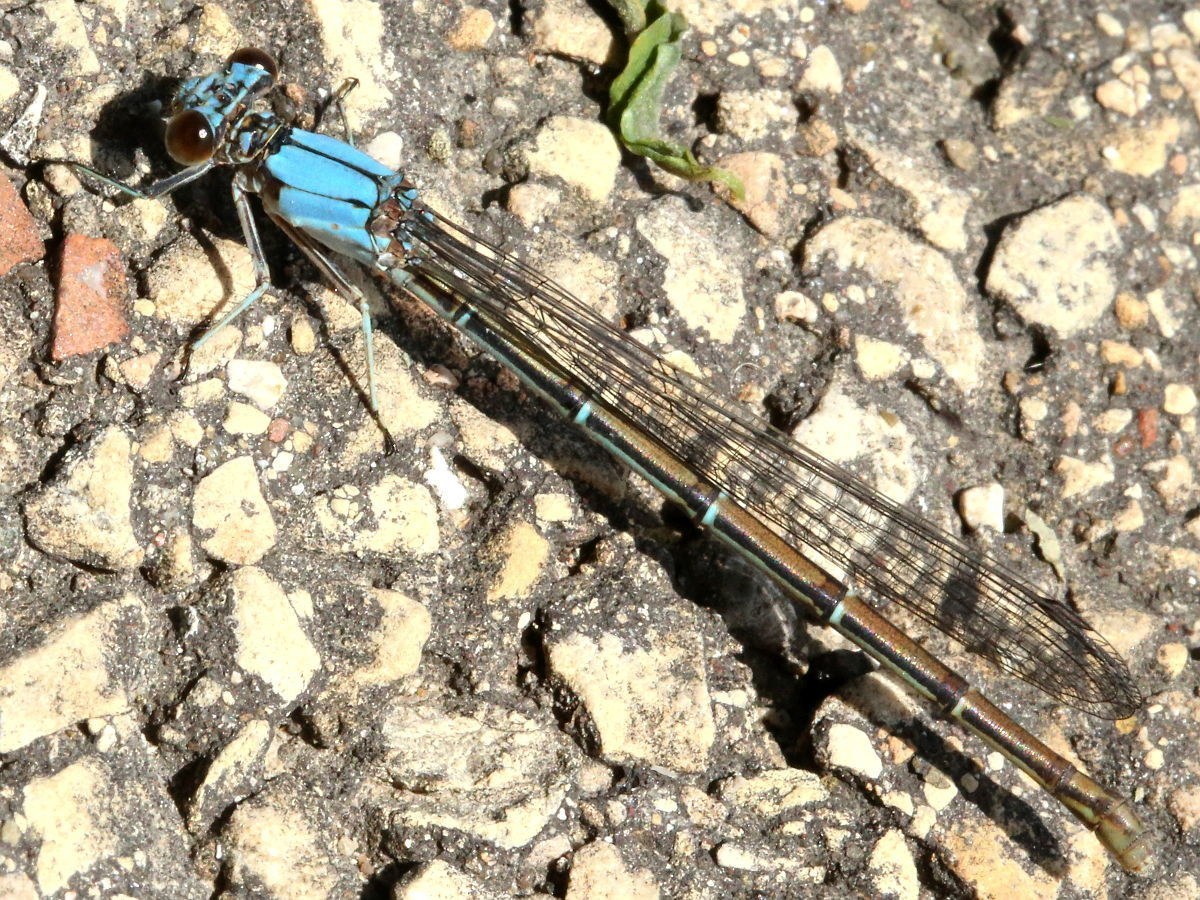
Powdered Dancer
rocky and gravelly rivers, streams, and lake shorelines