
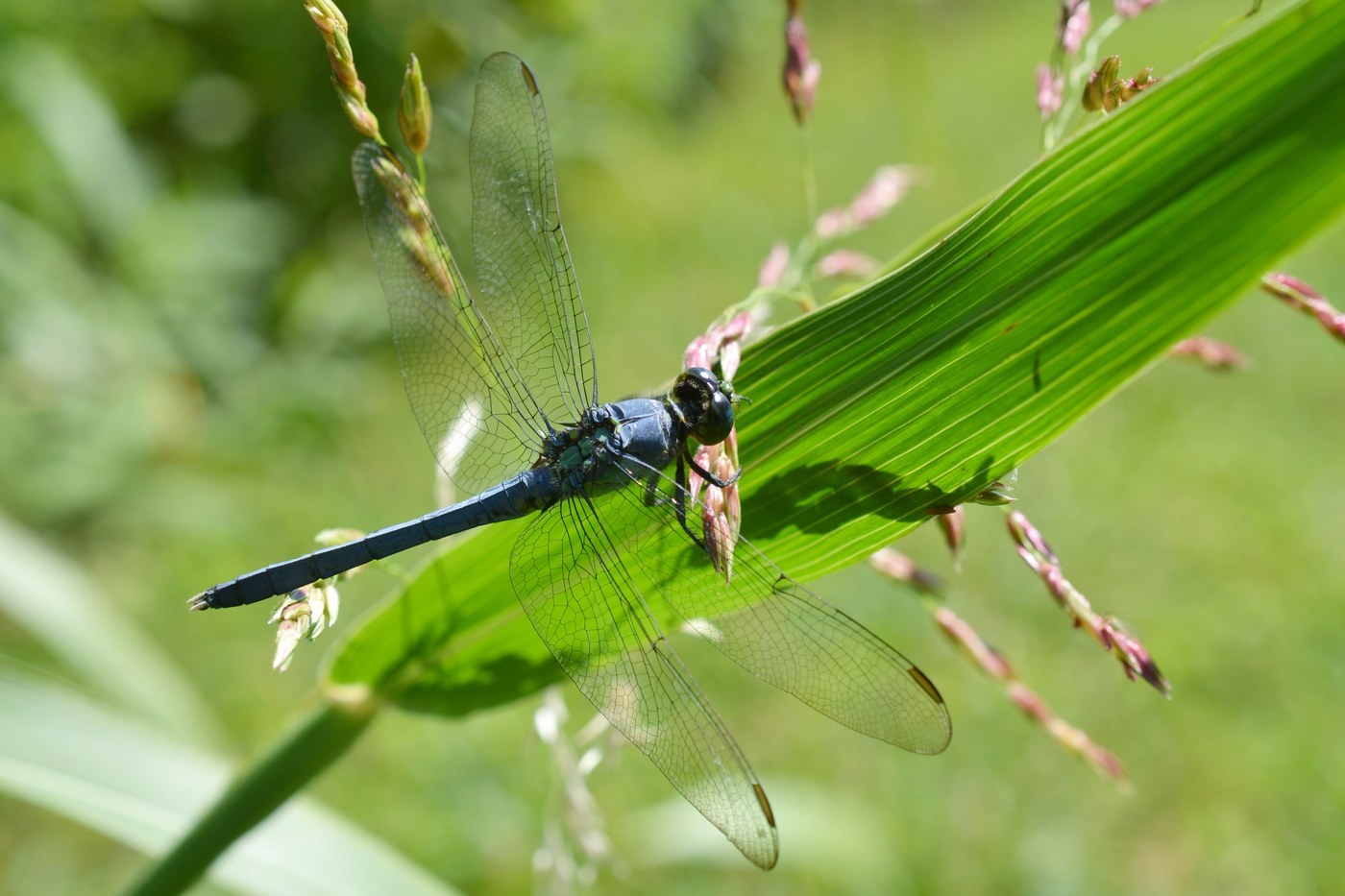
Eastern Pondhawk
Erythemis simplicicollis
A bold, ground-perching dragonfly whose bright green females and powdery blue males look almost like different species, and which readily preys on other dragonflies.
- Size
- 3.8–4.8 cm (1.5–1.9 in) long
- Habitat
- ponds, lakes, marshes, and slow streams across the eastern and central United States
- Danger
- Harmless
Spotted a bug like this?
Identify any bug or insect from a photo, free.
Overview
The eastern pondhawk is a common dragonfly of the eastern and central United States, notable for perching directly on the ground, lily pads, or low vegetation rather than on high stems like many other species. Its coloration changes dramatically with maturity and sex: mature males turn a powdery blue, while females and immature males remain bright green with bold black markings.
The species has a reputation as an aggressive hunter, readily capturing other flying insects on the wing, including smaller dragonflies and damselflies, making it one of the more predatory dragonflies found around ponds and marshes.
How to Identify
- Medium dragonfly, body length about 3.8–4.8 cm
- Mature males are powdery blue overall with a green face
- Females and immature males are bright green with black markings along the abdomen
- Wings largely clear, without heavy banding
- Distinguished from the blue dasher by its larger size and the absence of green eyes or a striped thorax
Habitat & Range
Found around ponds, lakes, marshes, and slow streams across the eastern and central United States, with its range extending into parts of the western US and Central America.
Behavior & Diet
Often perches directly on bare ground, low vegetation, or floating lily pads rather than high stems. An aggressive predator, it captures other flying insects in flight, including smaller dragonflies and damselflies as well as flies and mosquitoes. Males defend territories near water, using their blue coloration in visual displays to attract females.
Life Cycle
Eggs are laid in water or wet vegetation. Aquatic nymphs are active predators of other invertebrates and small aquatic animals, developing over a period of several months. After a series of molts, nymphs emerge from the water to become winged adults, with multiple generations possible per year in warmer parts of its range.
Frequently asked questions
Why do males and females look so different?
This is sexual dimorphism: males develop a powdery blue coating as they mature, while females retain a bright green coloration throughout life.
Does it really eat other dragonflies?
Yes, it is known to prey on smaller dragonflies and damselflies in addition to flies, mosquitoes, and other flying insects.
Where does it typically perch?
Often directly on the ground, lily pads, or low vegetation rather than on tall reeds or branches.
Where is it commonly found?
Around ponds, lakes, marshes, and slow streams across the eastern and central United States.
Eastern Pondhawk guides
In-depth guides for identifying, understanding, and living alongside Eastern Pondhawk.
Other bugs you may enjoy
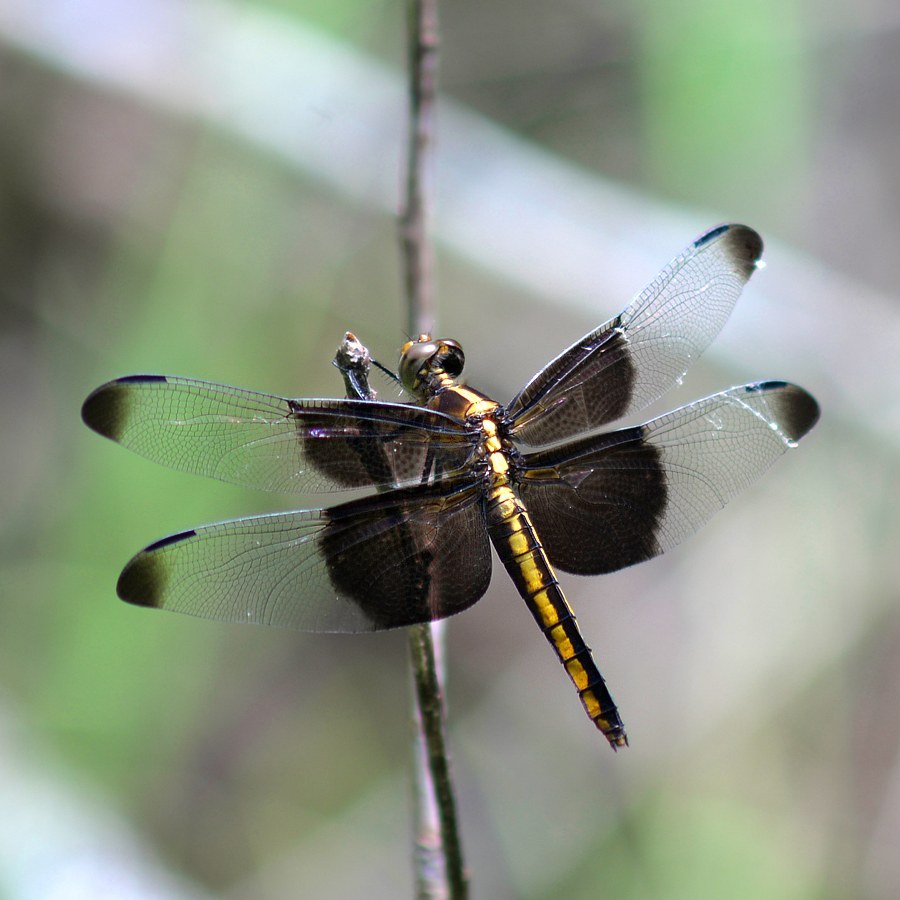
Widow Skimmer
ponds, lakes, and slow-moving streams with open shoreline vegetation across much of the United States
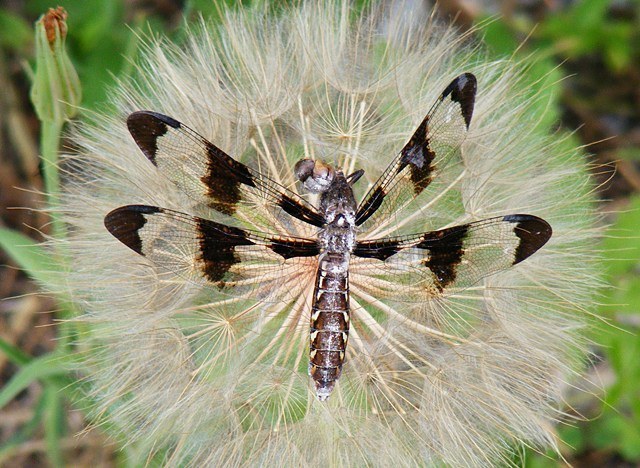
Twelve-spotted Skimmer
Ponds, lakes, and slow streams with open, sunny shorelines
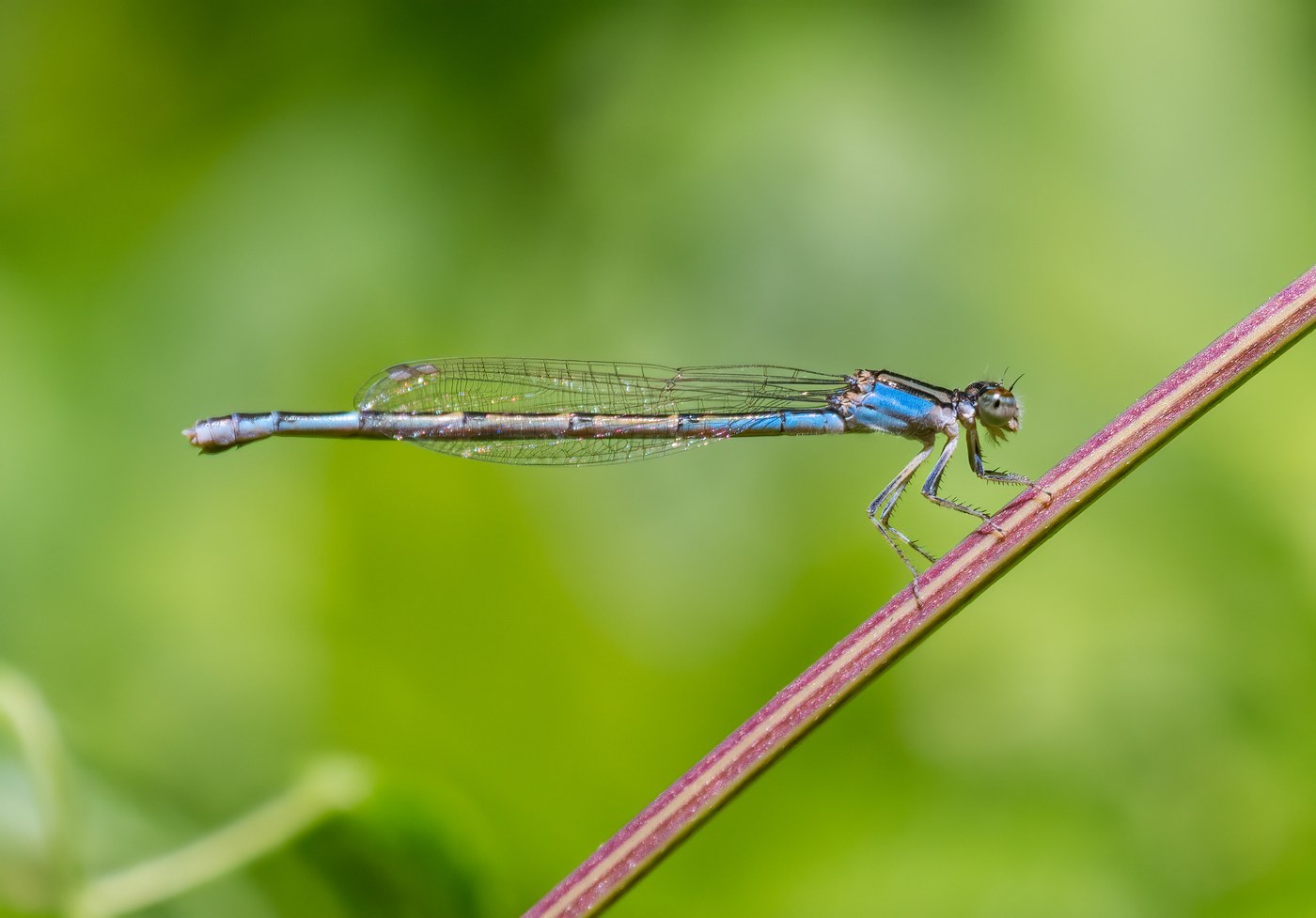
Azure Bluet
ponds, lakes, and slow streams with abundant aquatic vegetation
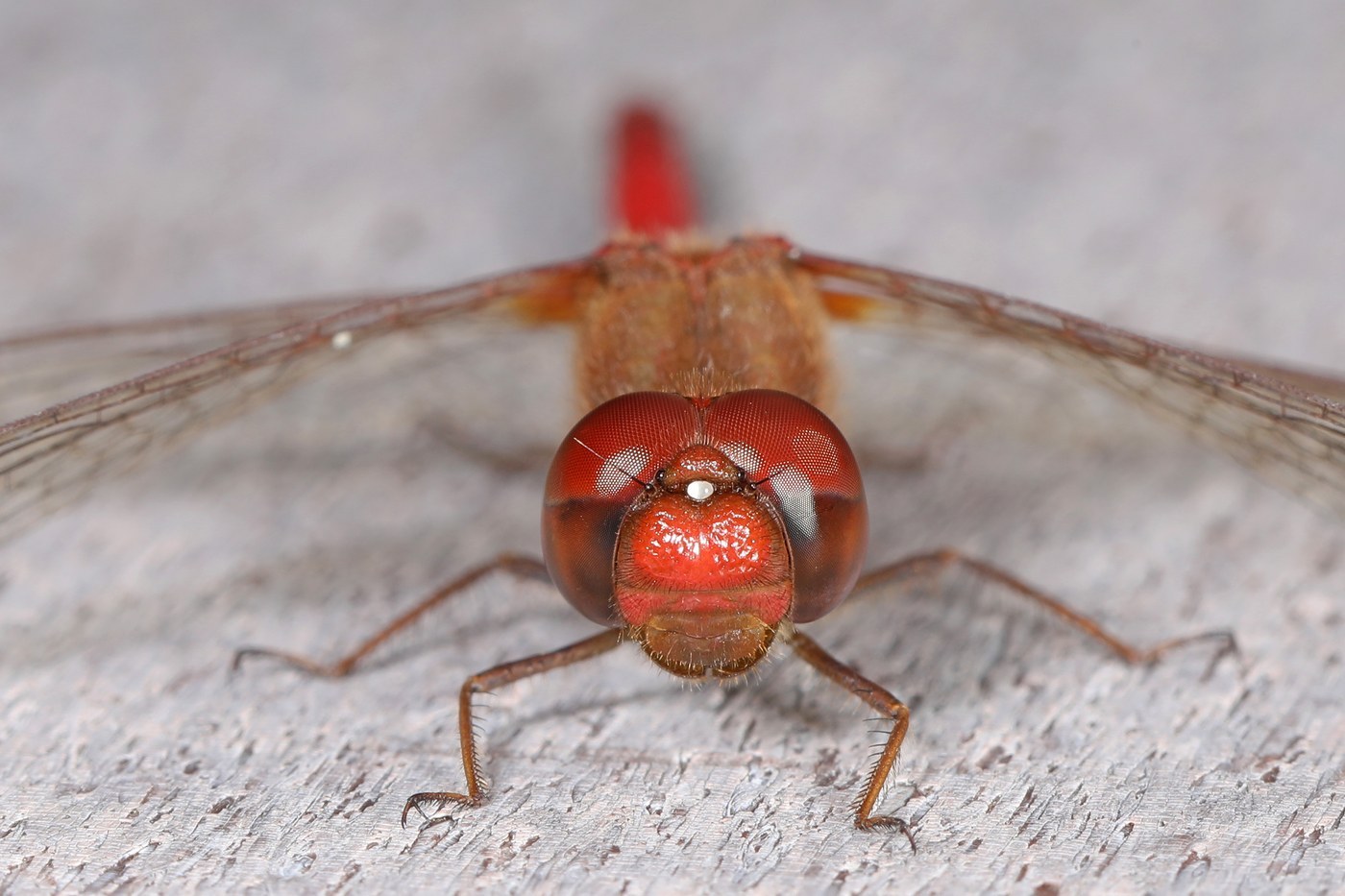
Autumn Meadowhawk
Ponds, marshes, and slow streams, often lingering into late fall
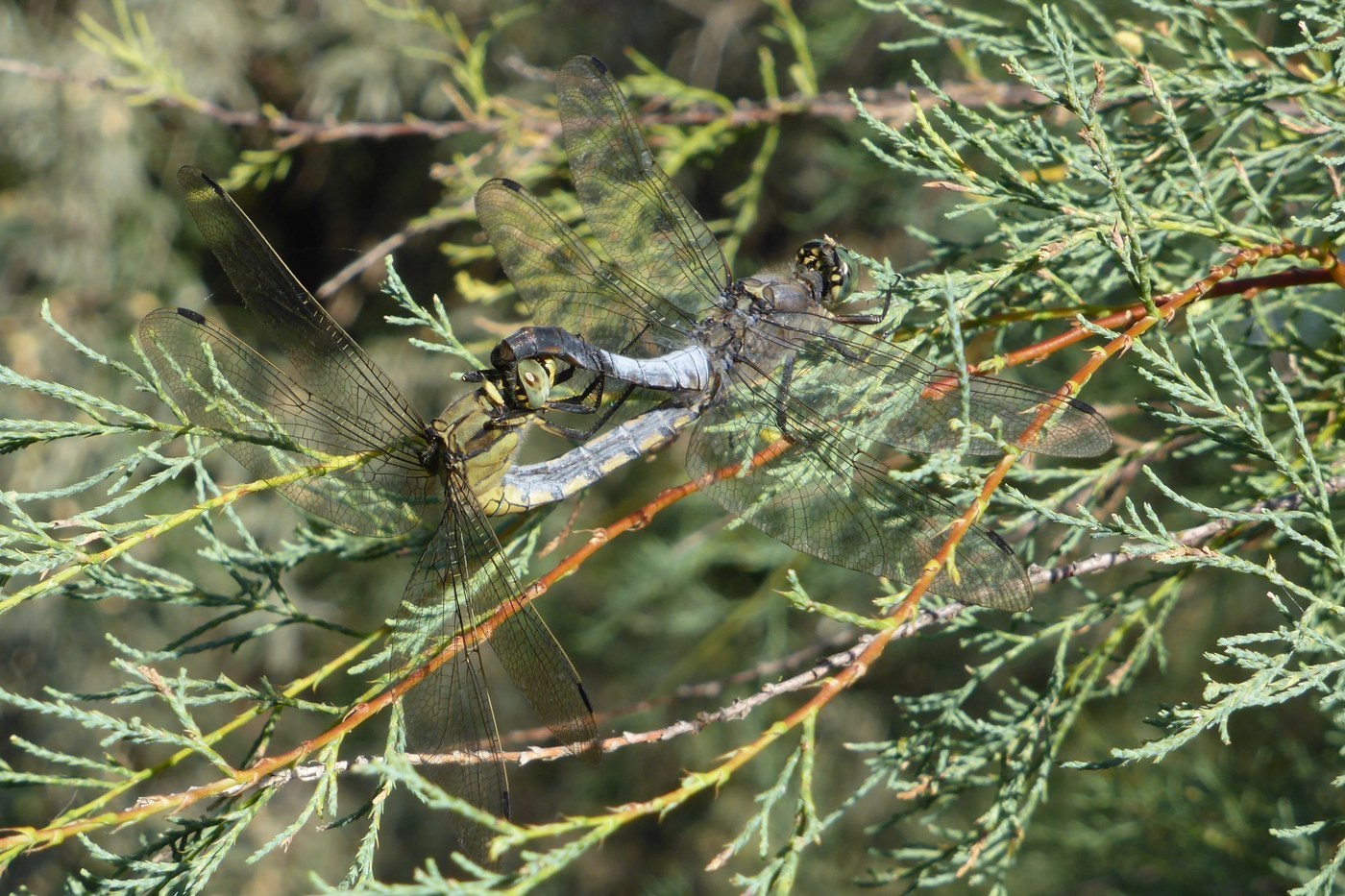
Spangled Skimmer
Ponds, lakes, and marshes with open sunny shorelines
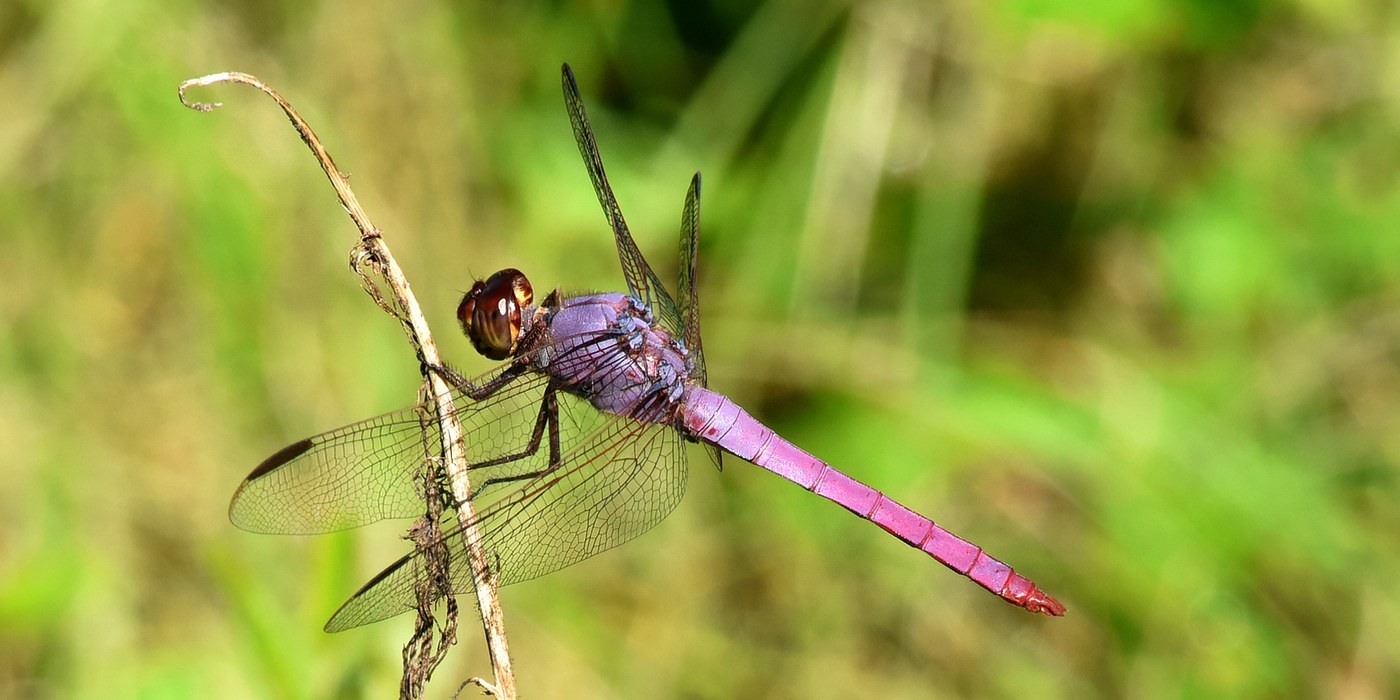
Roseate Skimmer
Ponds, ditches, and canals across the southern United States
Variable Dancer
streams, rivers, and pond margins, especially in wooded or partly shaded settings
Slaty Skimmer
Still or slow-moving ponds, lakes, and marshes with open shoreline
Wandering Glider
Temporary pools, open fields, and coastlines nearly worldwide
Vivid Dancer
rocky streams, seeps, and spring-fed creeks, often near thermal or warm springs
Painted Skimmer
Ponds, marshes, and slow-moving vegetated waters, including temporary pools
Powdered Dancer
rocky and gravelly rivers, streams, and lake shorelines