
German Yellowjacket
Vespula germanica
A black-and-yellow social wasp closely resembling the common wasp, distinguished by three black facial dots, that builds large paper nests in wall voids and roof cavities and is widespread in both its native and introduced ranges.
- Size
- 12–17 mm
- Habitat
- Urban areas, gardens, wall cavities, and roof spaces
- Danger
- Stings
Spotted a bug like this?
Identify any bug or insect from a photo, free.
Overview
The German yellowjacket is a social wasp in the family Vespidae, genus Vespula, native to Europe, temperate Asia, and North Africa. It has also been introduced widely around the world, including to North America, Australia, New Zealand, and South America, where it is now well established in many urban and suburban environments.
Like its close relative the common wasp, the German yellowjacket forms annual colonies founded by a single overwintered queen each spring, growing through the season to include workers, and eventually new queens and males. Its colonies often nest in concealed cavities such as wall voids, roof spaces, and underground burrows, which can make nests less obvious until worker traffic reveals an entrance point.
How to Identify
- Black body with bold yellow banding on the abdomen and yellow-marked thorax, closely resembling other Vespula yellowjackets.
- Face typically shows three separate black dots on the yellow clypeus, distinguishing it from the anchor-shaped mark of the common wasp.
- Abdominal black markings often form distinct diamond or dagger shapes along the yellow bands, another useful identification detail.
- Smooth, sparsely-haired body with a narrow waist typical of vespid wasps, and clear wings folded along the body at rest.
- Lookalikes: the common wasp is nearly identical in size and general coloring; close examination of the facial markings and abdominal pattern is usually needed to separate the two reliably.
Habitat & Range
German yellowjackets are found throughout their native Eurasian and North African range and are now widespread in temperate regions worldwide following introductions. They commonly nest in concealed cavities such as wall voids, attics, and underground burrows, making them frequent nesters around buildings and urban landscapes as well as gardens and woodland edges. Colonies are active from spring through autumn, with populations peaking in late summer.
Behavior & Diet
Workers hunt insects such as caterpillars and flies to feed colony larvae, while also foraging for nectar and, later in the season, sugary foods including fruit. Nests are built from chewed wood fiber formed into papery combs enclosed by a protective outer envelope, often hidden within a cavity rather than exposed. Colonies can grow quite large by late summer, and workers will defend the nest if it is disturbed, though foraging workers away from the nest are primarily focused on gathering food.
Life Cycle
A mated queen overwinters alone and founds a new colony in spring, laying eggs that develop into workers through complete metamorphosis. As the colony grows through summer, workers take over foraging and nest maintenance while the queen focuses on egg-laying. In late summer, new queens and males are produced and disperse to mate, after which the original colony declines and dies off with the onset of cold weather, leaving only newly mated queens to overwinter and begin the cycle again.
Frequently asked questions
How can I tell a German yellowjacket from a common wasp?
The clearest distinction is on the face: German yellowjackets typically show three separate black dots, while common wasps usually show a single anchor-shaped mark.
Where do German yellowjackets typically build nests?
They favor concealed cavities such as wall voids, roof spaces, and underground burrows, in addition to more exposed sites.
Is the German yellowjacket native everywhere it's found?
No, it is native to Europe, temperate Asia, and North Africa, but has been introduced and become established in many other regions worldwide.
Do German yellowjacket colonies persist year to year?
No, colonies are annual; only newly mated queens survive winter to start new colonies each spring.
German Yellowjacket guides
In-depth guides for identifying, understanding, and living alongside German Yellowjacket.
Other bugs you may enjoy
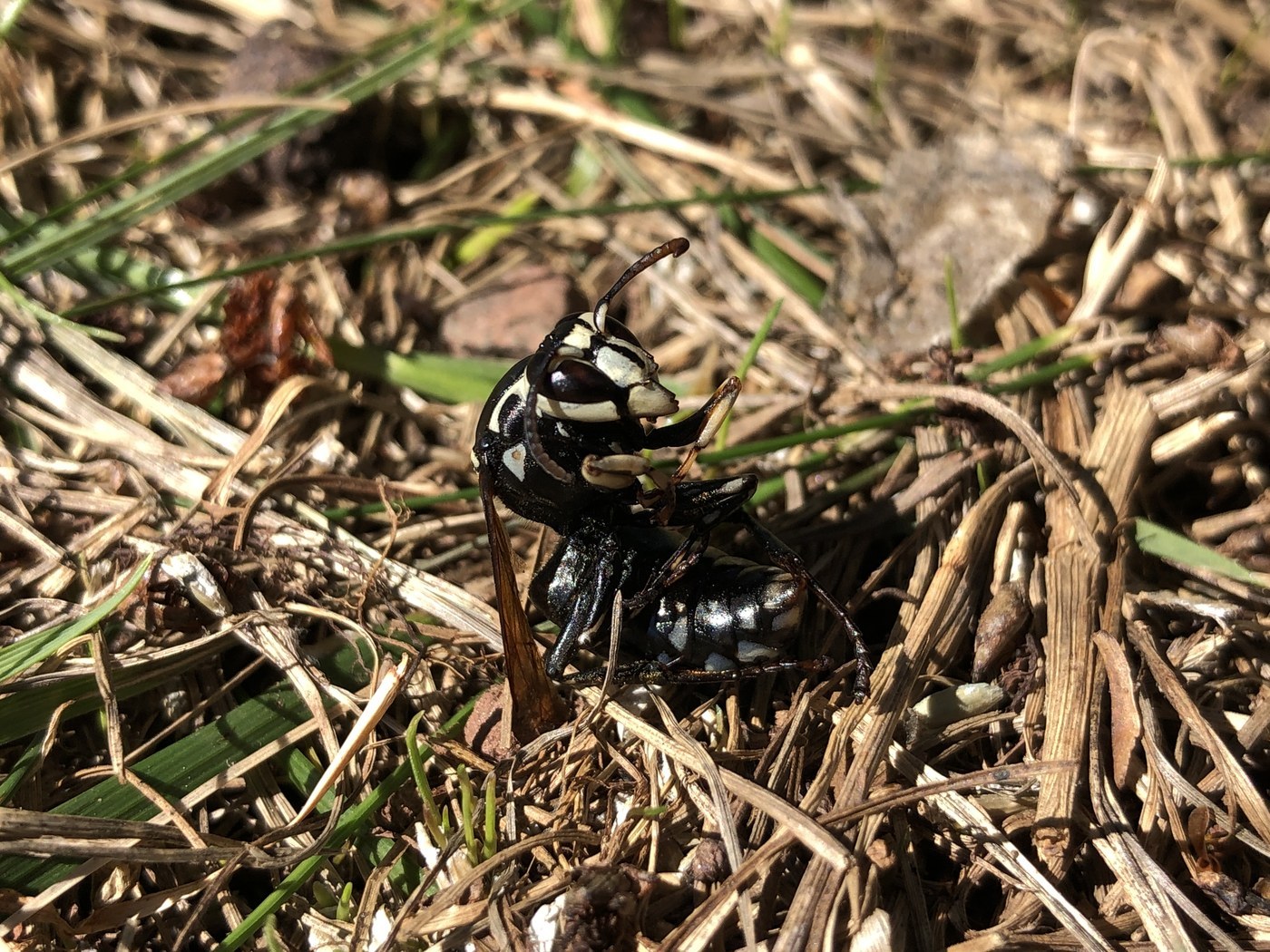
Bald-faced Hornet
Woodland edges, shrubs, and tree branches across North America
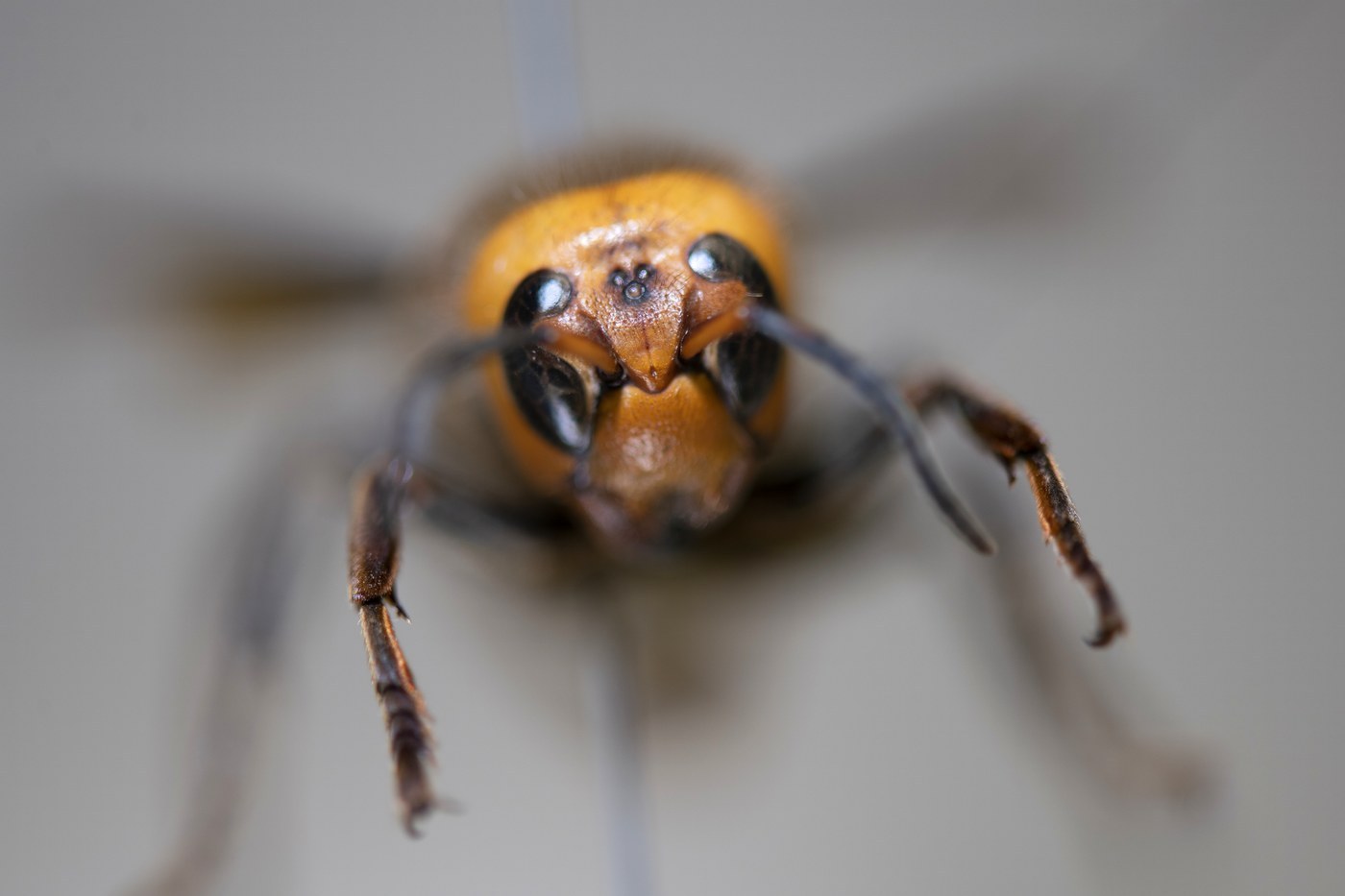
Asian Giant Hornet
Forested lowlands and mountains of East and South Asia; low tree hollows
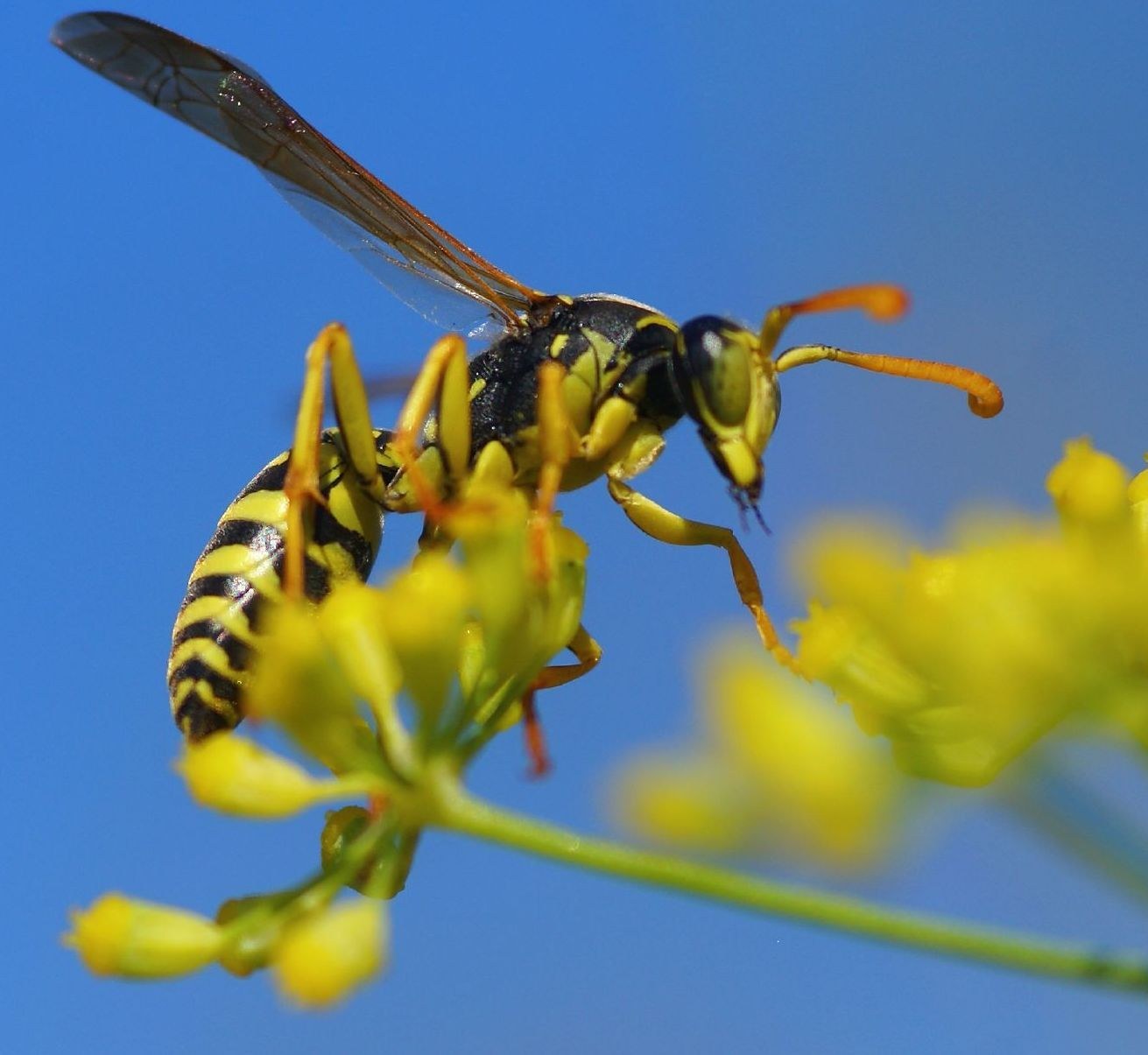
Yellowjacket
Underground nests, wall voids, gardens, picnic areas
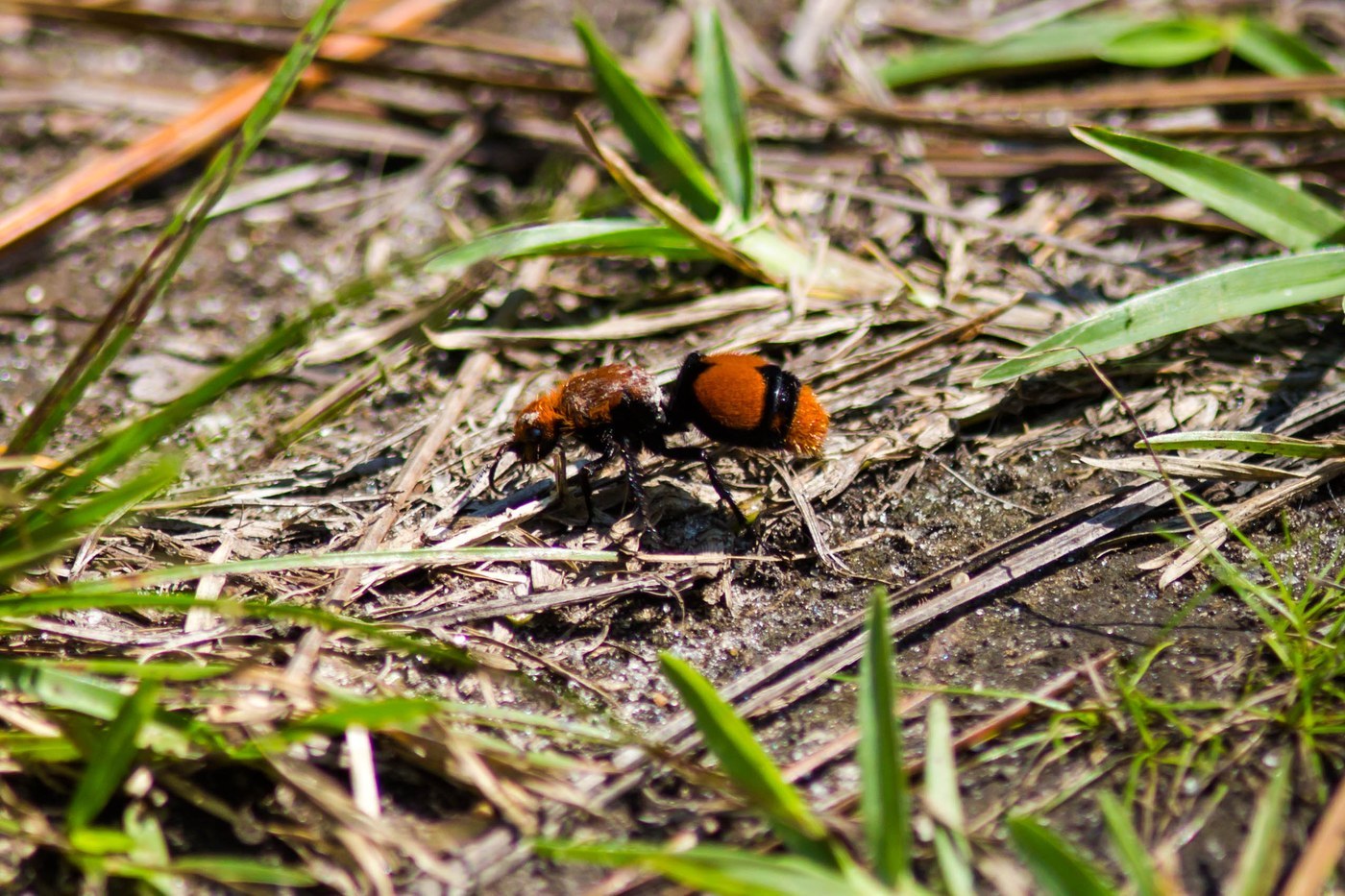
Velvet Ant
Sandy soils, open fields, dunes, roadsides in warm regions
Tarantula Hawk
Deserts, arid scrublands, and dry grasslands
Tarantula Hawk Wasp
Deserts, grasslands, and scrub of the Americas
Wasp
Gardens, woodlands, eaves, and urban areas worldwide
Spider Wasp
Gardens, grasslands, and sandy open areas worldwide
Yellow Jacket
Ground nests, wall voids, parks, and areas near food sources
Sawfly
Gardens, woodlands, and orchards on host foliage
Red Paper Wasp
Eaves, porch ceilings, sheds, open woodland edges, gardens
Trichogramma Wasp
Fields, gardens, and crops worldwide