
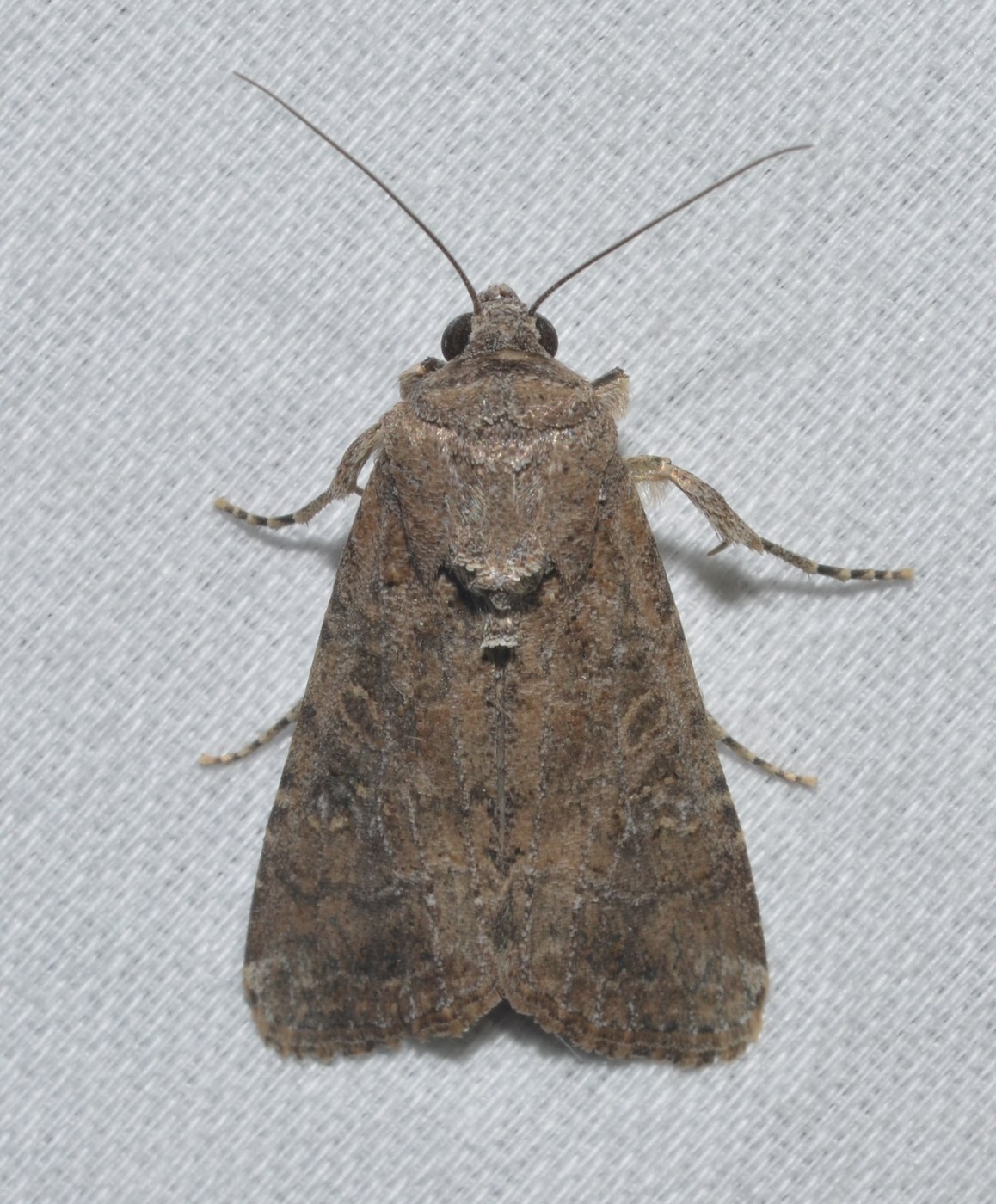
Armyworm
Mythimna unipuncta
A striped, greenish-brown caterpillar that gets its name from its habit of migrating in dense, destructive groups across grass and grain fields.
- Size
- 3.5-4.5 cm long
- Habitat
- grasslands, pastures, and cereal crop fields
- Danger
- Nuisance pest
Spotted a bug like this?
Identify any bug or insect from a photo, free.
Overview
The true armyworm (Mythimna unipuncta, formerly classified as Pseudaletia unipuncta) is a caterpillar found across much of North America, notorious for periodic outbreaks in which enormous numbers of larvae move together across fields in search of food, giving rise to the "army" in its name. It is the larval stage of a plain, medium-sized moth in the owlet moth family.
Armyworms feed primarily on grasses and cereal grains, including wheat, corn, and pasture grasses, and are considered an economically important pest of these crops. Outbreak years, often triggered by favorable weather and abundant host vegetation, can see caterpillar populations strip fields of foliage within days as they migrate en masse to fresh feeding grounds.
Despite their reputation as agricultural pests, armyworms are also an important food source for birds and are heavily preyed upon by parasitic wasps and flies, which along with disease outbreaks help bring dense populations back under control after an outbreak.
How to Identify
- Smooth, cylindrical body ranging from greenish-brown to dark gray or nearly black
- Several thin, pale stripes running the length of the body, including a distinct pale stripe along each side
- Head is often marked with a light brown, honeycomb-like pattern
- Grows to about 3.5-4.5 cm at full size
- Often found in large numbers moving together across fields
- Lookalikes: fall armyworm (has a distinctive inverted "Y" mark on the head) and other noctuid caterpillars
Habitat & Range
True armyworms are found throughout much of the eastern and central United States, southern Canada, and into parts of Central and South America. They are most common in grasslands, pastures, hay fields, and cereal crop fields such as wheat, oats, and corn. Outbreaks tend to follow cool, wet spring conditions that favor grass growth and caterpillar survival, with peak activity in late spring and early summer.
Behavior & Diet
Armyworms feed at night on grasses and cereal crop leaves, hiding in soil or plant debris during the day to avoid heat and predators. When local food supplies are exhausted by a dense population, large numbers of caterpillars will move together across the ground in search of fresh vegetation, a mass migration behavior that gives the species its common name. As both pest and prey, armyworms play a role in the food web, supporting populations of birds, ground beetles, and parasitic wasps and flies that help regulate outbreak populations.
Life Cycle
Adult female moths lay clusters of eggs in rows on grass blades or leaf sheaths, often hidden by folding the leaf around them. Eggs hatch within about a week, and caterpillars pass through six instars over three to four weeks, feeding mostly at night. Mature larvae burrow into the soil to pupate, emerging as adult moths after roughly two weeks. The adult is a medium-sized, grayish-brown moth with a small white spot on each forewing. Armyworms can produce two to three generations per year in warmer regions, with populations often building to outbreak levels in the later generations of the season.
Frequently asked questions
Why is it called an armyworm?
The name comes from its habit of migrating in large, dense groups across fields once local food is exhausted, resembling a marching army.
What crops are most affected by armyworms?
Grasses and cereal crops such as wheat, oats, corn, and pasture grasses are the primary hosts.
How can I tell an armyworm from a fall armyworm?
The fall armyworm has a distinctive pale inverted "Y" marking on its head, which the true armyworm lacks.
When are armyworm outbreaks most common?
Outbreaks typically occur in late spring and early summer following cool, wet conditions that favor grass growth and larval survival.
Armyworm guides
In-depth guides for identifying, understanding, and living alongside Armyworm.
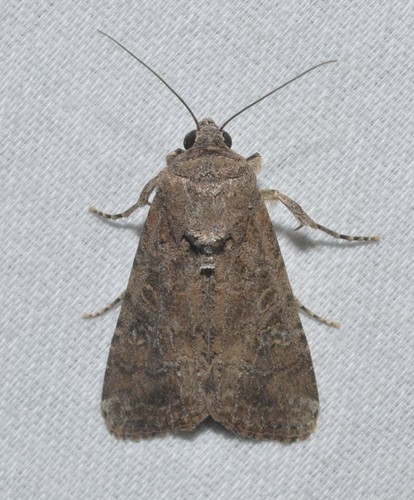
Armyworm identified by the community
Real finds identified with Bug Identifier.
Other bugs you may enjoy
Bagworm
Trees and shrubs, especially conifers and ornamental landscaping
Zebra Longwing Caterpillar
Tropical and subtropical hammocks with passionflower vines
Tomato Hornworm
Gardens and fields with tomato, pepper, and other nightshade plants
Tent Caterpillar
Deciduous trees such as cherry, apple, and other rosaceous species
Tobacco Hornworm
tobacco, tomato, and pepper plants in gardens and fields
Woolly Bear Caterpillar
Gardens, meadows, roadsides, and woodland edges across North America
Sod Webworm
Turfgrass lawns, golf courses, pastures
Spiny Oak-slug Caterpillar
Deciduous forests and woodland edges with oak and other hardwoods
Saddleback Caterpillar
Deciduous trees and shrubs in eastern and southern North America
Stinging Rose Caterpillar
Gardens and woodlands with rose, dogwood, or oak
Silkworm
Reared exclusively in captivity on mulberry leaves; no independent wild population
Spicebush Swallowtail Caterpillar
Woodlands and thickets with spicebush or sassafras