
Brown Recluse Spider
Loxosceles reclusa
A uniformly light-brown spider with a faint violin-shaped marking on its back and only six eyes instead of the usual eight, typically found hiding in dry, undisturbed indoor and outdoor spaces.
- Size
- 6–12 mm body
- Habitat
- Dark, dry, undisturbed spaces—closets, basements, woodpiles
- Danger
- Mildly venomous
Spotted a bug like this?
Identify any bug or insect from a photo, free.
Overview
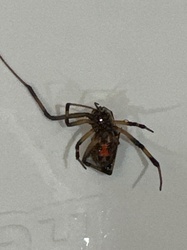
The brown recluse spider, Loxosceles reclusa, is a member of the family Sicariidae, native to the central and southern United States. It is best known for the dark violin-shaped marking on the top of its cephalothorax, which has earned it the nickname 'fiddleback spider.'
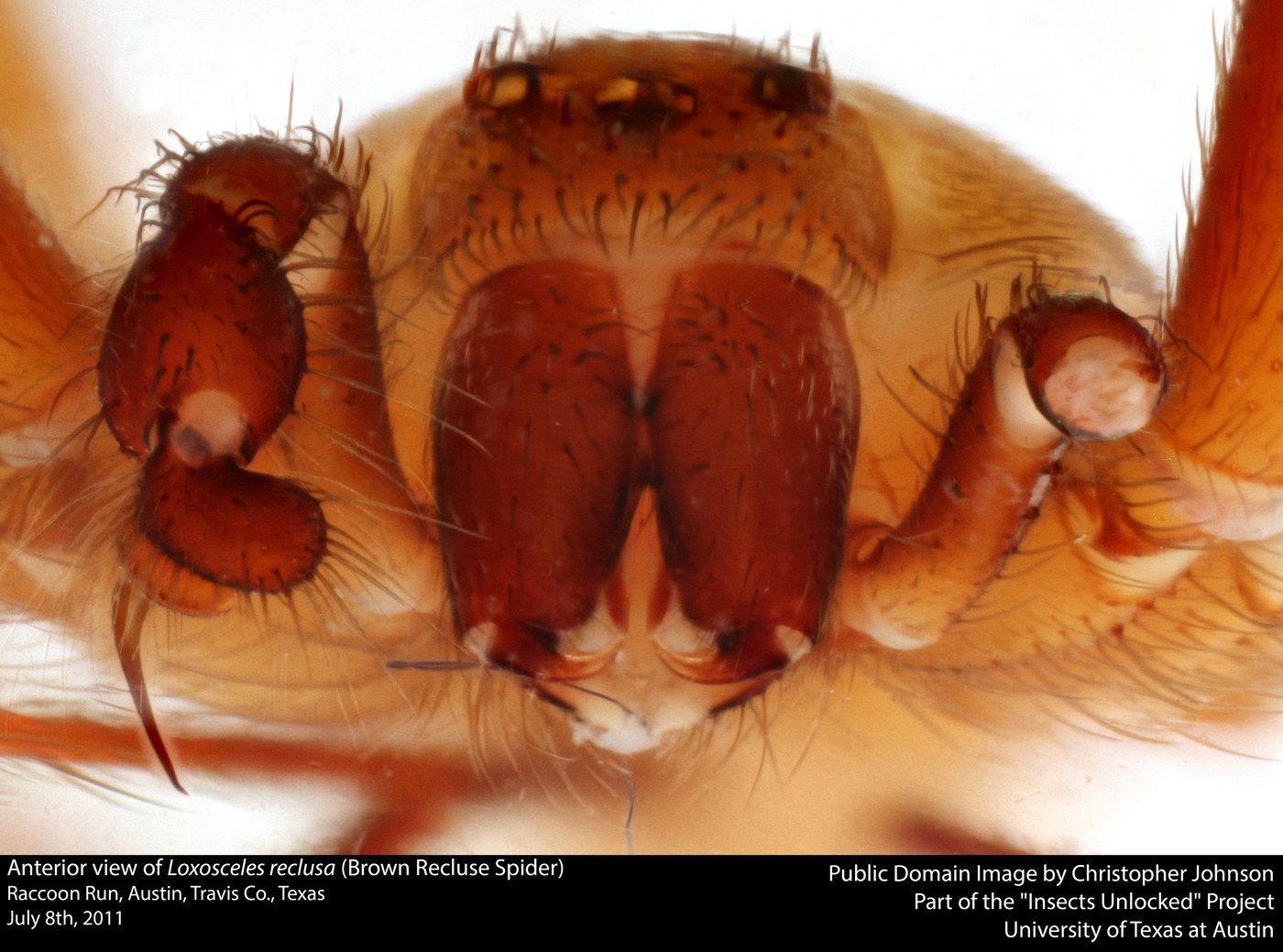
Unlike many spiders, the brown recluse has only six eyes arranged in three pairs (dyads), rather than the eight eyes found in most spider families, a key feature used in careful identification. It builds an irregular, sparse silk retreat rather than a large orb web, and prefers to remain hidden for most of its life.
The genus Loxosceles includes many related recluse species found in warmer regions of the Americas, Africa, and parts of Europe, but Loxosceles reclusa is the most familiar representative in North America.
How to Identify
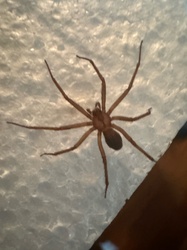
- Body: uniformly light to medium brown, with a slightly darker violin- or fiddle-shaped marking on the top of the cephalothorax (the marking can be faint or absent in some individuals).
- Eyes: six eyes arranged in three pairs, unlike the eight eyes of most other spiders—a definitive feature under magnification.
- Legs: long, thin, and uniformly colored without obvious banding or spines.
- Size: body length about 6–12 mm, with legs extending the overall span to roughly the size of a US quarter.
- Lookalikes: many harmless brown spiders are mistaken for recluses; the eye count and lack of banded or spiny legs help distinguish a true recluse.
Habitat & Range
Brown recluses are found primarily in the central and southern United States, from Texas and Oklahoma east to Georgia and north into parts of the Midwest. They favor dry, dark, undisturbed places—closets, attics, basements, woodpiles, and storage boxes—both indoors and out.
They are active mainly at night and remain hidden in retreats during the day, with activity increasing during the warmer months. In natural settings they can also be found under rocks, bark, and debris.
Behavior & Diet
True to its common name, the brown recluse is a shy, non-aggressive spider that spends most of its time hidden in a silken retreat and avoids open, exposed areas. It is a nocturnal hunter that actively roams at night to capture small insects rather than relying solely on a web to trap prey.
It builds only a small, irregular sheet of silk as a retreat rather than a large capture web. When encountered, its typical response is to flee or remain motionless, and it bites mainly if trapped against skin or clothing.
Life Cycle
Brown recluses undergo simple spider development: egg, spiderling through several molts, and adult, without a pupal stage. Females produce silk egg sacs containing dozens of eggs, usually placed within their retreat.
Spiderlings molt multiple times over roughly a year before reaching maturity. Brown recluses are notably long-lived for a spider, with adults capable of surviving one to two years or more, and they can also tolerate extended periods without food.
Frequently asked questions
How many eyes does a brown recluse have?
Six, arranged in three pairs, unlike the eight eyes typical of most spiders.
Is the violin marking always visible?
It can be faint or hard to see on some individuals, so eye arrangement is a more reliable identification feature.
Where are brown recluses typically found?
The central and southern United States, in dry, dark, undisturbed spaces like closets, attics, and woodpiles.
Does the brown recluse build a large web?
No, it builds only a small, irregular silk retreat and hunts actively at night rather than trapping prey in a large web.
Brown Recluse Spider guides
In-depth guides for identifying, understanding, and living alongside Brown Recluse Spider.
Brown Recluse Spider identified by the community
Real finds identified with Bug Identifier.

Other bugs you may enjoy
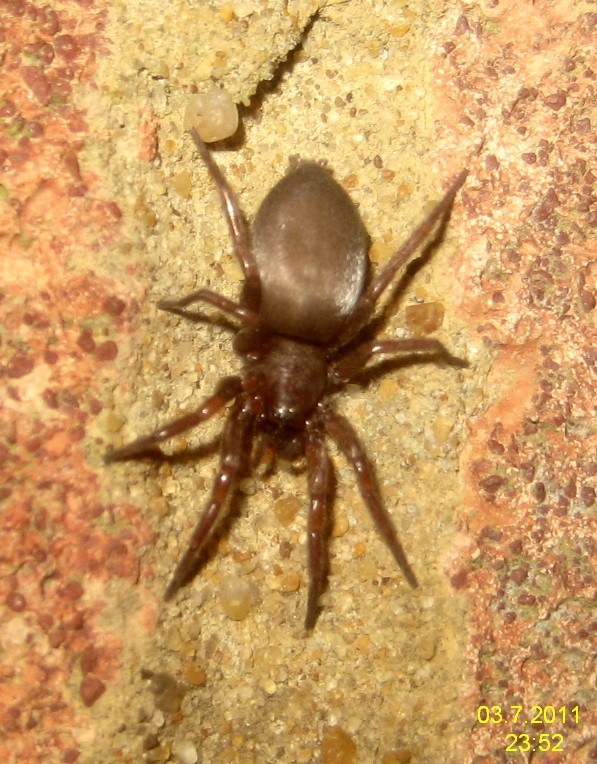
Woodlouse Spider
Damp leaf litter, under logs, stones, and mulch
Wolf Spider
Gardens, grasslands, forests, leaf litter, ground burrows
Wandering Spider
Tropical and subtropical forest floor, foliage, and banana plants
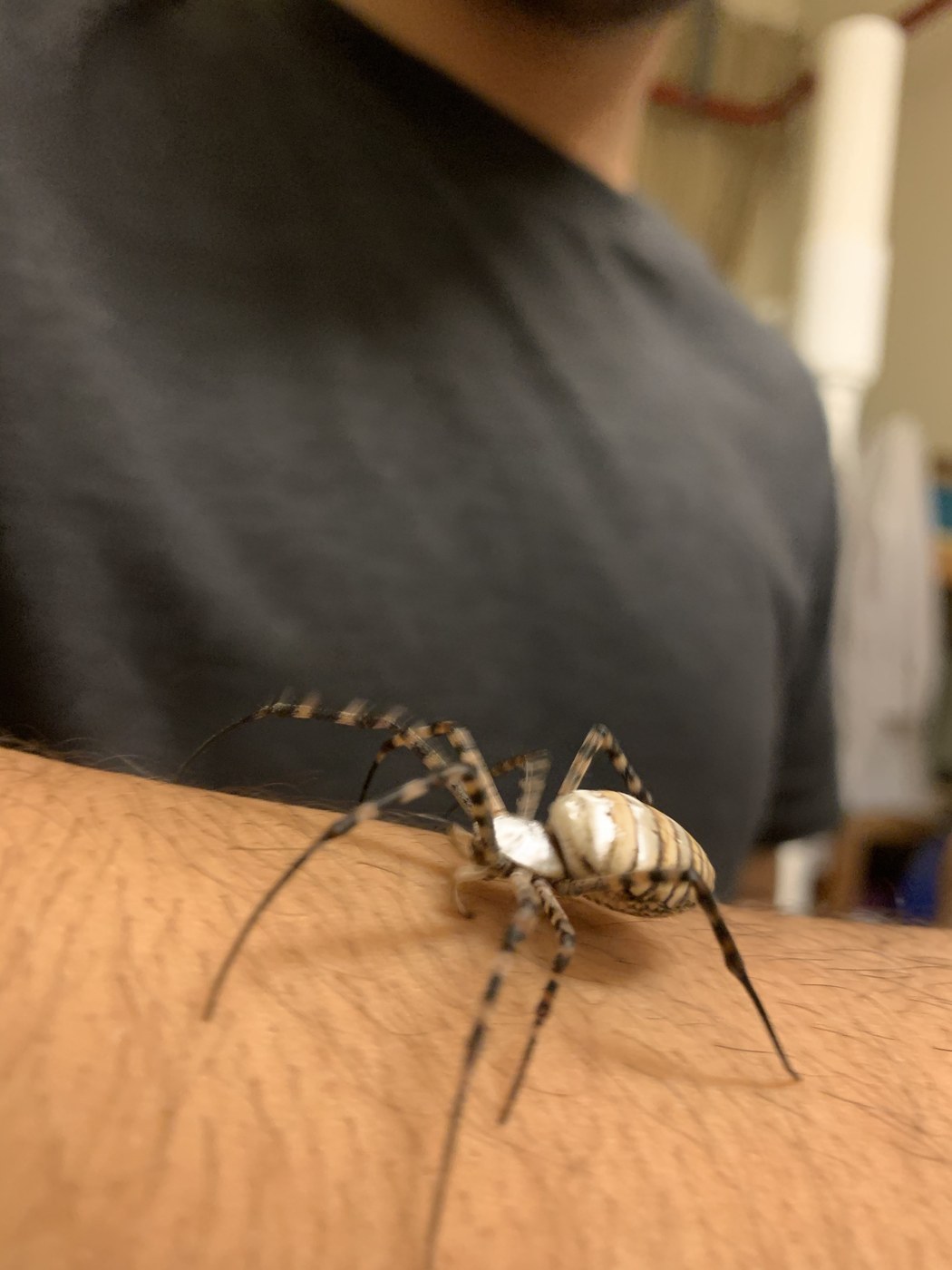
Banded Garden Spider
Tall grass, meadows, and gardens with open sunny vegetation
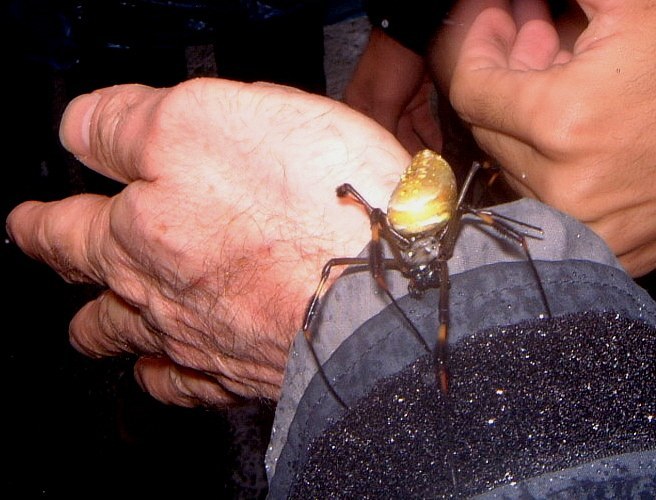
Banana Spider
Wooded trails, forest edges, and gardens across the southeastern U.S. and the American tropics
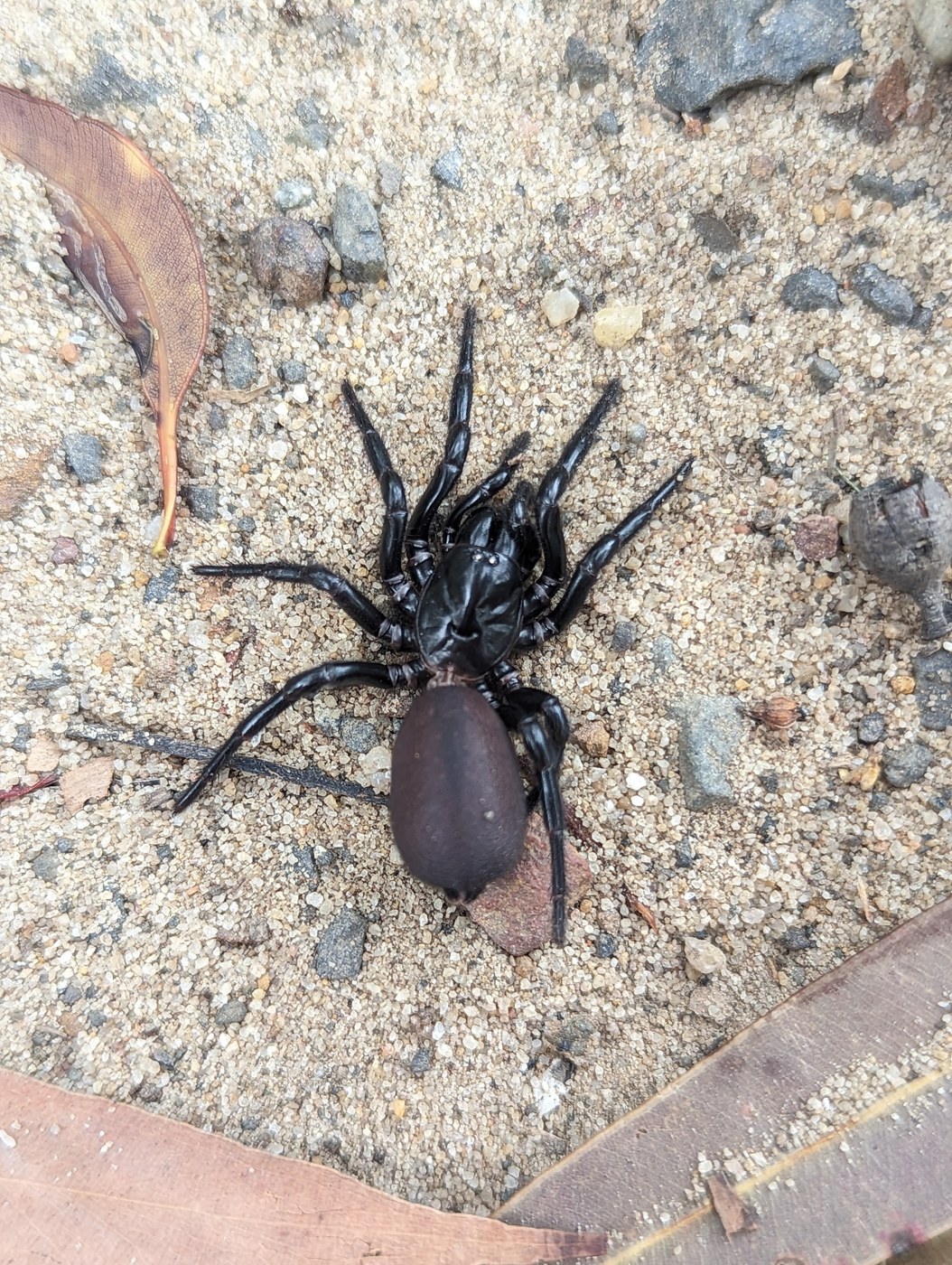
Sydney Funnel-web Spider
Burrows in moist soil, gardens, and forested gullies around the Sydney basin of eastern Australia
Trapdoor Spider
Self-dug silk-lined burrows with a camouflaged door, in dry, well-drained soil worldwide
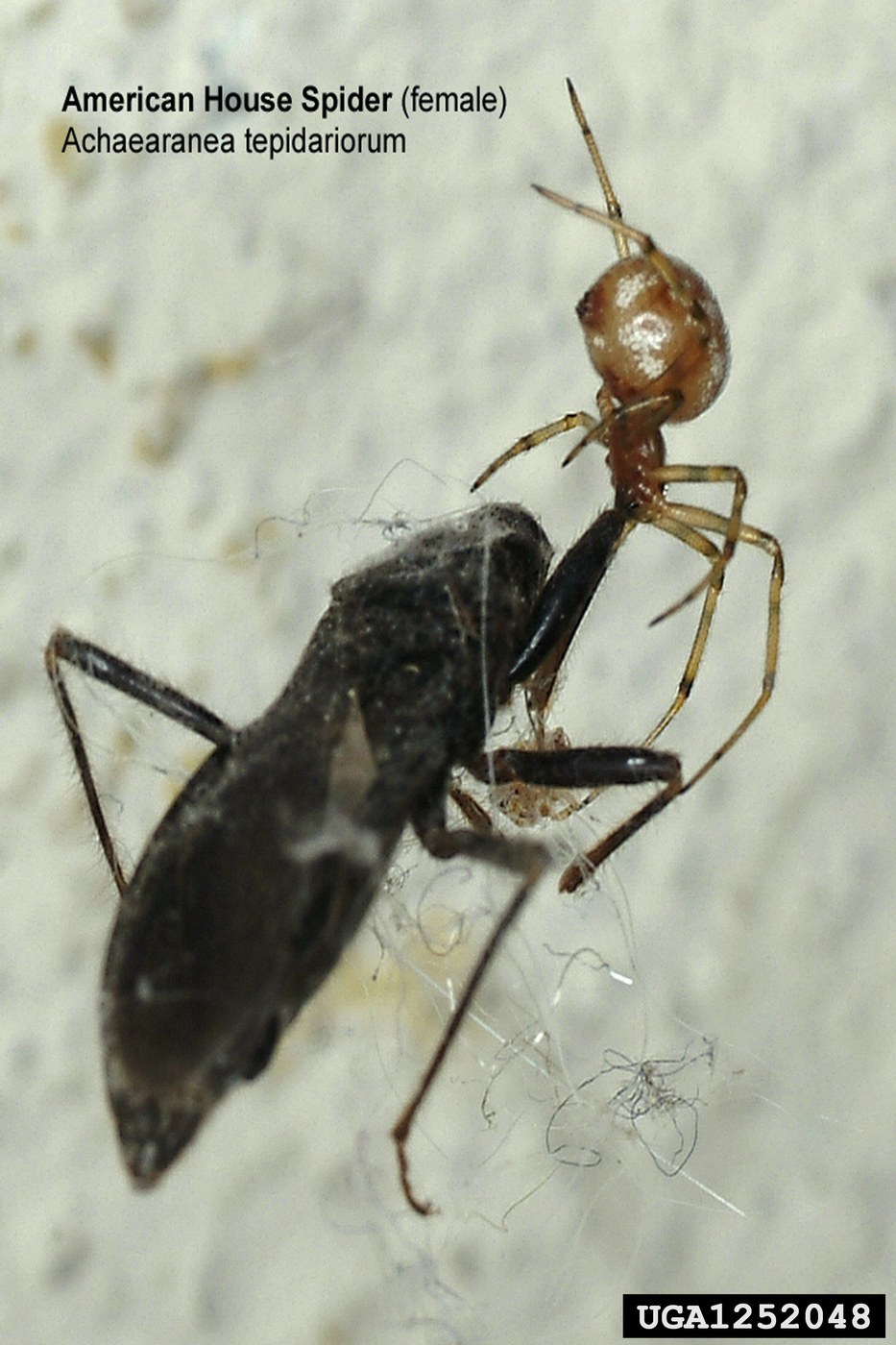
American House Spider
Corners, basements, garages, and outbuildings worldwide
Tube Web Spider
Wall crevices, bark, rockeries, and masonry
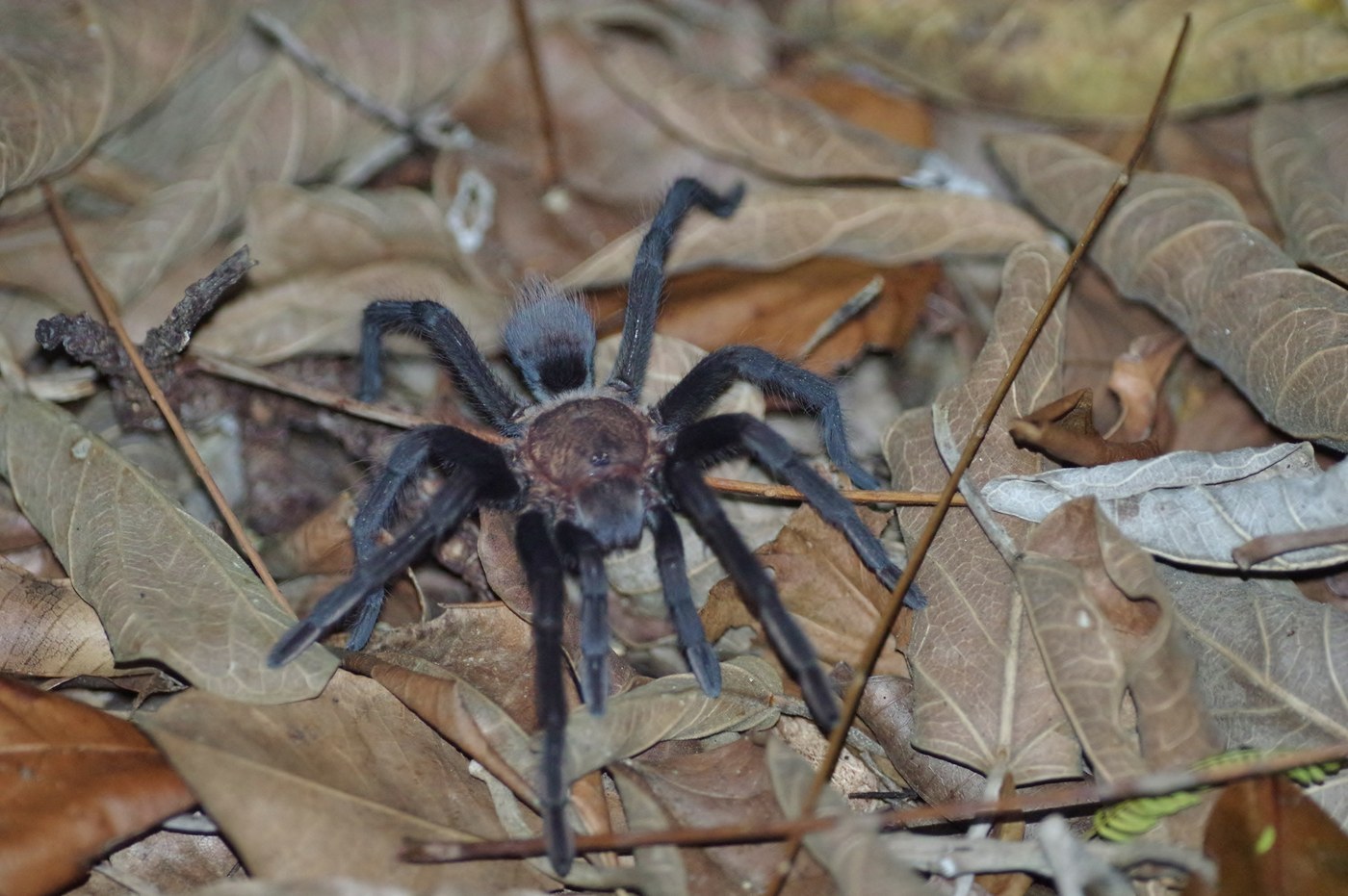
Tarantula
Burrows, rock crevices, and tree hollows in deserts, grasslands, and tropical forests worldwide
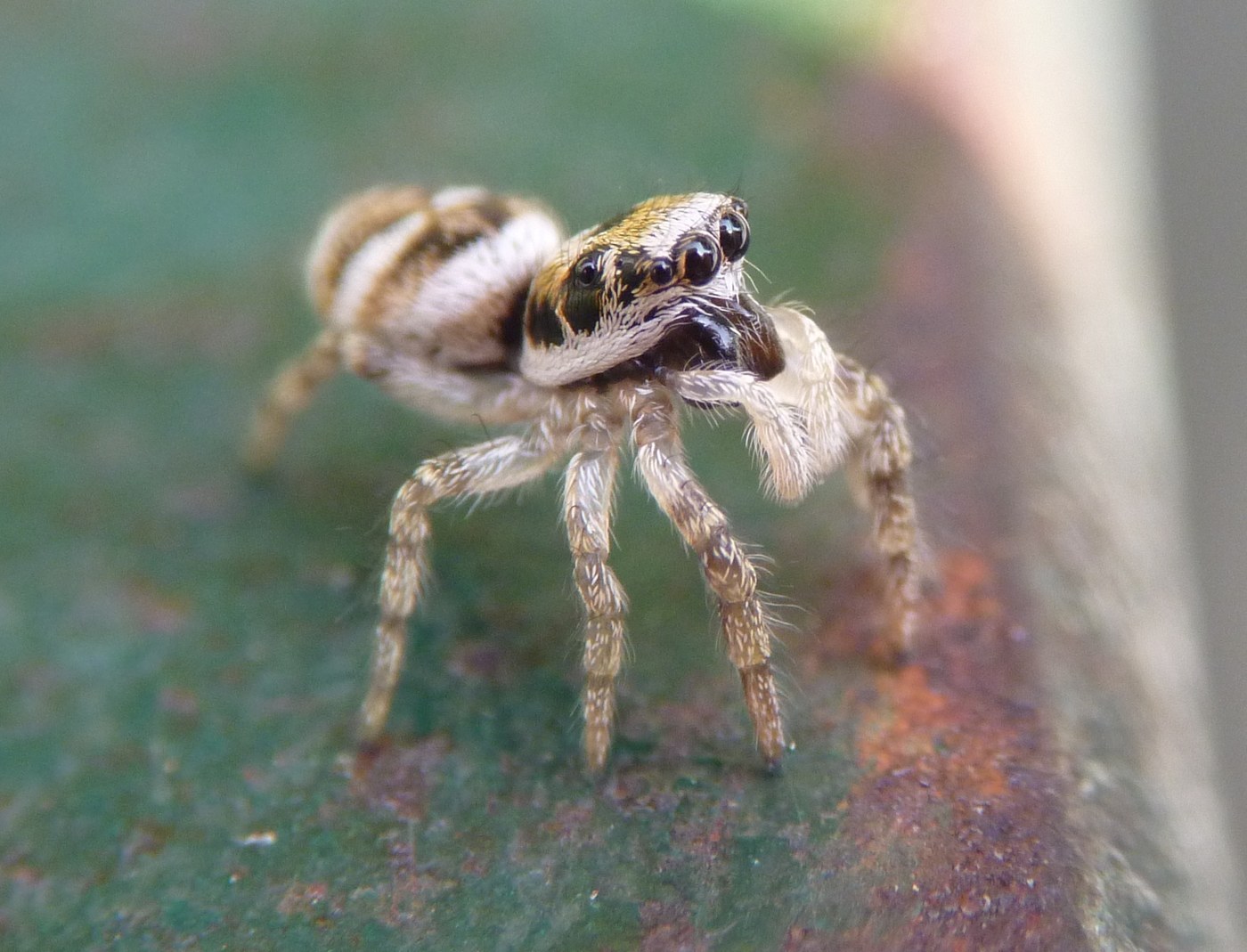
Zebra Jumping Spider
Sunny walls, fences, tree bark, and building exteriors
Wall Spider
Cracks and crevices on exterior and interior walls