
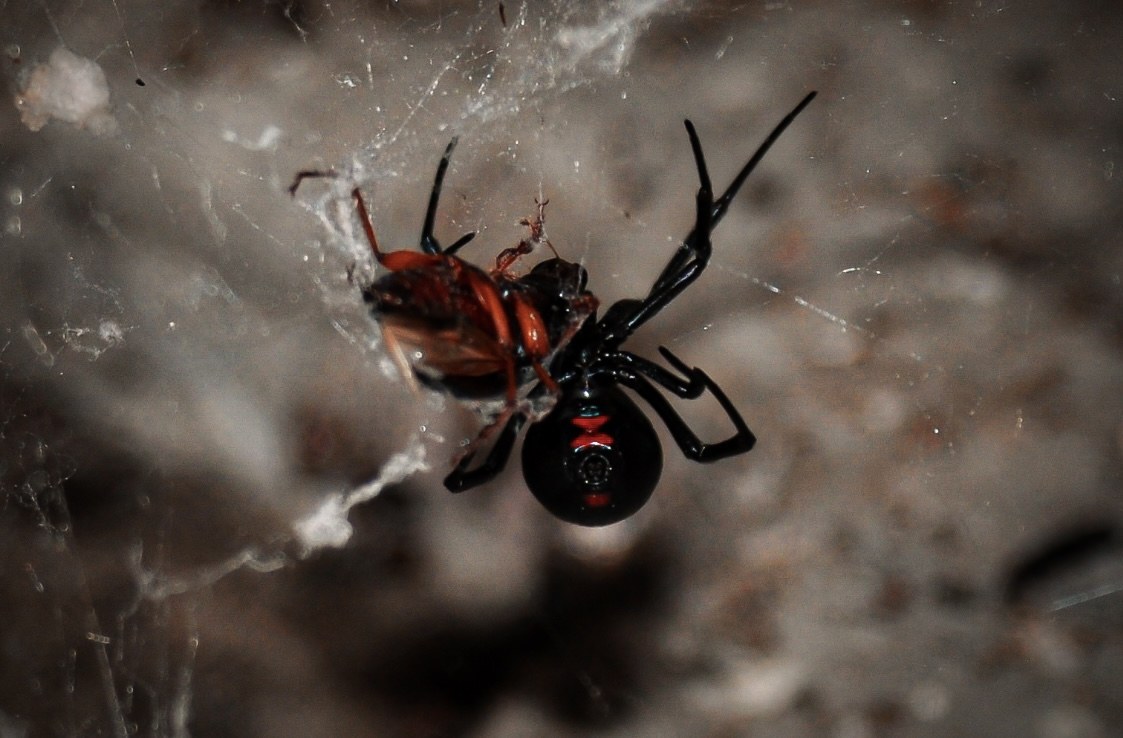
Southern Black Widow
Latrodectus mactans
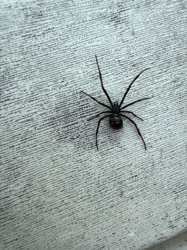
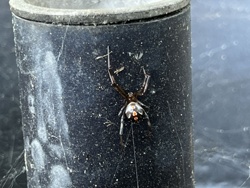
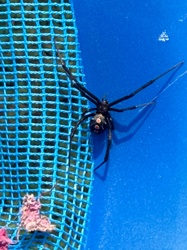
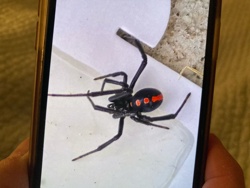
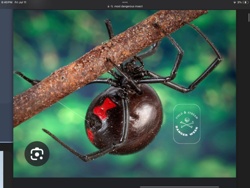
Glossy jet-black and marked with a bright red hourglass on the underside of its rounded abdomen, the southern black widow is one of the most recognizable spiders in North America, typically found tucked into quiet, undisturbed corners rather than out in the open.
- Size
- Female body 0.3-0.5 in (8-13 mm); males smaller at about 0.1-0.25 in (3-6 mm)
- Habitat
- Woodpiles, sheds, undisturbed debris, and burrows in warm temperate to subtropical North America
- Danger
- Venomous
Spotted a bug like this?
Identify any bug or insect from a photo, free.
Overview
The southern black widow, Latrodectus mactans, is a member of the widow spider genus and is found across the southern and eastern United States, extending into parts of Mexico. Females are instantly recognizable by their glossy, globular black abdomen marked underneath with a red or orange hourglass-shaped marking, one of the most iconic warning patterns among North American spiders. Males and juveniles look quite different, being smaller and patterned with lighter tan, brown, and white markings rather than solid black.
Southern black widows are shy, sedentary spiders that build an irregular, tangled cobweb in dark, undisturbed locations close to the ground, such as woodpiles, sheds, crawl spaces, and debris piles. They rarely leave the immediate vicinity of their web and are far more likely to retreat than to confront anything approaching.
As with other widow spiders, the southern black widow is a predator within its habitat, feeding on a variety of insects and other small arthropods that become entangled in its web, and it is best identified by its glossy black coloration and red hourglass marking together with its cobweb-building habit.
How to Identify
- Glossy black, rounded, bulbous abdomen on adult females
- Red or orange hourglass-shaped marking on the underside of the abdomen, sometimes broken into two separate triangles
- Long, thin legs relative to the compact body
- Males and juveniles are smaller, lighter in color, and patterned with tan, brown, and white markings rather than solid black
- Builds an irregular, tangled cobweb close to the ground in dark, sheltered locations rather than an open orb web
- Lookalikes include the closely related northern and western black widow species, distinguished mainly by subtle differences in the hourglass marking's shape and completeness
Habitat & Range
Southern black widows favor dark, undisturbed, sheltered spaces close to the ground, including woodpiles, sheds, garages, crawl spaces, meter boxes, and debris piles. They are found throughout the southern and eastern United States, from the Atlantic coast to Texas, and south into parts of Mexico, generally in warm temperate to subtropical climates.
Behavior & Diet
This species builds a messy, three-dimensional cobweb near ground level, often anchored between debris or structural gaps, with sticky trap lines extending down to intercept crawling insects. The spider remains within or near a small silken retreat in the web, rushing out to subdue prey caught in the sticky threads before wrapping and feeding on it. Southern black widows are not aggressive and are reluctant to leave their web, generally retreating deeper into the tangle when disturbed rather than confronting a threat. As predators, they help regulate populations of insects and other small arthropods within the sheltered habitats they occupy.
Life Cycle
Females produce several round, papery, tan-colored egg sacs over the course of a season, each containing large numbers of eggs, and often guard them within the web. Spiderlings hatch and disperse widely, sometimes ballooning on silk to new locations, and go through numerous molts as they grow, with juveniles displaying lighter, patterned coloration that darkens toward solid black as they approach maturity. Development speed depends on climate and food availability, with adult females capable of living a year or more and producing multiple egg sacs across that time, while males have a considerably shorter adult lifespan.
Frequently asked questions
How can I identify a southern black widow?
Adult females are glossy black with a red or orange hourglass marking on the underside of the abdomen, combined with an irregular, tangled cobweb built close to the ground.
Do young black widows look like adults?
No, juveniles and males are lighter colored with tan, brown, and white patterning, gradually darkening toward the adult female's black coloration as they mature.
Where do southern black widows typically build their webs?
They favor dark, undisturbed spots close to the ground such as woodpiles, sheds, crawl spaces, and debris piles.
What do southern black widows eat?
They prey on insects and other small arthropods that become entangled in the sticky threads of their web.
Southern Black Widow guides
In-depth guides for identifying, understanding, and living alongside Southern Black Widow.
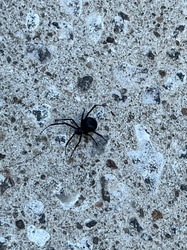
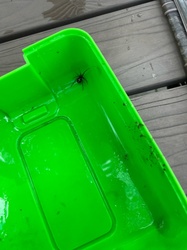
Southern Black Widow identified by the community
Real finds identified with Bug Identifier.
Other bugs you may enjoy
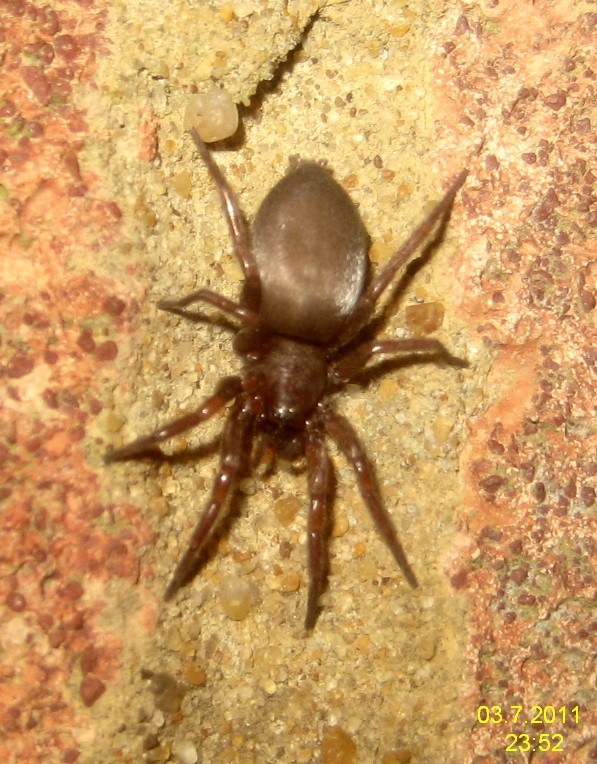
Woodlouse Spider
Damp leaf litter, under logs, stones, and mulch
Wolf Spider
Gardens, grasslands, forests, leaf litter, ground burrows
Wandering Spider
Tropical and subtropical forest floor, foliage, and banana plants
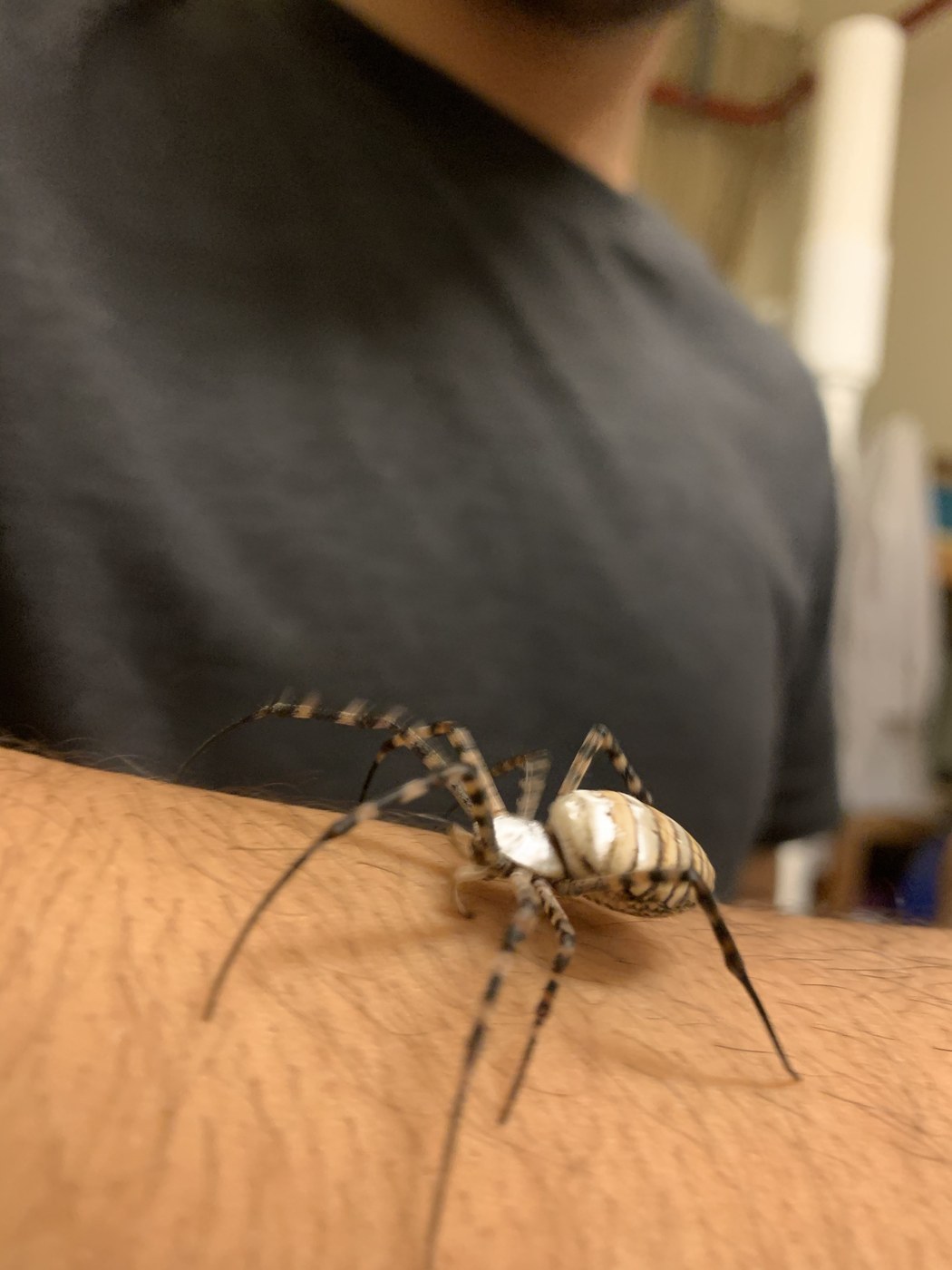
Banded Garden Spider
Tall grass, meadows, and gardens with open sunny vegetation
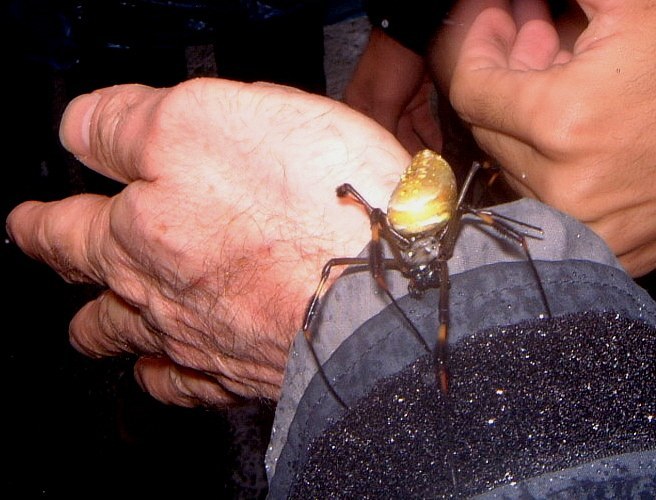
Banana Spider
Wooded trails, forest edges, and gardens across the southeastern U.S. and the American tropics
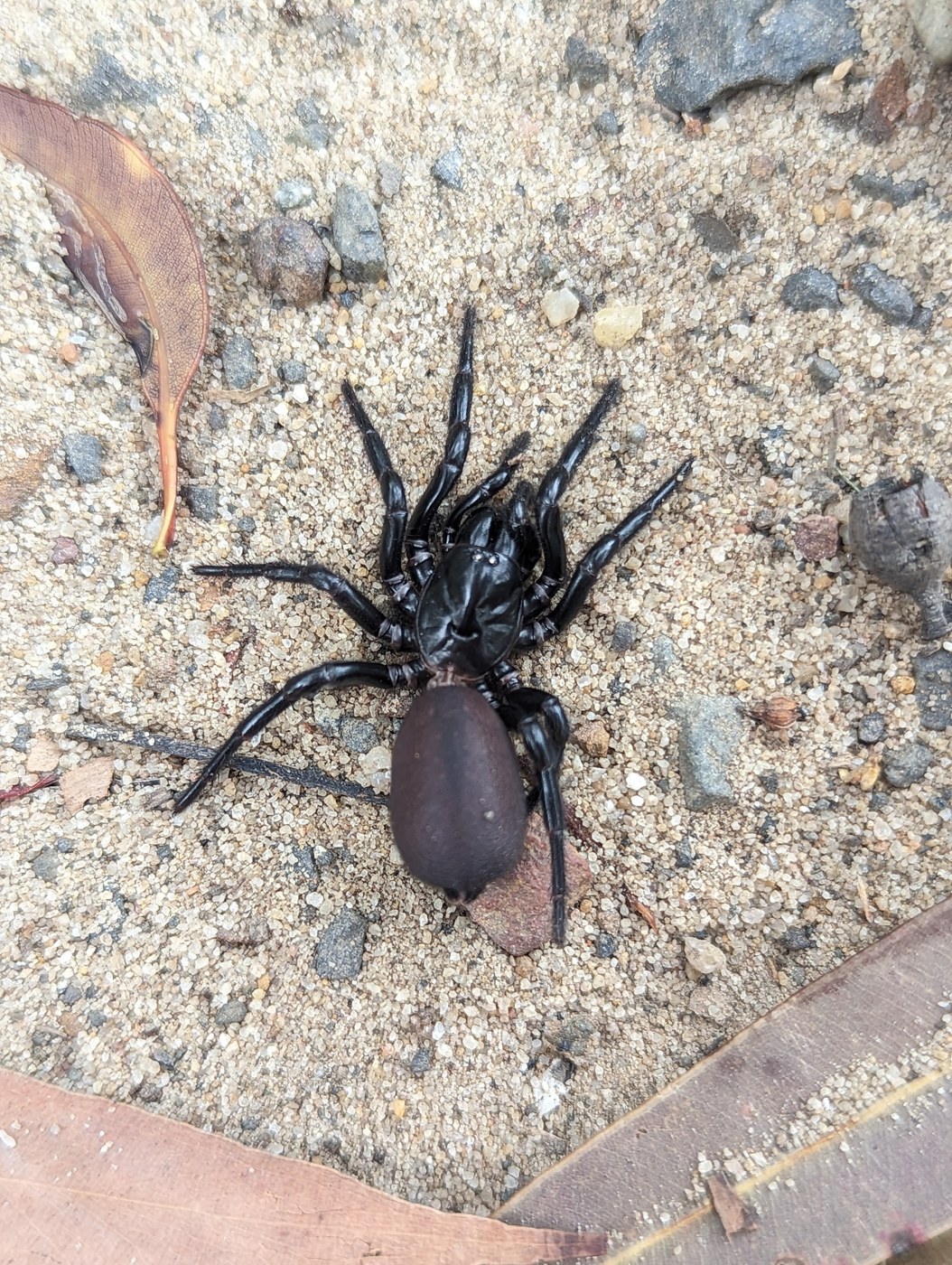
Sydney Funnel-web Spider
Burrows in moist soil, gardens, and forested gullies around the Sydney basin of eastern Australia
Trapdoor Spider
Self-dug silk-lined burrows with a camouflaged door, in dry, well-drained soil worldwide
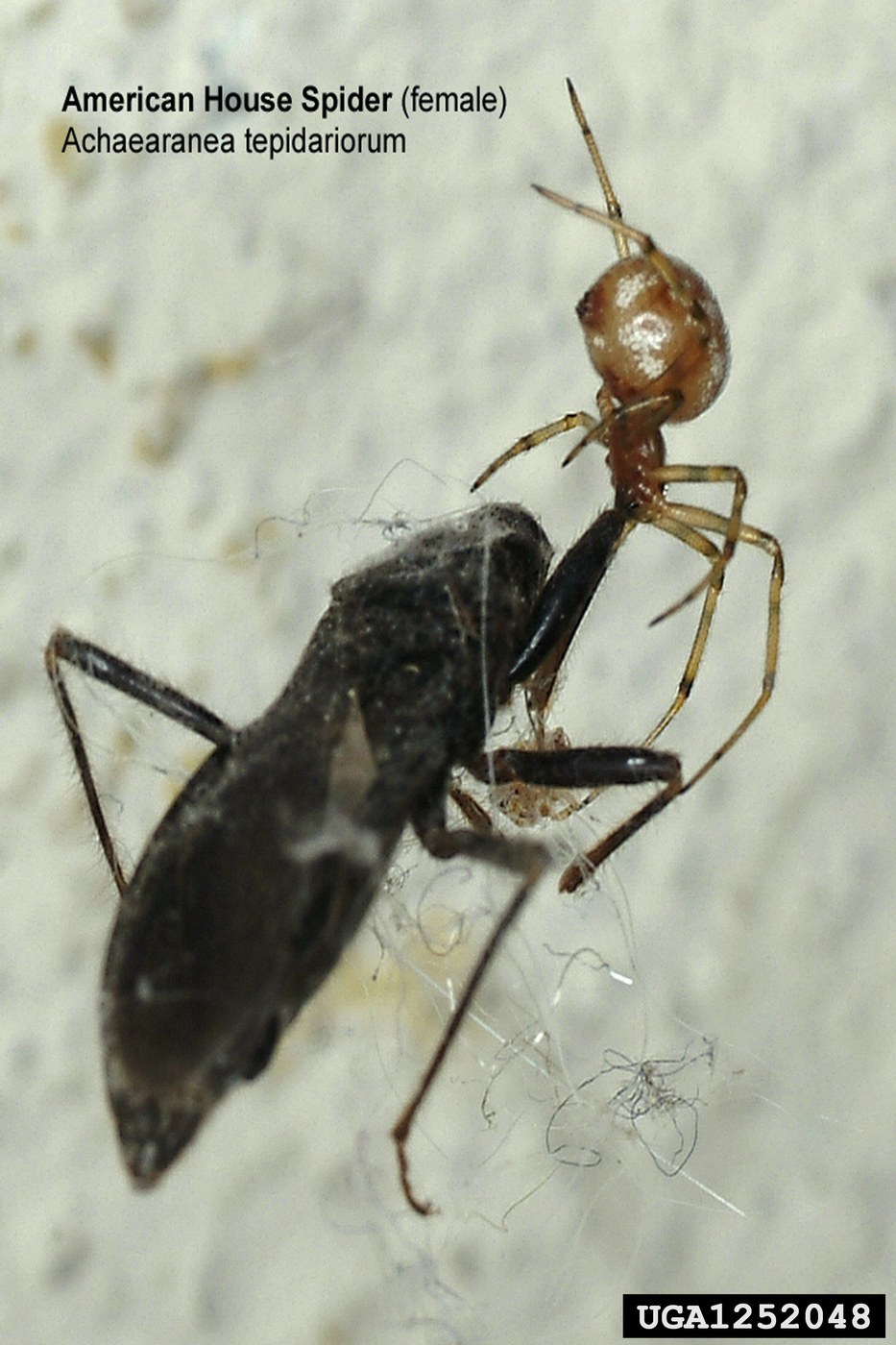
American House Spider
Corners, basements, garages, and outbuildings worldwide
Tube Web Spider
Wall crevices, bark, rockeries, and masonry
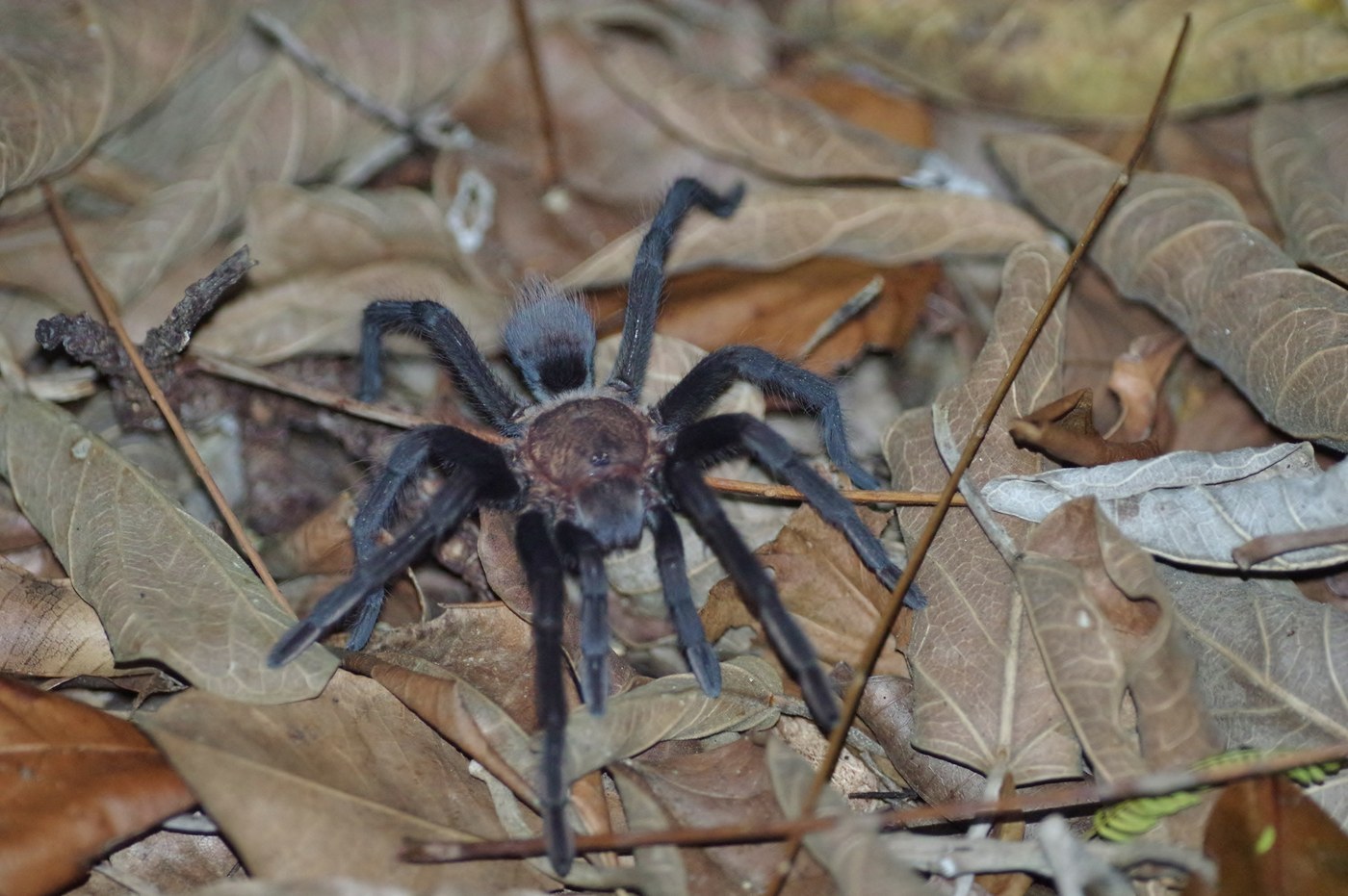
Tarantula
Burrows, rock crevices, and tree hollows in deserts, grasslands, and tropical forests worldwide
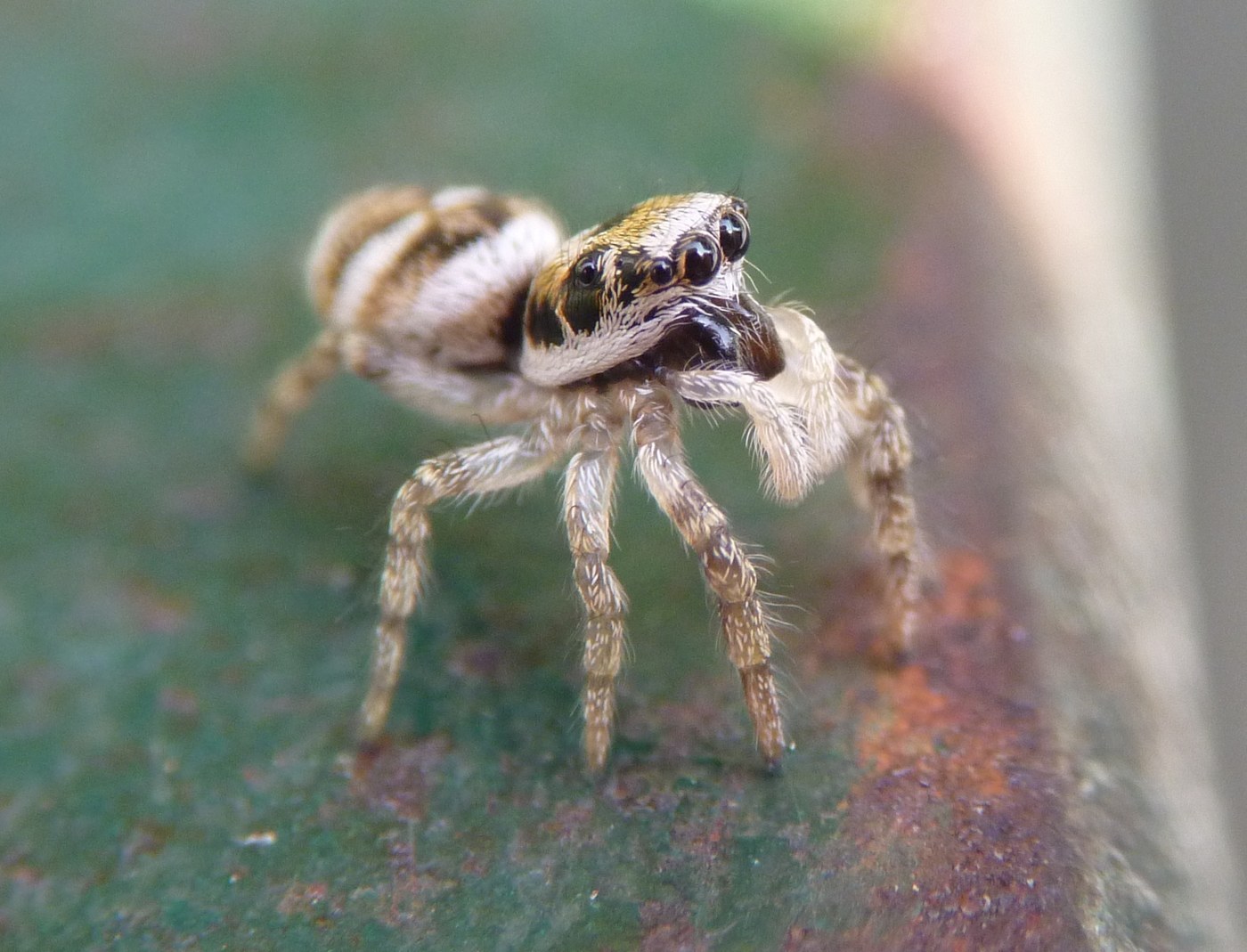
Zebra Jumping Spider
Sunny walls, fences, tree bark, and building exteriors
Wall Spider
Cracks and crevices on exterior and interior walls