
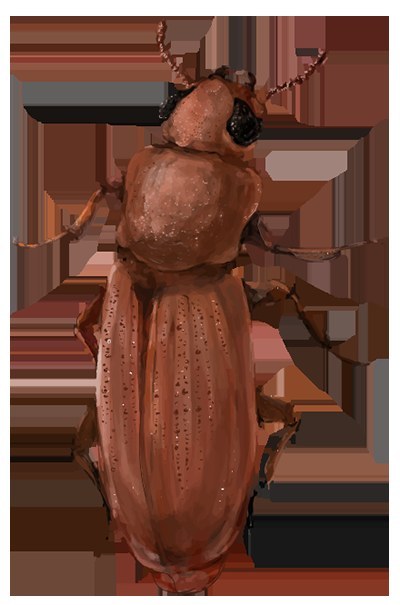
Flour Beetle
Tribolium castaneum
A tiny, shiny reddish-brown beetle that infests flour, cereal, and other dry stored foods, often found in dense clustered populations.
- Size
- 3–4 mm
- Habitat
- Stored grain, flour mills, pantries, kitchen cupboards
- Danger
- Nuisance pest
Spotted a bug like this?
Identify any bug or insect from a photo, free.
Overview
The flour beetle is a small member of the darkling beetle family (Tenebrionidae), a group best known for scavenger species that thrive in dry, decaying, or stored plant material. Two nearly identical species, the red flour beetle (Tribolium castaneum) and the confused flour beetle (Tribolium confusum), are the ones most commonly encountered indoors and are frequently lumped together under the common name.
This beetle is notable primarily as one of the most widespread stored-product insects on Earth, riding along in grain shipments and pantry goods to nearly every inhabited continent. Because it breeds quickly in flour, cornmeal, cereal, pasta, and similar dry goods, it is extremely familiar to anyone who has found small reddish beetles wriggling in an old bag of flour.
Ecologically, flour beetles are detritivores and scavengers of plant starches, filling a niche similar to that of many other pantry beetles. They have also become one of the most important laboratory model organisms in entomology and genetics, used for decades to study population biology and pest behavior.
How to Identify
- Small, elongated-oval body, flattened and shiny, roughly 3–4 mm long.
- Uniform reddish-brown to dark rust coloring across the entire body.
- Hardened wing covers (elytra) with fine, parallel longitudinal grooves.
- Thread-like to slightly clubbed antennae depending on species (the red flour beetle has a distinct 3-segmented club).
- Lookalikes include the confused flour beetle, which lacks the obvious antennal club and has a squarer thorax; both are essentially indistinguishable without close inspection.
Habitat & Range
Flour beetles are found worldwide wherever dry stored plant products accumulate, including grain elevators, flour mills, warehouses, pet food storage, and household pantries. They avoid the outdoors and rarely survive far from a food source, making indoor structures their functional habitat. Activity continues year-round indoors since they are not dependent on seasonal temperature cycles, though populations often build fastest in warm, undisturbed storage areas.
Behavior & Diet
These beetles are scavengers that feed on the starchy remains of processed grain products, especially flour, meal, and cracked or damaged grain kernels rather than whole intact seeds. They are active crawlers rather than strong fliers and tend to aggregate in cracks, seams of packaging, and the deeper layers of stored food. When disturbed in large numbers, some Tribolium species release a defensive quinone-based secretion that can give infested flour a musty odor. In the wider food web they serve mainly as decomposers of plant starches and as prey for other small arthropods that inhabit stored-product environments.
Life Cycle
Development is complete metamorphosis: egg, larva, pupa, adult. Tiny white eggs are laid loose within flour or meal; the small, slender, wireworm-like yellowish-white larvae feed and molt several times before pupating within the food medium. Under warm conditions a full generation can be completed in under a month, allowing many overlapping generations per year indoors. There is no true overwintering diapause in heated structures, since indoor stored-product environments remain warm and food-rich continuously.
Frequently asked questions
Is the flour beetle the same as a weevil?
No, weevils have a distinct elongated snout and belong to a different beetle family; flour beetles have a normal rounded head without a snout.
How can I tell red and confused flour beetles apart?
The main difference is the antennae: the red flour beetle has an abrupt 3-segmented club at the tip, while the confused flour beetle's antennae widen gradually without a sharp club.
Do flour beetles fly?
Red flour beetles can fly in warm conditions, while confused flour beetles are flightless, which is one behavioral clue to species identity.
Where would I typically find one?
Inside bags or containers of flour, cereal, pasta, or other dry starchy goods, especially products that have been stored for a long time.
Flour Beetle guides
In-depth guides for identifying, understanding, and living alongside Flour Beetle.
Other bugs you may enjoy
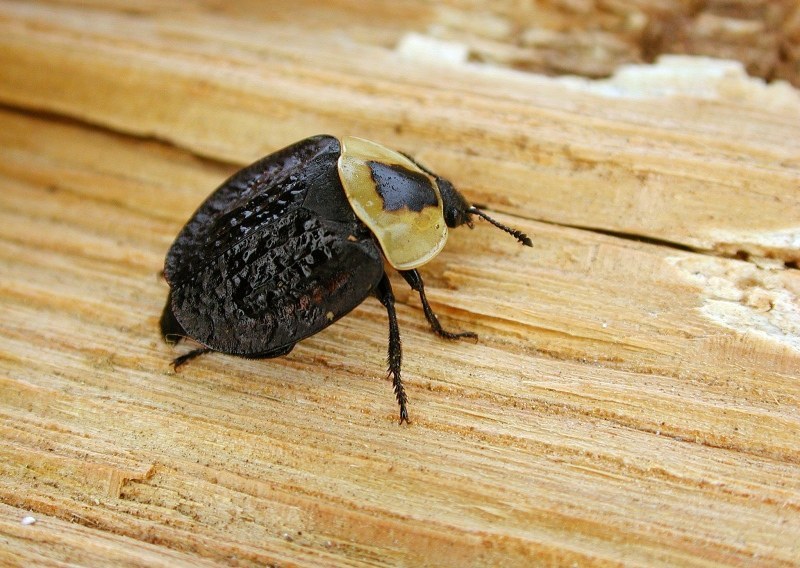
American Carrion Beetle
Forests, fields, and roadsides across North America, near decaying animal carcasses
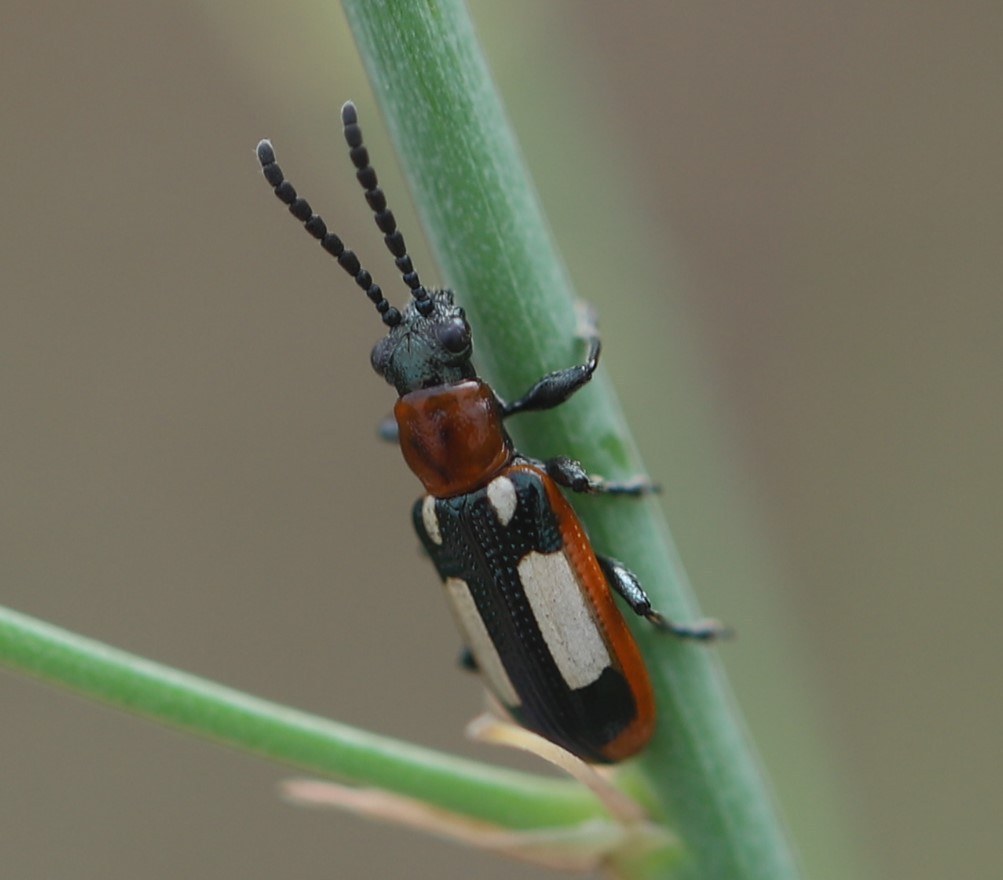
Asparagus Beetle
Asparagus patches, gardens, and farm fields
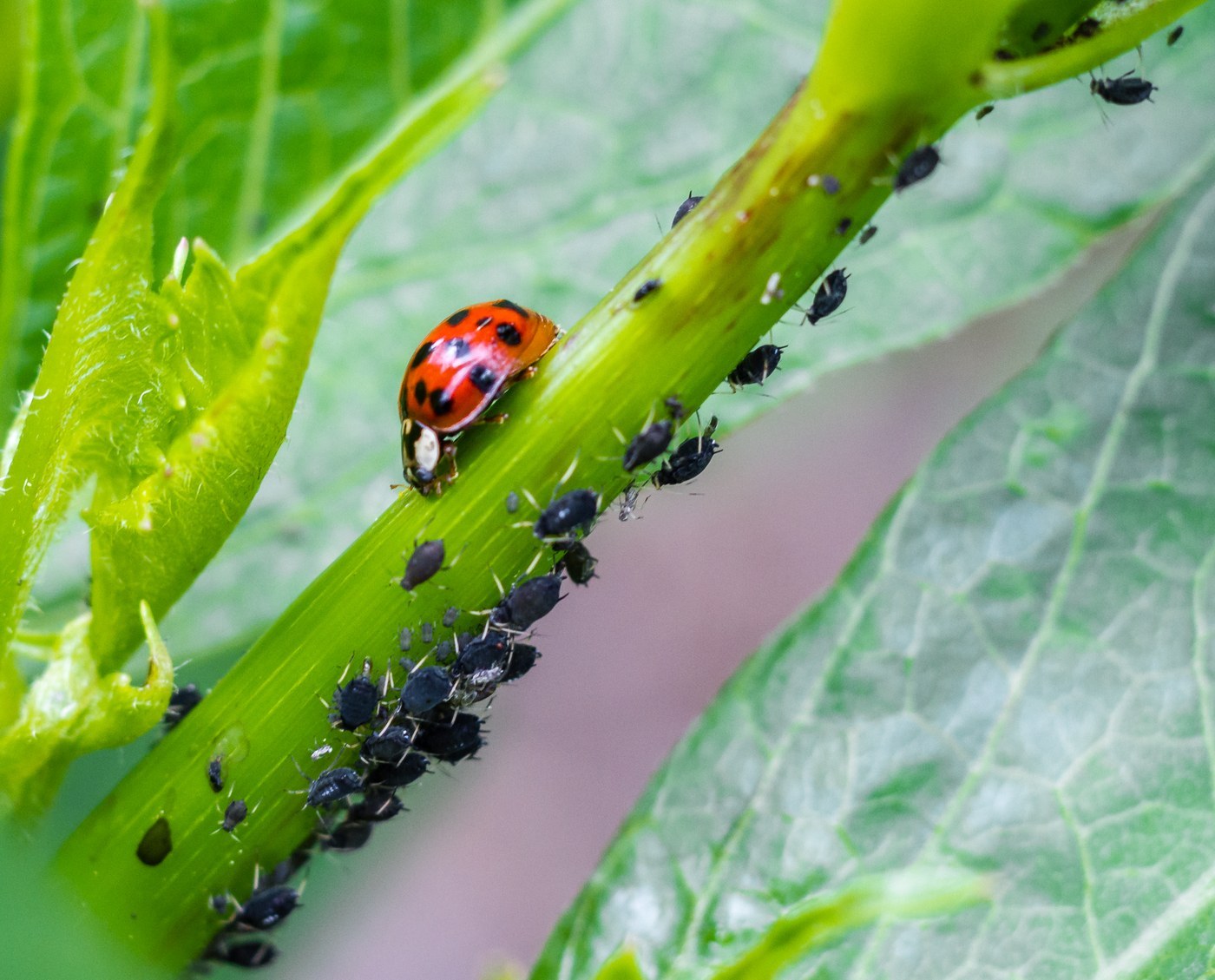
Asian Lady Beetle
Gardens, crop fields, woodlands, buildings
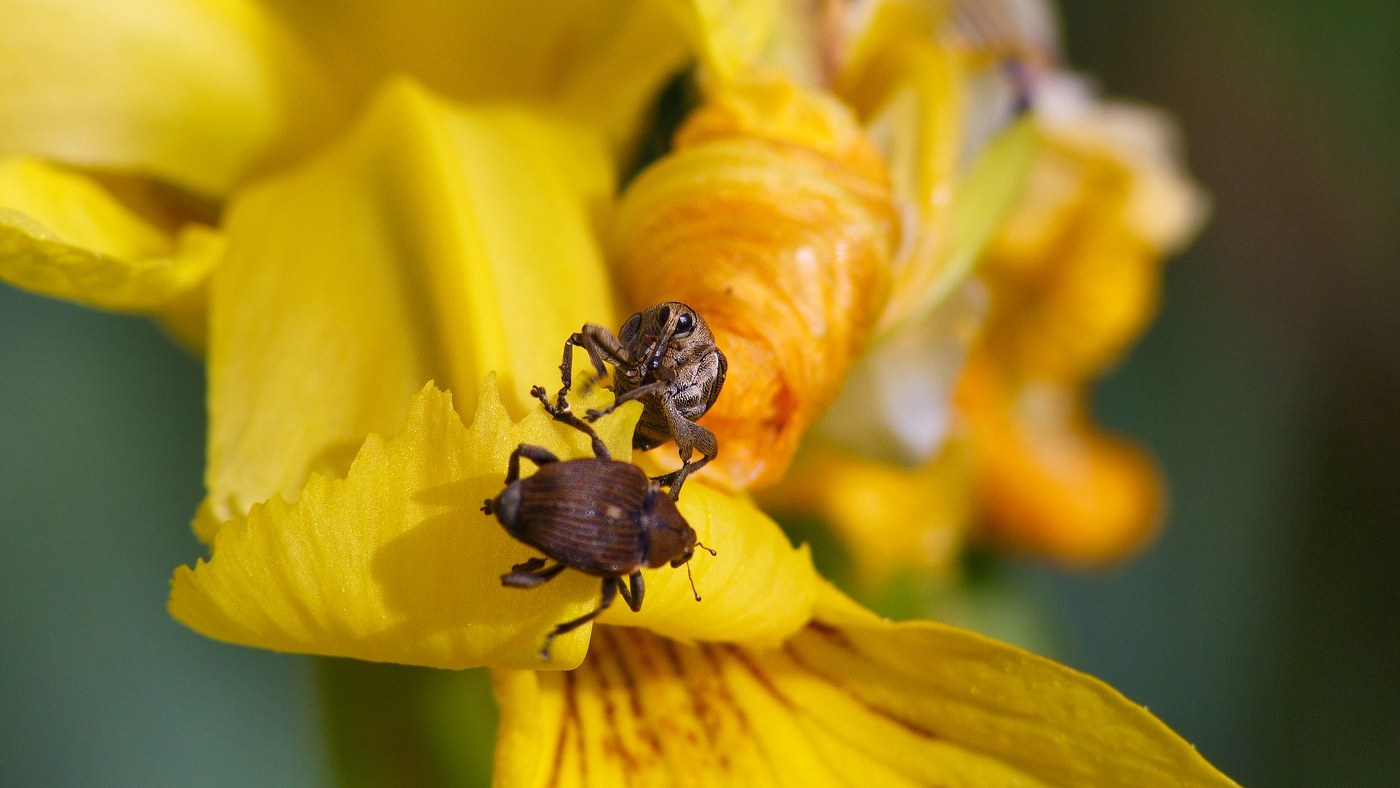
Acorn Weevil
Oak woodlands and forests, on and beneath oak trees
Wireworm
Soil of grasslands, gardens, and cultivated fields worldwide
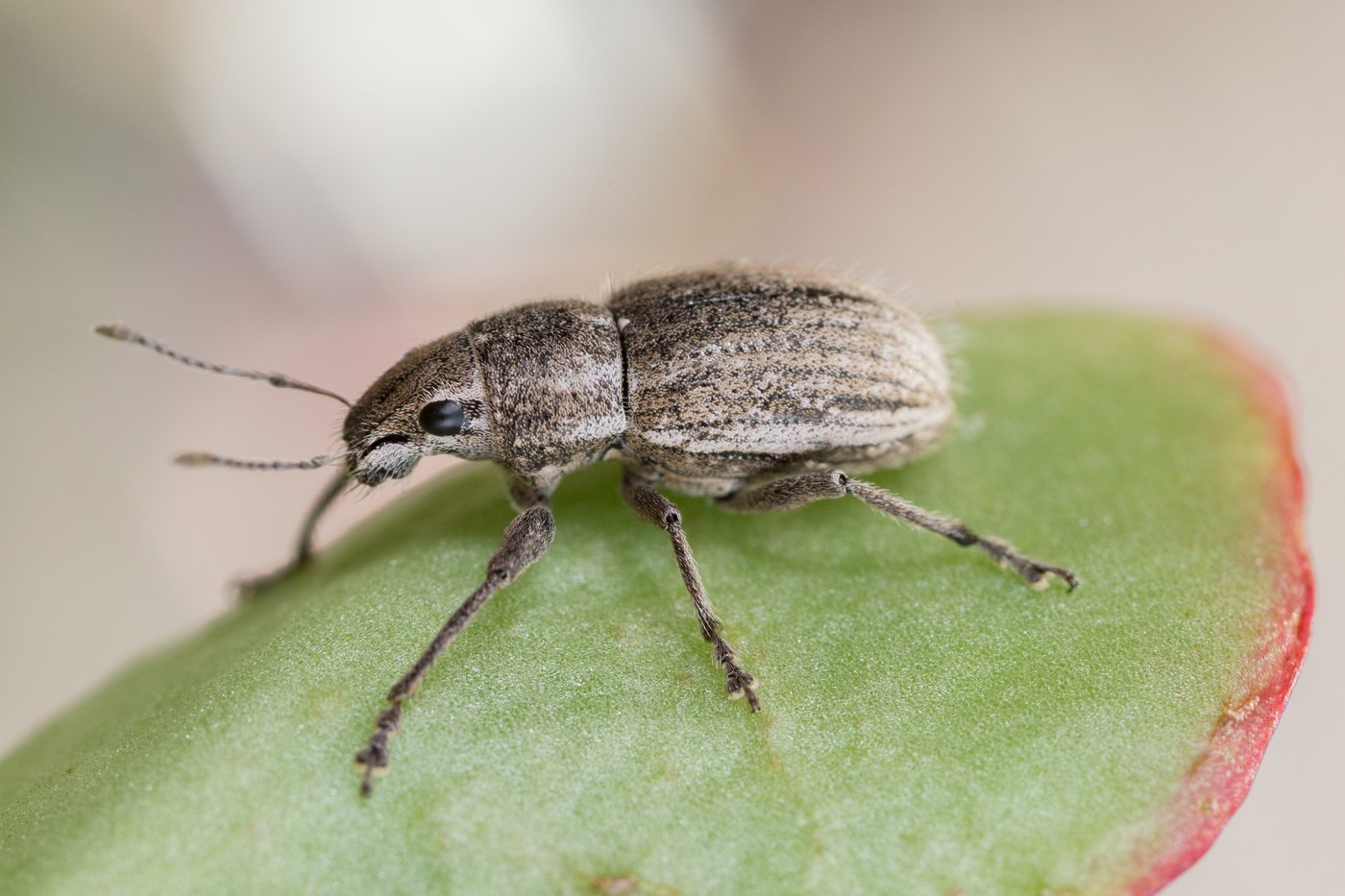
Whitefringed Beetle
Pastures, row crops, lawns, disturbed soils
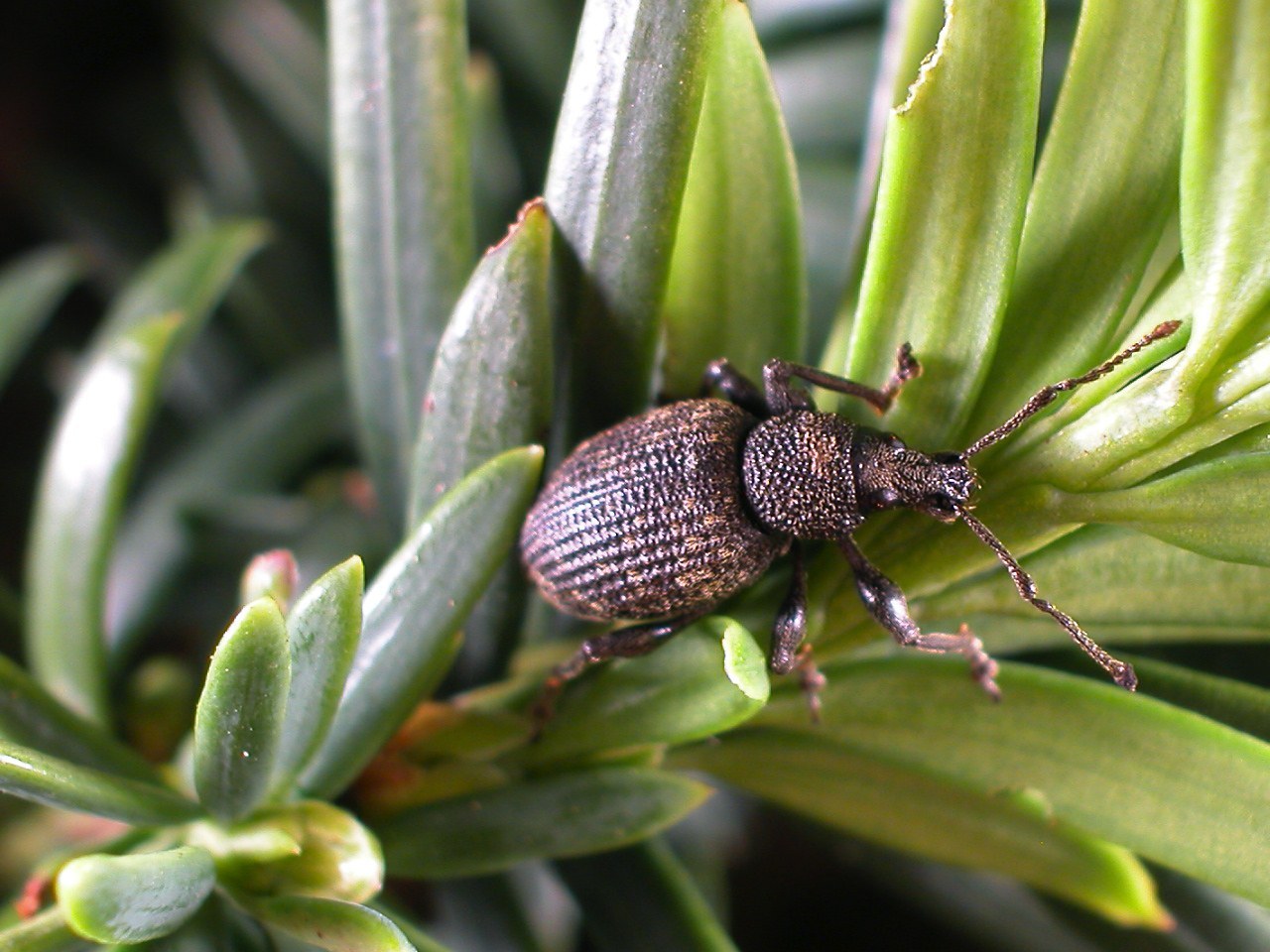
Vine Weevil
Gardens, nurseries, greenhouses, and container plantings
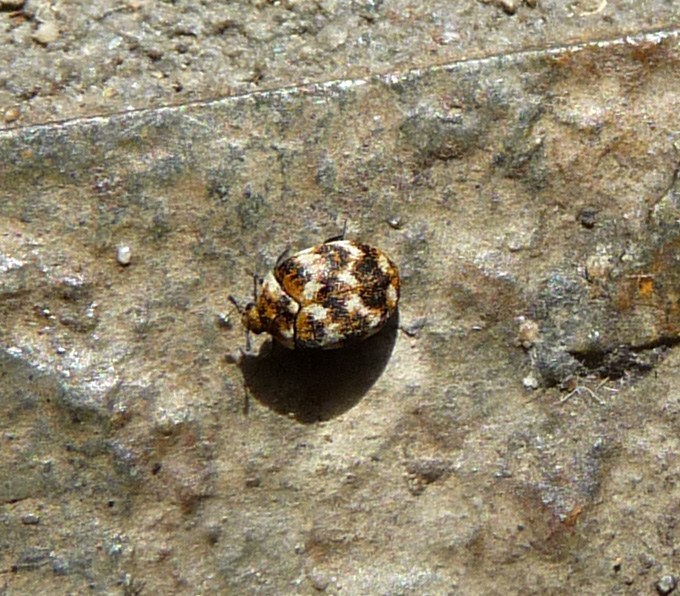
Varied Carpet Beetle
Homes, nests of birds and mammals, and flowers outdoors
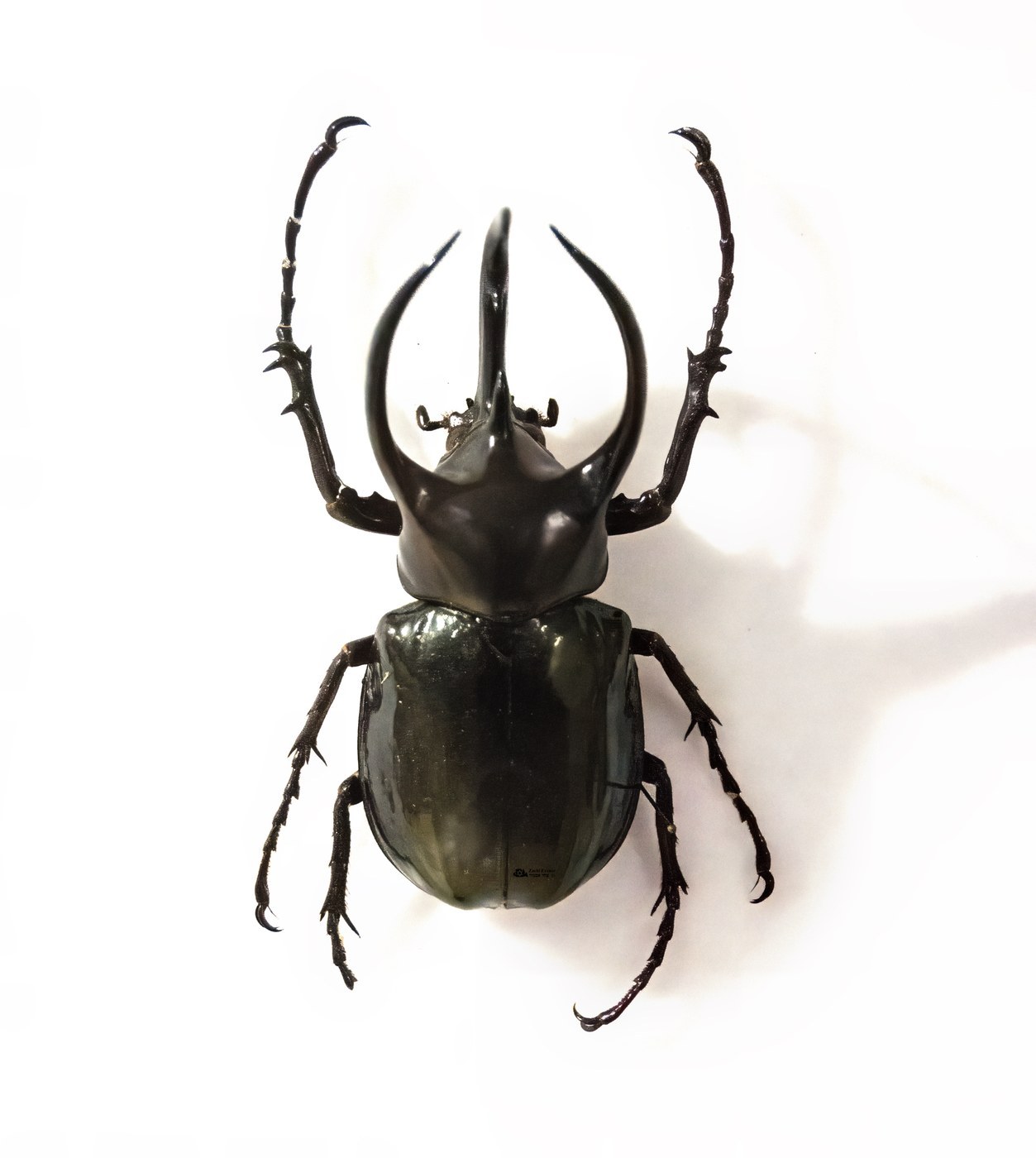
Atlas Beetle
Tropical forests of Southeast Asia
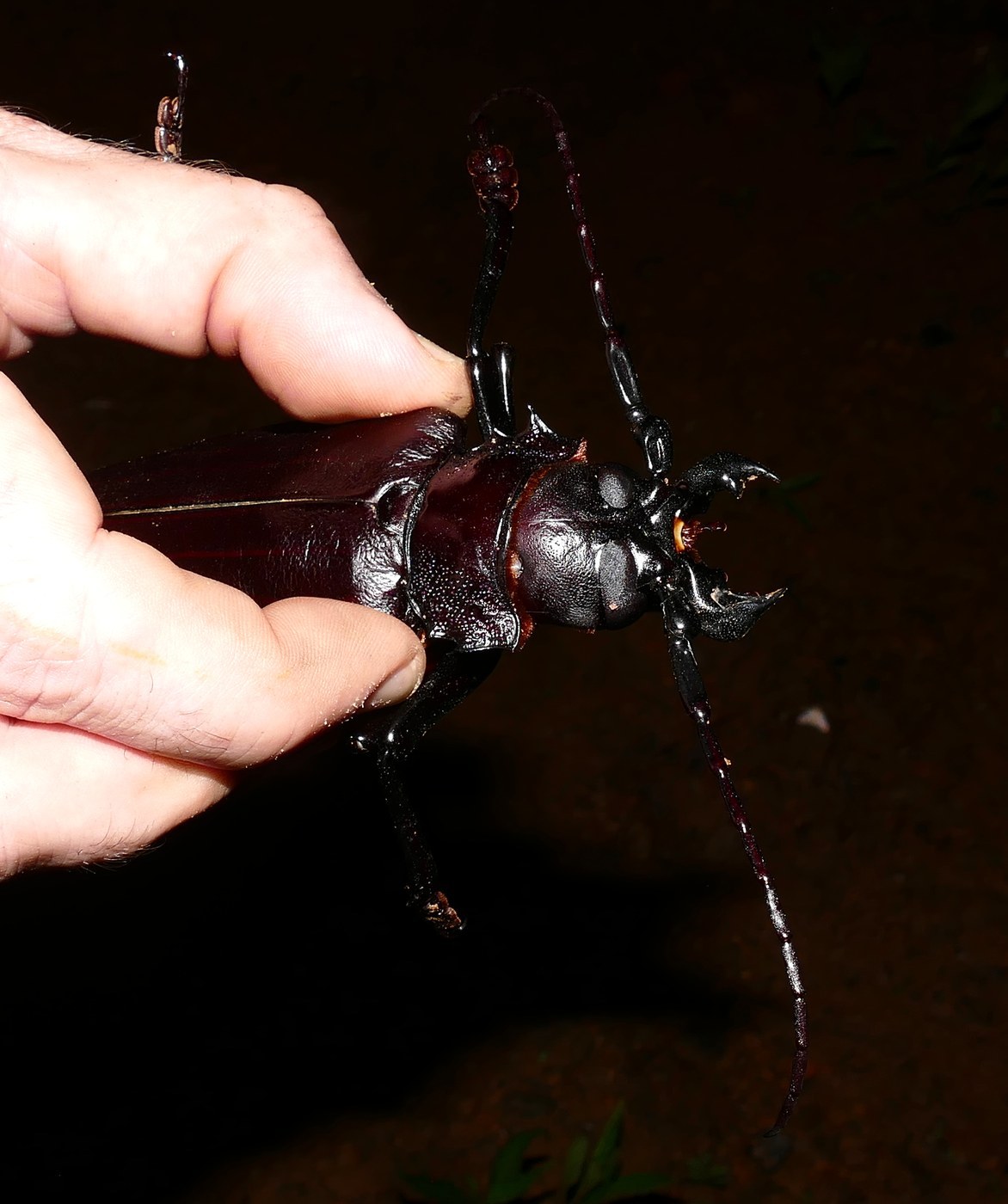
Titan Beetle
Amazon rainforest of South America
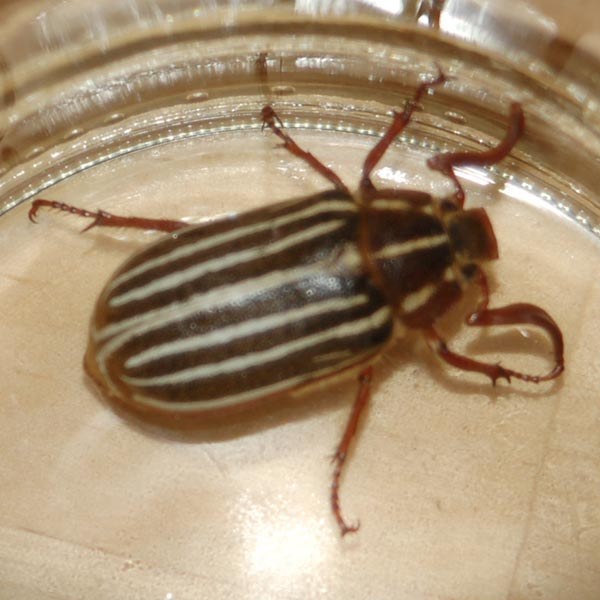
Ten-lined June Beetle
Sandy soils, pine forests, and orchards of western North America
Squash Beetle
Vegetable gardens and fields growing squash, pumpkin, and other cucurbits