
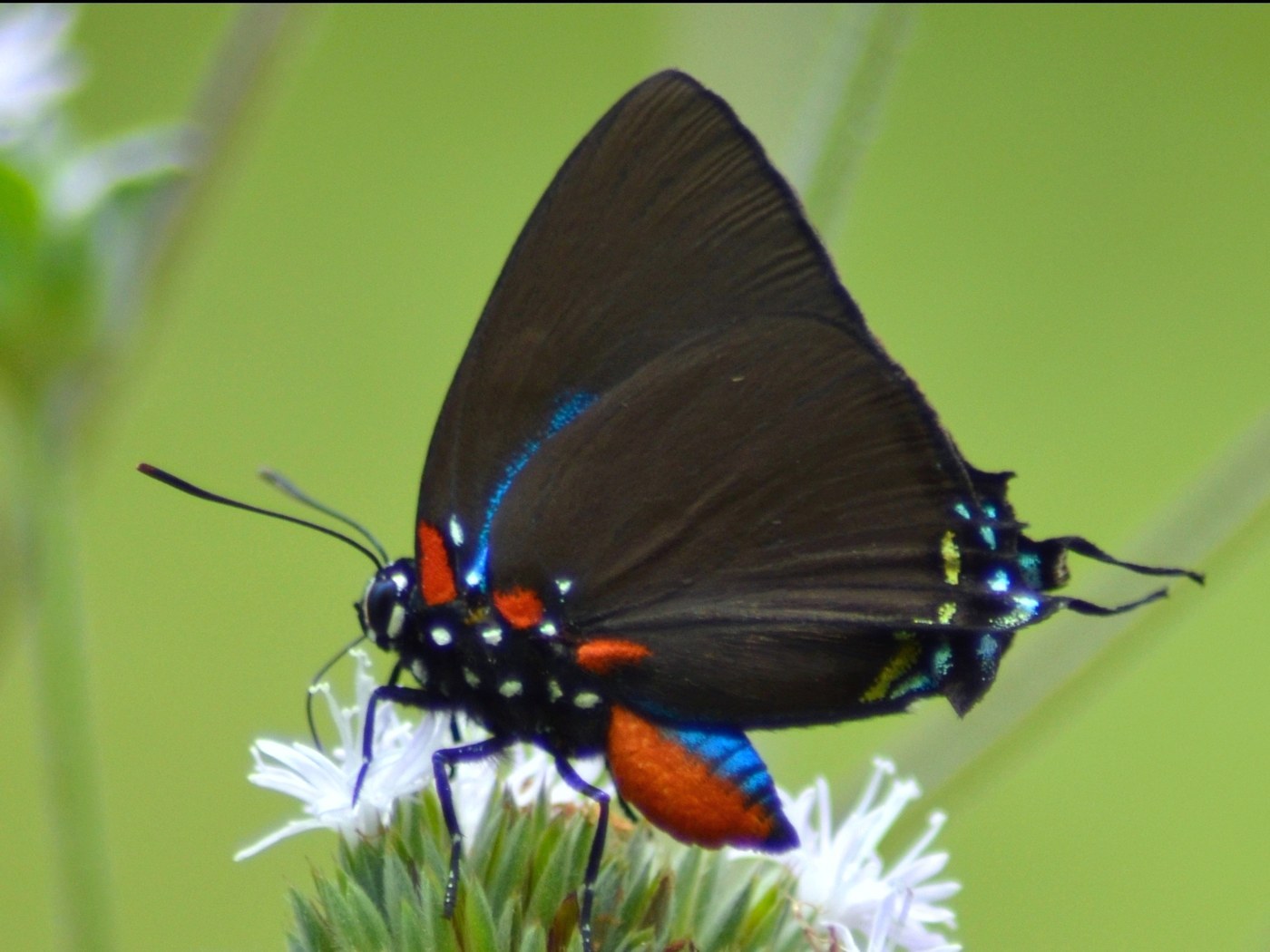
Great Purple Hairstreak
Atlides halesus
The largest and most iridescent hairstreak in North America, with brilliant blue-green upperwings, red-orange spots on the body and wing base, and long twin tails, its caterpillars feeding on parasitic mistletoe clumps in host trees.
- Size
- 1.4–2.0 in wingspan
- Habitat
- Woodlands and wooded suburbs with mistletoe-infested trees, mainly southern US
- Danger
- Harmless
Spotted a bug like this?
Identify any bug or insect from a photo, free.
Overview
The Great Purple Hairstreak is the largest species in the gossamer-wing family (Lycaenidae) found in North America, easily outsizing most other hairstreaks. Its range spans the southern and southeastern United States down through Mexico and Central America, wherever its unusual host plant, mistletoe, grows on suitable trees.
What sets this species apart ecologically is its dependence on mistletoe, a parasitic plant that grows on the branches of oaks and other hardwoods; the caterpillars feed exclusively on mistletoe foliage rather than on the host tree itself. This specialized relationship ties the butterfly's distribution closely to areas where mistletoe infestations are common.
With its dazzling iridescent coloring, the Great Purple Hairstreak is considered one of the most spectacular small butterflies in North America and a favorite sighting among butterfly enthusiasts in its southern range.
How to Identify
- Upperside is brilliant iridescent blue-green, especially vivid in fresh individuals, contrasting with black wing borders.
- Body (thorax and abdomen) is dark with bright orange-red spots along the sides of the abdomen.
- Underside is blackish with a patch of iridescent blue-green near the wing base and orange-red coloring near the hindwing margin.
- Long, thin tails extend from the hindwing.
- Lookalikes: its large size, vivid iridescence, and red-spotted abdomen readily distinguish it from all other North American hairstreaks, which are smaller and duller.
Habitat & Range
Found across the southern United States from California and Arizona east through Texas, the Gulf states, and into Florida, extending south through Mexico and Central America. It occupies wooded areas, riparian corridors, and even suburban neighborhoods wherever oaks or other trees carry mistletoe clumps. In the warmest parts of its range, adults can be seen flying nearly year-round, while in cooler areas activity is concentrated in the warmer months.
Behavior & Diet
Adults fly with a fast, somewhat erratic pattern and often perch high in trees near mistletoe clumps, making them easier to spot when they descend to nectar at flowers such as goldenrod or other composites. Males perch to await females near host mistletoe. Caterpillars feed exclusively on the leaves of mistletoe growing as a parasite on host trees, a specialized diet that links the butterfly's presence directly to mistletoe abundance. The species plays a role in pollination within the wooded habitats it occupies.
Life Cycle
Eggs are laid on mistletoe foliage growing within host trees. Caterpillars are short, stout, and greenish, camouflaged against the mistletoe leaves they consume. Pupation occurs in bark crevices or leaf litter near the base of the host tree. In the warmer parts of its range the species can produce multiple generations per year and may overwinter as a pupa, while activity is more seasonally restricted toward the cooler edges of its range.
Frequently asked questions
Why is it called the 'Great Purple' Hairstreak if it looks blue?
The name is a historical holdover; the iridescent coloring can appear to shift between blue, green, and purple depending on the angle of light, which is reflected in its alternate name, Great Blue Hairstreak.
What do the caterpillars actually eat?
They feed exclusively on mistletoe, a parasitic plant that grows on the branches of oaks and other host trees, rather than on the tree's own leaves.
How big does it get compared to other hairstreaks?
It is the largest hairstreak in North America, with a wingspan noticeably larger than the roughly one-inch span typical of most other hairstreak species.
Where in the US would I be most likely to see one?
It is found across the southern United States, from the Southwest through Texas and the Gulf states to Florida, wherever mistletoe grows in trees.
Great Purple Hairstreak guides
In-depth guides for identifying, understanding, and living alongside Great Purple Hairstreak.
Other bugs you may enjoy
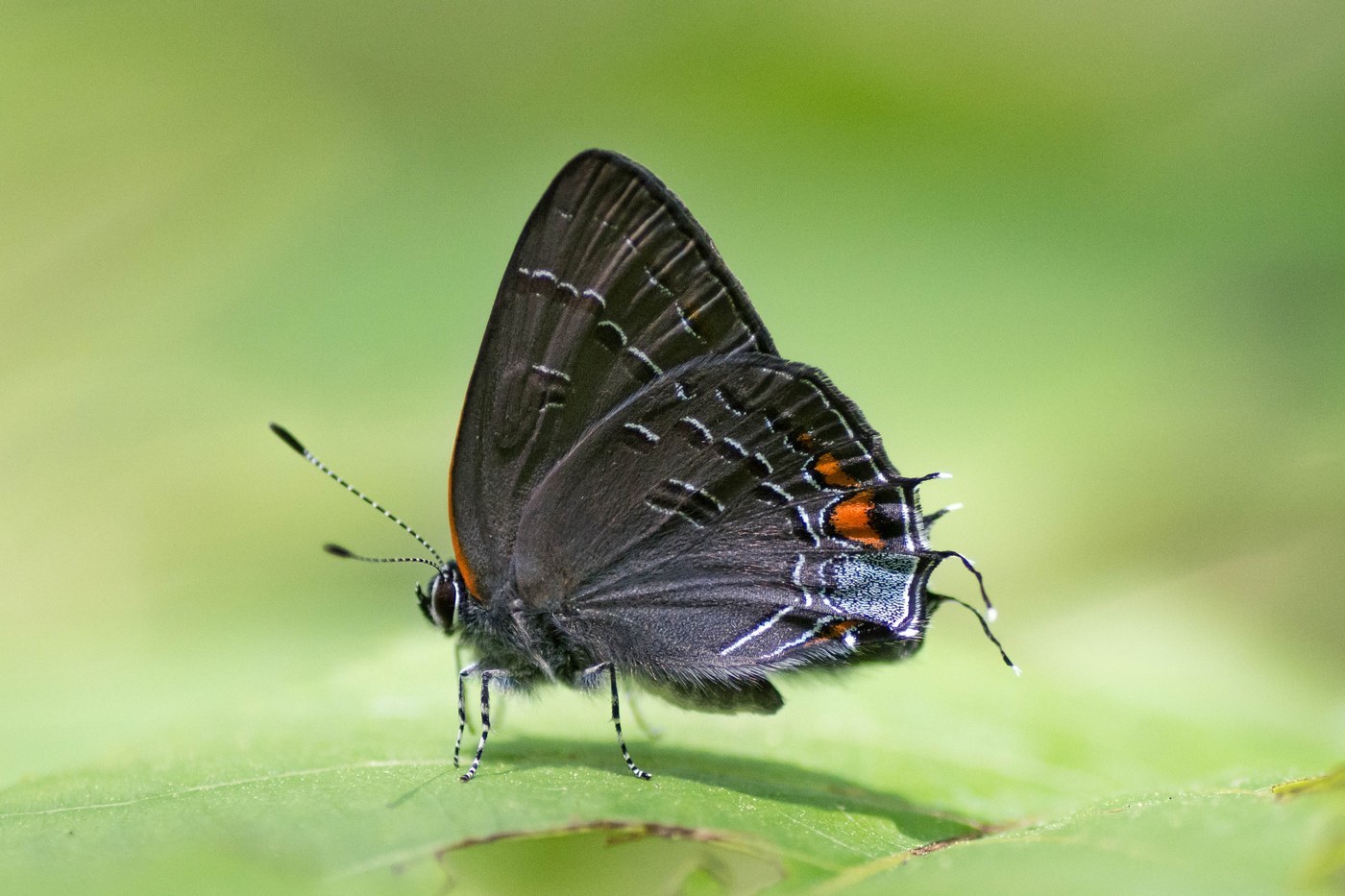
Banded Hairstreak
Deciduous woodlands and edges with oaks and hickories
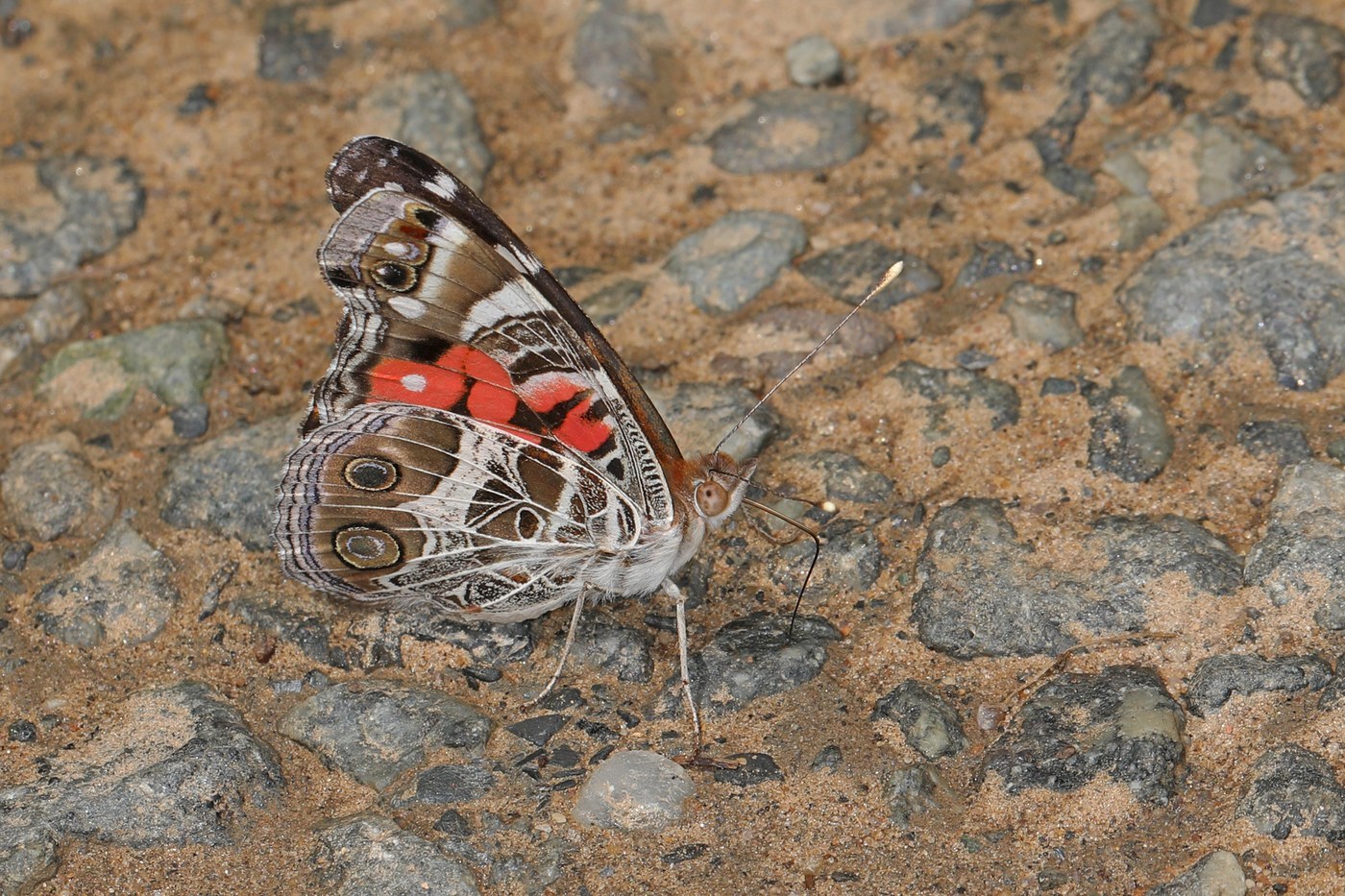
American Lady
Open fields, meadows, gardens, roadsides
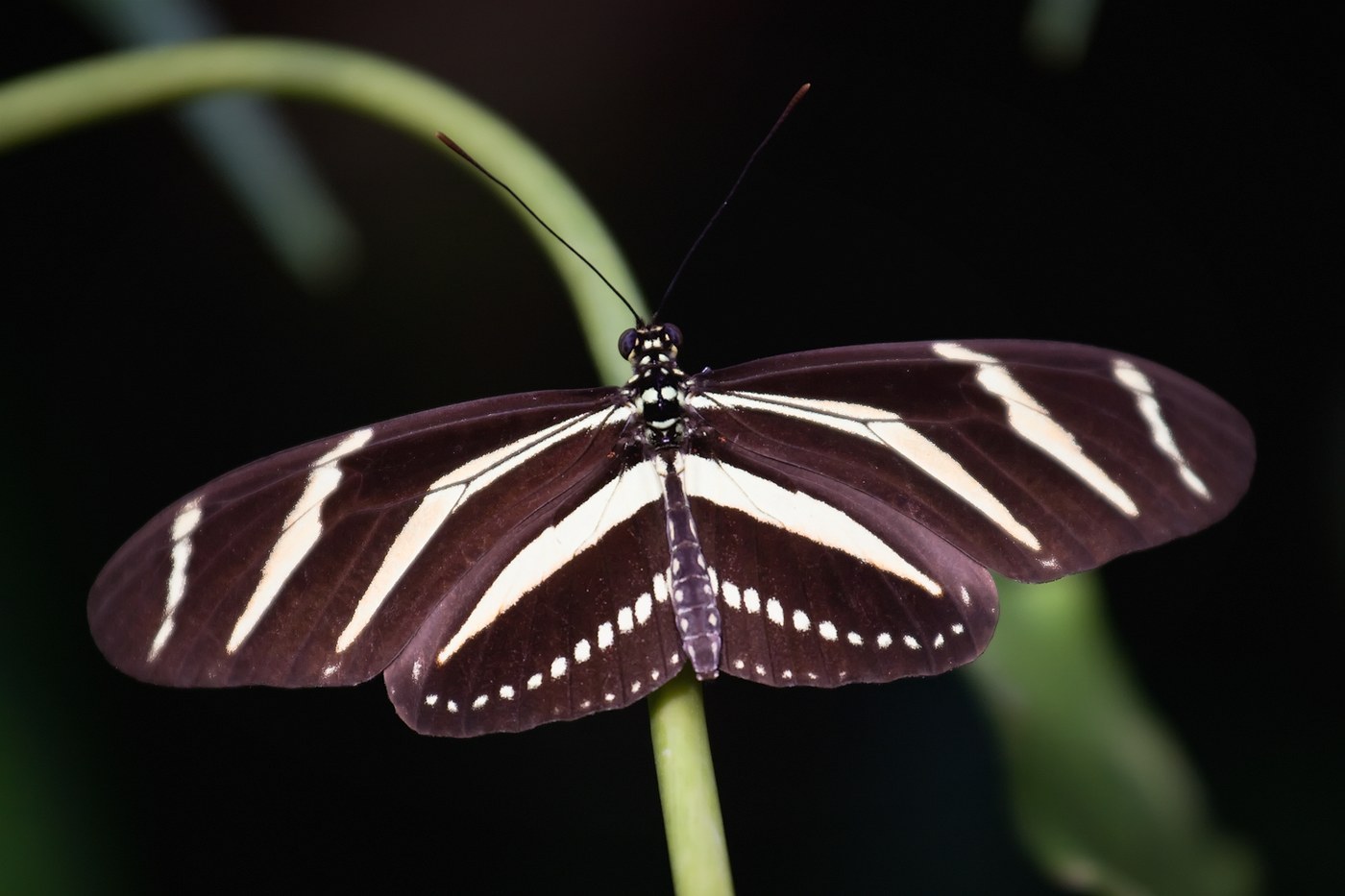
Zebra Longwing
Tropical hammocks, gardens, forest edges
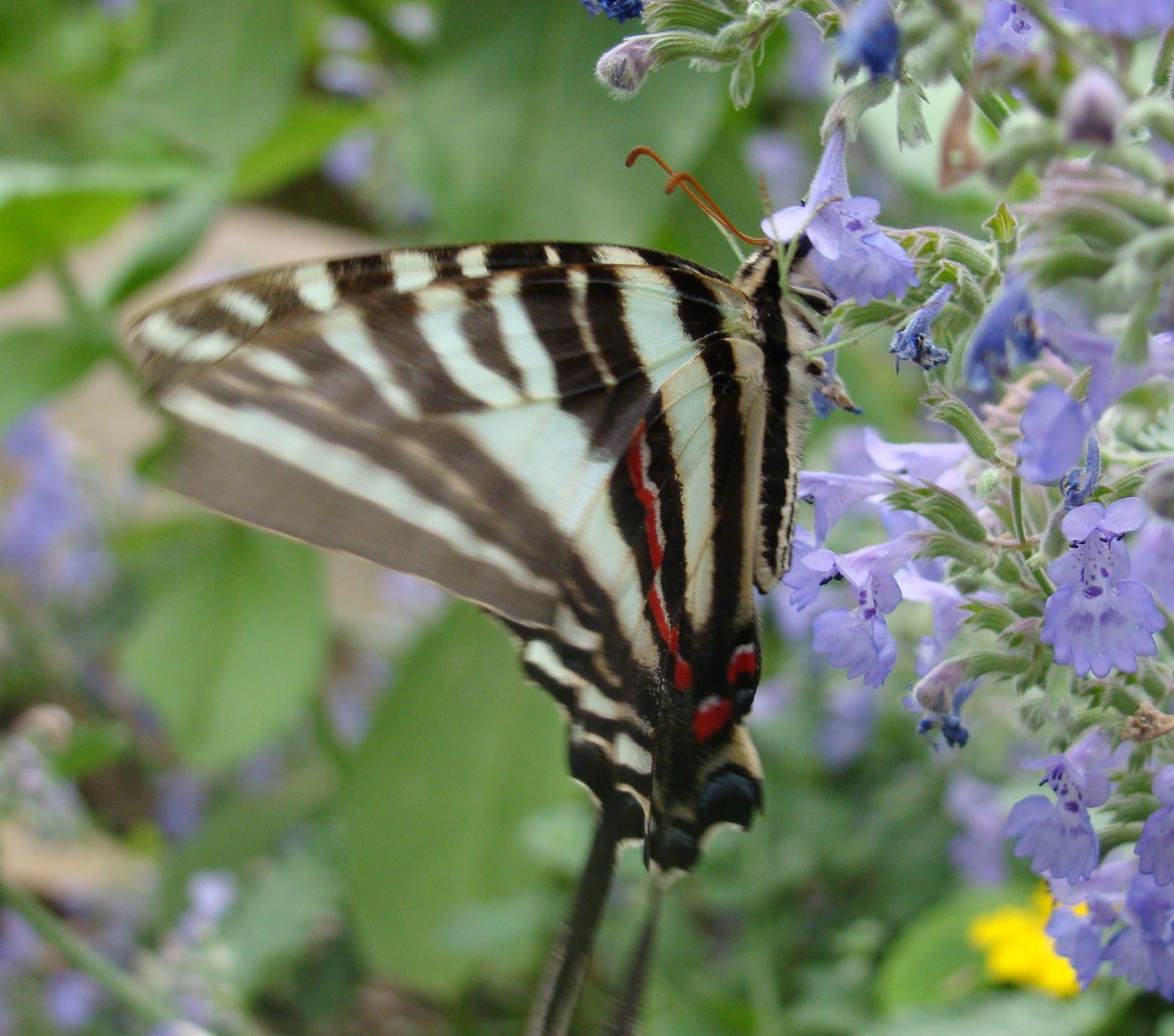
Zebra Swallowtail
Woodlands, floodplains, forest edges near pawpaw
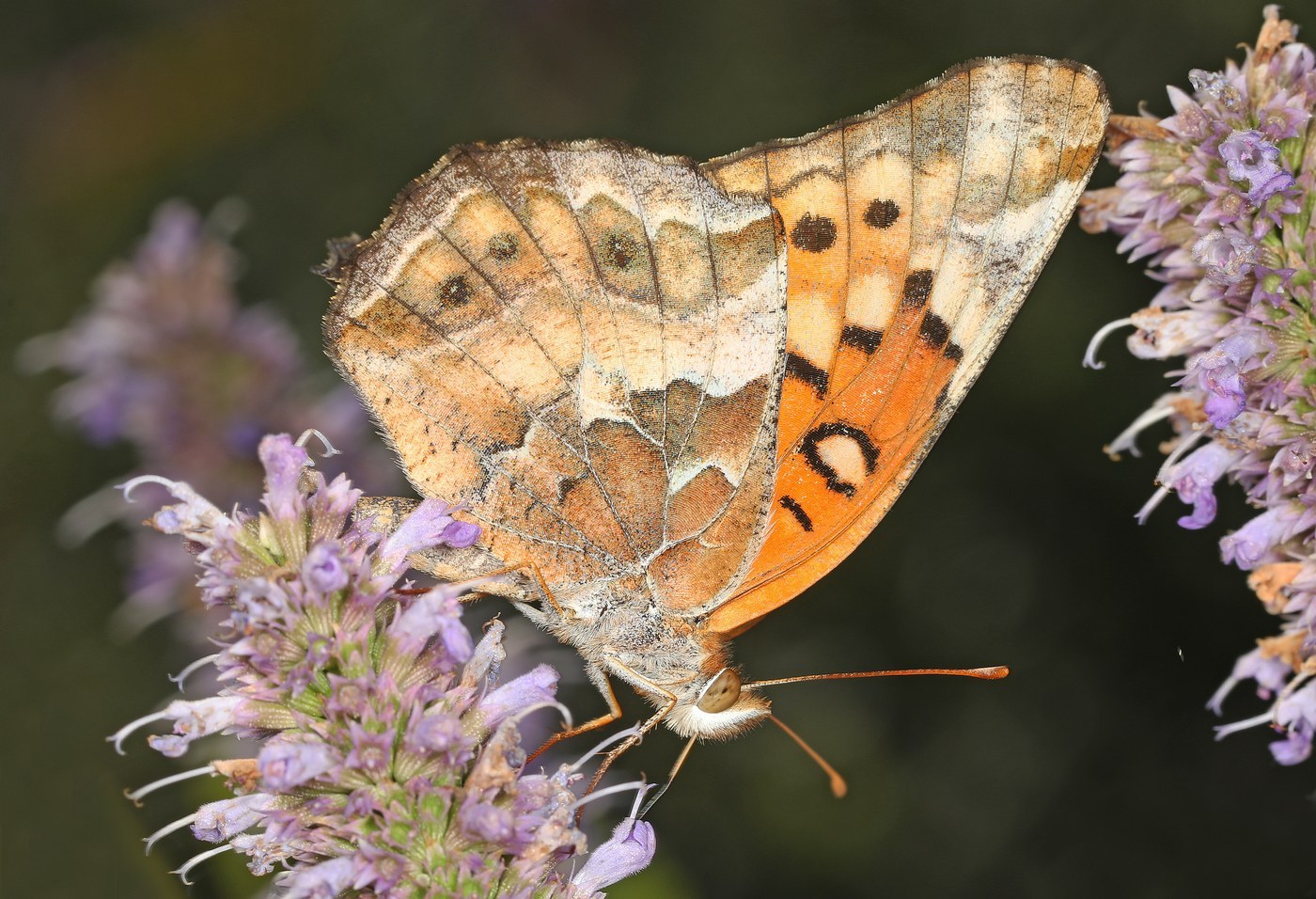
Variegated Fritillary
Open fields, prairies, roadsides, and disturbed ground across most of the United States
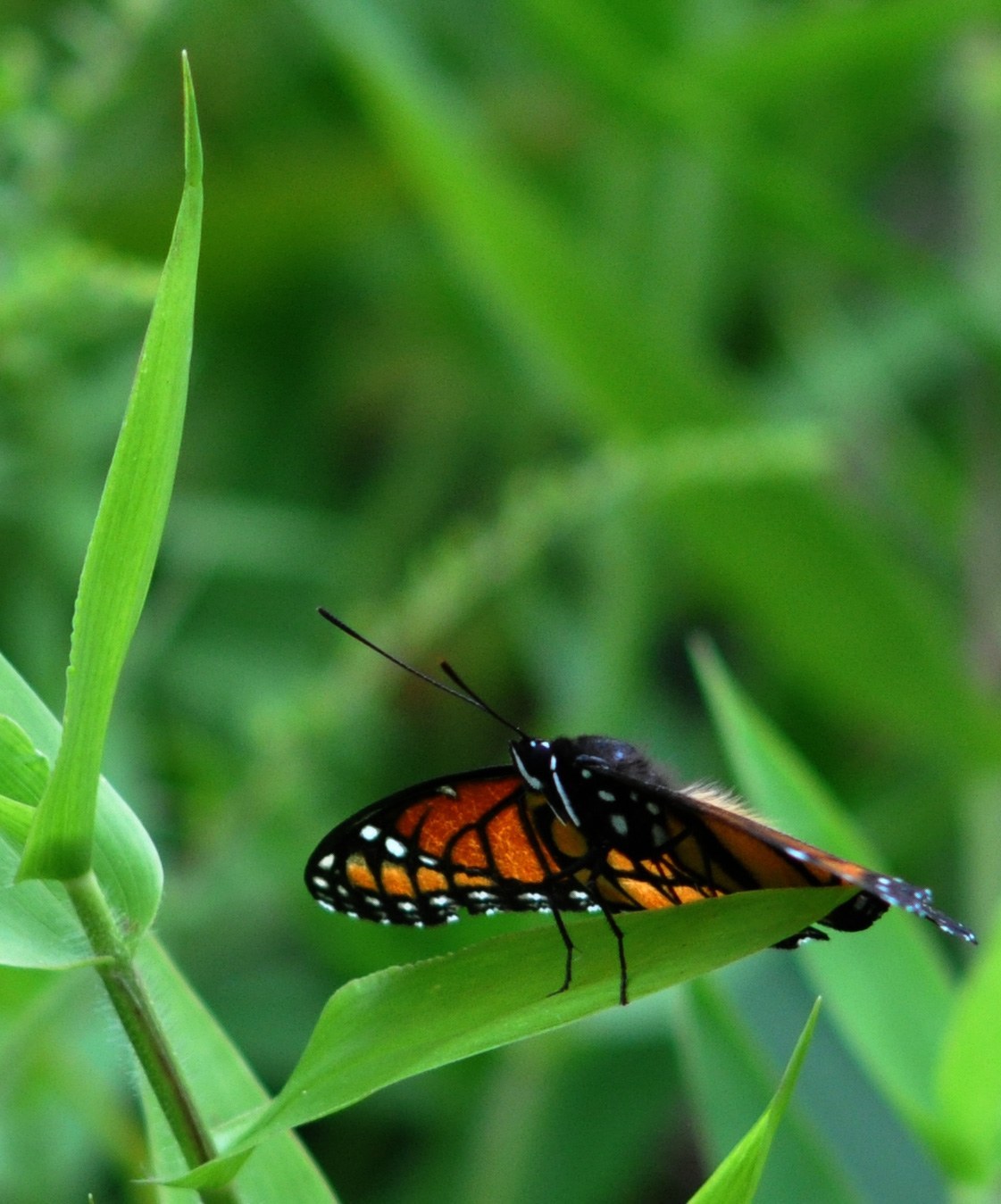
Viceroy Butterfly
Wetlands, meadows, riverbanks, willow thickets (North America)
Baltimore Checkerspot
Wet meadows, bogs, and marshy fields in the northeastern and Appalachian US
American Copper
Old fields, roadsides, and disturbed open ground with sorrel or dock
West Virginia White
Rich deciduous forest floors, especially near seeps and streams
Spring Azure
Woodland edges, gardens, shrubby clearings
Red Admiral
Gardens, woodland edges, parks, meadows
Sleepy Orange
Open woodland, fields, roadsides, and disturbed ground