
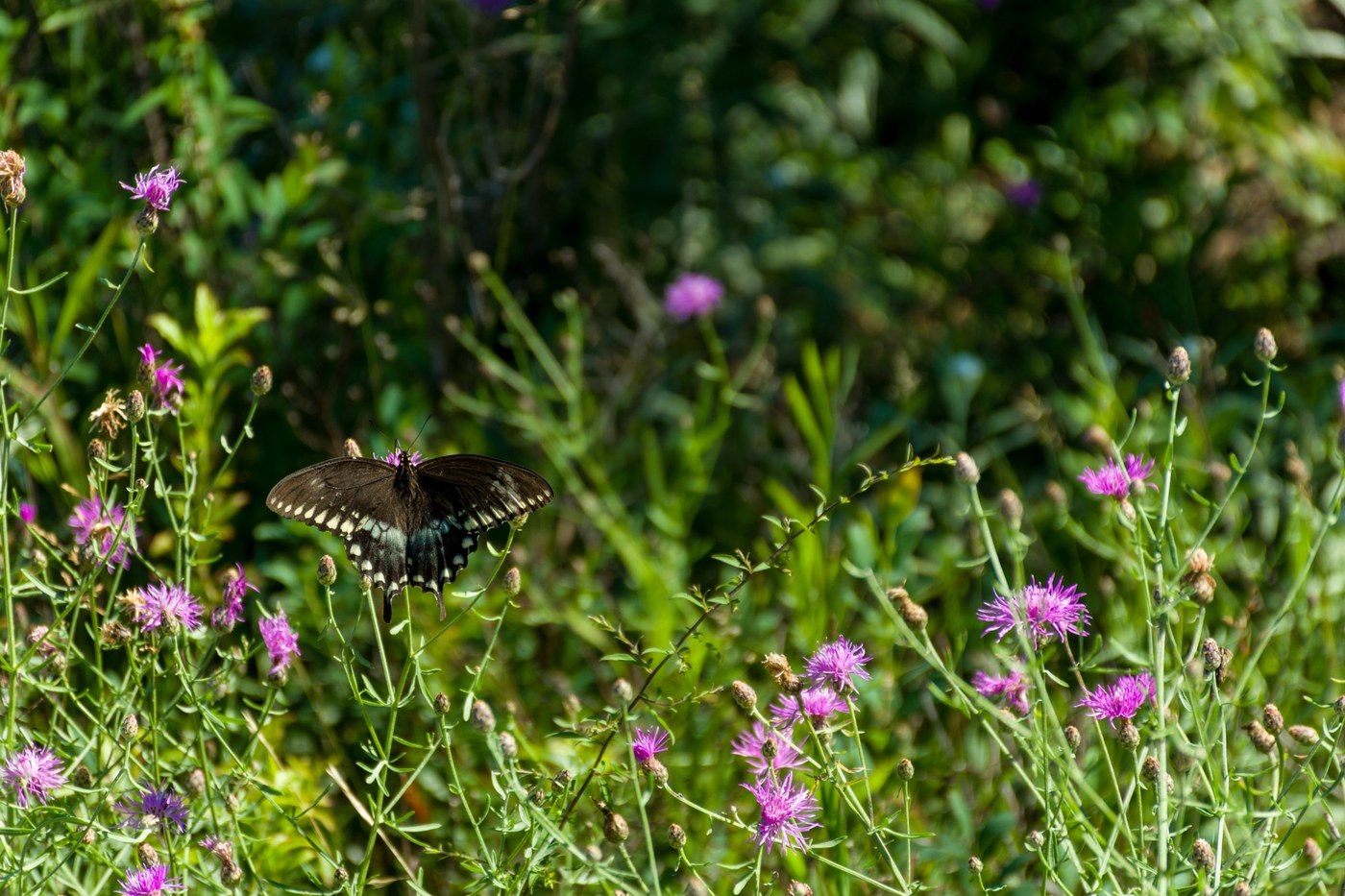
Spicebush Swallowtail
Papilio troilus
A black swallowtail with a blue-green wash across the hindwings and a row of pale spots along the forewing margin, whose caterpillars have famous large false eyespots and mimic the Pipevine Swallowtail as adults.
- Size
- 3–4.5 in wingspan
- Habitat
- Deciduous forests, woodland edges, gardens
- Danger
- Harmless
Spotted a bug like this?
Identify any bug or insect from a photo, free.
Overview
The Spicebush Swallowtail is a member of the swallowtail family Papilionidae, found through much of the eastern United States wherever its namesake host plants, spicebush and sassafras, grow in forest understory. As an adult, it is a Batesian mimic of the chemically defended Pipevine Swallowtail, sharing a similar black body with an iridescent blue-green hindwing flush, which offers it some protection from predators despite lacking the toxins of its model.
The species is perhaps best known for its remarkable caterpillar, which in its later instars develops two large, cartoonish false eyespots on a swollen thorax, an adaptation thought to mimic a small snake and startle potential predators such as birds. Young caterpillars additionally resemble bird droppings, and all stages construct a folded-leaf shelter for daytime shelter.
As both pollinator and forest-understory herbivore, the Spicebush Swallowtail plays a role in the ecology of eastern deciduous woodlands, tightly linked to the Lauraceae family plants it depends on.
How to Identify
- Upperside is black with a row of pale cream-to-yellow spots along the forewing margin; hindwing shows a blue-green (males) or more blue (females) iridescent wash.
- Underside hindwing has two rows of orange spots and a pale blue-green area, distinguishing it from the true Pipevine Swallowtail it mimics.
- Wings are moderately broad with a single slender tail per hindwing.
- Distinguished from the Pipevine Swallowtail by the row of pale marginal spots on the upperside forewing (absent or faint in Pipevine) and from Black Swallowtail by lacking a distinct row of yellow spots across the entire wing.
Habitat & Range
Found throughout the eastern United States, from New England south to Florida and west to the Great Plains, generally within or near deciduous forest habitat.
Adults favor forest edges, wooded stream corridors, and shaded gardens where spicebush or sassafras grow in the understory, and are active from spring through early fall with multiple generations in the southern part of the range.
Behavior & Diet
Adults nectar at a variety of woodland and garden flowers, including jewelweed, milkweed, and thistle, and males often patrol along forest edges and stream corridors searching for mates. Caterpillars feed on spicebush and sassafras leaves, folding a leaf edge over themselves with silk to create a protective daytime retreat, emerging at night to feed.
The caterpillar's swollen thorax with large false eyespots is a defensive display believed to deter predators by resembling a small snake when the leaf shelter is disturbed. The species is both a pollinator as an adult and a specialist herbivore of Lauraceae shrubs as a larva.
Life Cycle
Females lay single pale green eggs on the underside of spicebush or sassafras leaves. Young caterpillars are dark and resemble bird droppings, while later instars turn green or yellow-green with large false eyespots on a swollen thorax, feeding within a folded-leaf shelter.
The chrysalis is mottled brown or green, attached to a twig or leaf litter. The species produces two generations per year across most of its range through complete metamorphosis, overwintering as a chrysalis.
Frequently asked questions
Why does the caterpillar have big eye-like spots?
The large false eyespots on the swollen thorax of later-instar caterpillars are believed to mimic a small snake, deterring predators when the leaf shelter is disturbed.
How is the adult different from a Pipevine Swallowtail?
The Spicebush Swallowtail shows a row of pale cream spots along the upperside forewing margin, which the Pipevine Swallowtail lacks or shows only faintly.
What plants do the caterpillars need?
Spicebush and sassafras, both members of the laurel family (Lauraceae).
Where does it spend the winter?
As a chrysalis attached to a twig or hidden in leaf litter.
Spicebush Swallowtail guides
In-depth guides for identifying, understanding, and living alongside Spicebush Swallowtail.
Other bugs you may enjoy
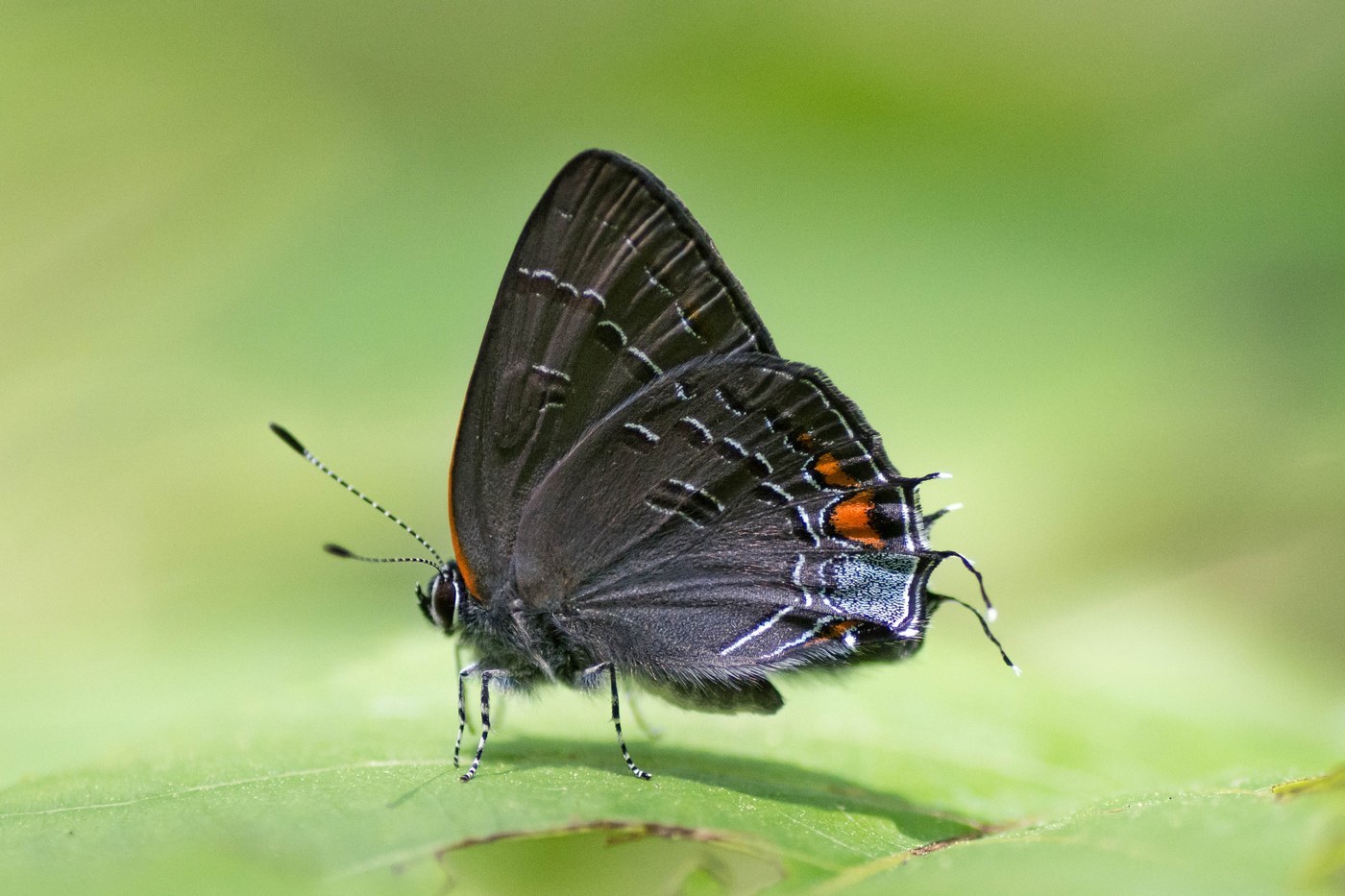
Banded Hairstreak
Deciduous woodlands and edges with oaks and hickories
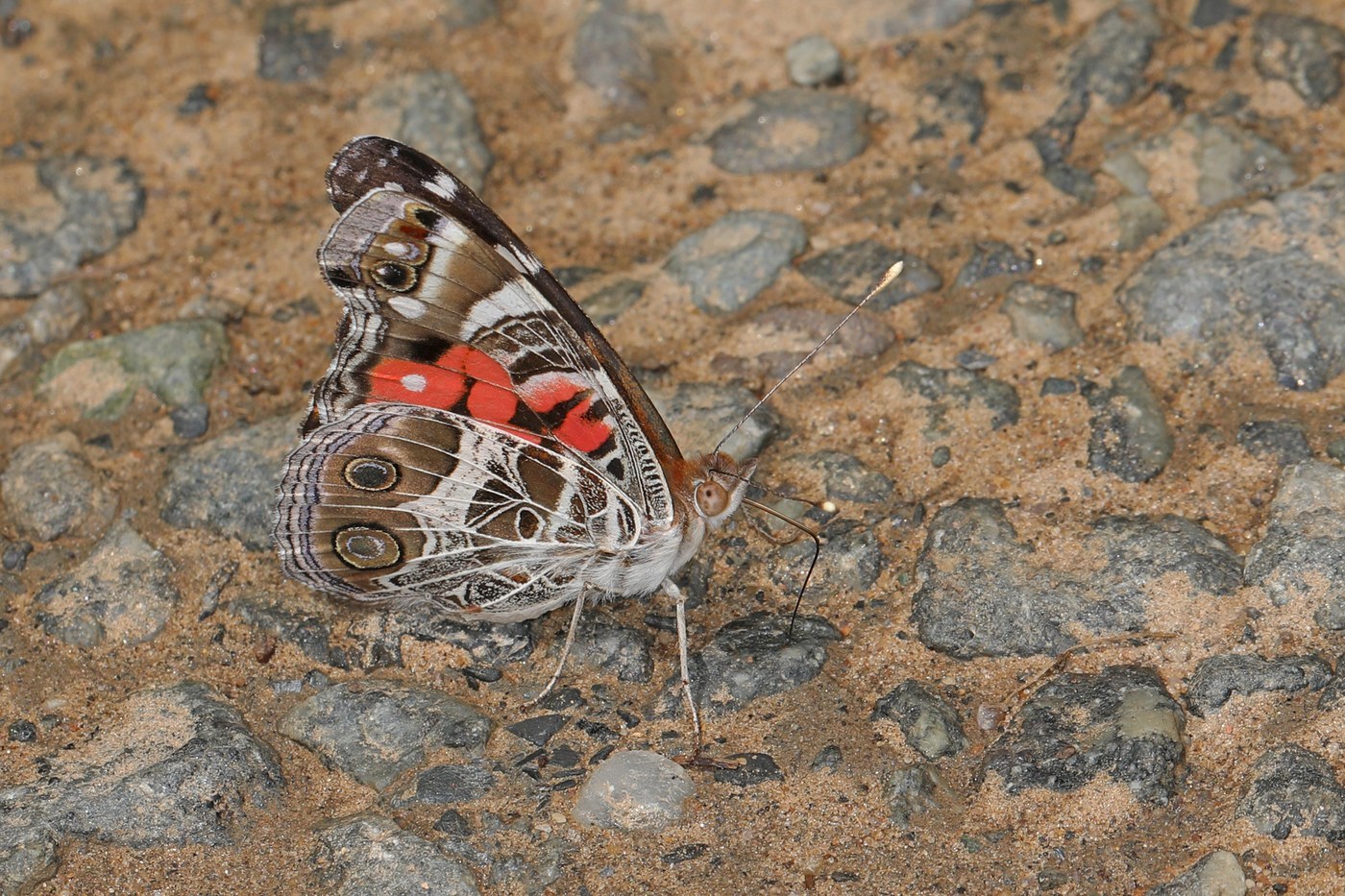
American Lady
Open fields, meadows, gardens, roadsides
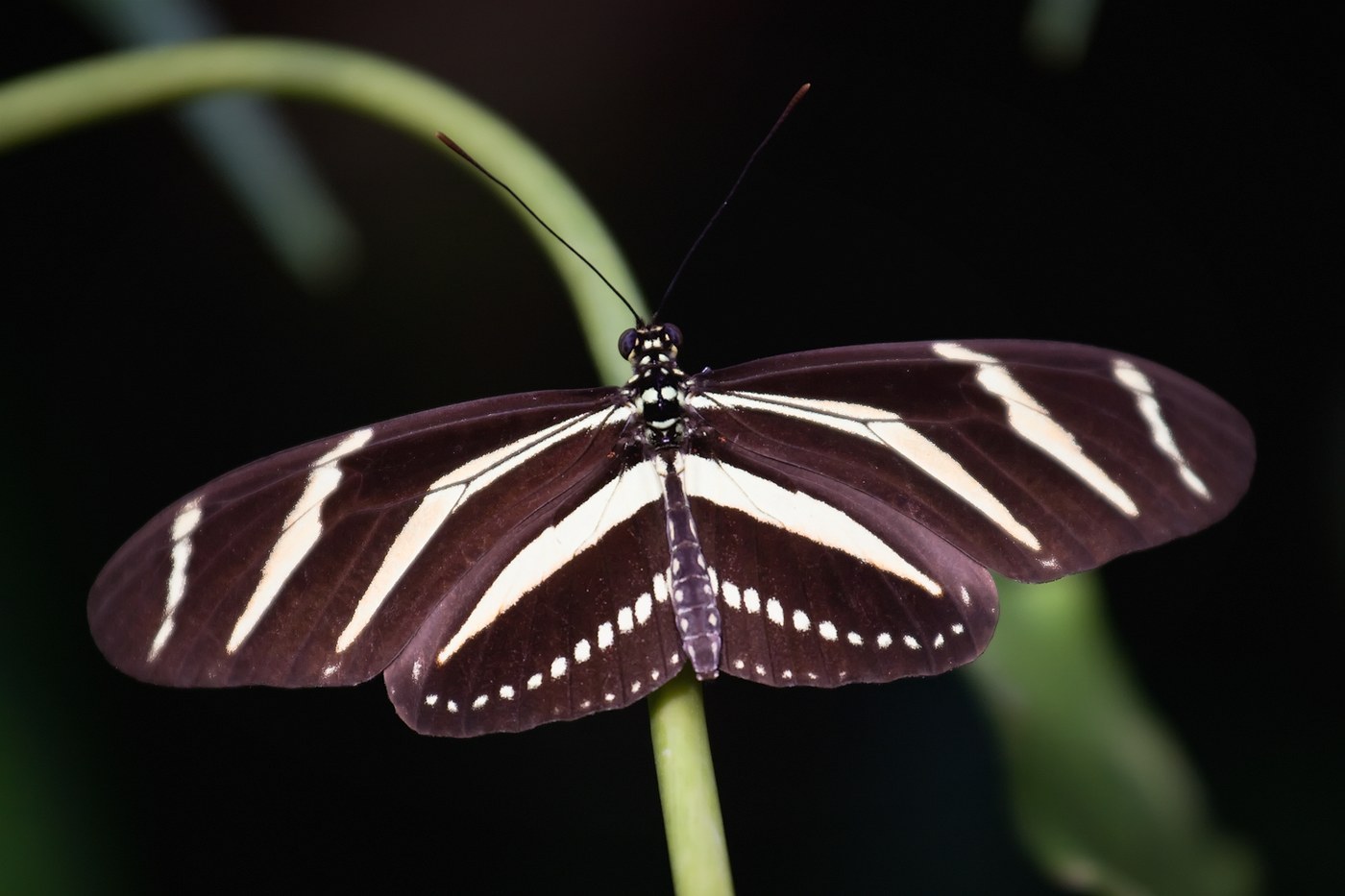
Zebra Longwing
Tropical hammocks, gardens, forest edges
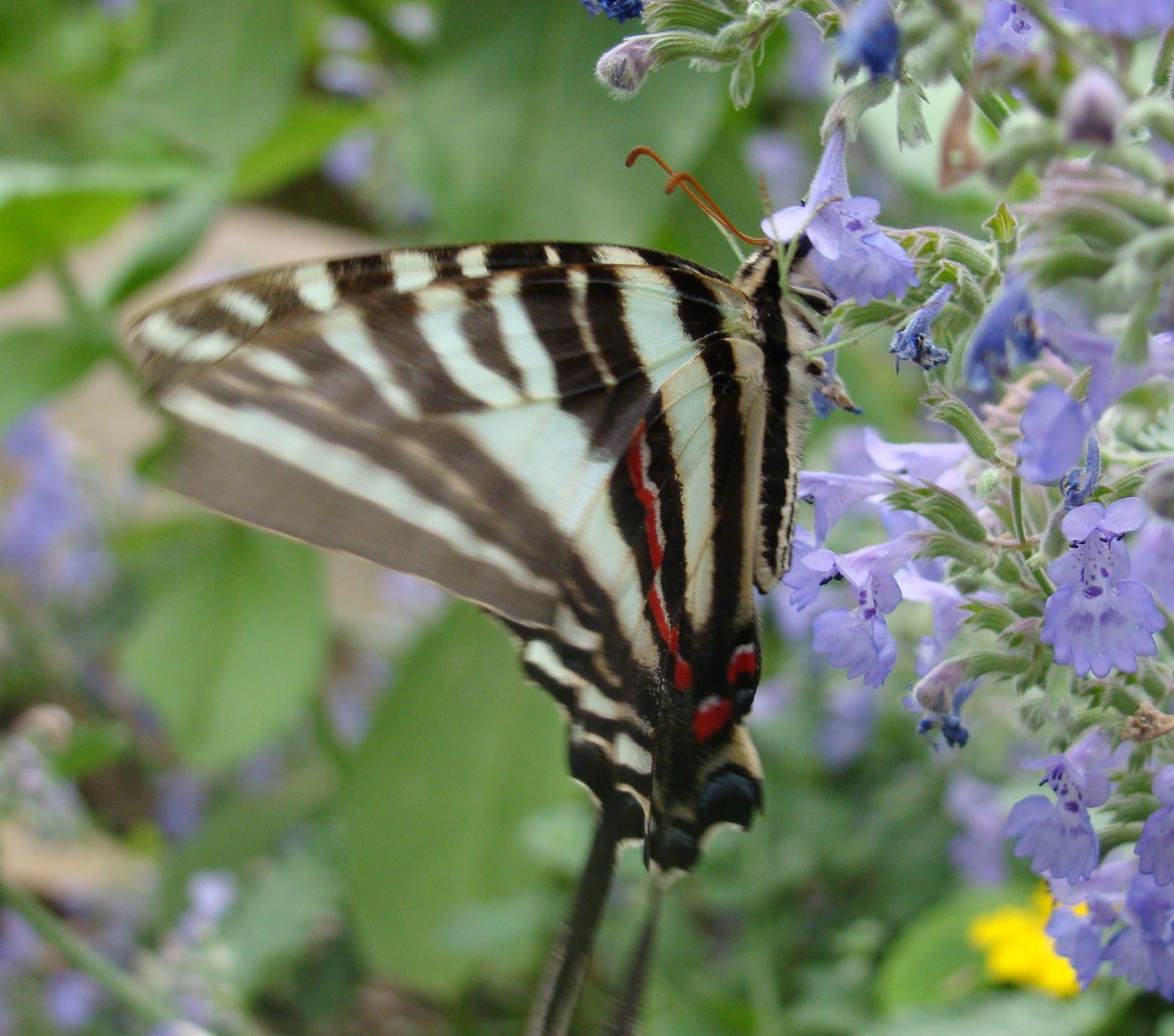
Zebra Swallowtail
Woodlands, floodplains, forest edges near pawpaw
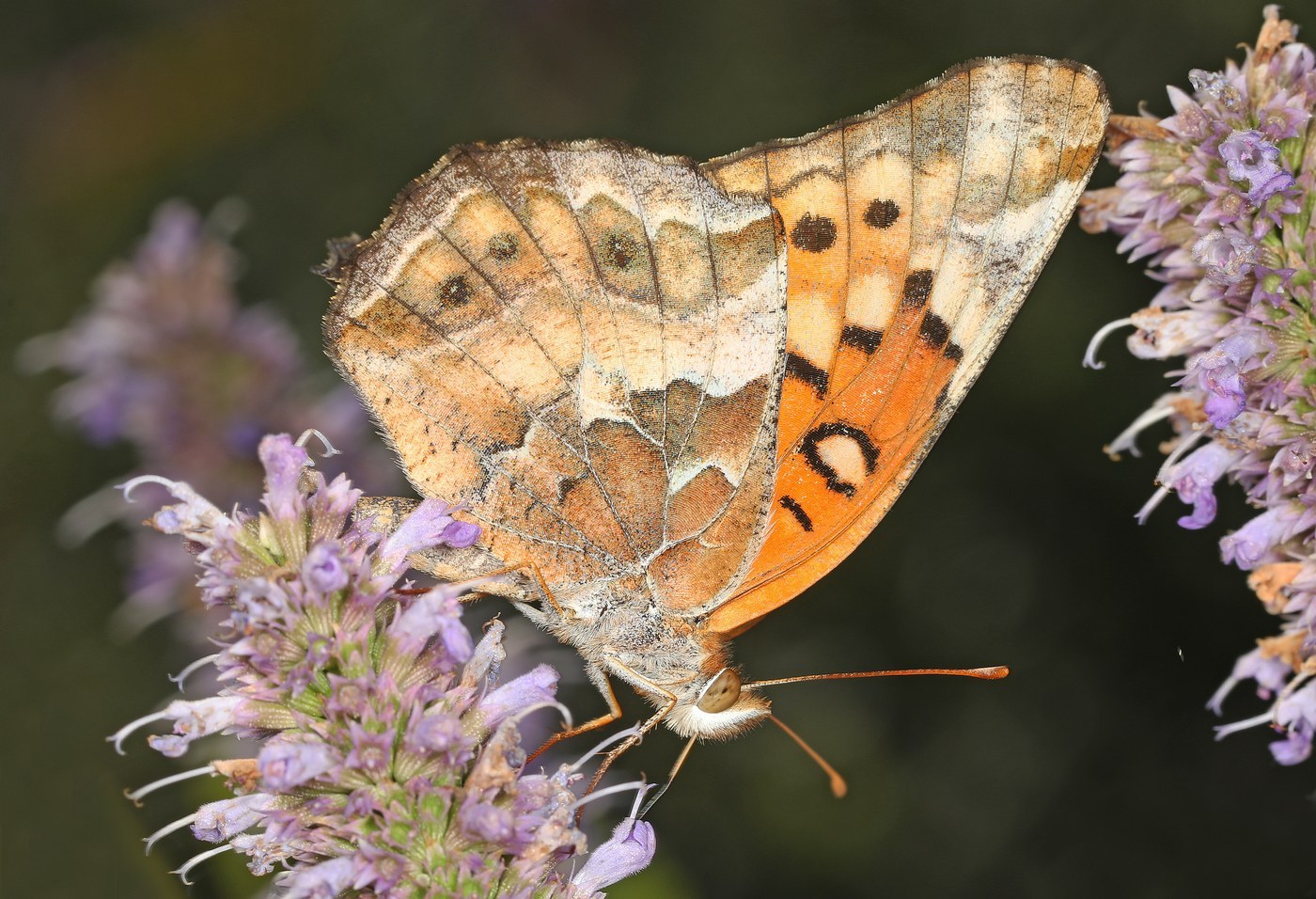
Variegated Fritillary
Open fields, prairies, roadsides, and disturbed ground across most of the United States
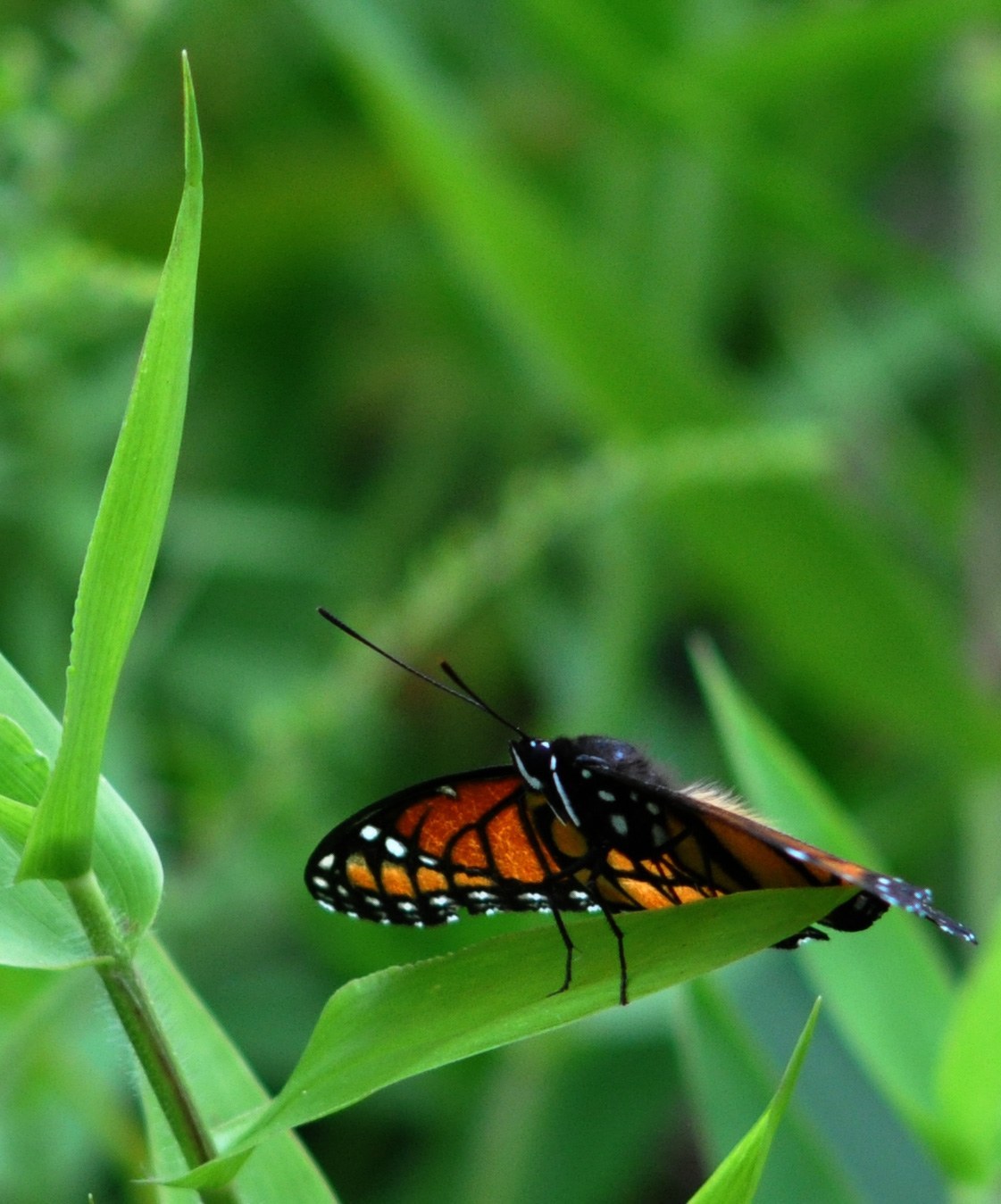
Viceroy Butterfly
Wetlands, meadows, riverbanks, willow thickets (North America)
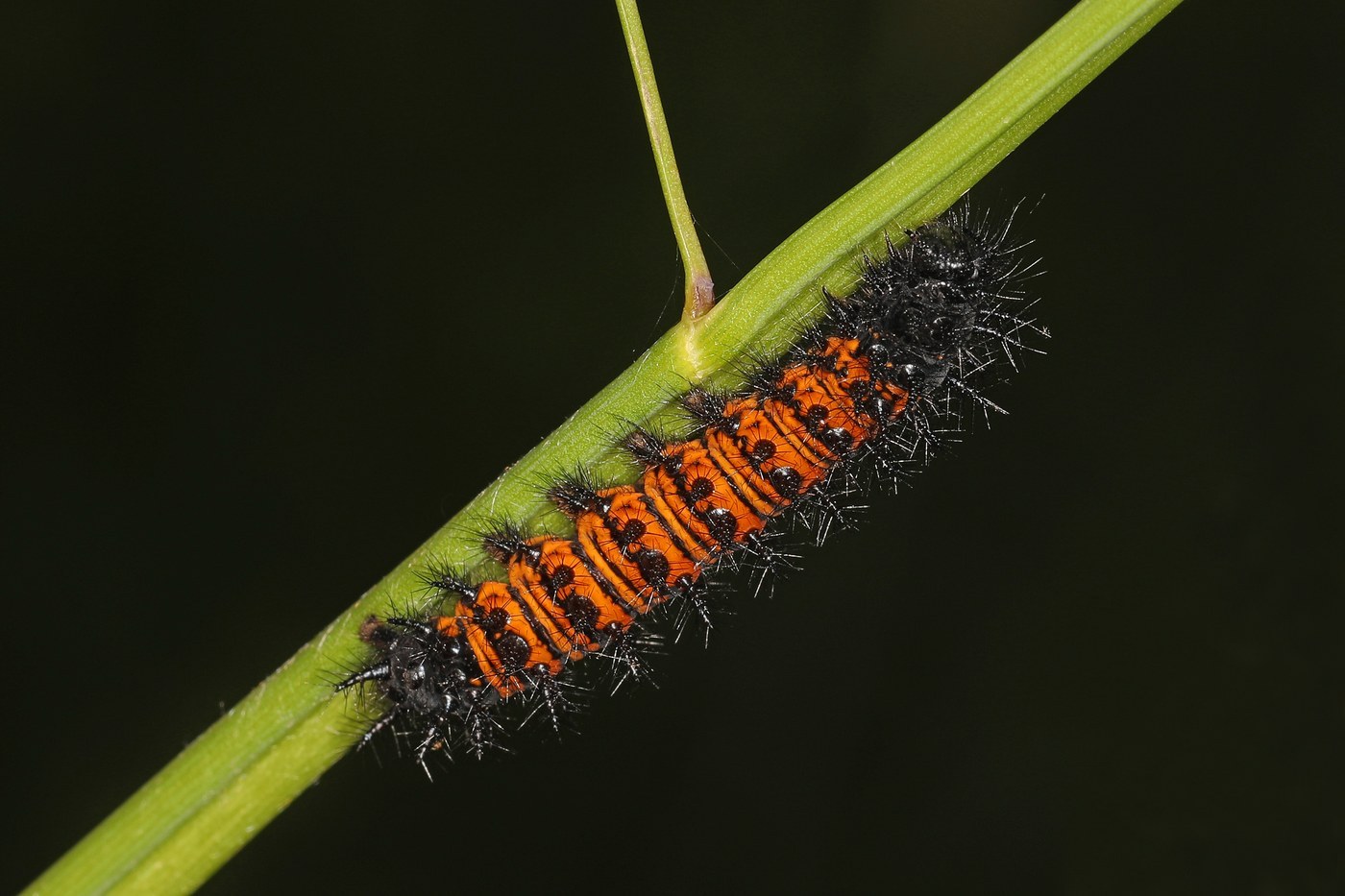
Baltimore Checkerspot
Wet meadows, bogs, and marshy fields in the northeastern and Appalachian US
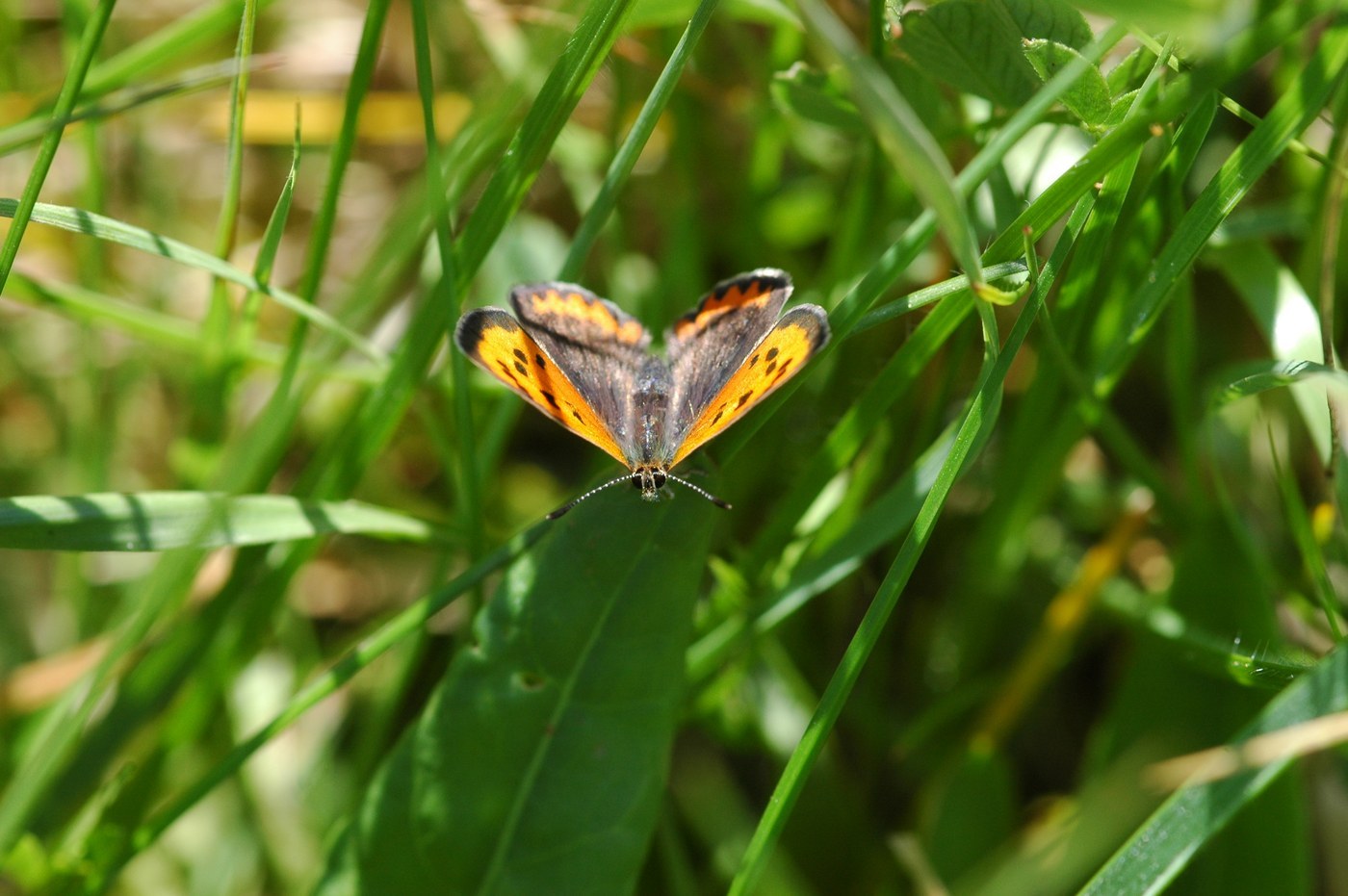
American Copper
Old fields, roadsides, and disturbed open ground with sorrel or dock
West Virginia White
Rich deciduous forest floors, especially near seeps and streams
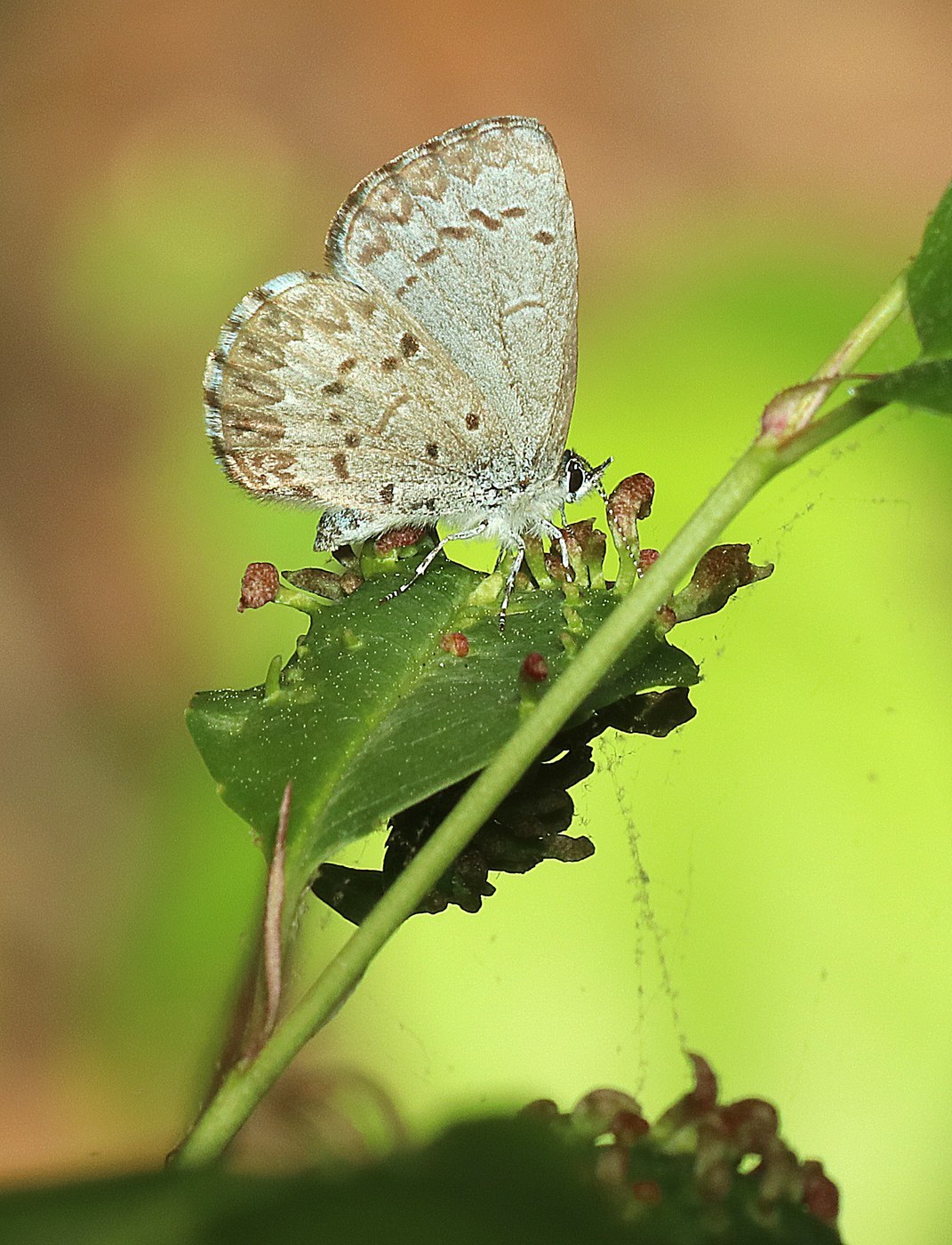
Spring Azure
Woodland edges, gardens, shrubby clearings
Red Admiral
Gardens, woodland edges, parks, meadows
Sleepy Orange
Open woodland, fields, roadsides, and disturbed ground