
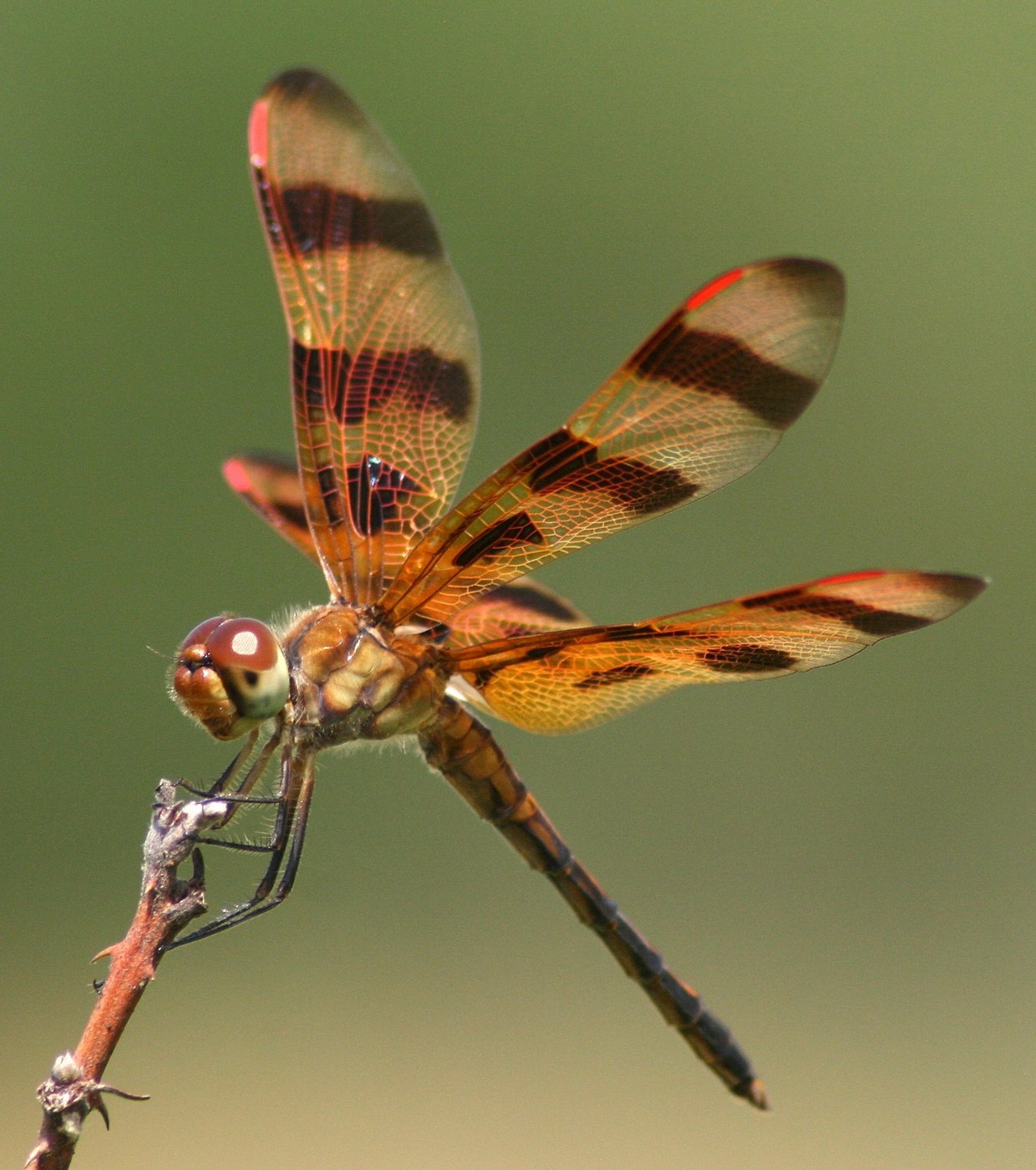
Halloween Pennant
Celithemis eponina
With broad orange-amber wings banded in dark brown, this dragonfly perches conspicuously atop tall grass stems, swaying like a small flag in the breeze.
- Size
- Body about 1.4–1.7 in (35–43 mm) long; wingspan roughly 2.8–3.3 in (70–85 mm)
- Habitat
- Ponds, lakes, and marshes with tall grasses and reeds
- Danger
- Harmless
Spotted a bug like this?
Identify any bug or insect from a photo, free.
Overview
The Halloween Pennant is a colorful member of the skimmer family Libellulidae, named for its orange-and-black wing pattern reminiscent of the autumn holiday, though it is actually most common in summer. It belongs to the pennant group of dragonflies, so called for their habit of perching at the very tips of tall grasses and forbs, where they sway back and forth in the wind like small pennant flags.
Both males and females share the bold amber wings crossed with dark brown bands, making this one of the more instantly recognizable dragonflies in its range even at a distance, thanks to its habit of perching in the open atop vegetation rather than hiding low down.
Found across much of the eastern and central United States, the Halloween Pennant is a common and welcome sight around vegetated ponds and marshes throughout the warmer months.
How to Identify
- Medium dragonfly with broad, amber-orange wings crossed by dark brown bands, most prominent near the wingtips and midwing
- Body orange-brown with dark markings along the abdomen
- Distinctive perching posture, holding onto the very tip of a tall grass or plant stem, often swaying with the wind
- Broader-winged and more strongly banded than most other pennants in the genus Celithemis
- Lookalikes: Calico Pennant (Celithemis elisa) is smaller with a different wing pattern of small dark spots rather than broad bands
Habitat & Range
Common across the eastern and central United States and into southern Canada, the Halloween Pennant breeds in ponds, lakes, and marshes with abundant emergent and shoreline vegetation. Adults are most conspicuous perched on tall grasses, sedges, and shrub tips at the edges of these wetlands, and they are on the wing primarily from late spring through summer.
Behavior & Diet
This species is famous for its exposed, flag-like perching habit, choosing the very top of a swaying grass stem or twig rather than tucking into cover, which makes it easy to spot even from a distance. From these perches, adults sally out to catch small flying insects before returning to the same or a nearby stem. As predators of small flying insects, Halloween Pennants play a role in controlling insect populations around wetland edges, and their conspicuous perching makes them a frequent target for birds and other predators as well.
Life Cycle
Mating pairs form briefly, after which the female flies low over open water, tapping the tip of her abdomen to the surface to release eggs, often while the male hovers nearby or guards from a perch. Eggs hatch into aquatic nymphs that live among dense submerged and emergent vegetation, preying on small invertebrates as they develop through the summer. In most of its range, this species completes one generation per year, with nymphs typically overwintering before emerging as adults the following warm season.
Frequently asked questions
Why is it called the Halloween Pennant?
Its orange wings crossed with dark brown bands recall the colors of the Halloween holiday, even though the species is most active in summer rather than autumn.
What does the term "pennant" refer to in this dragonfly's name?
It refers to the habit of perching at the very tip of tall grasses or plant stems, where the dragonfly sways in the wind much like a small flag.
How can I tell a Halloween Pennant from a Calico Pennant?
The Halloween Pennant has broader wings with bold dark bands, while the smaller Calico Pennant shows a pattern of small dark spots rather than continuous bands.
Where do Halloween Pennant nymphs live?
They live among dense aquatic vegetation in ponds, lakes, and marshes, preying on small invertebrates until they are ready to emerge as adults.
Halloween Pennant guides
In-depth guides for identifying, understanding, and living alongside Halloween Pennant.
Other bugs you may enjoy
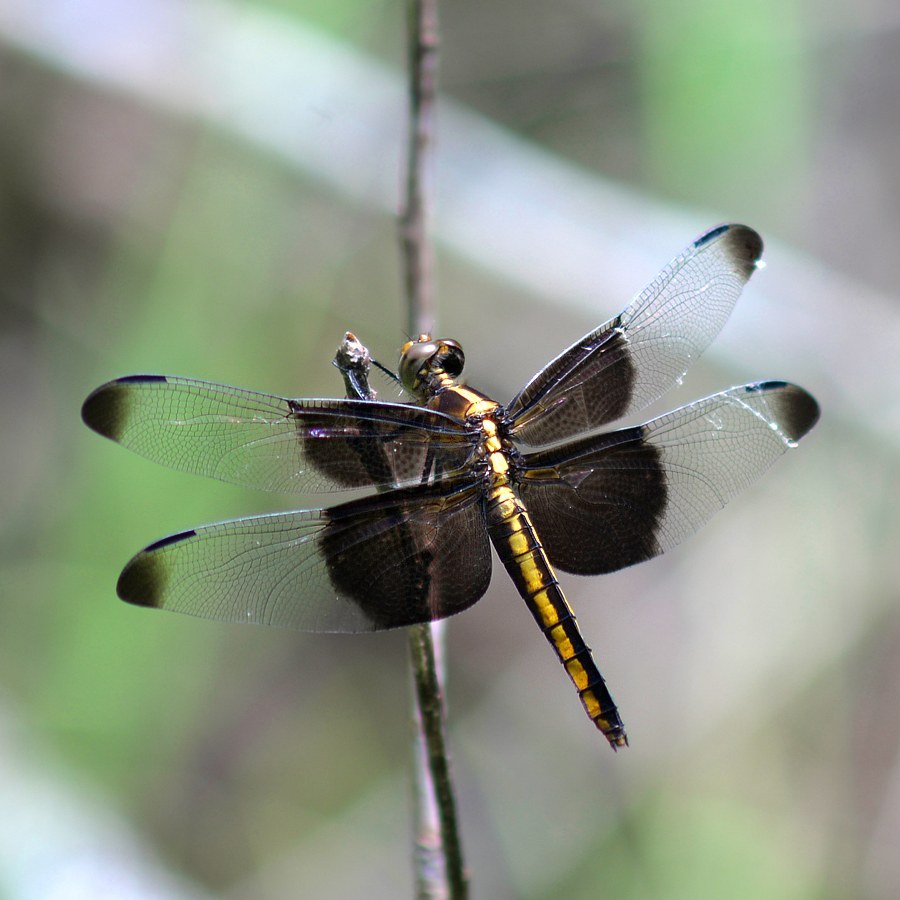
Widow Skimmer
ponds, lakes, and slow-moving streams with open shoreline vegetation across much of the United States
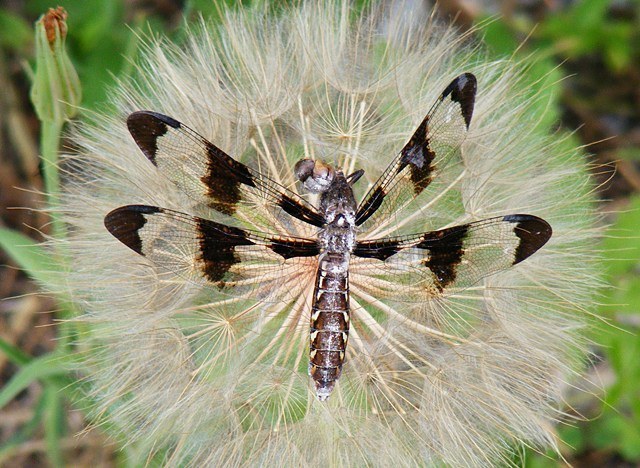
Twelve-spotted Skimmer
Ponds, lakes, and slow streams with open, sunny shorelines
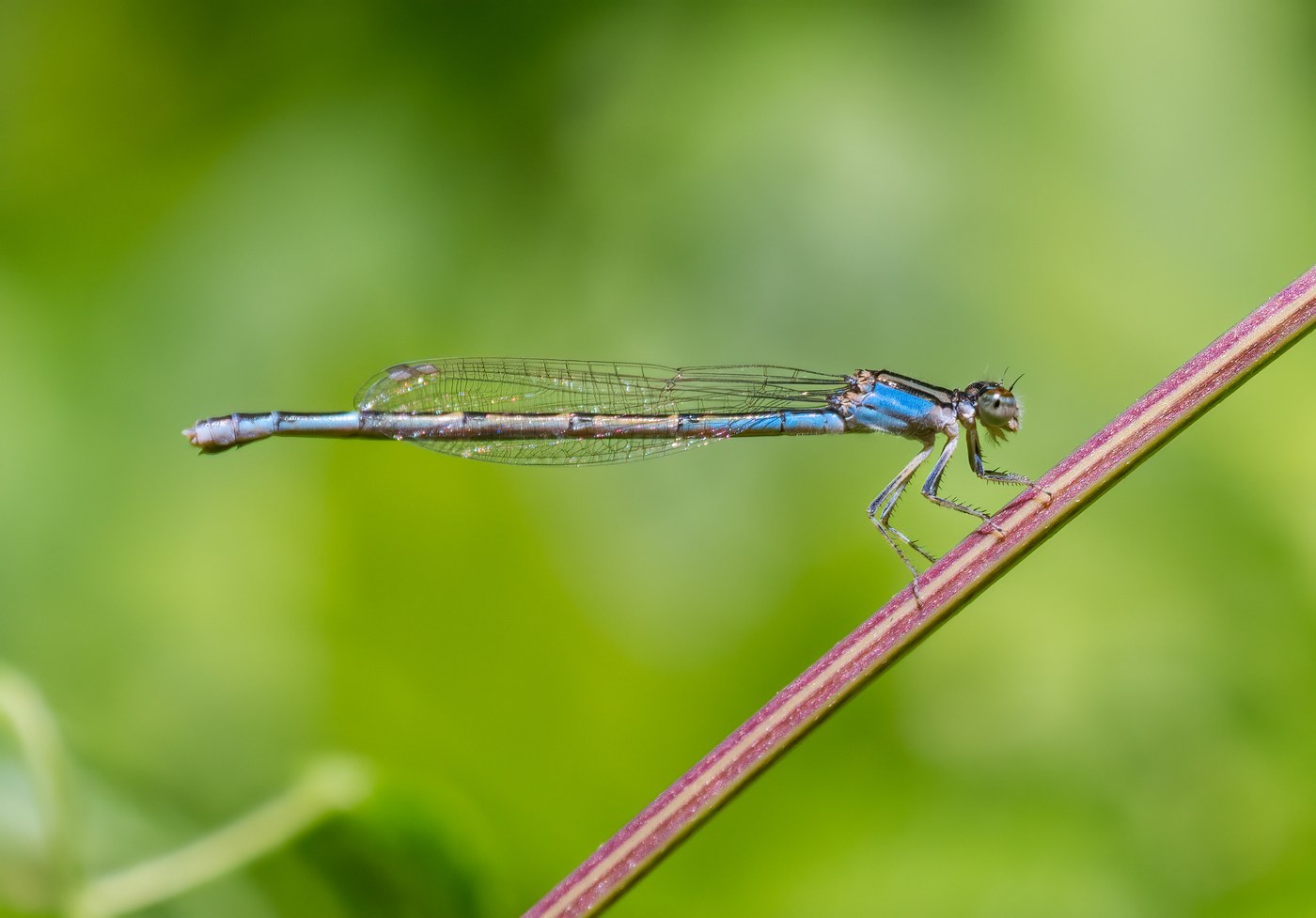
Azure Bluet
ponds, lakes, and slow streams with abundant aquatic vegetation
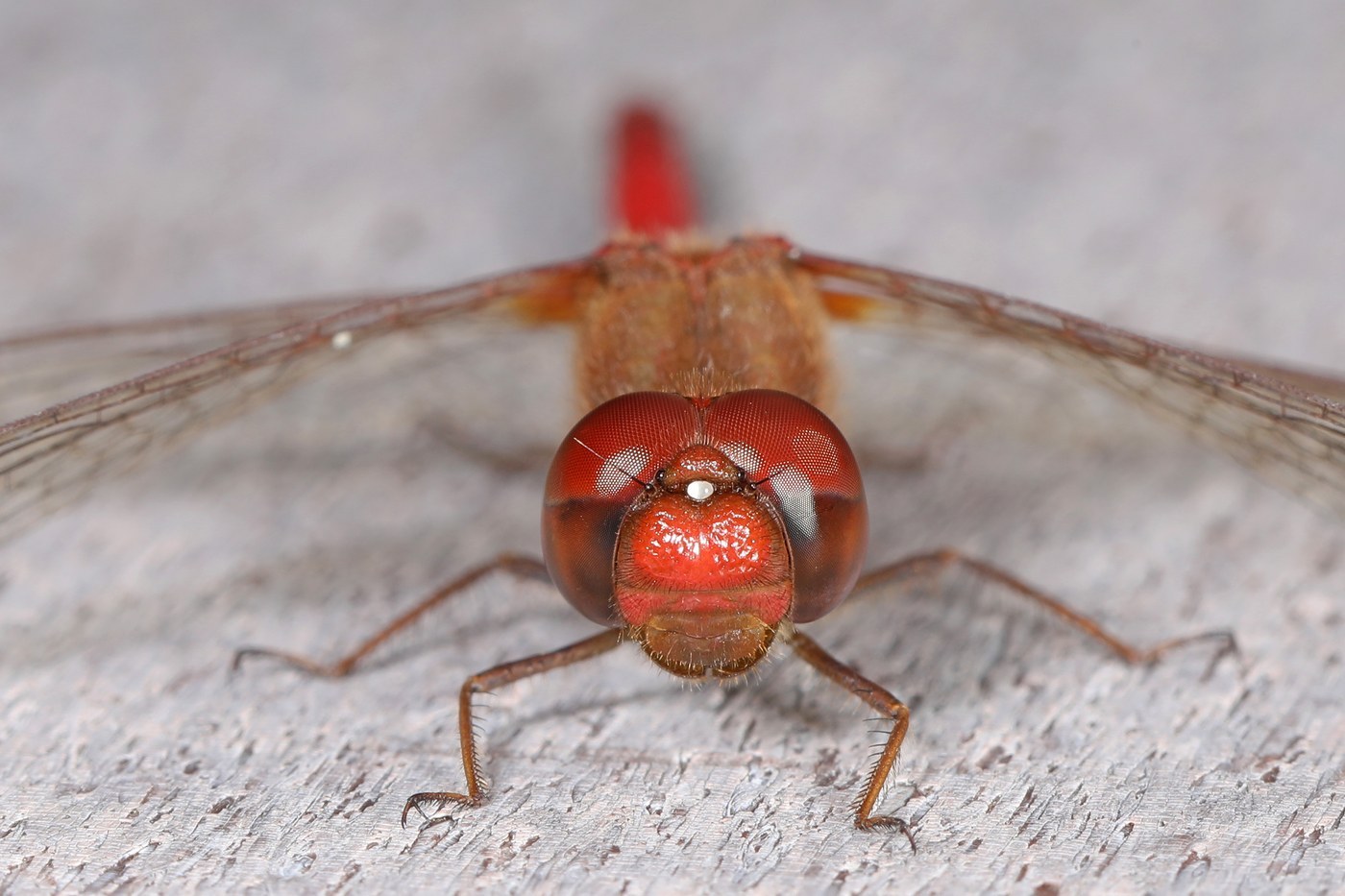
Autumn Meadowhawk
Ponds, marshes, and slow streams, often lingering into late fall
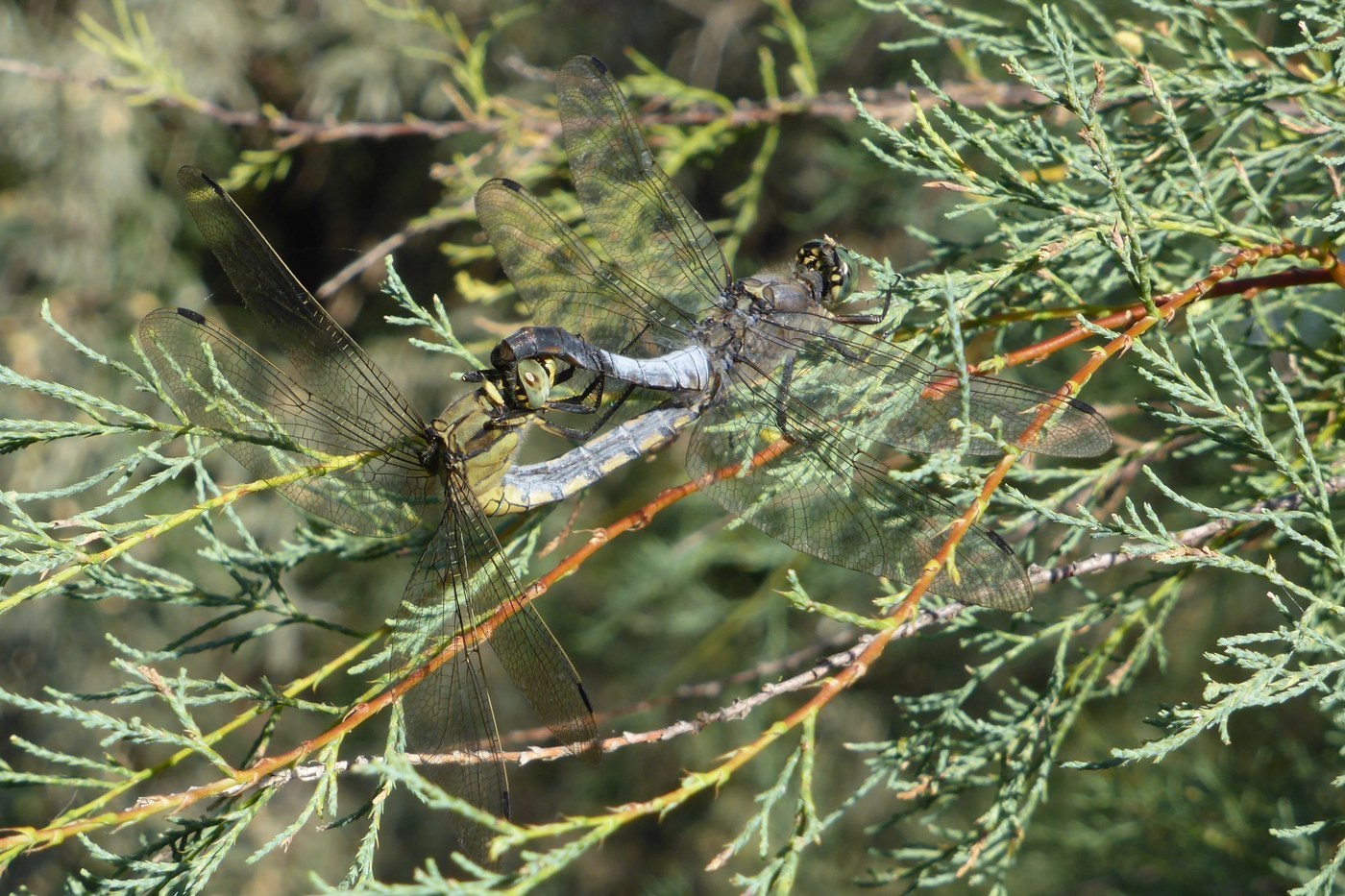
Spangled Skimmer
Ponds, lakes, and marshes with open sunny shorelines
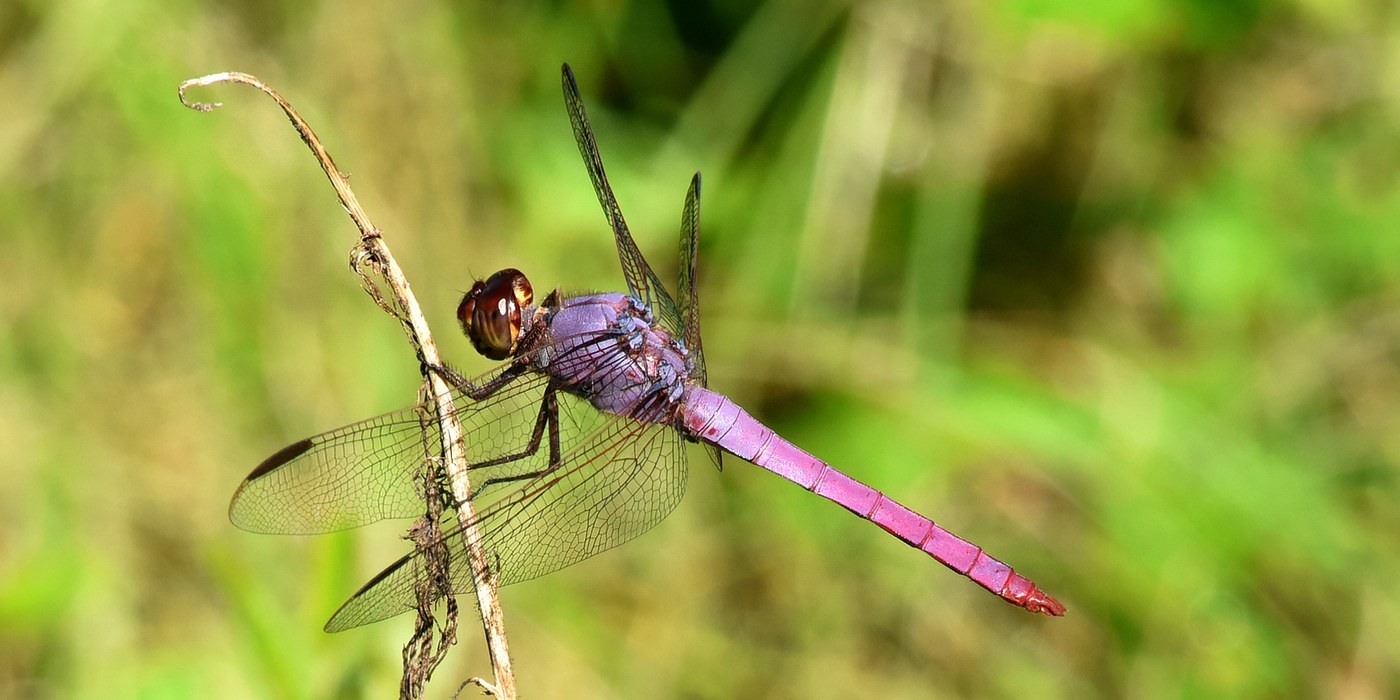
Roseate Skimmer
Ponds, ditches, and canals across the southern United States
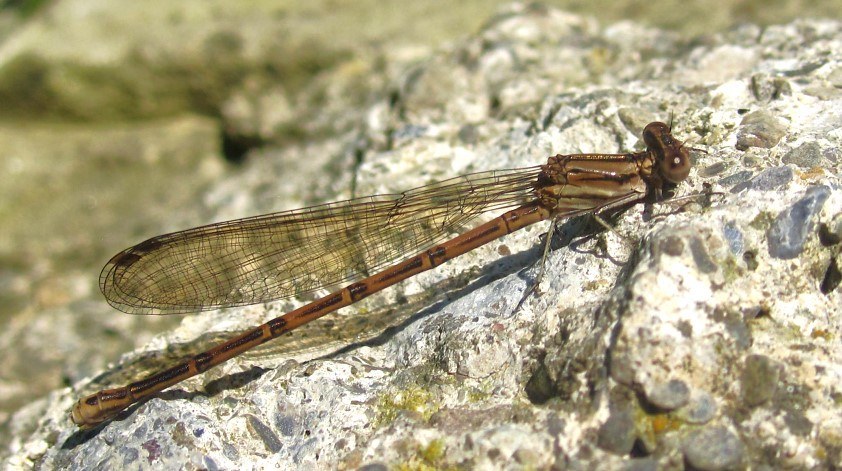
Variable Dancer
streams, rivers, and pond margins, especially in wooded or partly shaded settings
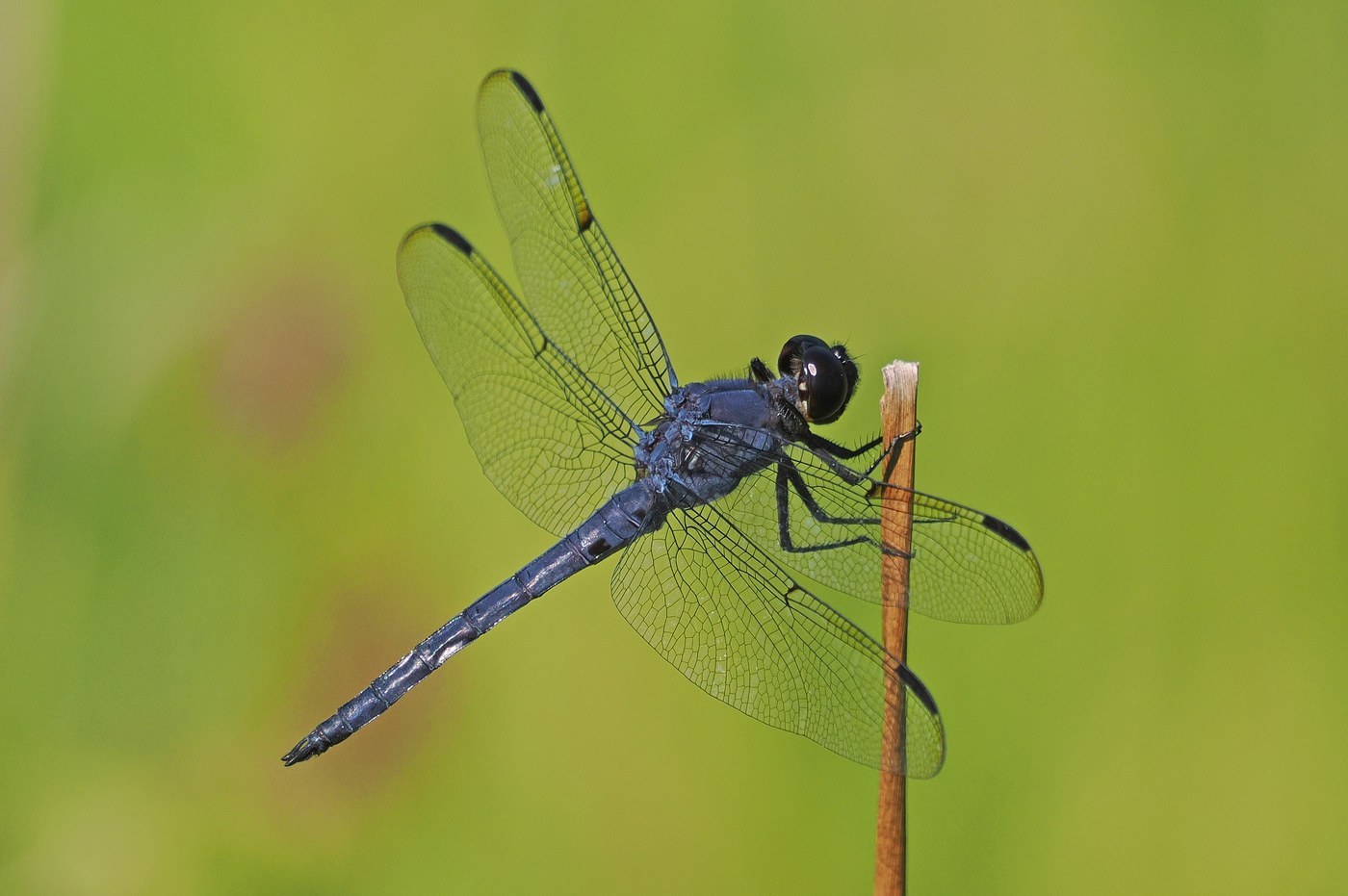
Slaty Skimmer
Still or slow-moving ponds, lakes, and marshes with open shoreline
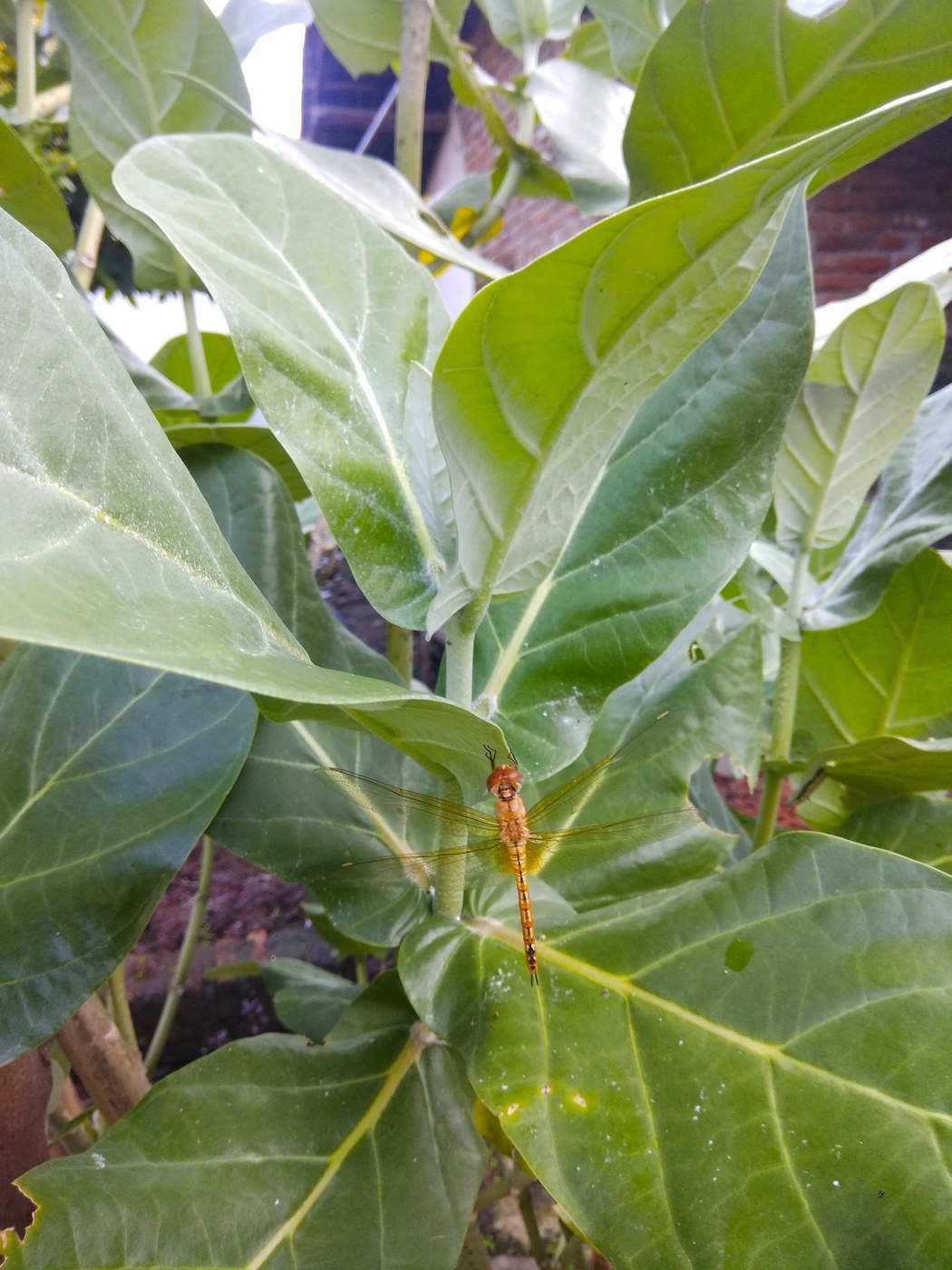
Wandering Glider
Temporary pools, open fields, and coastlines nearly worldwide
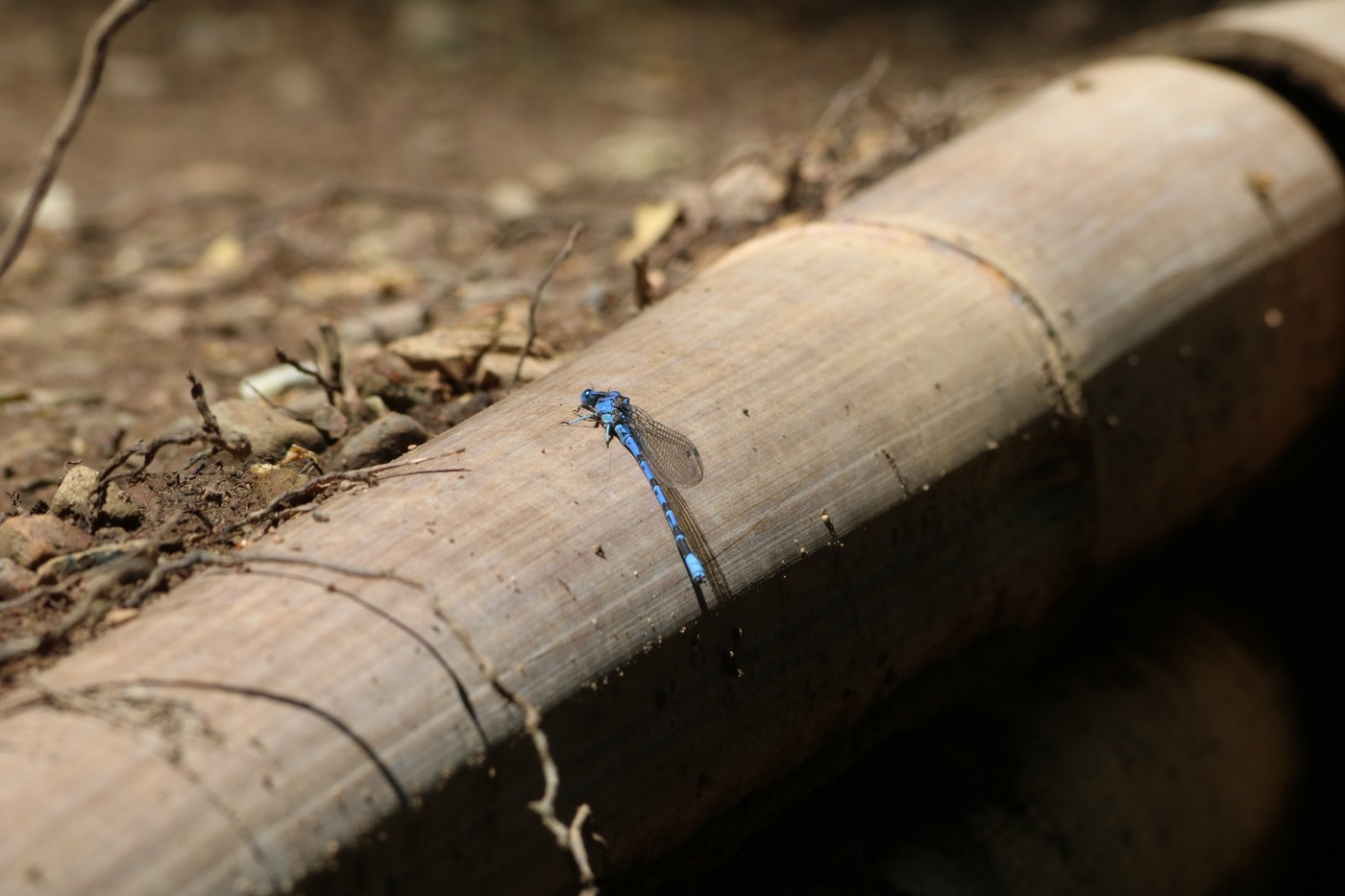
Vivid Dancer
rocky streams, seeps, and spring-fed creeks, often near thermal or warm springs
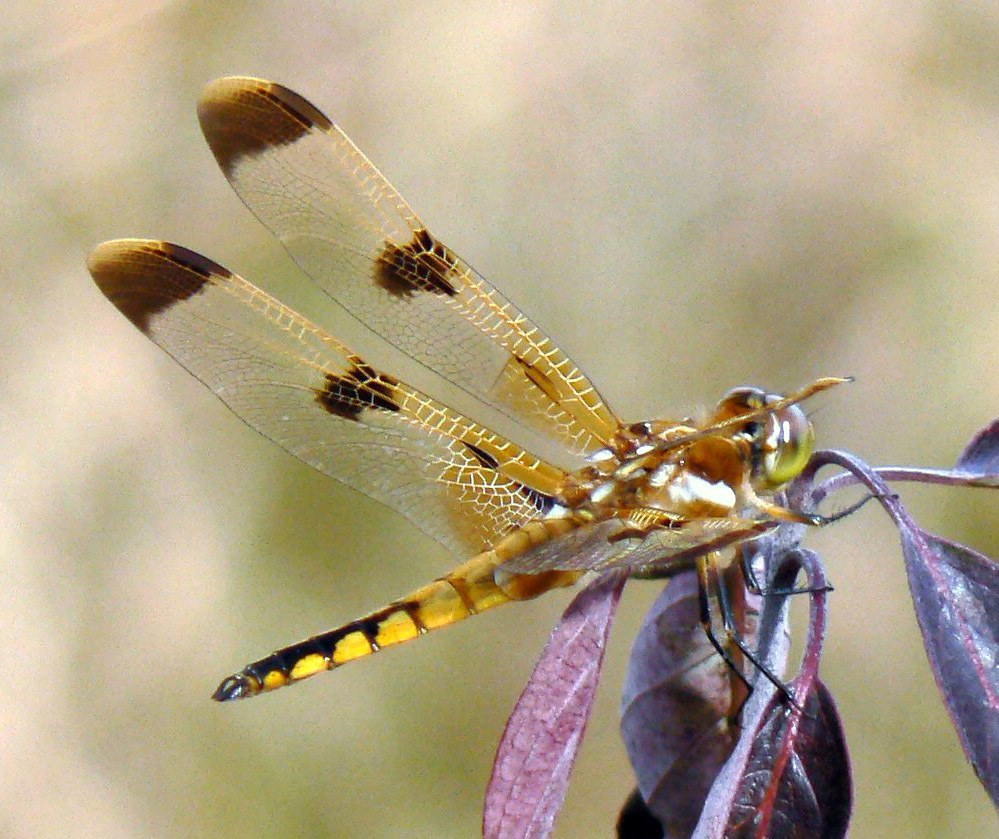
Painted Skimmer
Ponds, marshes, and slow-moving vegetated waters, including temporary pools
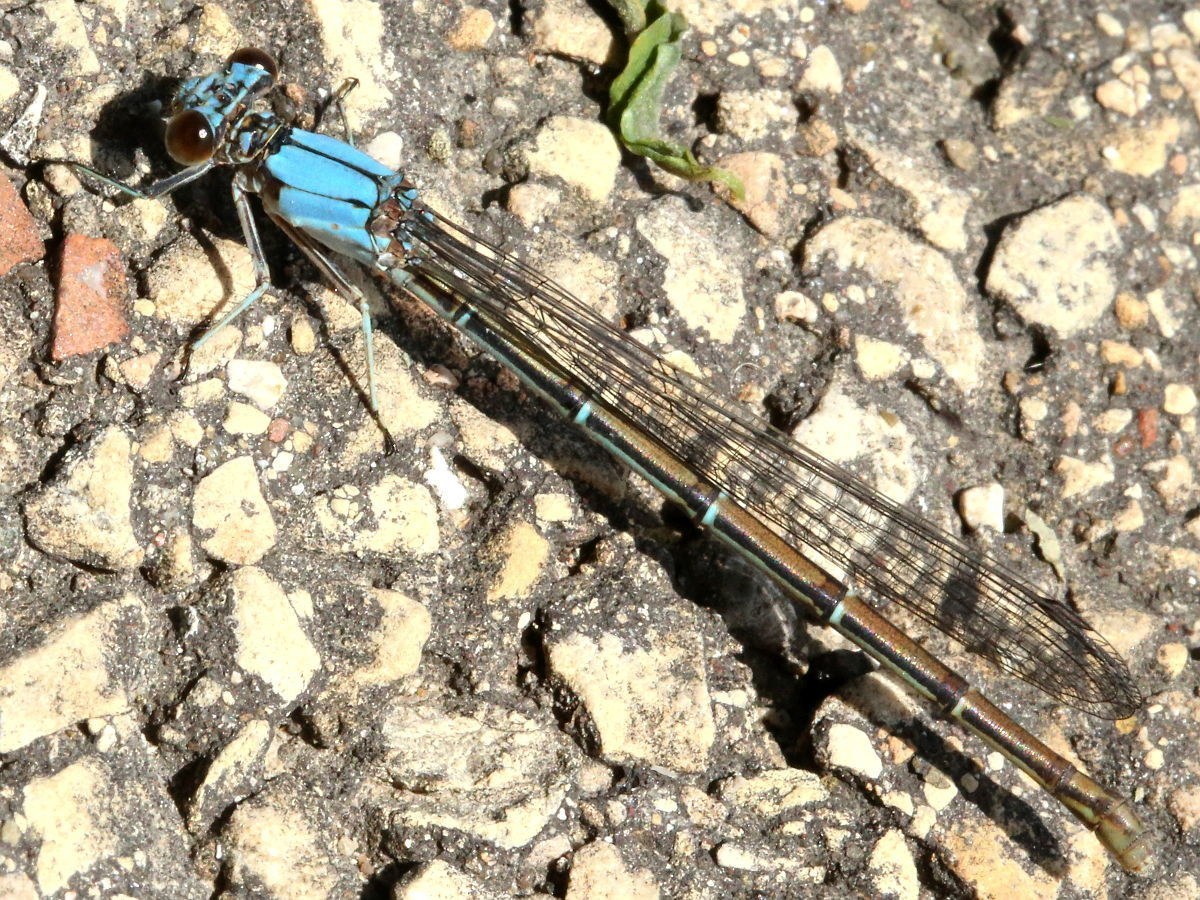
Powdered Dancer
rocky and gravelly rivers, streams, and lake shorelines