
Jagged Ambush Bug
Phymata spp.
A stocky, irregularly angular true bug camouflaged among flower petals, equipped with thickened, raptorial front legs it uses to seize visiting pollinators far larger than itself.
- Size
- 8–11 mm
- Habitat
- Flower heads in meadows, gardens, and prairies
- Danger
- Bites
Spotted a bug like this?
Identify any bug or insect from a photo, free.
Overview
The jagged ambush bug belongs to the genus Phymata within the assassin bug family Reduviidae, a group known for predatory habits and piercing mouthparts. Unlike most assassin bugs, which actively hunt, ambush bugs are sit-and-wait predators that station themselves motionless on flowers, relying on camouflage and speed rather than pursuit.
Its body shape is unusually irregular and angular compared to most insects, with broadened, jagged-edged segments that break up its outline against flower petals, making it one of the more visually distinctive true bugs found in gardens and meadows. This camouflage, combined with its powerful grasping front legs, allows it to capture prey many times its own size, including bees, wasps, and butterflies.
Ecologically, ambush bugs serve as predators within pollinator communities, occasionally taking a toll on flower-visiting insects, and they are frequently encountered by gardeners and naturalists observing flowers in bloom during the warmer months.
How to Identify
- Compact, wedge-shaped body about 8–11 mm long with an irregular, jagged outline created by expanded, angular segments on the thorax and abdomen.
- Coloring is typically mottled yellow, green, or tan, providing camouflage against flower petals and foliage.
- The most distinctive feature is the pair of greatly thickened, raptorial front legs used to grasp prey, resembling small pincers.
- Head is relatively small and triangular with short antennae; the abdomen often flares wider than the thorax, adding to the jagged profile.
- Distinguished from praying mantises by its much smaller size and true-bug piercing mouthpart, and from other assassin bugs by its stout, non-elongated body and flower-dwelling ambush habit.
Habitat & Range
Jagged ambush bugs are widespread across much of North America, occurring in meadows, prairies, gardens, roadsides, and other open, flower-rich habitats. They are most active from mid to late summer, coinciding with peak flowering of many garden and wildflower species.
Individuals typically remain stationed on a single flower head or cluster of blooms for extended periods, particularly on composite flowers such as goldenrod and asters, where their coloring blends effectively with the petals and where prey insects frequently visit to feed.
Behavior & Diet
This species is an ambush predator, remaining motionless on flowers and relying on camouflage to avoid detection by both prey and would-be predators. When a pollinating insect lands within reach, the ambush bug strikes rapidly with its raptorial front legs, seizing prey that can be considerably larger than itself, then uses its piercing mouthparts to feed on the captured insect's body fluids.
Prey commonly includes bees, wasps, flies, and butterflies visiting the same flowers. If handled, an ambush bug may bite in defense with its piercing mouthparts. Within its ecosystem it functions as a localized predator of pollinators, occasionally influencing the behavior and visitation patterns of flower-visiting insects.
Life Cycle
Ambush bugs undergo incomplete metamorphosis, passing through egg, several nymphal instars, and adult stages without a pupal phase. Eggs are typically laid in late summer or fall in protected sites near host vegetation and overwinter before hatching the following spring.
Nymphs develop through the summer months on flowers, gradually acquiring the raptorial front legs and jagged body shape as they molt toward adulthood. There is generally one generation per year, with adults most commonly observed from mid to late summer into early fall before the cycle restarts with overwintering eggs.
Frequently asked questions
Is the jagged ambush bug the same as a praying mantis?
No, despite both being ambush predators with grasping front legs, the ambush bug is a true bug in the assassin bug family and is much smaller, stockier, and more irregularly shaped than a mantis.
Does the jagged ambush bug bite?
It can bite in defense with its piercing mouthparts if handled, though it is not aggressive toward people and prefers to remain camouflaged on flowers.
What does the jagged ambush bug eat?
It preys on other insects that visit flowers, including bees, wasps, flies, and butterflies, which it seizes with its powerful front legs and feeds on using piercing mouthparts.
Where is the best place to spot one?
Look closely at flower clusters, especially goldenrod and other composite blooms, during mid to late summer, since the bug's mottled coloring makes it easy to overlook among the petals.
Jagged Ambush Bug guides
In-depth guides for identifying, understanding, and living alongside Jagged Ambush Bug.
Other bugs you may enjoy
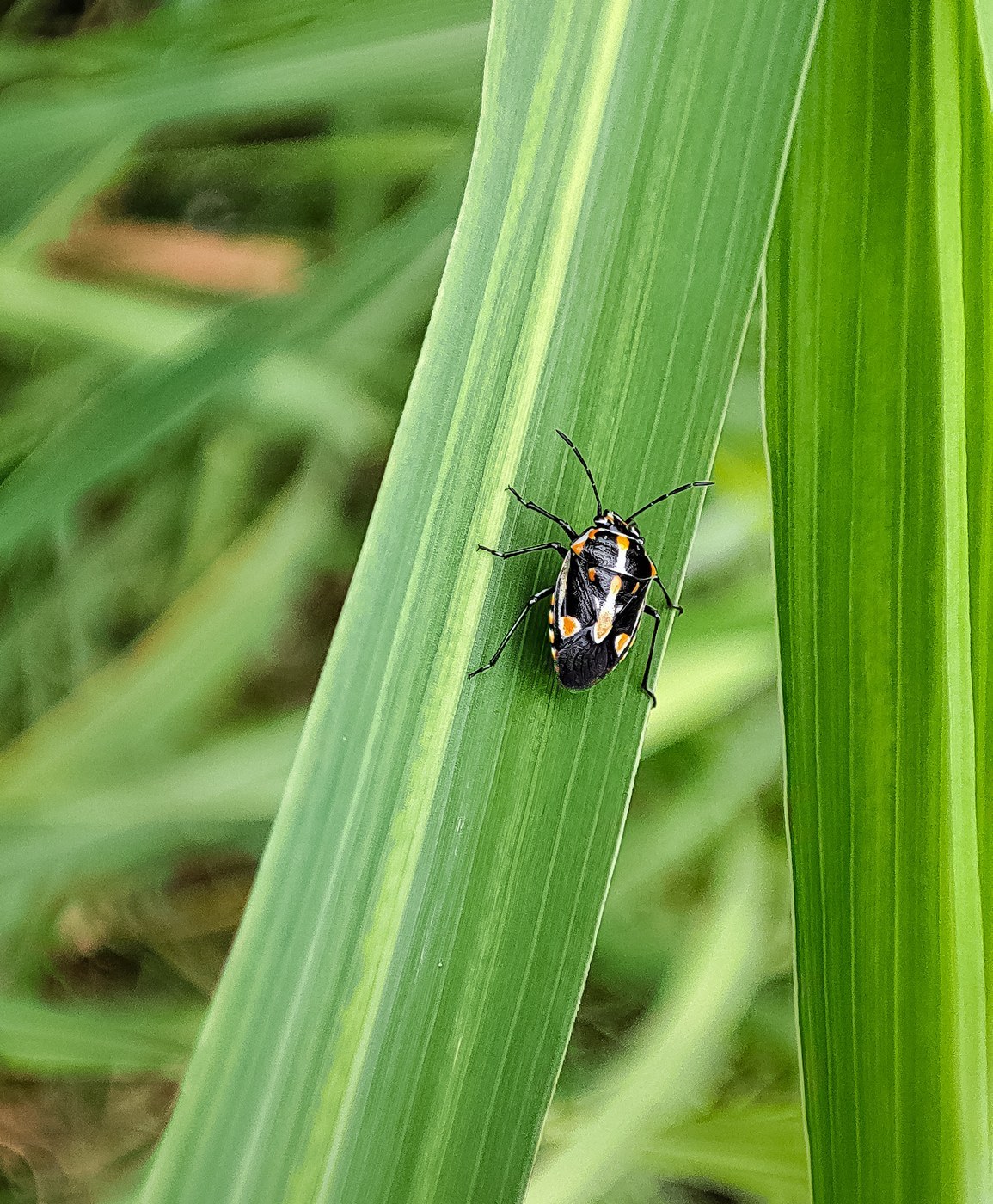
Bagrada Bug
Arid gardens, crucifer fields, desert-adjacent croplands
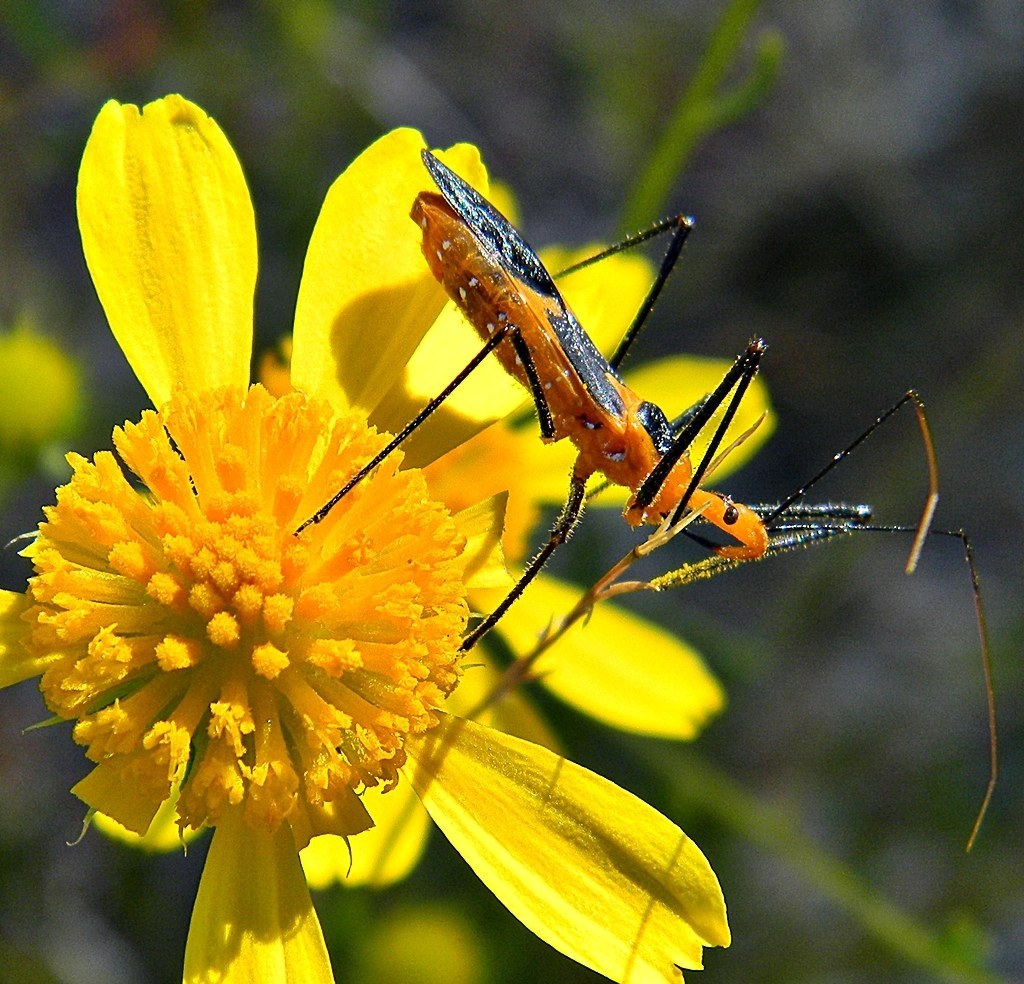
Assassin Bug
Gardens, meadows, and vegetation worldwide
Water Boatman Bug
Ponds, lakes, and slow-moving freshwater
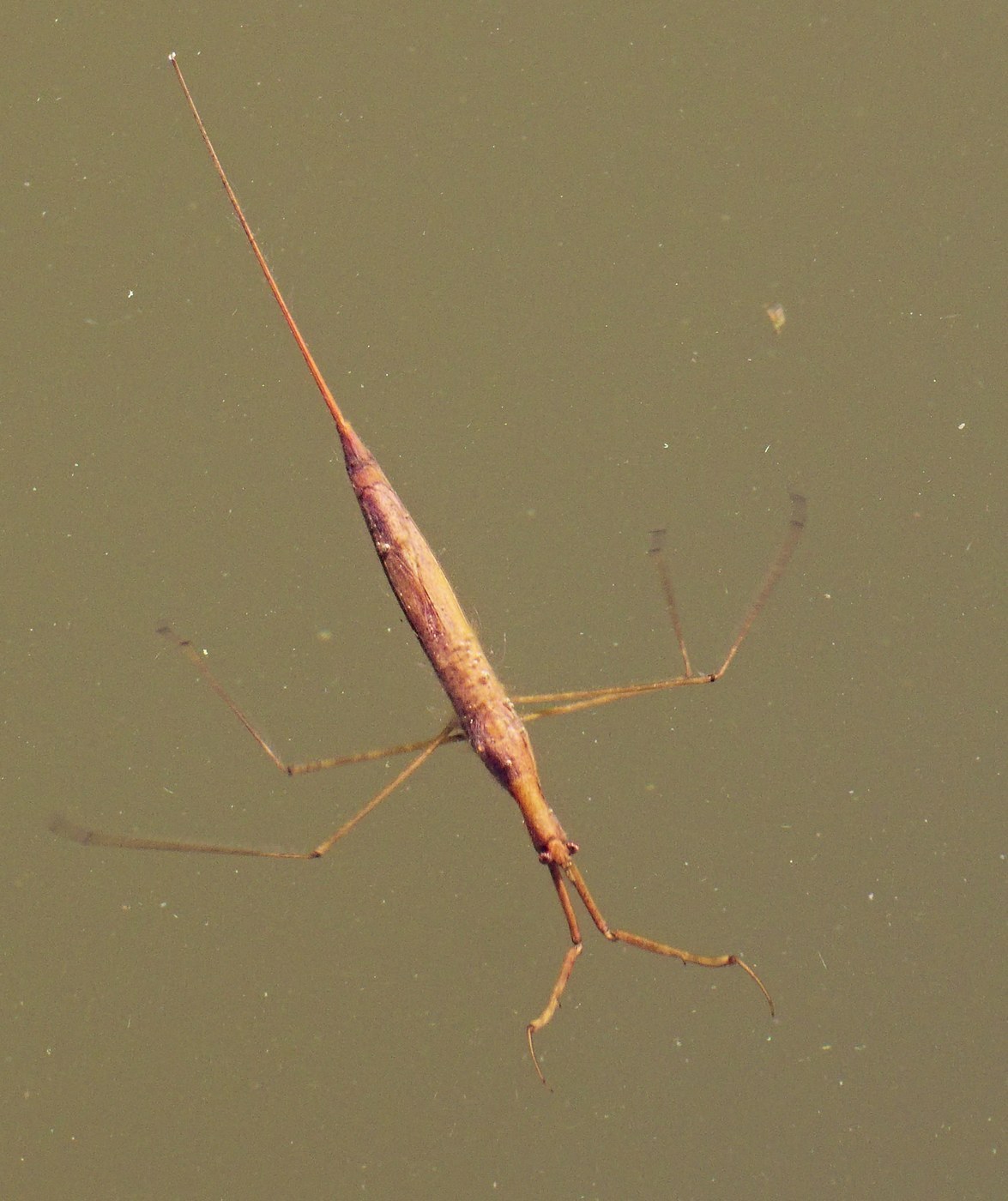
Water Stick Insect
Still and slow-moving water with dense submerged vegetation
Rough Stink Bug
Tree bark, woodlands, orchards, and shrubby vegetation
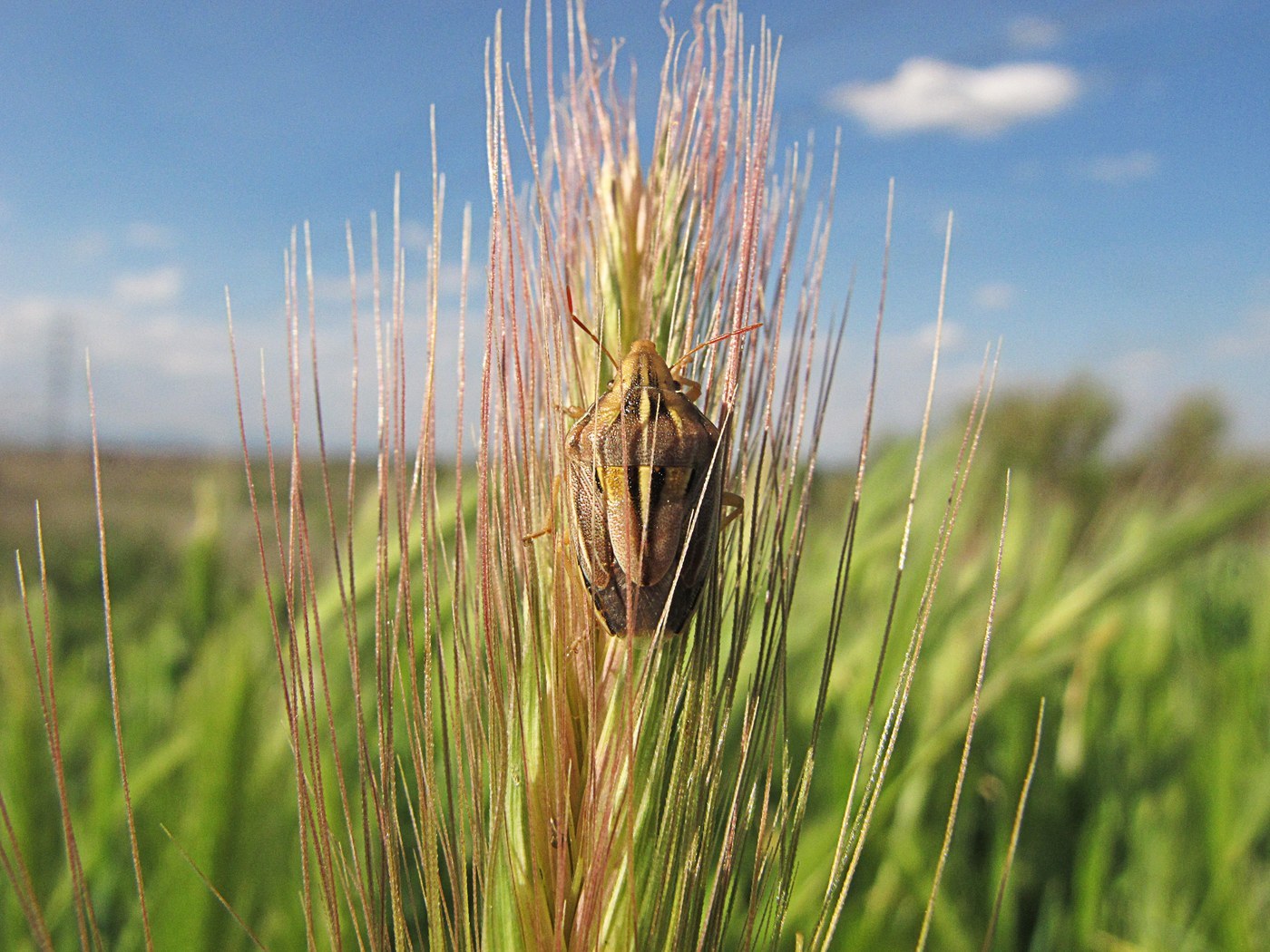
Stink Bug
Gardens, crop fields, and woodlands across temperate and subtropical regions
Squash Bug
Vegetable gardens and farm fields growing squash, pumpkin, and other cucurbits
Aphid
On stems, leaves, and buds of a very wide range of host plants
Woolly Aphid
Bark crevices, root collars, and twigs of apple, elm, and alder trees
Whitefly
Greenhouses, gardens, and undersides of leaves on host plants
Water Measurer
Quiet edges of ponds, marshes, and slow streams
Two-Spotted Stink Bug
Gardens and fields with potato and nightshade-family plants