
Ogre-faced Spider
Deinopis spp.
A twig-like nocturnal spider with enormous, light-gathering eyes that weaves a small rectangular net and hurls it over passing prey in a lightning-fast ambush.
- Size
- 15-25 mm body length
- Habitat
- Warm forest understory and shrubby vegetation near ground level
- Danger
- Bites
Spotted a bug like this?
Identify any bug or insect from a photo, free.
Overview
The ogre-faced spider, also called the net-casting or gladiator spider, is a remarkable nocturnal hunter named for its greatly enlarged pair of posterior median eyes, which are proportionally among the largest of any spider and grant it exceptional night vision. Rather than waiting in a fixed orb web, this spider spins a small, rectangular net of specialized woolly silk that it holds between its front legs, then stretches and casts over unsuspecting prey walking or flying beneath it in a rapid, precise strike.
During the day, ogre-faced spiders rely on an elongated, twig-like body and cryptic brown coloration to remain almost invisible, hanging motionless among vegetation or resting along thin stems. Its unusually large eyes, which lack the reflective tapetum layer seen in many nocturnal animals but instead regenerate a light-sensitive membrane nightly, provide it with among the most sensitive night vision documented in the animal kingdom relative to body size.
Species in the genus Deinopis occur in warm temperate to tropical regions across the Americas, Africa, Asia, and Australia, typically hunting from a low perch just above the ground where they can cast their net down onto passing prey or occasionally fling it backward to catch flying insects overhead.
How to Identify
- Elongated, twig-like brown or gray body that blends with dry vegetation, held in a stretched-out resting posture during the day
- Two enormous posterior median eyes, giving the face a distinctive "ogre" appearance, especially visible at night
- Long, thin legs, with the front two pairs used to hold and cast a small rectangular capture net
- Small, elastic, blue-gray woolly silk net stretched between the front legs rather than a fixed orb web
- Distinguished from all other spiders by its unique net-casting hunting method and greatly enlarged posterior eyes
Habitat & Range
Ogre-faced spiders inhabit warm forest understory, shrubby vegetation, and garden edges, usually perching low to the ground on thin twigs or grass stems where they can cast their net onto passing prey. Species occur across warm temperate and tropical regions including the southeastern United States, Central and South America, Africa, Asia, and Australia. Activity is strictly nocturnal, with spiders resting motionless and camouflaged during daylight hours.
Behavior & Diet
This spider hunts at night by weaving a small net of specialized dry, sticky silk and holding it stretched between its front legs while hanging head-down from a support thread; upon detecting prey nearby, it lunges downward and expands the net over the target in a fraction of a second, one of the fastest predatory strikes documented among spiders. Diet includes ground-walking insects such as crickets and beetles, as well as flying insects, which some species catch by flinging the net backward using vibration and sound cues. During the day it remains still and camouflaged, relying on its twig-like shape to avoid detection by predators.
Life Cycle
Females produce an egg sac that is typically camouflaged and suspended near the spider's resting site or hidden among vegetation, guarded to varying degrees depending on species. Spiderlings hatch and begin constructing miniature versions of the net-casting apparatus almost immediately, honing their striking technique as they grow through successive molts. Development to maturity generally takes several months to about a year depending on climate, with warmer tropical populations potentially producing more than one generation annually.
Frequently asked questions
Does the ogre-faced spider bite?
It may bite in defense if handled, but it is a cryptic, twig-like spider that stays motionless and camouflaged by day.
How does the ogre-faced spider catch prey?
It weaves a small net of silk, holds it between its front legs, and casts it over passing prey in a rapid downward strike.
Why are its eyes so large?
Its greatly enlarged posterior median eyes provide exceptional night vision, allowing it to detect prey in near-total darkness.
Where do ogre-faced spiders live?
They are found in warm forest understory and shrubby vegetation across parts of the Americas, Africa, Asia, and Australia.
Ogre-faced Spider guides
In-depth guides for identifying, understanding, and living alongside Ogre-faced Spider.
Ogre-faced Spider identified by the community
Real finds identified with Bug Identifier.
Other bugs you may enjoy
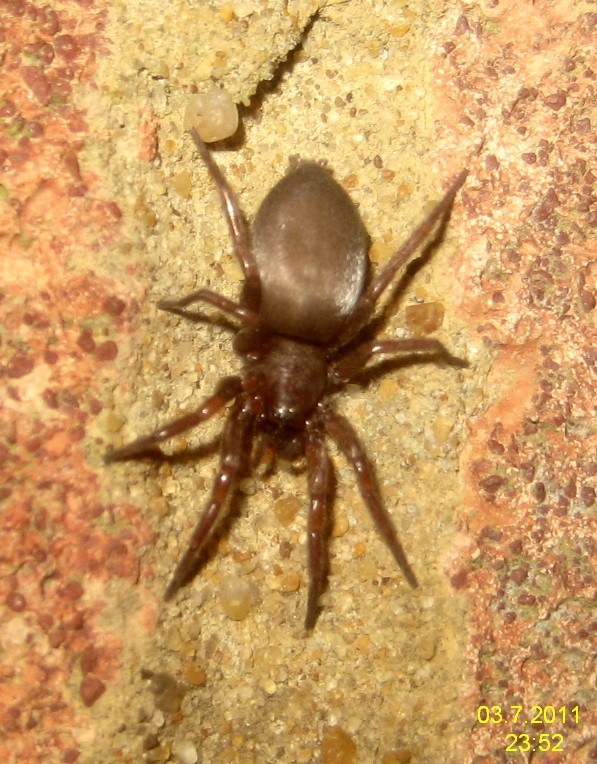
Woodlouse Spider
Damp leaf litter, under logs, stones, and mulch
Wolf Spider
Gardens, grasslands, forests, leaf litter, ground burrows
Wandering Spider
Tropical and subtropical forest floor, foliage, and banana plants
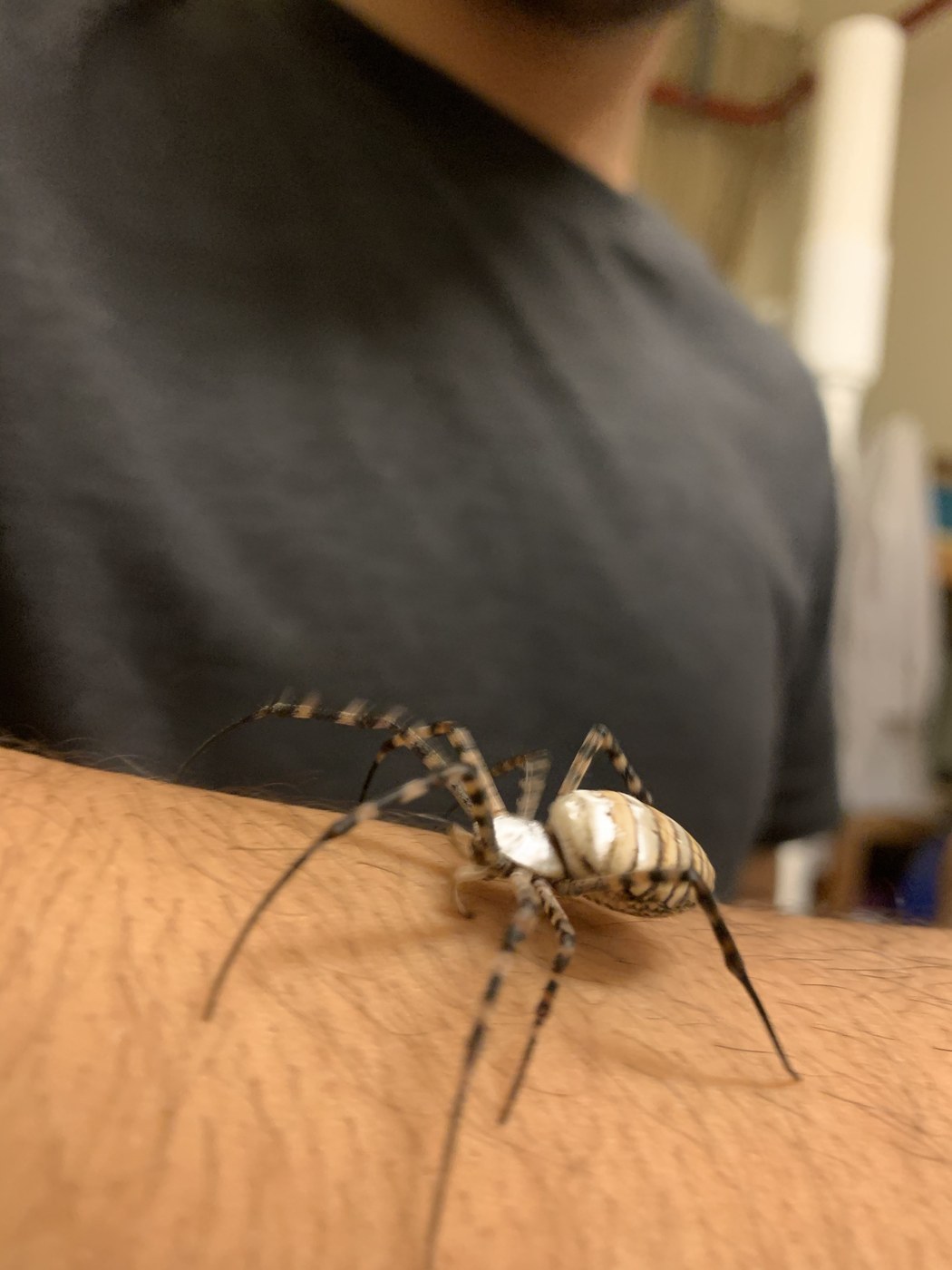
Banded Garden Spider
Tall grass, meadows, and gardens with open sunny vegetation
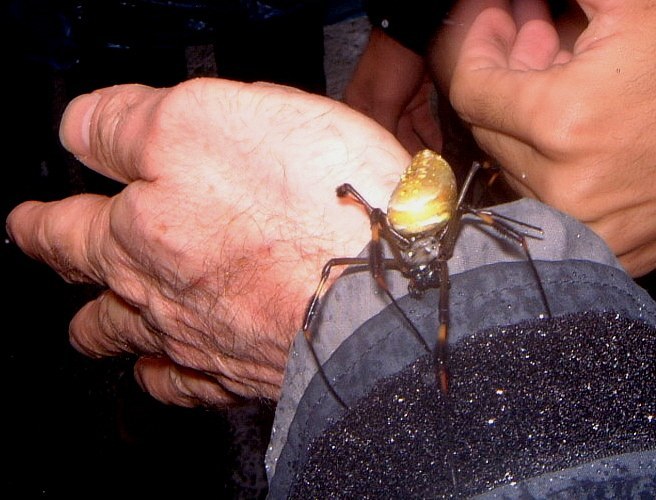
Banana Spider
Wooded trails, forest edges, and gardens across the southeastern U.S. and the American tropics
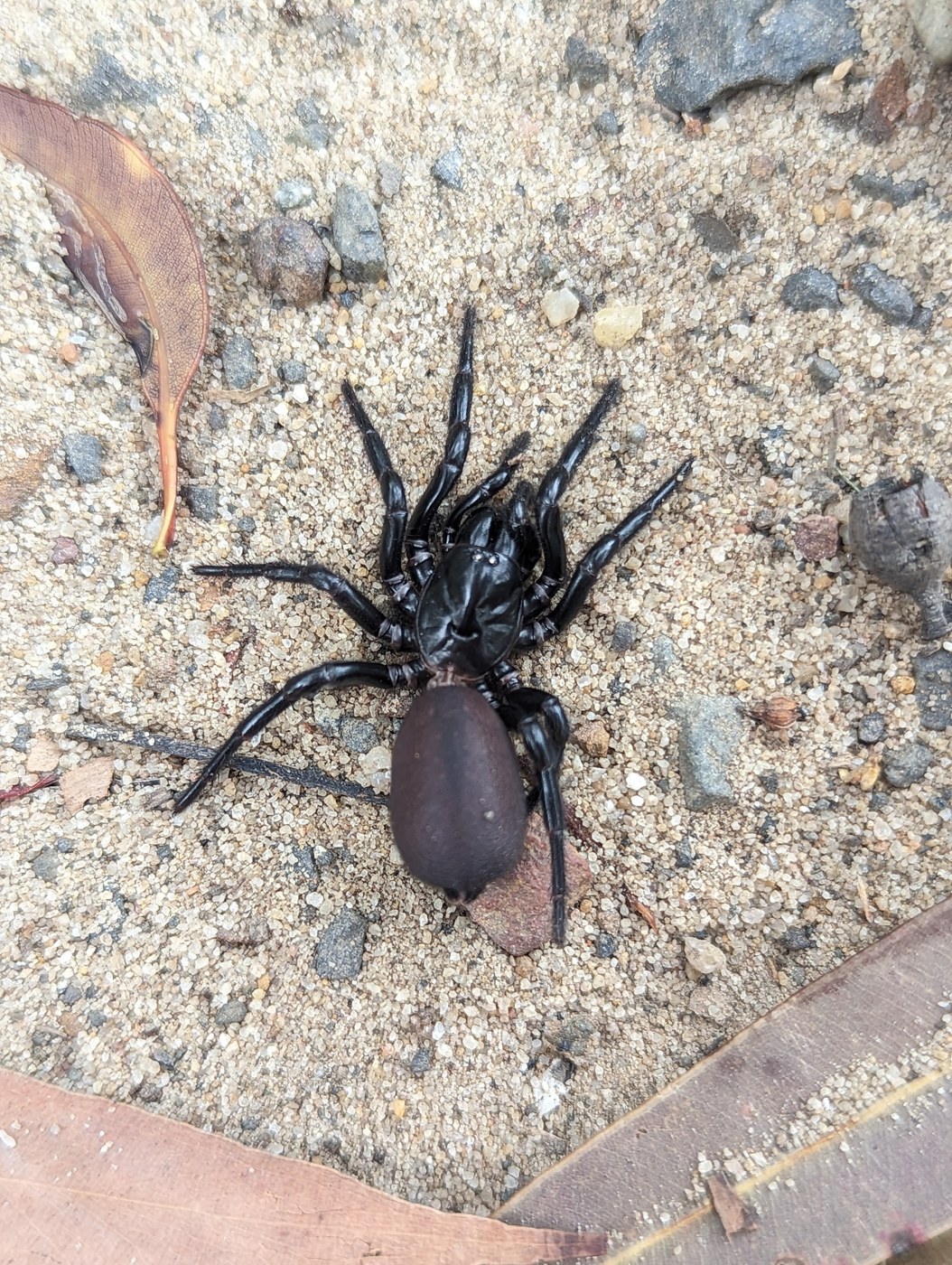
Sydney Funnel-web Spider
Burrows in moist soil, gardens, and forested gullies around the Sydney basin of eastern Australia
Trapdoor Spider
Self-dug silk-lined burrows with a camouflaged door, in dry, well-drained soil worldwide
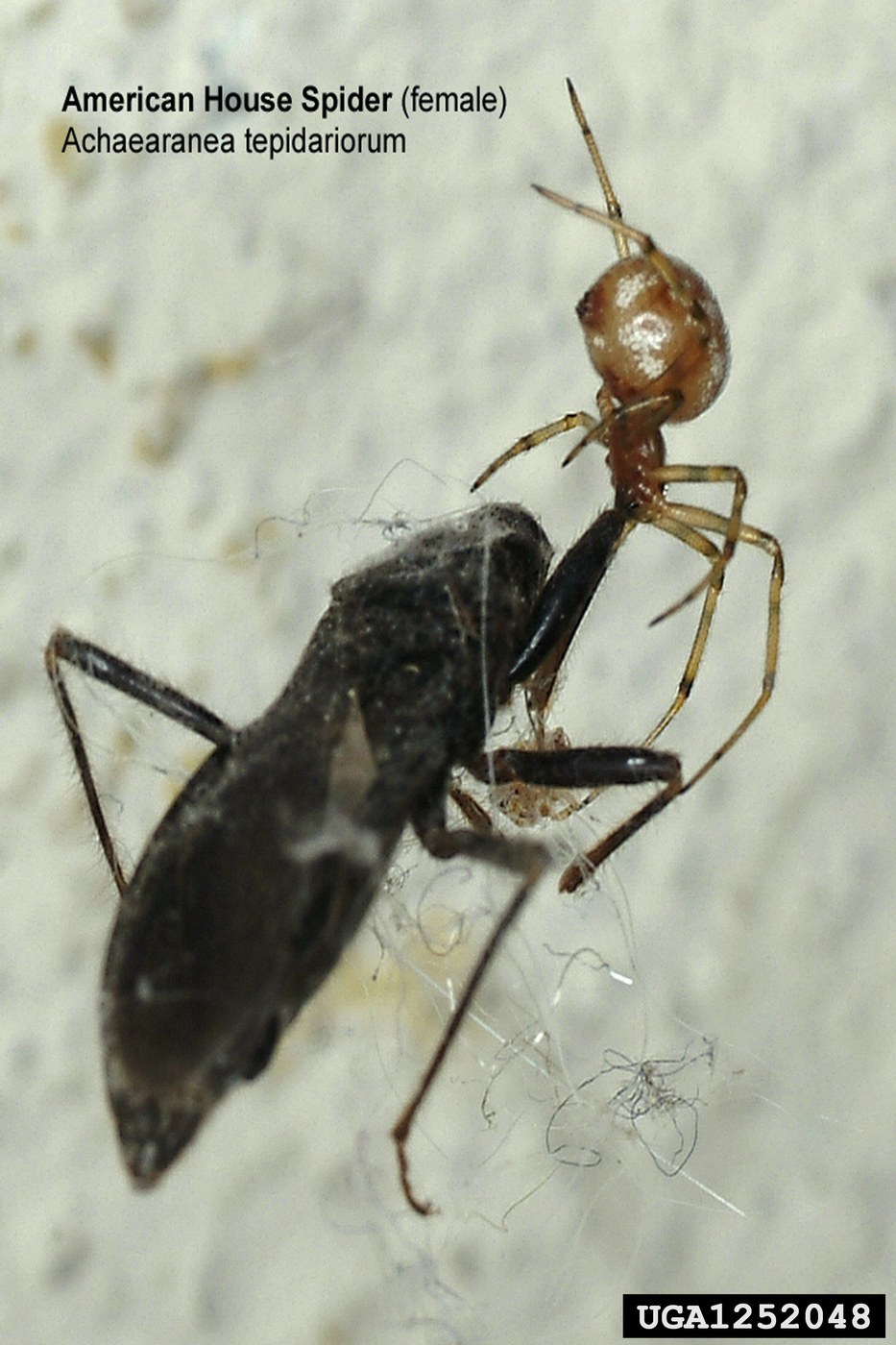
American House Spider
Corners, basements, garages, and outbuildings worldwide
Tube Web Spider
Wall crevices, bark, rockeries, and masonry
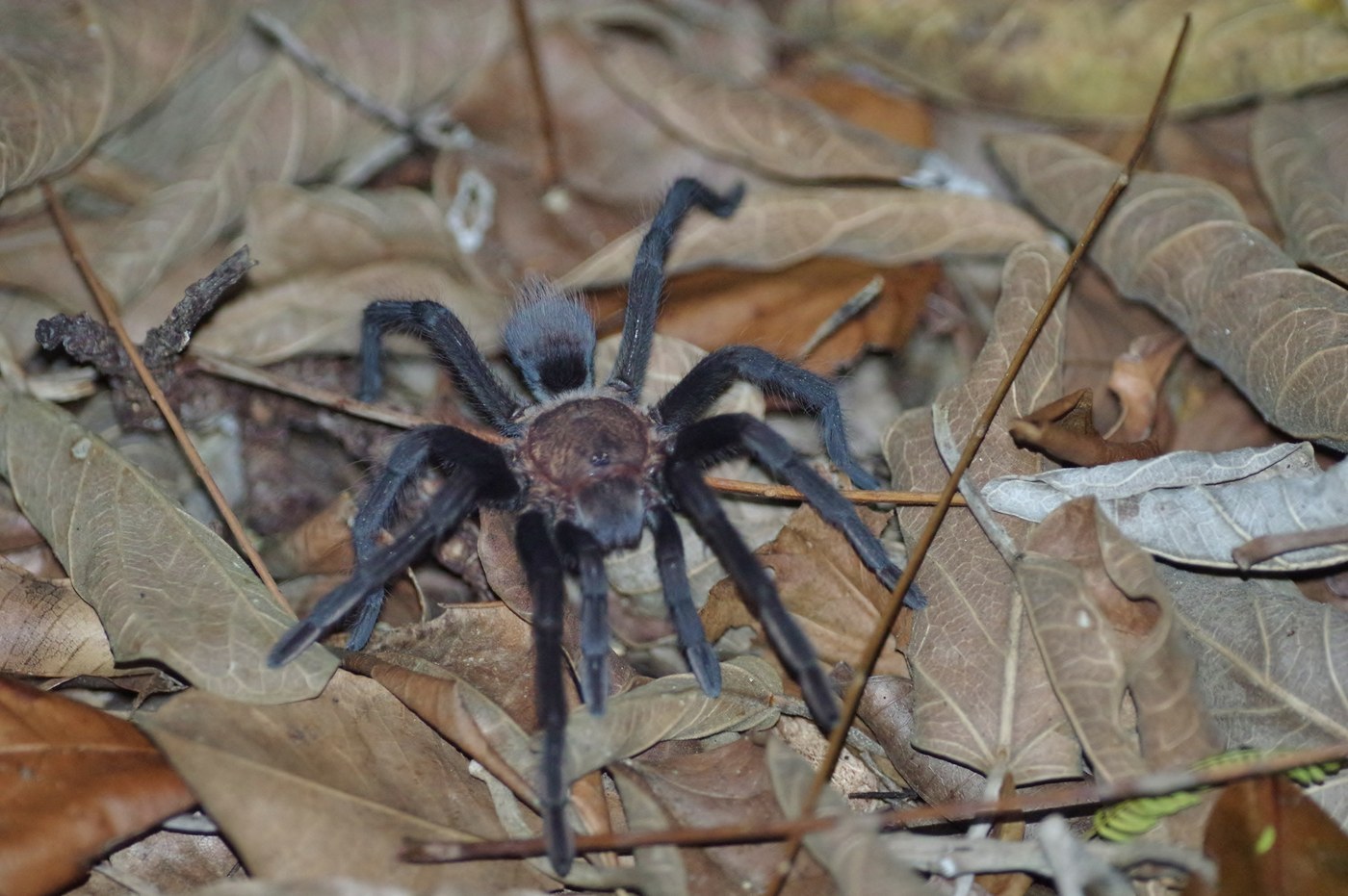
Tarantula
Burrows, rock crevices, and tree hollows in deserts, grasslands, and tropical forests worldwide
Zebra Jumping Spider
Sunny walls, fences, tree bark, and building exteriors
Wall Spider
Cracks and crevices on exterior and interior walls