
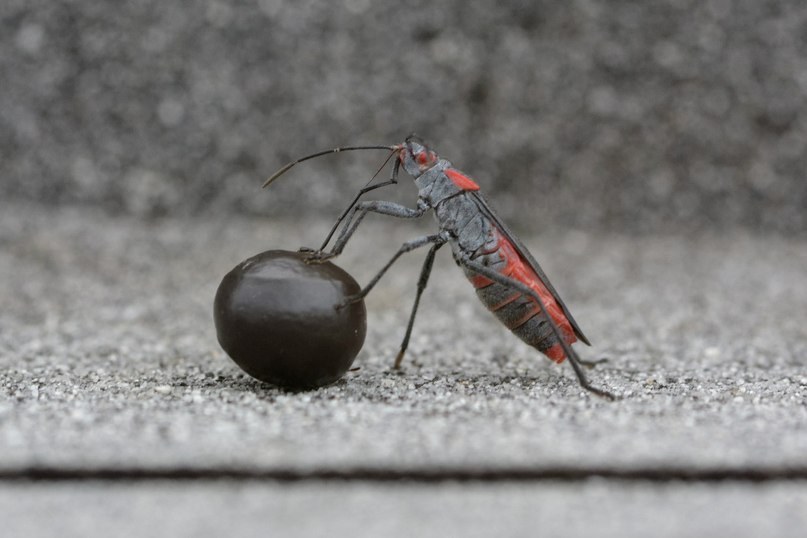
Red-Shouldered Bug
Jadera haematoloma
A dark, flattened true bug with a bright red-orange collar across its shoulders, often seen clustering beneath goldenrain trees and other soapberry-family hosts.
- Size
- 10–14 mm
- Habitat
- Soapberry-family trees such as goldenrain tree and balloon vine; warm urban and suburban settings
- Danger
- Nuisance pest
Spotted a bug like this?
Identify any bug or insect from a photo, free.
Overview
The red-shouldered bug, also known as the soapberry bug, is a true bug in the family Rhopalidae found mainly in the southern and southeastern United States. It is closely associated with plants in the soapberry family, particularly balloon vine and the introduced goldenrain tree, whose seeds serve as its primary food source.
This species has become a well-studied example of rapid evolutionary adaptation, as populations feeding on introduced host plants with differently sized seed pods have shown measurable changes in mouthpart length over just a few decades, making it notable in evolutionary biology circles as much as in casual identification.
Around homes and gardens it is most often noticed as large clusters of dark, red-trimmed bugs gathering on sidewalks, tree trunks, and building foundations near host trees, particularly during warm weather when seed pods are abundant.
How to Identify
- Flattened, oval body about 10–14 mm long, mostly dark gray to black with a distinctive bright red-orange band across the front edge of the thorax, giving the 'red-shouldered' name.
- Red eyes and reddish veining along the wing margins add to the contrasting color pattern.
- Nymphs are wingless and often bright red or orange with black markings, resembling small, rounder versions of the adult coloring.
- Distinguished from the boxelder bug by its broader red 'shoulder' band rather than three narrow stripes, and by its strong association with balloon vine and goldenrain tree seed pods rather than maples.
- Large ground-level aggregations near host trees, especially on pavement and low walls, are a helpful identification cue.
Habitat & Range
This species occurs primarily in the southern and southeastern United States, extending into parts of the central and western states where its host plants are cultivated, and it can also be found in parts of Mexico and Central America.
It is closely tied to soapberry-family plants, especially balloon vine (Cardiospermum) and the introduced goldenrain tree (Koelreuteria), and is most abundant wherever these hosts grow in yards, parks, and along roadsides. Adults and nymphs cluster on the ground, tree trunks, and nearby structures beneath host trees, particularly during the warm months when seed pods are ripening.
Behavior & Diet
Red-shouldered bugs feed by inserting their piercing mouthparts into the seeds of host plants to extract nutrients, often aggregating in large numbers around fallen seed pods on the ground. They are gregarious, frequently found in dense clusters of mixed-age individuals.
The species is notable to researchers for demonstrating measurable evolutionary shifts in beak length correlating with the size of seed pods on different host plants introduced to their range. Beyond this scientific interest, their day-to-day behavior involves basking in sun-warmed areas, feeding on seeds, and dispersing short distances by walking or flying between host plants.
Life Cycle
Development proceeds through incomplete metamorphosis, with eggs, several nymphal instars, and adults, lacking a pupal stage. Eggs are laid near host plants, and nymphs feed on seeds as they develop through the warmer months, going through successive molts before reaching the winged adult stage.
In warmer parts of its range multiple generations can occur within a year, with populations remaining active for much of the warm season. Adults may persist in large numbers around host trees into late fall, with overwintering behavior varying by region and climate.
Frequently asked questions
What is the difference between a red-shouldered bug and a boxelder bug?
Both are dark true bugs with red markings, but the red-shouldered bug has a broad red band across its shoulders rather than narrow stripes, and it is associated with soapberry-family trees like goldenrain tree rather than boxelder and maple.
Why are there so many of these bugs under my tree?
Red-shouldered bugs aggregate in large numbers wherever their preferred host plants, such as goldenrain tree or balloon vine, are dropping seed pods, since the seeds are their main food source.
Do red-shouldered bugs fly?
Yes, adults have fully developed wings and can fly short distances between host plants, though they are often seen walking and clustering on the ground near seed pods.
Are the red nymphs a different insect?
No, the smaller, rounder red and black individuals are simply immature nymphs of the same species, which gradually take on the adult's flattened shape and red-shouldered pattern as they mature.
Red-Shouldered Bug guides
In-depth guides for identifying, understanding, and living alongside Red-Shouldered Bug.
Other bugs you may enjoy
Bagrada Bug
Arid gardens, crucifer fields, desert-adjacent croplands
Assassin Bug
Gardens, meadows, and vegetation worldwide
Water Boatman Bug
Ponds, lakes, and slow-moving freshwater
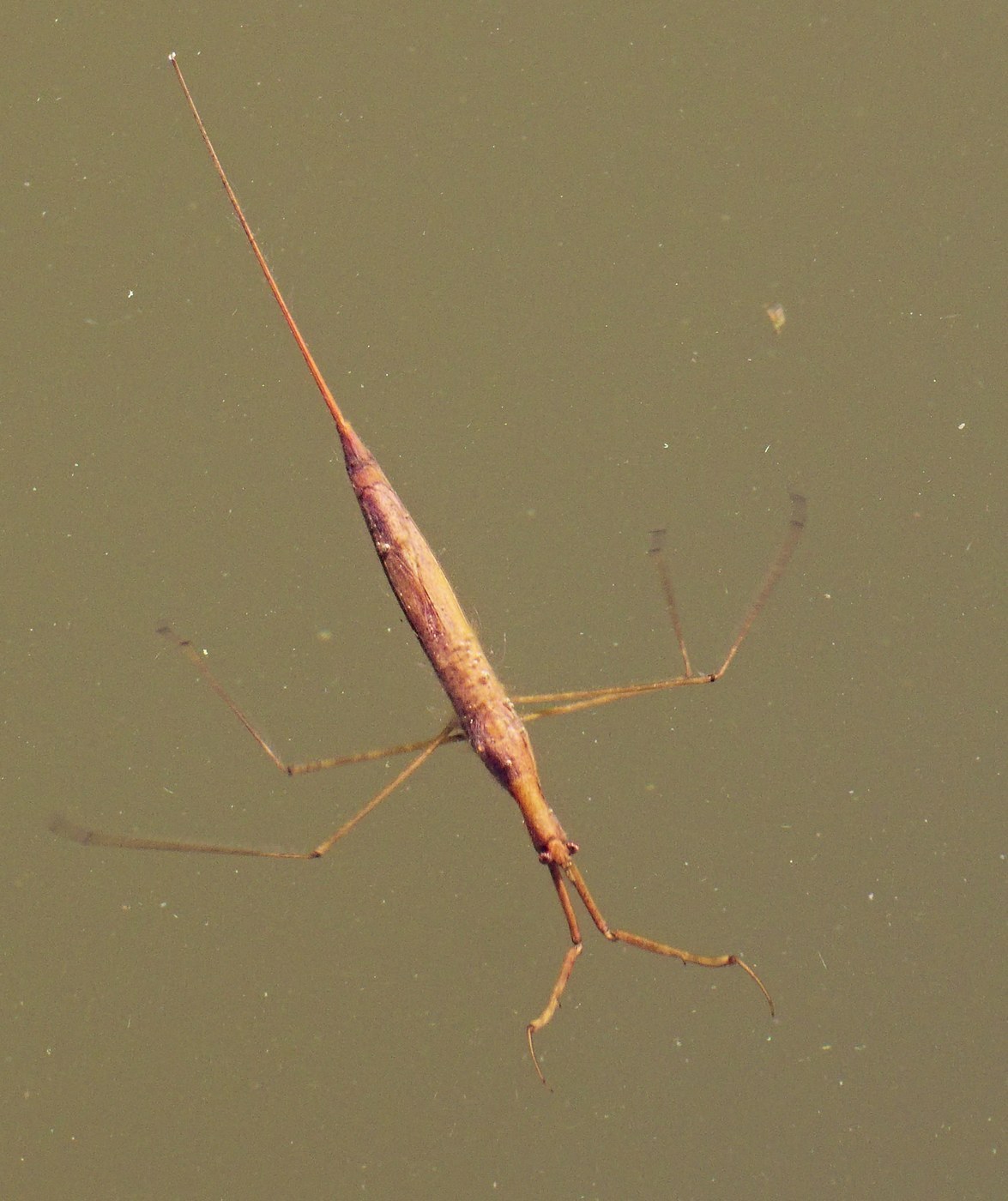
Water Stick Insect
Still and slow-moving water with dense submerged vegetation
Rough Stink Bug
Tree bark, woodlands, orchards, and shrubby vegetation
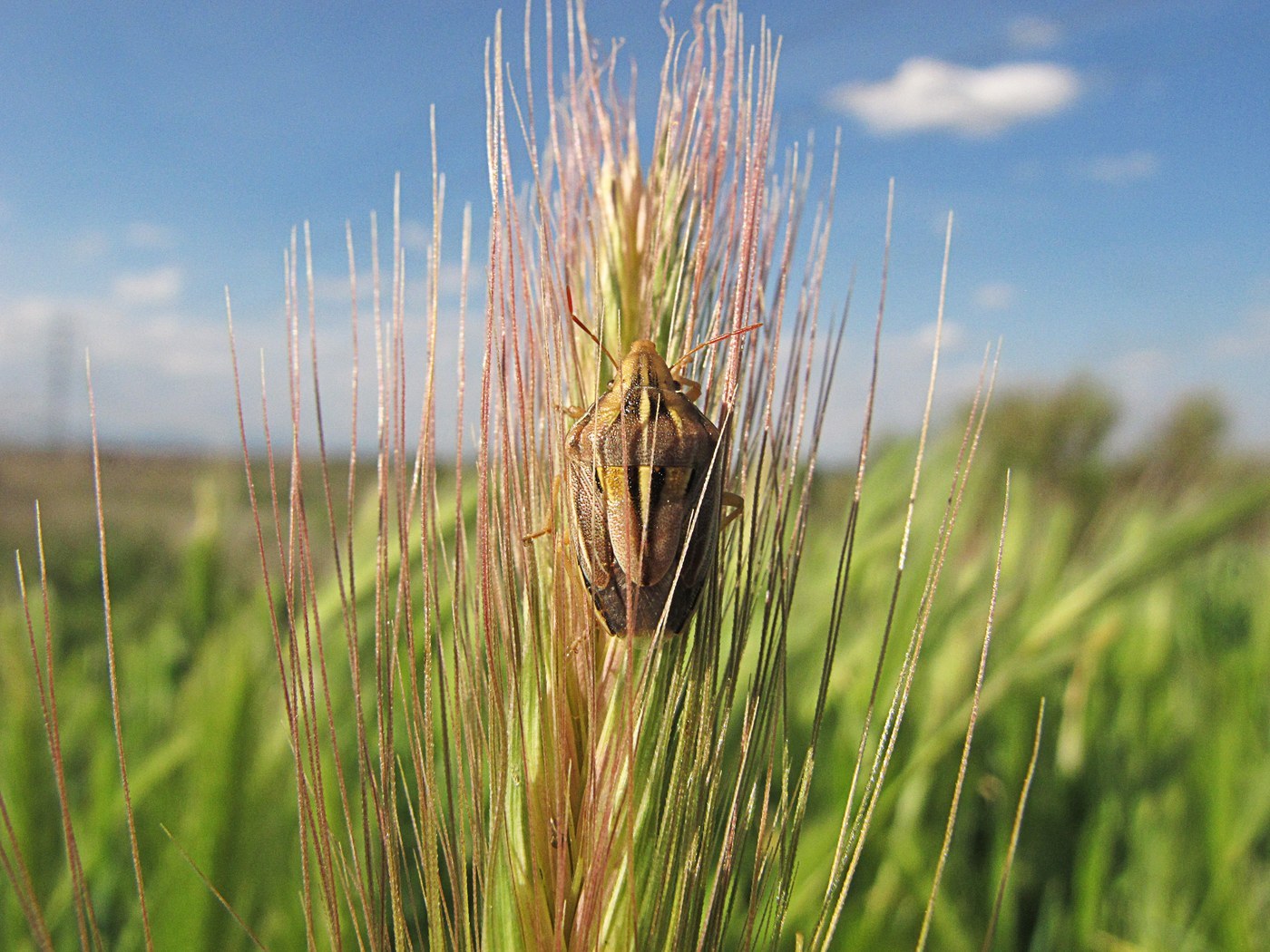
Stink Bug
Gardens, crop fields, and woodlands across temperate and subtropical regions
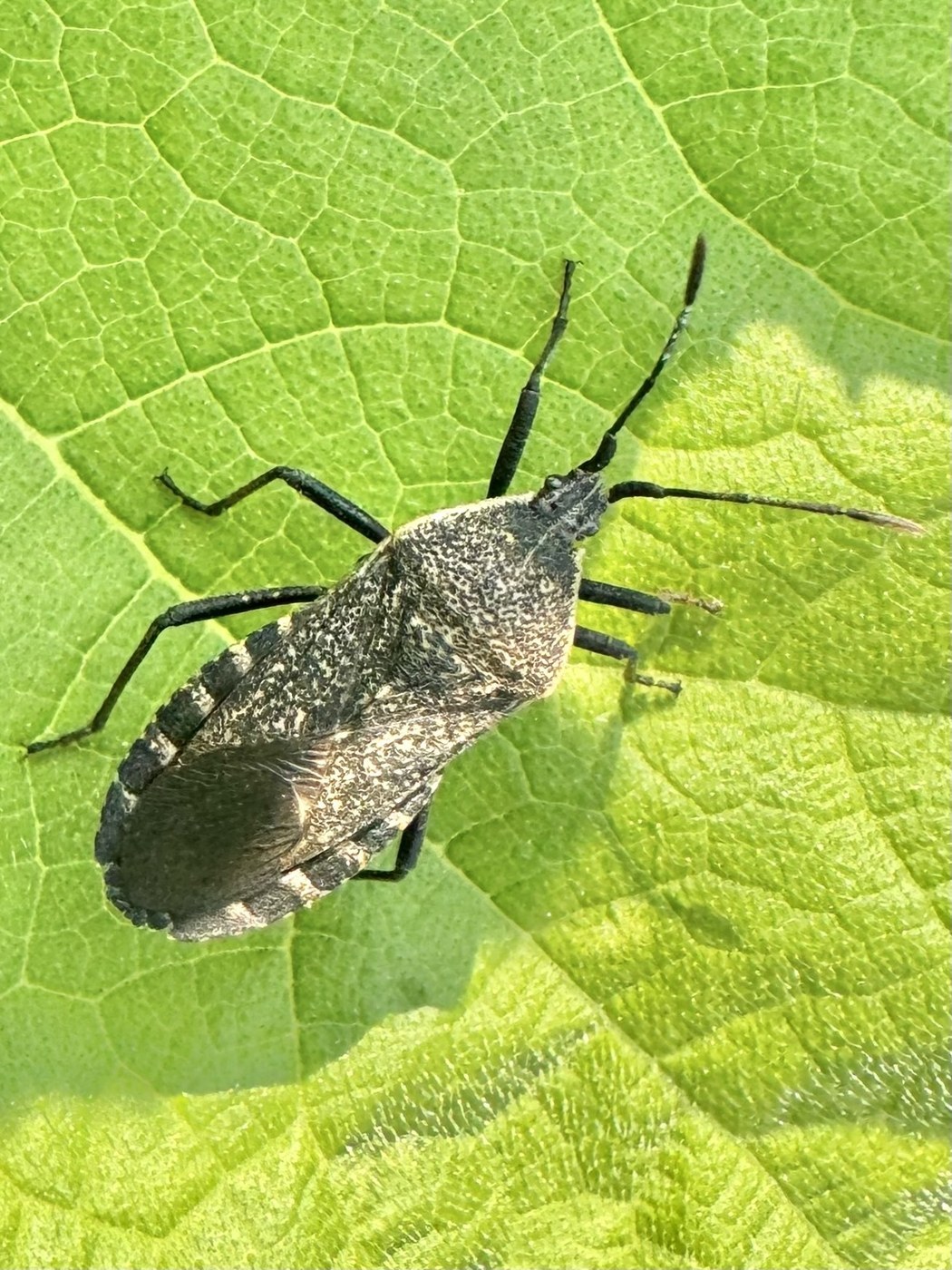
Squash Bug
Vegetable gardens and farm fields growing squash, pumpkin, and other cucurbits
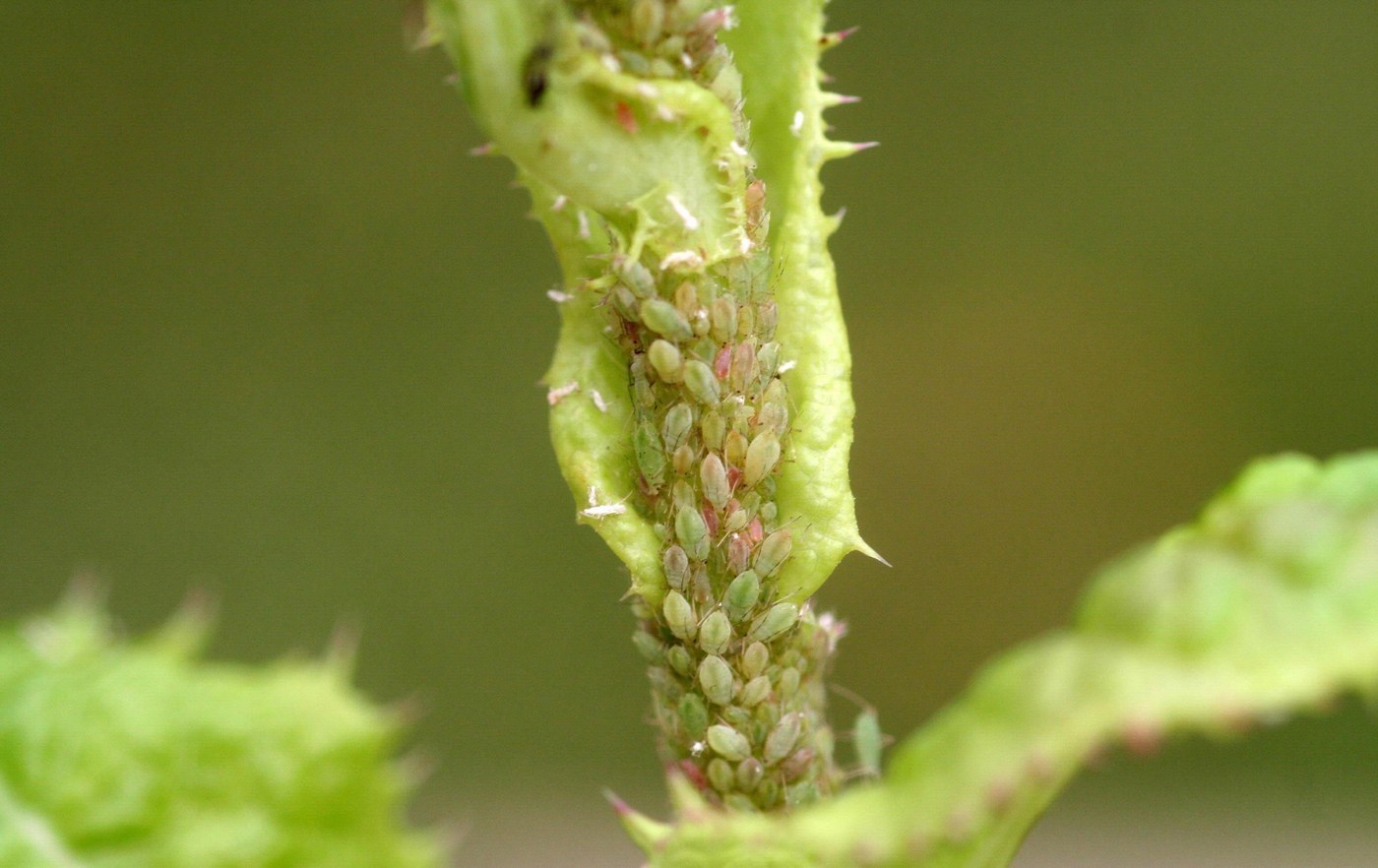
Aphid
On stems, leaves, and buds of a very wide range of host plants
Woolly Aphid
Bark crevices, root collars, and twigs of apple, elm, and alder trees
Whitefly
Greenhouses, gardens, and undersides of leaves on host plants
Water Measurer
Quiet edges of ponds, marshes, and slow streams
Two-Spotted Stink Bug
Gardens and fields with potato and nightshade-family plants