
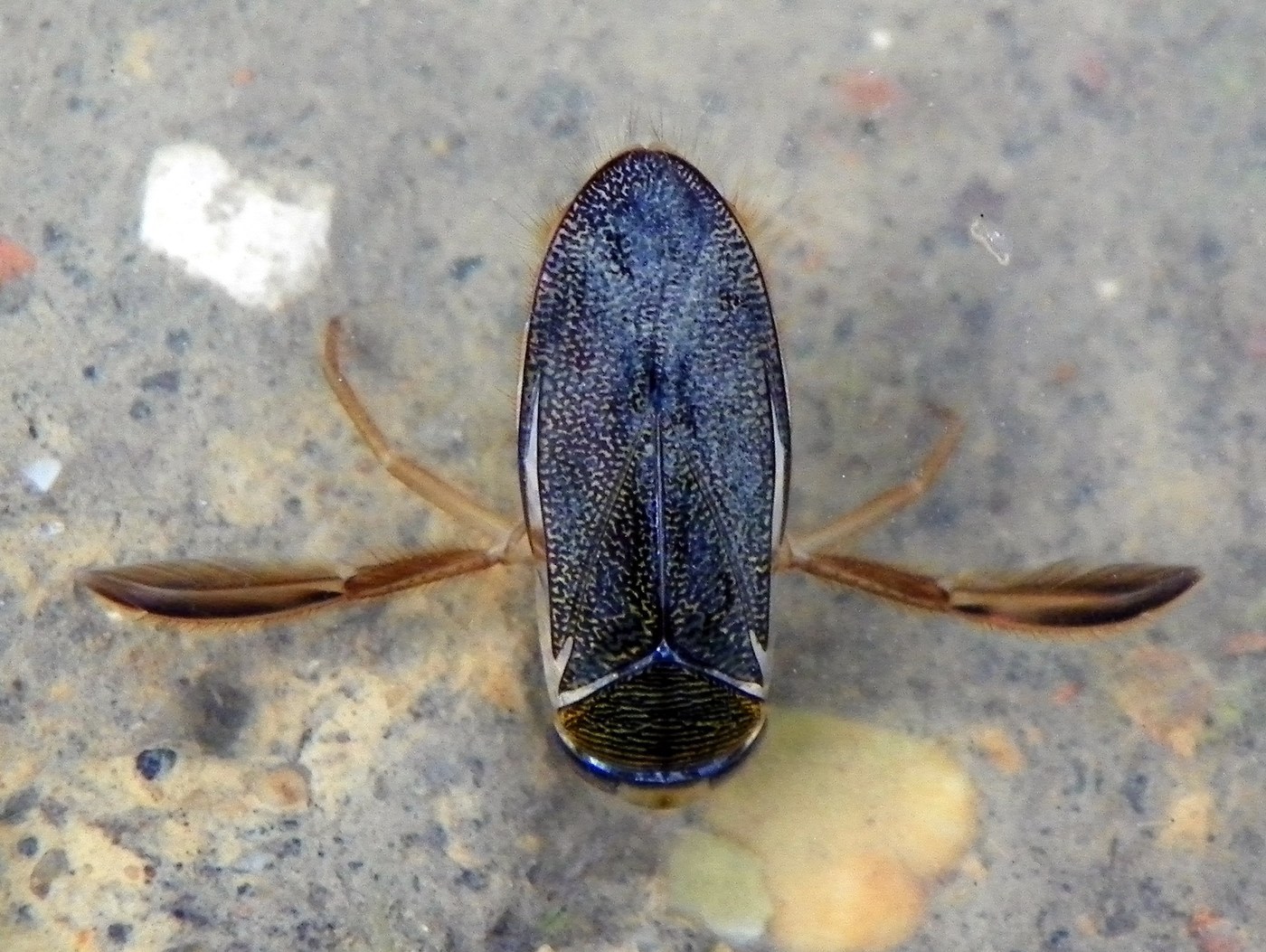
Water Boatman
Corixa punctata
A small, streamlined aquatic true bug with oar-like hind legs used for swimming, commonly seen gliding just beneath the surface of ponds and calm freshwater.
- Size
- 5–15 mm
- Habitat
- Ponds, lakes, slow streams, freshwater with vegetation
- Danger
- Harmless
Spotted a bug like this?
Identify any bug or insect from a photo, free.
Overview
The Water Boatman is a common aquatic true bug in the family Corixidae, order Hemiptera, well adapted to life beneath the surface of freshwater habitats. Its flattened, streamlined body and long, fringed hind legs, used like oars, make it one of the most efficient swimmers among aquatic insects.
Unlike its lookalike relative the backswimmer, which swims upside down and is predatory, the Water Boatman typically swims right-side up and feeds primarily on algae, detritus, and microorganisms, making it more of a grazer within its aquatic community rather than an active predator.
As both a consumer of algae and detritus and a prey item for fish, amphibians, and aquatic birds, the Water Boatman occupies an important position in freshwater food webs, contributing to nutrient cycling within ponds and slow-moving waters.
How to Identify
- Flattened, elongated oval body, streamlined for swimming, typically 5–15 mm long.
- Coloration generally mottled gray, brown, or olive with fine, dark cross-hatched patterning on the wings.
- Long, flattened, fringed hind legs adapted as swimming oars, held out to the sides.
- Short front legs modified for scooping algae and detritus rather than grasping prey.
- Lookalikes: frequently confused with the backswimmer (Notonecta spp.), which swims upside down and has a more rounded, keeled back; the water boatman swims right-side up and has a flatter back.
Habitat & Range
Found worldwide in freshwater habitats, water boatmen are common in ponds, lakes, slow streams, and vegetated ditches. They are active throughout the warmer months, often seen resting near the surface or diving to feed among submerged vegetation and sediment, and some species overwinter as adults in the mud at the bottom of water bodies.
Behavior & Diet
Water boatmen swim using their oar-like hind legs, propelling themselves in short bursts through the water, and periodically surface to trap a bubble of air against their body for underwater respiration. They feed primarily on algae, plant detritus, and microorganisms scraped from submerged surfaces using their modified front legs, distinguishing them ecologically from the predatory backswimmer. Some species can produce a soft, chirping sound by rubbing body parts together, a behavior known as stridulation, and adults are capable of flight and often disperse between water bodies, sometimes attracted to lights at night.
Life Cycle
Water boatmen undergo incomplete metamorphosis, spending their entire life cycle in or near water. Eggs are laid attached to submerged plants, rocks, or debris, hatching into nymphs that resemble smaller, wingless versions of the adult and grow through several instars while feeding underwater. After their final molt, they emerge as fully winged adults capable of flight and dispersal to new bodies of water. Depending on climate, one to several generations may occur per year, with some species overwintering as adults in bottom sediments.
Frequently asked questions
Is the Water Boatman the same as a backswimmer?
No, though similar in shape, the Water Boatman swims right-side up and feeds mainly on algae and detritus, while the backswimmer swims upside down and actively preys on other small aquatic animals.
Does the Water Boatman bite?
It is primarily an algae and detritus feeder and is not known for aggressive biting behavior toward anything other than its food sources.
How does it breathe underwater?
It surfaces periodically to trap a bubble of air against its body, which it uses as an air supply while submerged.
Where would I find Water Boatmen?
In calm freshwater habitats such as ponds, lakes, and slow streams, often near submerged vegetation.
Water Boatman guides
In-depth guides for identifying, understanding, and living alongside Water Boatman.
Other bugs you may enjoy
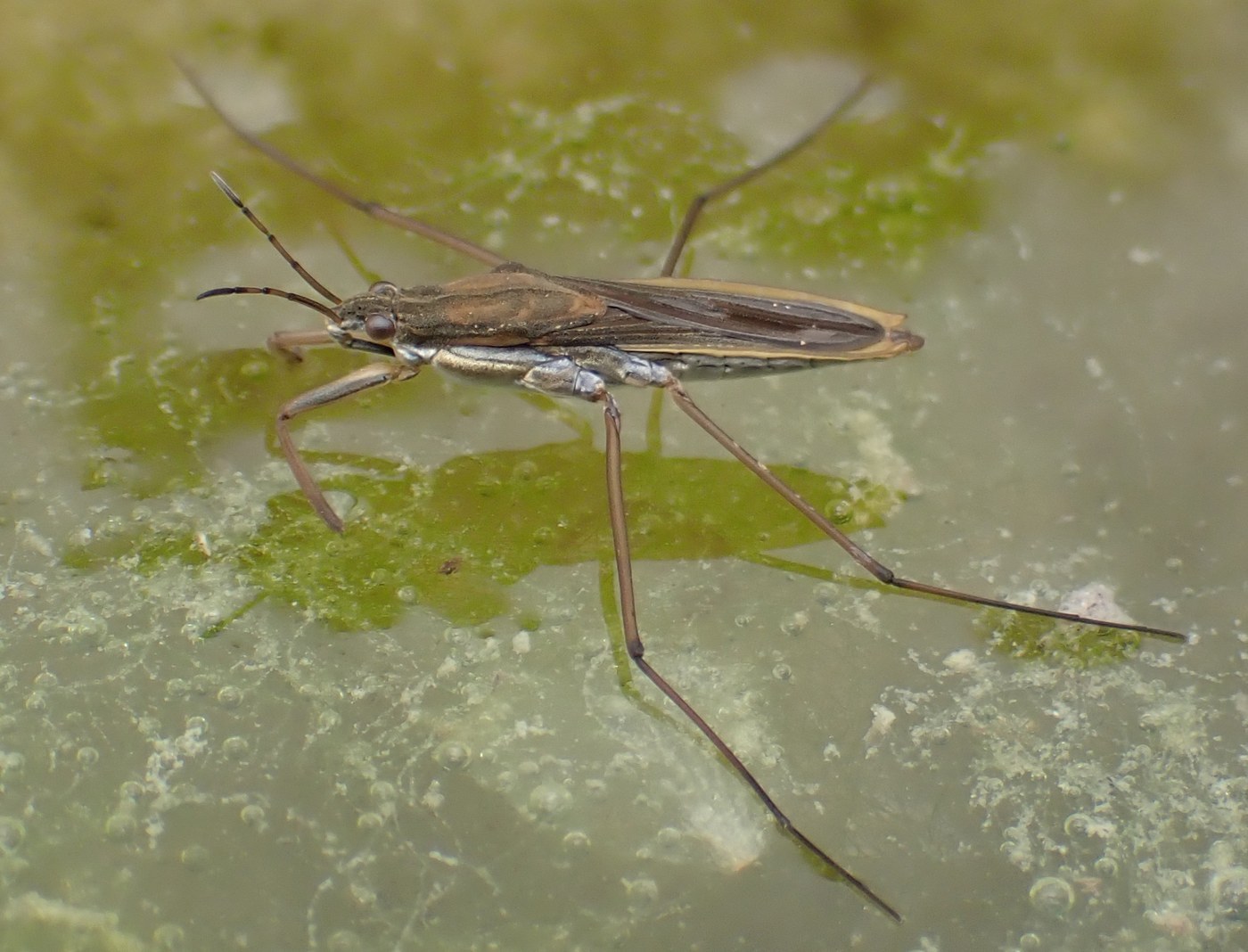
Water Strider
Still or slow-moving fresh water: ponds, lake edges, slow streams, puddles
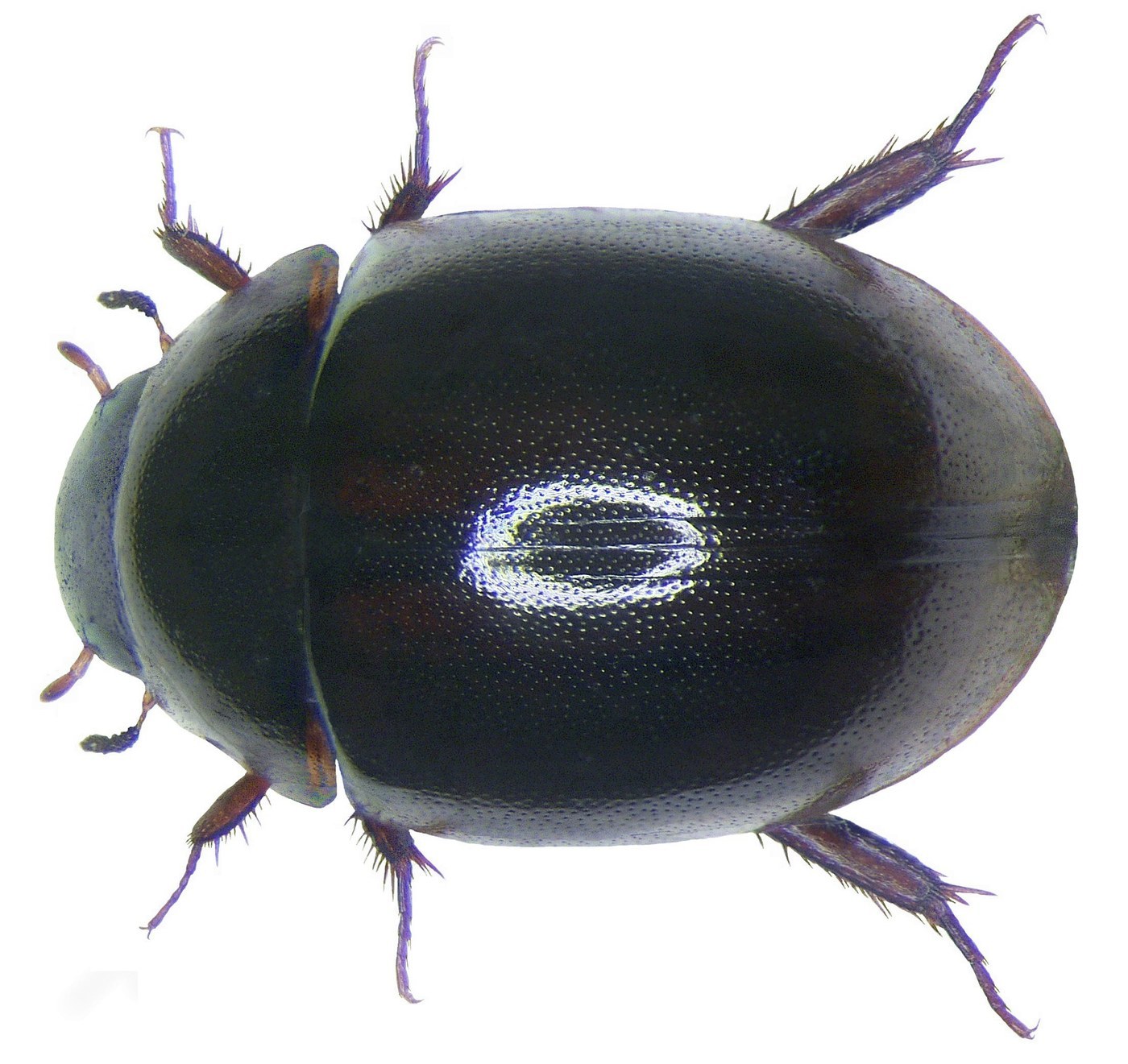
Water Beetle
Ponds, slow streams, marshes, still fresh water
Water Penny Beetle
Fast, rocky, well-oxygenated streams
Water Scorpion
Still or slow-moving water with submerged vegetation
Stonefly
Cold, clean, well-oxygenated streams and rivers
Stonefly Nymph
Cold, fast-flowing, well-oxygenated streams
Toad Bug
Muddy or sandy shorelines of ponds, streams, and rivers
Soldier Fly Larva
Ponds, marshes, and slow streams with organic sediment
Mosquito Larva
Standing water in ponds, ditches, containers, and puddles
Whirligig Beetle
Surface of ponds, lakes, and slow streams
Rat-Tailed Maggot
Stagnant, oxygen-poor water such as manure pools, drains, and compost
Predaceous Diving Beetle
Ponds, lakes, and slow-moving freshwater