
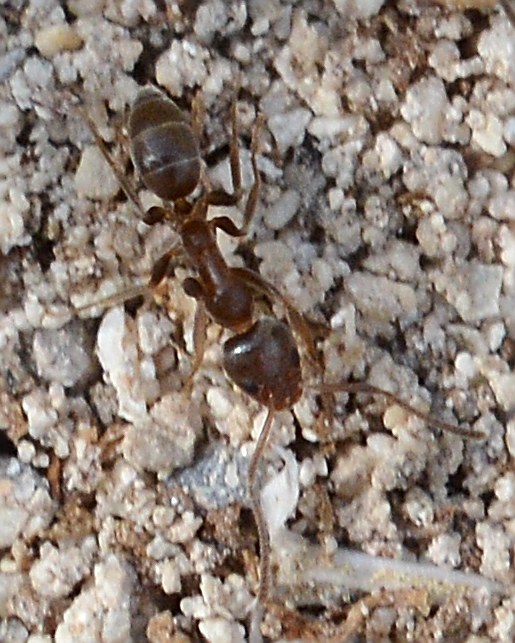
Argentine Ant
Linepithema humile
A small, uniformly light-brown ant that forms enormous, cooperative supercolonies stretching across entire regions rather than defending small individual nests.
- Size
- Workers about 2-3 mm long
- Habitat
- Disturbed urban soil, gardens, and building perimeters
- Danger
- Nuisance pest
Spotted a bug like this?
Identify any bug or insect from a photo, free.
Overview
The Argentine ant is a small, unassuming species native to the floodplains of the Parana River in Argentina, Brazil, Paraguay, and Uruguay. Since the late 1800s it has spread to mild-climate regions worldwide, including coastal California, the Mediterranean, South Africa, Japan, and Australia, largely through the movement of agricultural goods and nursery plants.
What makes this species remarkable is its unusual social structure. Unlike most ants, introduced Argentine ant populations lack the genetic diversity that normally causes colonies to recognize and fight rival nests. As a result, ants from thousands of separate nests treat one another as nestmates, merging into vast unicolonial "supercolonies" that can extend for many kilometers and contain millions of interconnected workers and queens.
This cooperative structure gives Argentine ants a strong competitive advantage over native ant species, and they are considered one of the world's most successful invasive insects, frequently displacing native ants in the areas they colonize.
How to Identify
- Small, monomorphic (uniform-sized) worker ants roughly 2-3 mm long
- Light to dark brown coloring, sometimes with a faint sheen
- One node on the petiole (waist), not visible from above
- No stinger; releases a musty, somewhat rotten odor when crushed
- Moves in dense, well-defined foraging trails along edges, wires, and plant stems
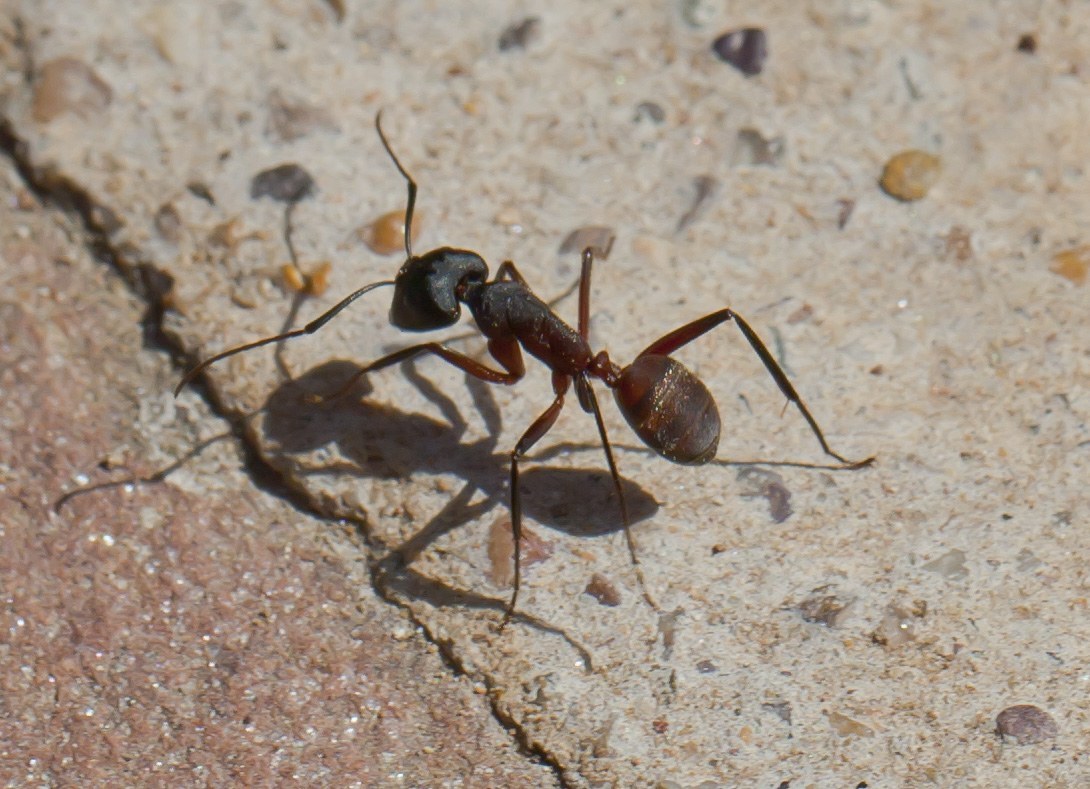
- Lacks the erratic zig-zag running of crazy ants and is smaller and less shiny than carpenter or field ants
Habitat & Range
In its native range, this species inhabits floodplain forests and disturbed ground along South American rivers. Introduced populations favor mild, moist climates and are especially common in irrigated landscapes such as suburban lawns, gardens, orchards, and vineyards. Colonies nest in shallow soil, under mulch, pavement, or debris, and readily relocate nest sites in response to moisture changes, often moving indoors during hot, dry spells or heavy rain.
Behavior & Diet
Argentine ants are omnivorous generalists, feeding on other insects, seeds, and sugary substances. They are especially attracted to honeydew produced by aphids, scale insects, and mealybugs, which they tend and protect in a mutualistic relationship, sometimes increasing pest insect populations on plants as a side effect. Their supercolony structure allows extremely high worker densities and near-continuous foraging trails rather than the aggressive, spaced-out territories typical of most ant species. Because they rarely fight rival colonies, they can out-forage and outcompete native ants for food and nesting space.
Life Cycle
Like all ants, Argentine ants undergo complete metamorphosis: egg, larva, pupa, and adult. Colonies are highly polygynous, containing many egg-laying queens rather than a single one. New colonies form primarily through budding, in which a queen and a group of workers split off to found a satellite nest nearby, rather than through dramatic winged mating flights. In mild climates, brood production and colony growth continue nearly year-round, slowing only during cooler winter months.
Frequently asked questions
How can I tell an Argentine ant from other small brown ants?
Argentine ant workers are uniform in size, light to medium brown, lack a stinger, and give off a musty odor rather than the coconut-like smell of odorous house ants when crushed.
Why do Argentine ants form such large colonies?
Introduced populations lack the genetic variation that normally triggers aggression between separate nests, so workers from many nests cooperate as if they belong to one giant colony.
What do Argentine ants eat?
They are omnivorous, feeding on other small insects, seeds, and especially sugary honeydew produced by aphids and scale insects, which they actively tend.
Where did Argentine ants originally come from?
They are native to the Parana River basin of South America and have since spread to many mild-climate regions worldwide through commerce.
Argentine Ant guides
In-depth guides for identifying, understanding, and living alongside Argentine Ant.
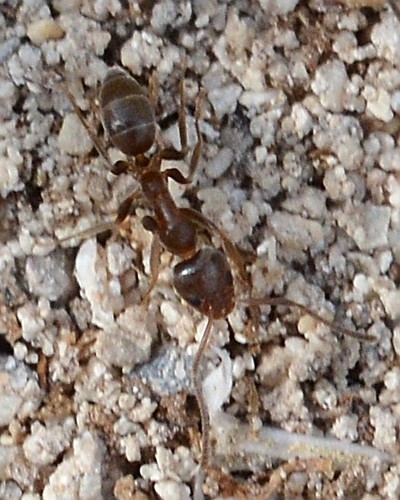
Argentine Ant identified by the community
Real finds identified with Bug Identifier.
Other bugs you may enjoy
Ant
Gardens, lawns, woodlands, sidewalks, and buildings worldwide
Weaver Ant
Canopy of tropical forests, orchards, and mangroves
Sugar Ant
Gardens, woodlands, and urban areas; nests in soil, timber, or tree hollows
Trap-Jaw Ant
Tropical and subtropical forests, leaf litter, sandy coastal soils
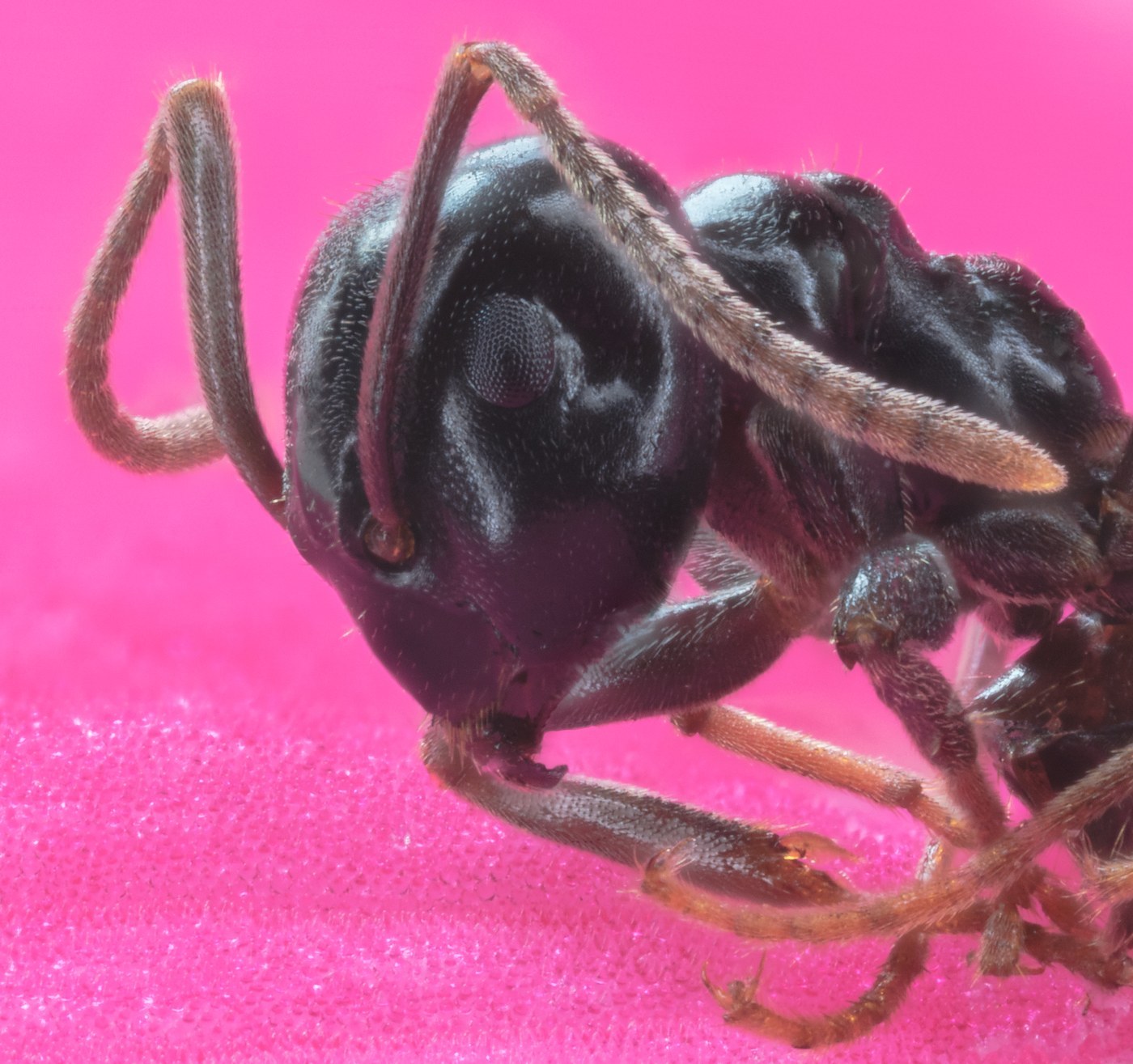
Pharaoh Ant
Warm, humid indoor voids such as wall cavities and heating ducts
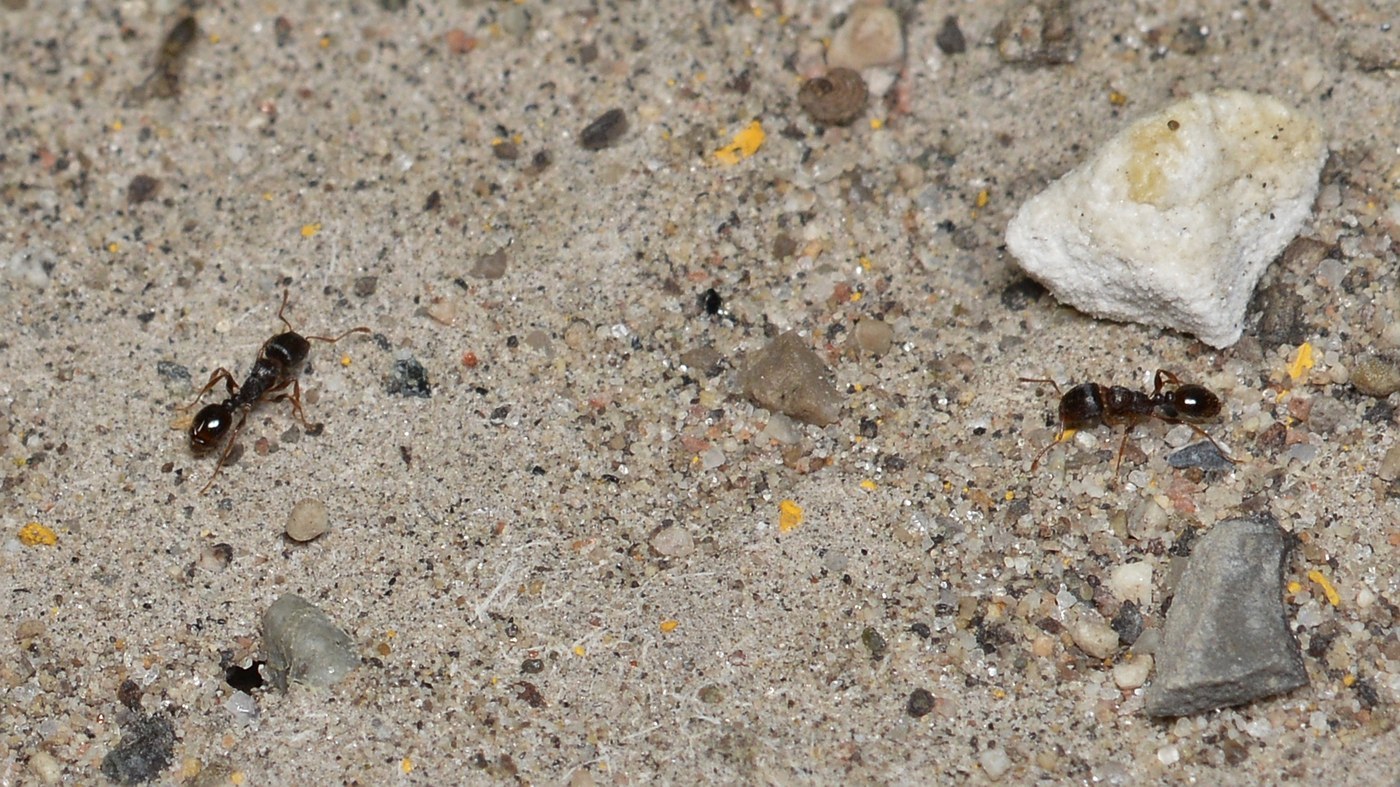
Pavement Ant
Cracks in sidewalks, driveways, and building foundations
Odorous House Ant
Soil, mulch, wall voids, and areas near moisture indoors and out
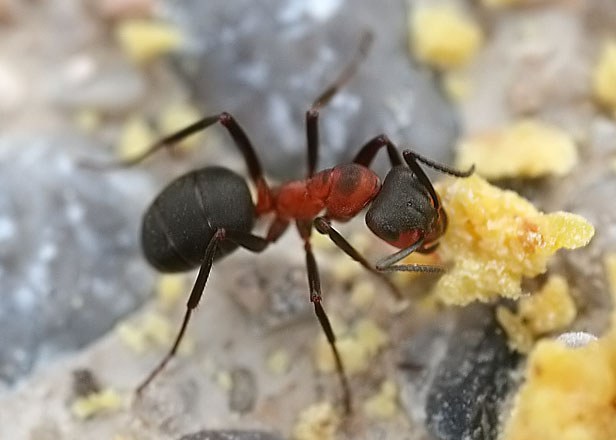
Red Wood Ant
Coniferous and mixed woodland, forest clearings and edges
Harvester Ant
Arid grasslands, deserts, and open sandy areas
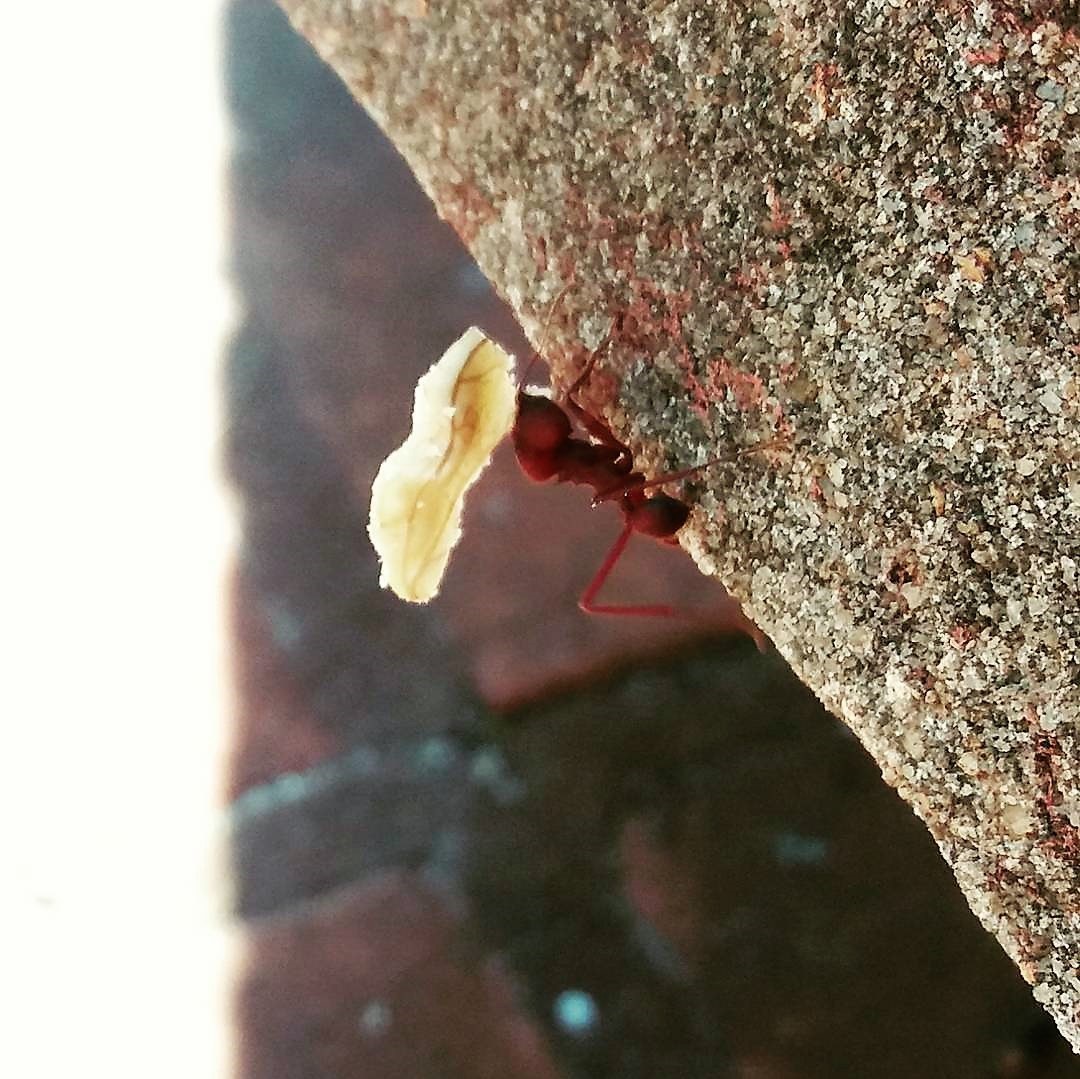
Leafcutter Ant
Tropical and subtropical forests, farmland edges
Little Black Ant
Lawns, gardens, rotting wood, and occasionally indoors
Field Ant
Open fields, meadows, lawns, and woodland edges