
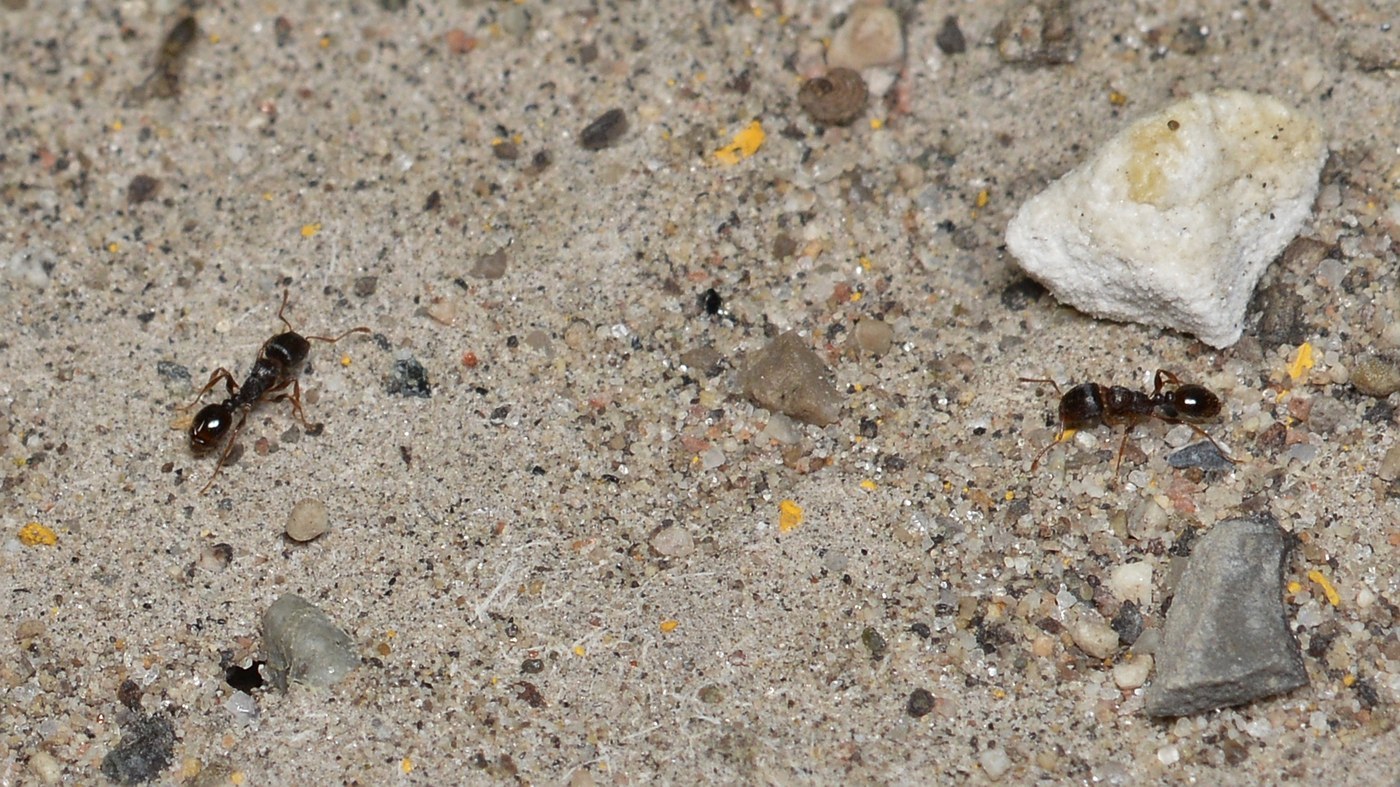
Pavement Ant
Tetramorium immigrans
A stocky brown to black ant famous for the dramatic "ant wars" its colonies wage along sidewalk cracks each spring.
- Size
- Workers about 2.5-4 mm long
- Habitat
- Cracks in sidewalks, driveways, and building foundations
- Danger
- Stings
Spotted a bug like this?
Identify any bug or insect from a photo, free.
Overview
The pavement ant is a small, hardy species originally native to Europe that has become widespread across North America since its introduction in the 1700s and 1800s. True to its name, it commonly nests beneath pavement, sidewalks, and building slabs, often revealing its presence through small mounds of excavated soil pushed up through cracks.
Colonies are territorial, and neighboring pavement ant colonies frequently clash in large-scale skirmishes along shared boundaries, with hundreds of workers grappling in visible masses on sidewalks, particularly in spring when colonies are re-establishing territory after winter dormancy.
The species has been recently reclassified taxonomically; populations long called Tetramorium caespitum in North America are now recognized as the related species Tetramorium immigrans.
How to Identify
- Small, robust workers about 2.5-4 mm long, reddish-brown to blackish
- Head and thorax marked with fine parallel grooves (striations)
- Two nodes on the petiole, distinguishing it from single-node species like odorous house ants
- A pair of small spines at the rear of the thorax
- Possesses a functional stinger
- Small mounds of loose soil often visible at pavement cracks near nest entrances
Habitat & Range
Pavement ants are common throughout the northern and eastern United States, southern Canada, and much of Europe. As the name suggests, they favor nesting beneath pavement, sidewalk slabs, driveways, and building foundations, though they also nest in open soil, under stones, and within mulch beds in and around gardens and lawns.
Behavior & Diet
These ants are omnivorous scavengers, feeding on insects, seeds, and a wide variety of household and garden food sources, and they also tend honeydew-producing insects. They are notably territorial, and in spring, large numbers of workers from adjacent colonies often engage in extended battles along boundary lines, a visible and well-documented behavior sometimes called "ant wars." Foraging workers travel along scent trails to food sources both outdoors and, occasionally, indoors.
Life Cycle
Pavement ants undergo complete metamorphosis from egg to larva to pupa to adult. Colonies typically contain a single queen, though multiple-queen colonies occur, and populations can reach several thousand workers. Winged reproductives are produced seasonally and undertake mating flights, usually in summer, after which newly mated queens seek a nesting site to found a new colony.
Frequently asked questions
Why do I see swarms of ants fighting on the sidewalk?
Neighboring pavement ant colonies are highly territorial and often clash in large battles along shared boundaries, especially in spring.
Do pavement ants sting?
They have a functional stinger and can sting in defense.
How can I identify a pavement ant?
Look for fine parallel grooves on the head and thorax, two nodes on the waist, and small spines at the back of the thorax.
Where do pavement ants build their nests?
They commonly nest beneath sidewalks, driveways, and building foundations, often marked by small mounds of soil pushed up through cracks.
Pavement Ant guides
In-depth guides for identifying, understanding, and living alongside Pavement Ant.
Pavement Ant identified by the community
Real finds identified with Bug Identifier.


Other bugs you may enjoy
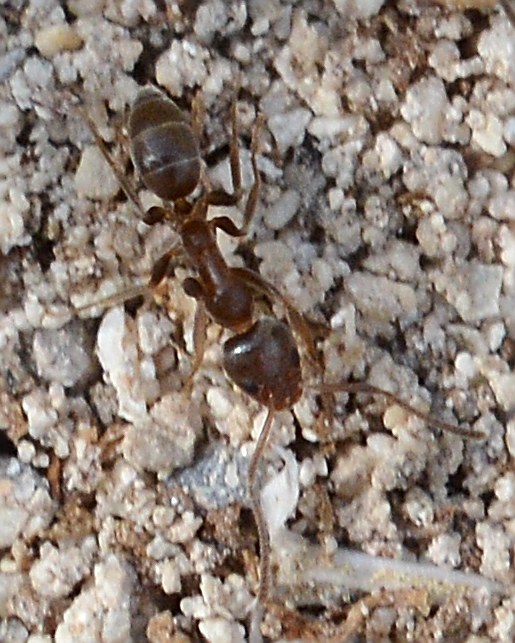
Argentine Ant
Disturbed urban soil, gardens, and building perimeters
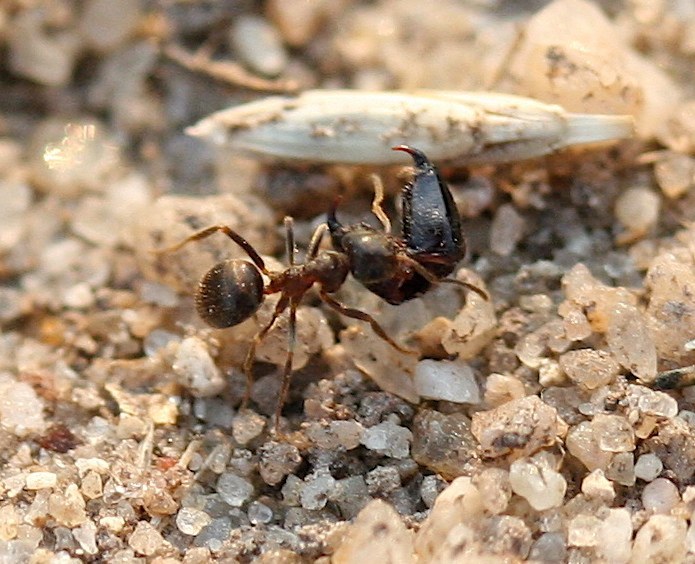
Ant
Gardens, lawns, woodlands, sidewalks, and buildings worldwide
Weaver Ant
Canopy of tropical forests, orchards, and mangroves
Sugar Ant
Gardens, woodlands, and urban areas; nests in soil, timber, or tree hollows
Trap-Jaw Ant
Tropical and subtropical forests, leaf litter, sandy coastal soils
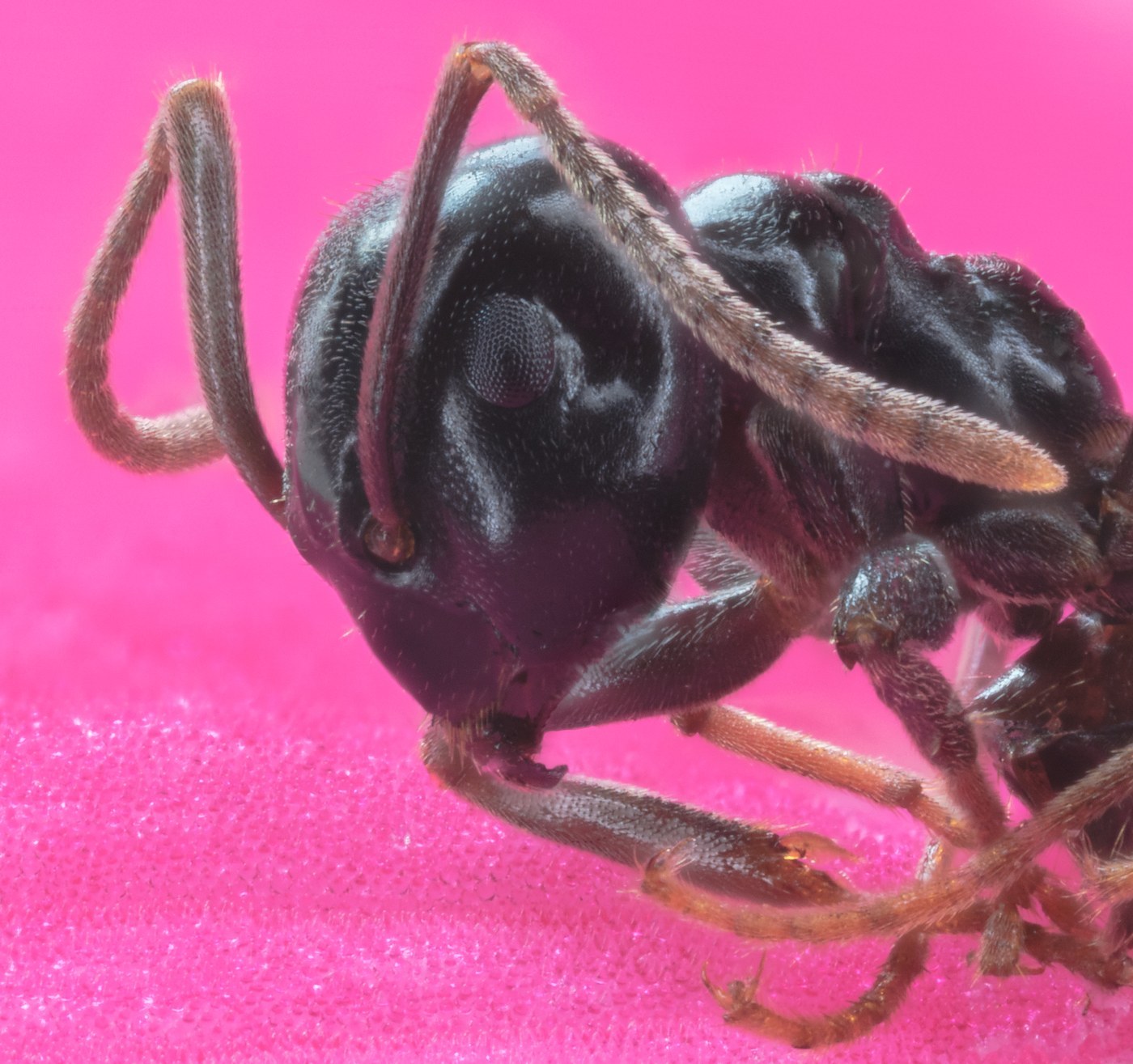
Pharaoh Ant
Warm, humid indoor voids such as wall cavities and heating ducts
Odorous House Ant
Soil, mulch, wall voids, and areas near moisture indoors and out
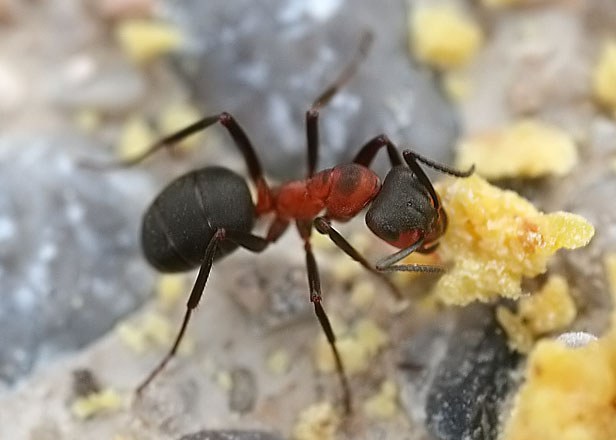
Red Wood Ant
Coniferous and mixed woodland, forest clearings and edges
Harvester Ant
Arid grasslands, deserts, and open sandy areas
Leafcutter Ant
Tropical and subtropical forests, farmland edges
Little Black Ant
Lawns, gardens, rotting wood, and occasionally indoors
Field Ant
Open fields, meadows, lawns, and woodland edges