
Band-winged Grasshopper
Oedipodinae spp.
A camouflaged grasshopper that flashes vivid yellow, red, or blue hindwings in flight before vanishing again into the dust the instant it lands.
- Size
- 0.75-2 in (2-5 cm) long
- Habitat
- open, sparsely vegetated ground including dry fields, dunes, gravel bars, and rocky slopes
- Danger
- Harmless
Spotted a bug like this?
Identify any bug or insect from a photo, free.
Overview
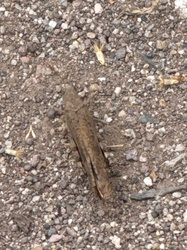
Band-winged grasshoppers belong to the subfamily Oedipodinae, a group distinguished by brightly colored or boldly patterned hindwings that are normally hidden beneath drab, camouflaged forewings. When at rest on bare soil, gravel, or rock, these grasshoppers are often nearly invisible, but when flushed into flight they reveal a flash of yellow, orange, red, or blue on the hindwing, often crossed by a dark band, before dropping back to the ground and disappearing again.
Body coloration and patterning in this group are highly variable and frequently matched closely to the substrate the species lives on, a form of camouflage that makes many species difficult to spot until they move. Many species also produce a distinctive crackling or buzzing sound in flight, called crepitation, produced by snapping the hindwings, which is thought to play a role in courtship and territorial displays.
Band-winged grasshoppers are found on open, disturbed, or sparsely vegetated ground worldwide, including dry pastures, sand dunes, gravel roads, and rocky outcrops. As herbivores, they graze on grasses and other low vegetation and represent an important part of the diet of grassland birds and other predators, while their camouflage and flash coloration together form a classic predator-avoidance strategy combining concealment with sudden, disorienting displays.
How to Identify
- Forewings mottled brown, gray, or tan, closely matching soil or rock for camouflage while at rest
- Hindwings brightly colored (yellow, orange, red, or blue) often with a dark crossband, visible only in flight
- Many species produce a crackling or buzzing sound (crepitation) while flying
- Body shape is typically slender to moderately robust with a somewhat flattened head
- Coloration and pattern vary strongly by species and habitat, aiding camouflage on open ground
- Distinguished from spur-throated grasshoppers by lacking a throat spur and by the colorful hindwings
Habitat & Range
This group favors open, sparsely vegetated habitats such as dry pastures, sand dunes, gravel bars, rocky slopes, and disturbed or bare ground, where camouflage against soil or stone is most effective. Band-winged grasshoppers occur on every continent except Antarctica, with numerous species native to North America. Adults are typically active from summer into fall in temperate regions.
Behavior & Diet
Band-winged grasshoppers rely on a combination of camouflage and startle displays to avoid predators: they remain motionless and blend into bare ground until closely approached, then burst into flight, flashing colorful hindwings and often crackling audibly before landing abruptly and vanishing again against the substrate. Males of many species use their wing-snapping sounds and short display flights to attract females or defend territory. They feed primarily on grasses and other low, sparse vegetation typical of the open habitats they occupy, and they form an important prey base for ground-foraging birds, lizards, and other insectivores in these exposed environments.
Life Cycle
Band-winged grasshoppers undergo incomplete metamorphosis, with females laying egg pods in sandy or bare soil during late summer or fall. Eggs typically overwinter and hatch the following spring. Nymphs are wingless and pass through several molts over the growing season, gradually developing wing pads that become full flight wings, including the colorful hindwing pattern, only at the final molt to adulthood. Most species complete one generation annually.
Frequently asked questions
Why do band-winged grasshoppers flash color when they fly?
The bright hindwing color, hidden at rest and revealed only in flight, works with camouflage to startle predators and helps the grasshopper seem to vanish again once it lands.
What is the crackling sound some band-winged grasshoppers make?
It is called crepitation, a snapping sound produced by the hindwings during flight, often used in courtship or display.
Where do band-winged grasshoppers typically live?
They favor open, sparsely vegetated ground such as dry fields, sand dunes, gravel roads, and rocky slopes where their coloring matches the substrate.
How is a band-winged grasshopper different from a spur-throated grasshopper?
Band-winged grasshoppers have colorful hindwings and lack the small throat spur found in spur-throated grasshoppers.
Band-winged Grasshopper guides
In-depth guides for identifying, understanding, and living alongside Band-winged Grasshopper.
Band-winged Grasshopper identified by the community
Real finds identified with Bug Identifier.
Other bugs you may enjoy
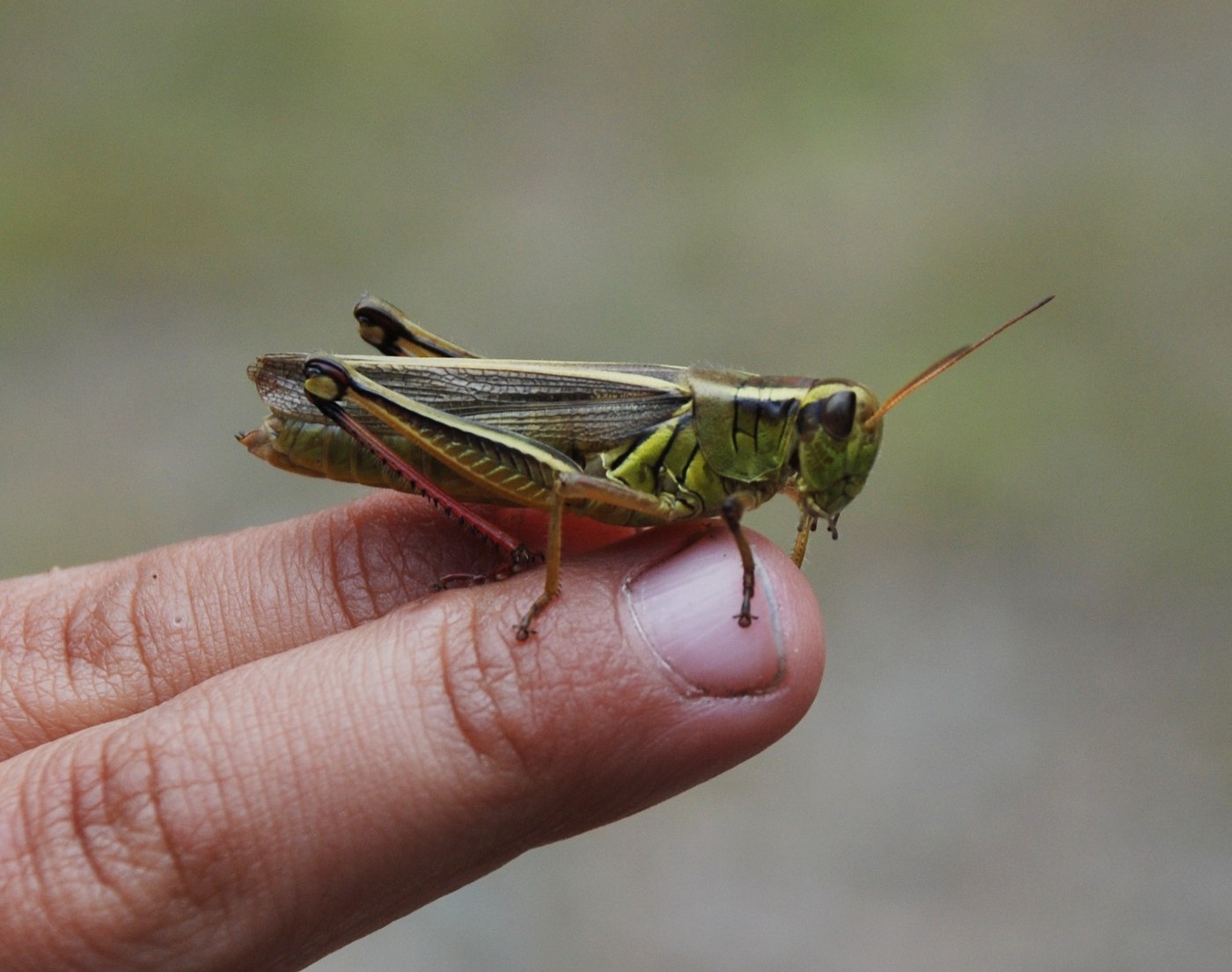
Two-striped Grasshopper
Meadows, pastures, riverbanks, and agricultural fields across North America
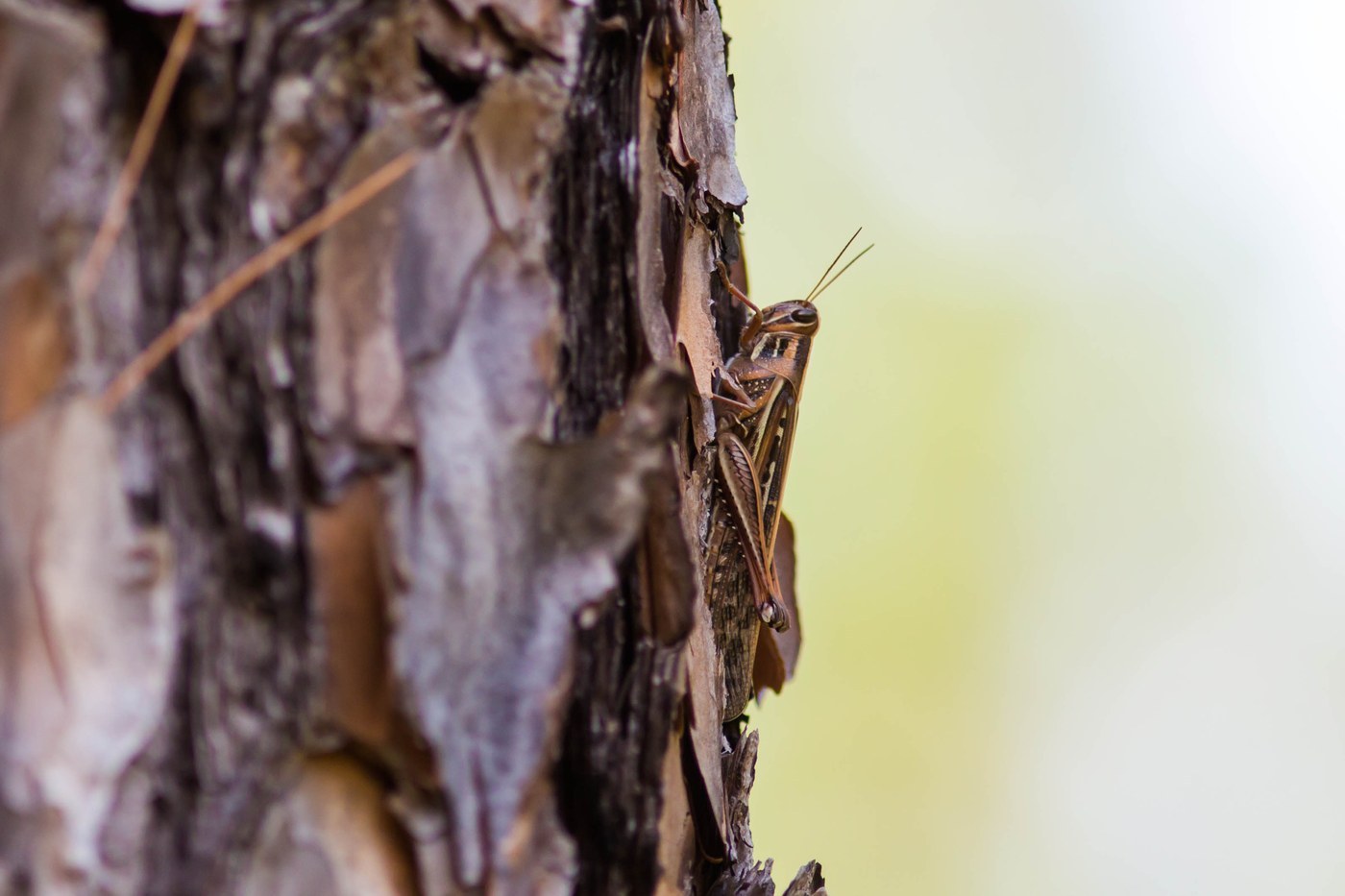
American Grasshopper
Woodland edges, citrus groves, gardens, and open fields across the southern and southeastern United States
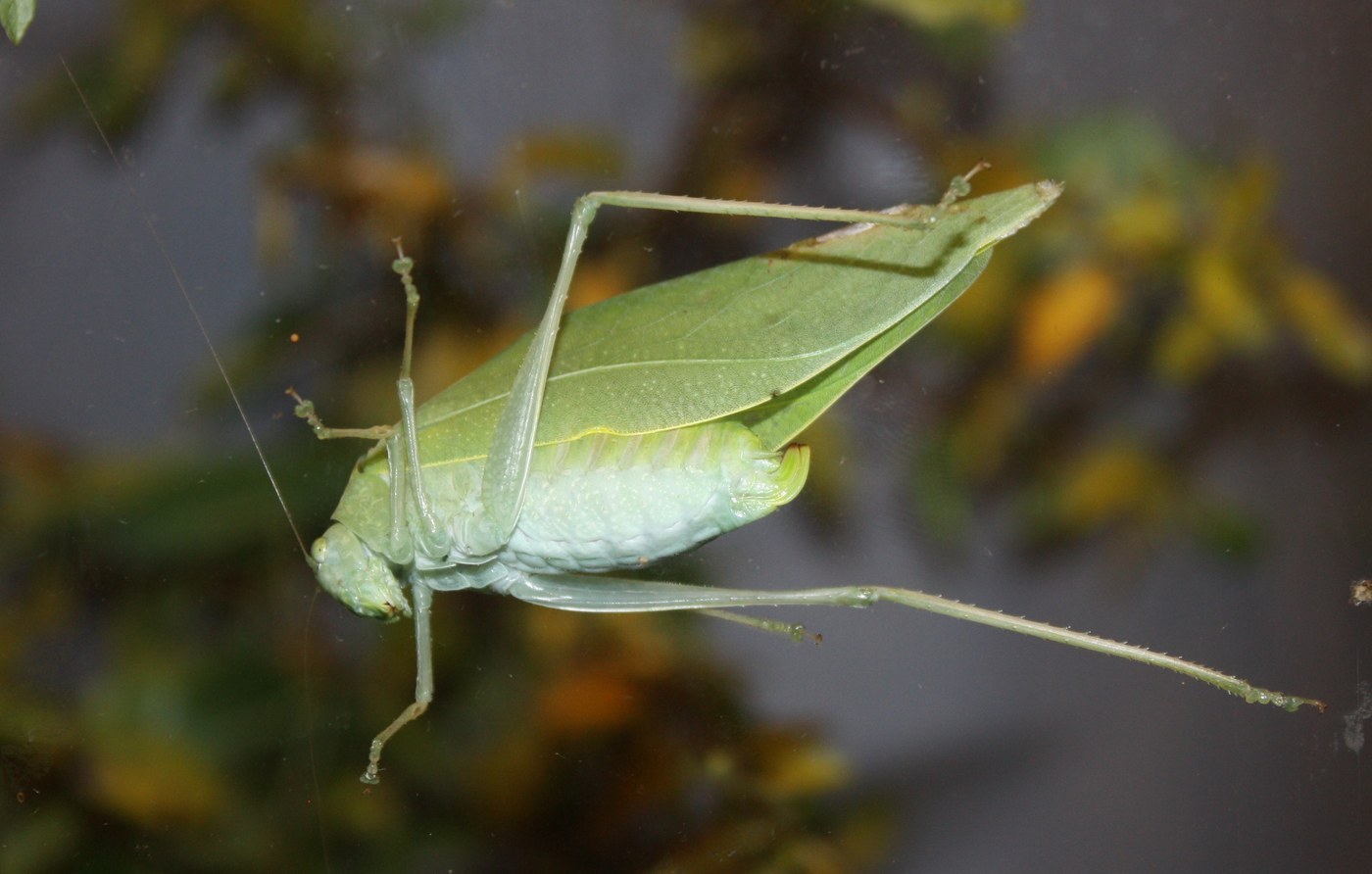
Angular-winged Katydid
deciduous trees, shrubs, and hedgerows across eastern and central North America
Spur-throated Grasshopper
grasslands, meadows, croplands, and roadsides across North America
Snowy Tree Cricket
Shrubs, trees, and tall vegetation across North America
Rocky Mountain Locust
historically open grasslands and river valleys of the Rocky Mountains and Great Plains (now believed extinct)
Spotted Camel Cricket
damp caves, crawl spaces, basements, leaf litter, and rotting logs in eastern North America
Pygmy Grasshopper
damp soil, mud, and low vegetation near ponds, streams, and marshes
Red-legged Grasshopper
Meadows, pastures, field edges, and gardens across North America
Painted Grasshopper
arid scrub, wastelands, and gardens of the Indian subcontinent, especially near milkweed plants
Speckled Bush Cricket
Brambles, hedgerows, nettles, and shrubby vegetation
Northern Mole Cricket
wet soil, pond margins, and marshy ground across eastern and central North America