
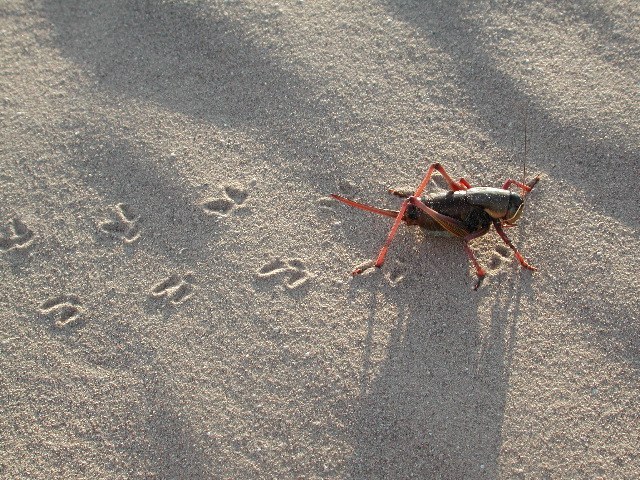
Mormon Cricket
Anabrus simplex
A hefty, flightless katydid whose swarms can stretch for miles across western rangelands, marching en masse in search of food and mates.
- Size
- 2-3 in (5-7.5 cm) long
- Habitat
- sagebrush steppe, grassland, and rangeland of the western United States
- Danger
- Harmless
Spotted a bug like this?
Identify any bug or insect from a photo, free.
Overview
Despite its common name, the Mormon cricket is not a true cricket but a large, wingless shieldback katydid native to the sagebrush and bunchgrass rangelands of the American West. It earned its name from early Mormon settlers in Utah who battled swarms of the insect devastating their crops in the 1840s, an event later commemorated by the "seagull miracle" story. The species is best known for its irregular, large-scale population outbreaks, during which millions of individuals form dense marching bands that can travel considerable distances over open ground.
Adults are stout-bodied and heavy, with a domed, shield-like pronotum covering the thorax that gives the shieldback katydid group its name. Color varies widely between populations and even individuals, ranging from black and brown to deep red, purple, or green, sometimes with a mottled or striped pattern. Because the wings are reduced to small pads, Mormon crickets cannot fly and instead rely entirely on walking and hopping to disperse, which is part of what makes their coordinated mass migrations so visually striking.
Ecologically, Mormon crickets are omnivorous generalists, feeding on forbs, grasses, shrubs, and occasionally other insects, including their own kind. Their periodic outbreaks can strip vegetation over large areas, but in non-outbreak years they are simply an inconspicuous part of the shrub-steppe insect community and serve as a food source for birds and small mammals.
How to Identify
- Large, robust body, roughly 2-3 in (5-7.5 cm) long, with a noticeably domed, shield-shaped pronotum
- Wings reduced to small stubs; flightless and ground-bound
- Coloration highly variable: black, brown, reddish, purplish, or greenish, sometimes mottled or striped
- Females have a long, curved, sword-like ovipositor extending from the rear
- Thick hind legs adapted for jumping and walking rather than sustained flight
- Distinguished from true crickets by the shield-like pronotum and from grasshoppers by very long, thread-like antennae
Habitat & Range
Mormon crickets inhabit arid and semi-arid rangeland across the Intermountain West and Great Basin, including Utah, Nevada, Idaho, Wyoming, Montana, and parts of neighboring states. They favor sagebrush steppe, bunchgrass prairie, and open rangeland with a mix of forbs and shrubs. Adults are active from late spring through summer, with outbreak bands most conspicuous in June and July as they march across roads, hillsides, and pastures searching for food and breeding sites.
Behavior & Diet
Mormon crickets are diurnal and highly gregarious during outbreak years, forming dense migratory bands that move in a coordinated direction across the landscape, sometimes covering a mile or more in a day. This mass movement is thought to be driven partly by nutrient-seeking behavior and partly by predator avoidance, since individuals lagging behind a moving band risk being eaten by their own crowded neighbors. They are omnivorous, grazing on a wide variety of range plants, seeds, and occasionally scavenging or preying on other insects. Outside of outbreak phases, populations are solitary and much less noticeable, blending into the shrub-steppe environment. Birds, rodents, and other predators feed heavily on Mormon crickets, making them an important seasonal food source in rangeland food webs.
Life Cycle
Mormon crickets undergo incomplete metamorphosis with three life stages: egg, nymph, and adult. Females use their long ovipositor to deposit eggs in the soil in late summer, and the eggs overwinter, sometimes for more than one year, before hatching in spring. Nymphs emerge wingless and gradually grow through several molts over the course of the summer, resembling miniature, paler versions of the adults. There is a single generation per year in most populations, with adults dying off by late summer after breeding and egg-laying is complete.
Frequently asked questions
Is the Mormon cricket a true cricket?
No, it is actually a large flightless katydid in the shieldback group, not a true cricket, despite the common name.
Why do Mormon crickets form huge marching bands?
During population outbreaks, dense groups move together across rangeland searching for food and mates, a behavior linked to both nutrient needs and avoiding being eaten by neighbors.
Can Mormon crickets fly?
No, their wings are reduced to small stubs, so they travel entirely by walking and hopping.
Where are Mormon crickets found?
They occur in sagebrush steppe and rangeland across the Intermountain West and Great Basin of the United States.
Mormon Cricket guides
In-depth guides for identifying, understanding, and living alongside Mormon Cricket.
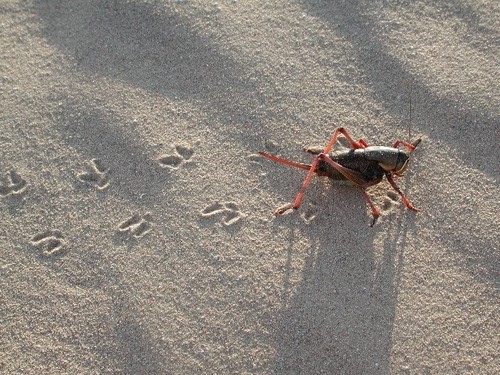
Mormon Cricket identified by the community
Real finds identified with Bug Identifier.
Other bugs you may enjoy
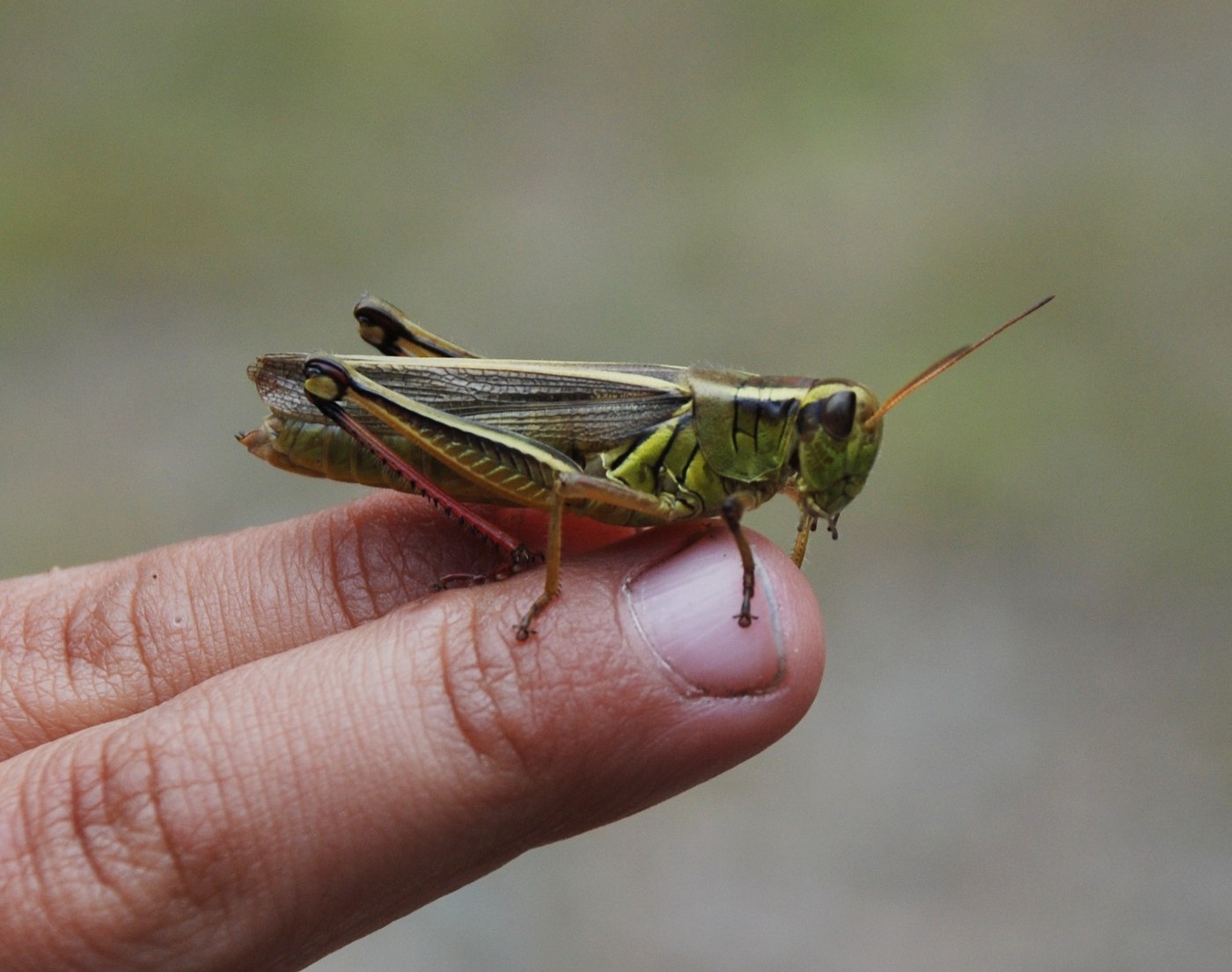
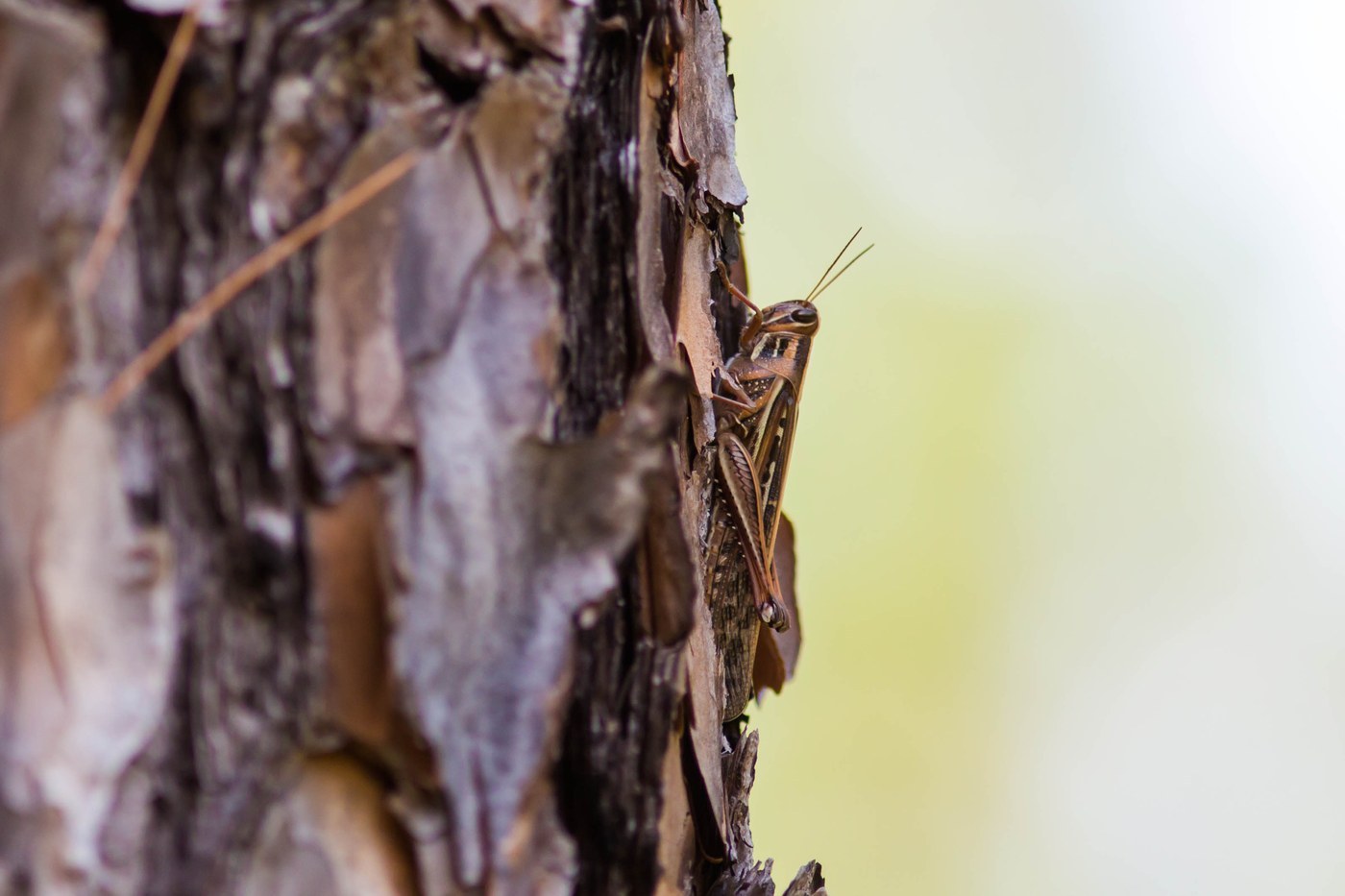
Two-striped Grasshopper
Meadows, pastures, riverbanks, and agricultural fields across North America
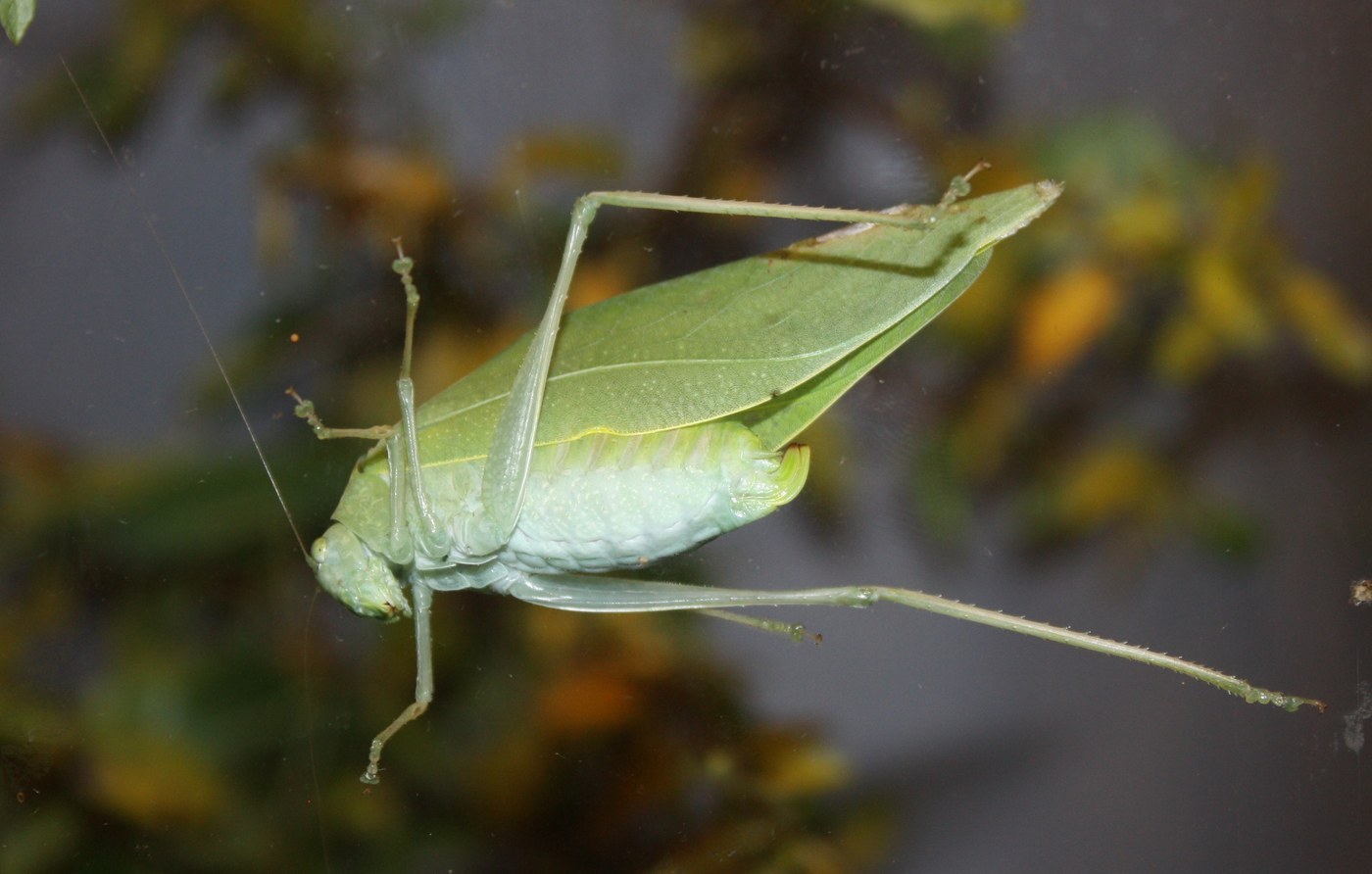
American Grasshopper
Woodland edges, citrus groves, gardens, and open fields across the southern and southeastern United States
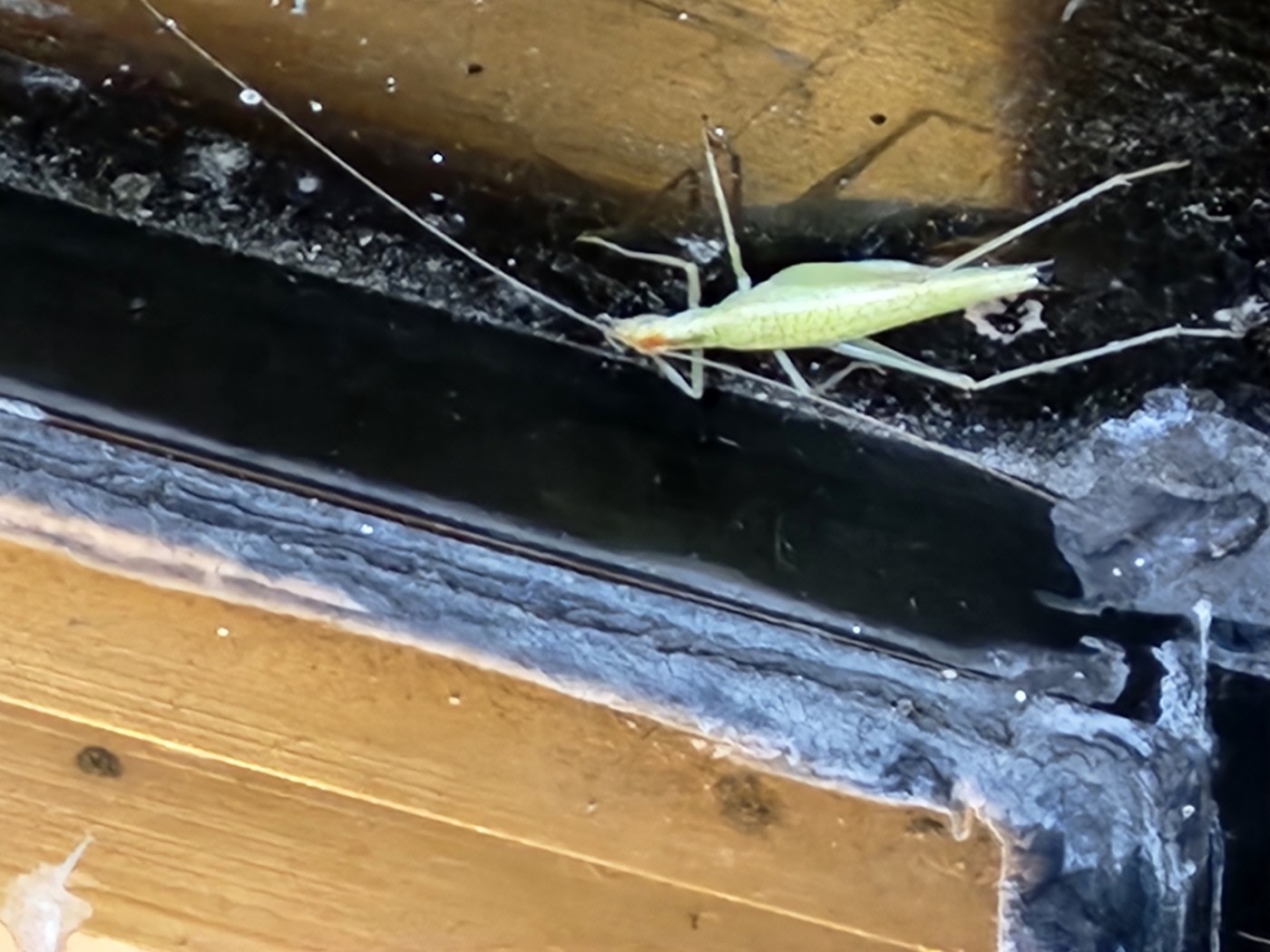
Angular-winged Katydid
deciduous trees, shrubs, and hedgerows across eastern and central North America
Spur-throated Grasshopper
grasslands, meadows, croplands, and roadsides across North America
Snowy Tree Cricket
Shrubs, trees, and tall vegetation across North America
Rocky Mountain Locust
historically open grasslands and river valleys of the Rocky Mountains and Great Plains (now believed extinct)
Spotted Camel Cricket
damp caves, crawl spaces, basements, leaf litter, and rotting logs in eastern North America
Pygmy Grasshopper
damp soil, mud, and low vegetation near ponds, streams, and marshes
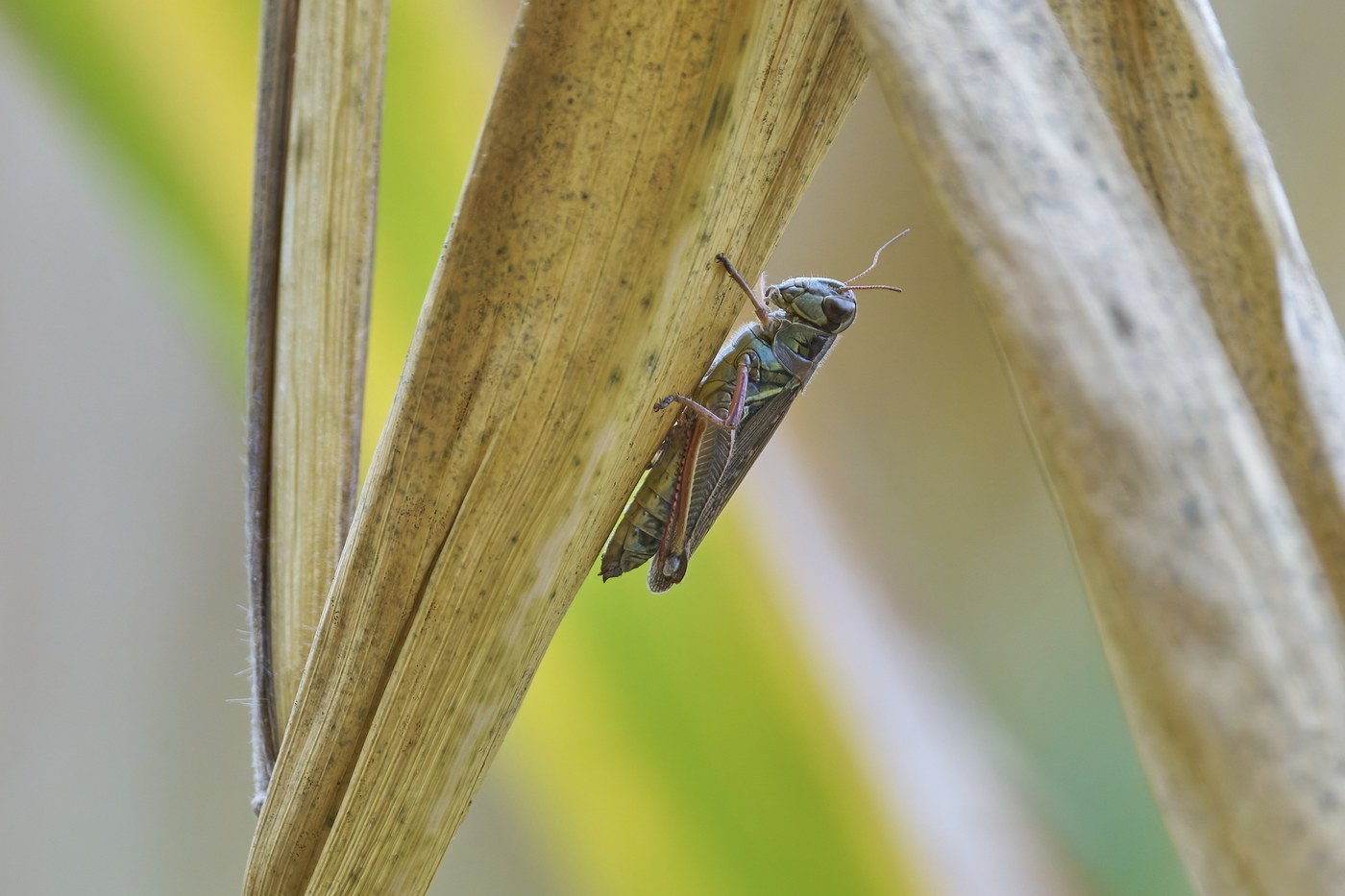
Red-legged Grasshopper
Meadows, pastures, field edges, and gardens across North America
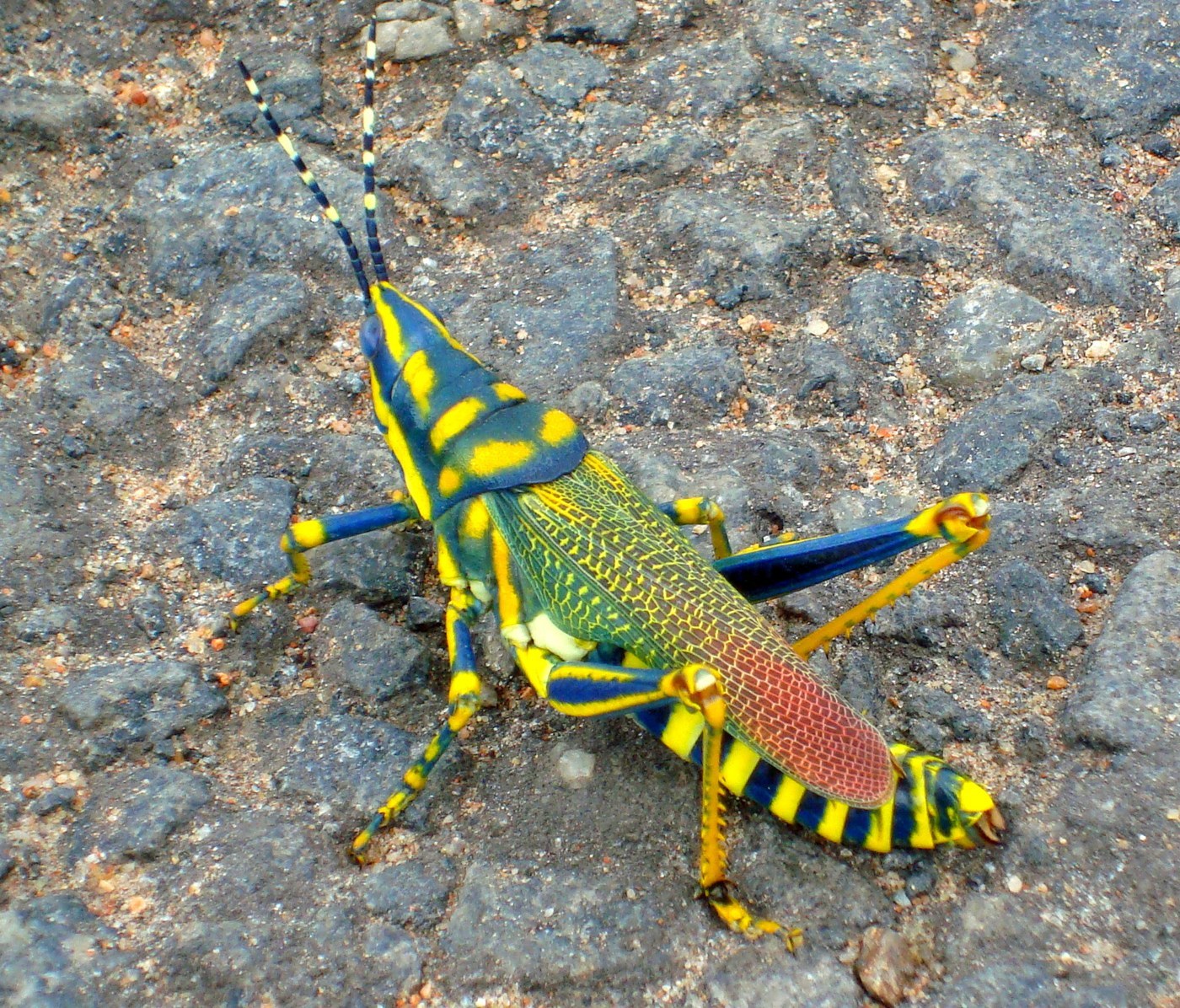
Painted Grasshopper
arid scrub, wastelands, and gardens of the Indian subcontinent, especially near milkweed plants
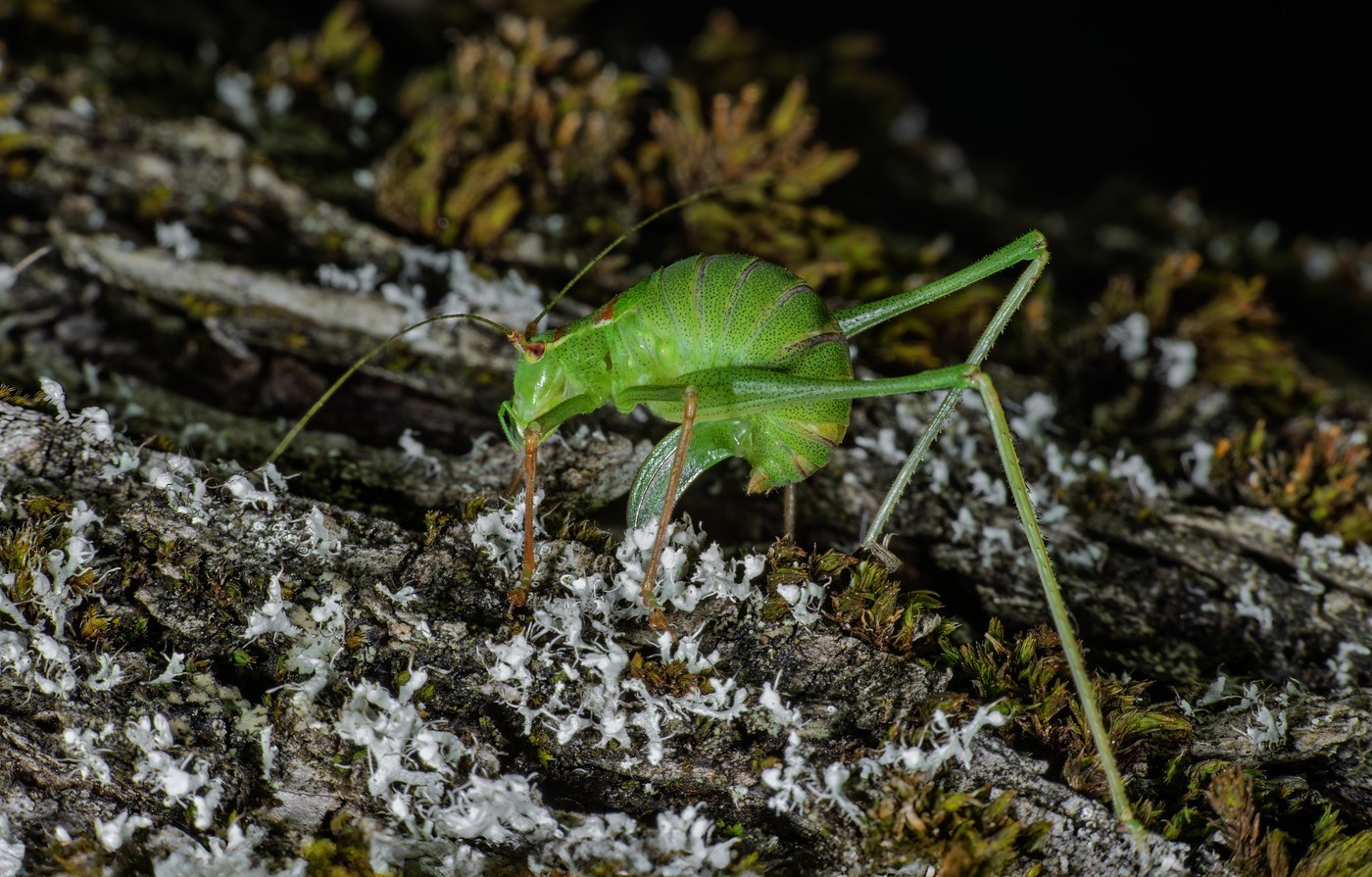
Speckled Bush Cricket
Brambles, hedgerows, nettles, and shrubby vegetation
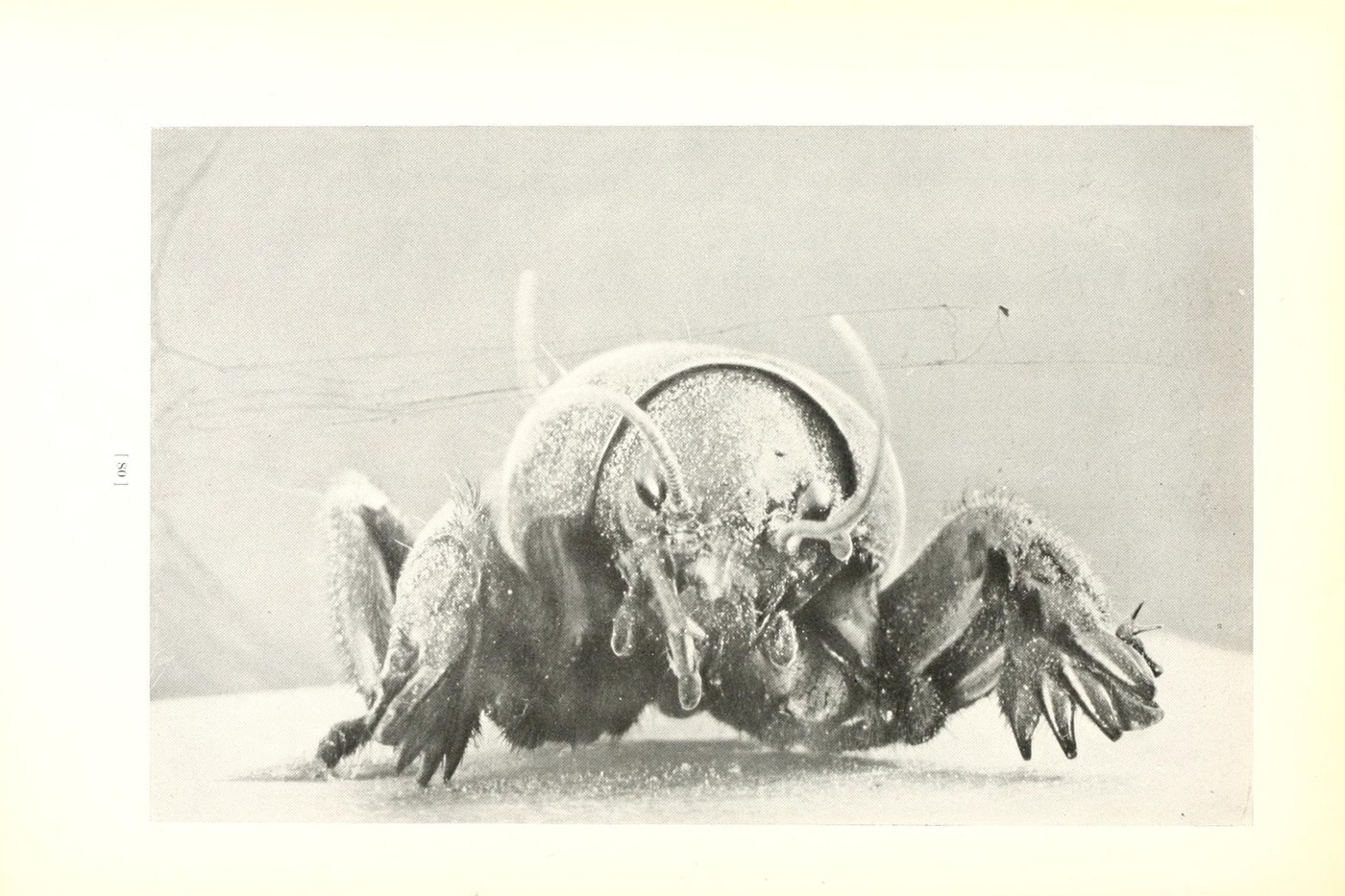
Northern Mole Cricket
wet soil, pond margins, and marshy ground across eastern and central North America