
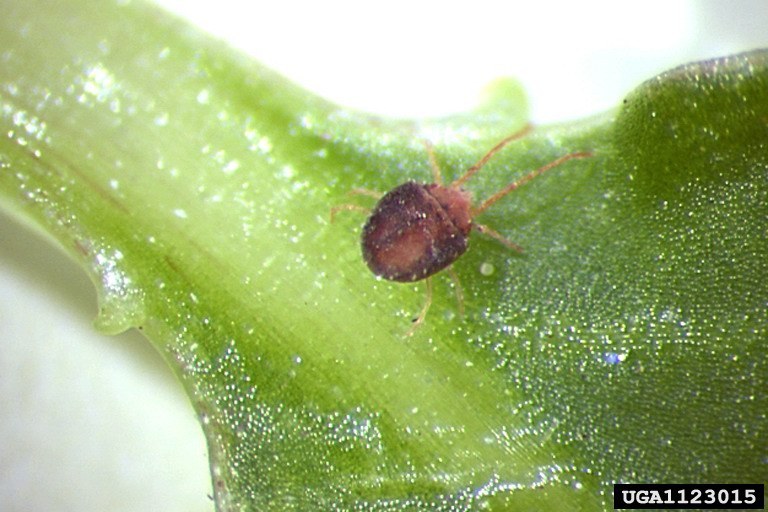
Clover Mite
Bryobia praetiosa
A speck-sized reddish mite that streaks a rust-colored stain if crushed and invades homes by the hundreds when lawns dry out or turn cold.
- Size
- 0.3-0.75 mm (nearly invisible without magnification)
- Habitat
- Lawns, clover and grassy areas; often invades homes in spring and fall
- Danger
- Nuisance pest
Spotted a bug like this?
Identify any bug or insect from a photo, free.
Overview
The clover mite is a tiny plant-feeding arachnid, not a true insect, that lives among grass, clover, and other low-growing vegetation. Despite its microscopic size, it becomes a familiar household nuisance twice a year when large numbers migrate from lawns toward buildings, squeezing through cracks around windows and siding in search of shelter from unfavorable weather.
Clover mites feed exclusively on plant sap and pose no threat to fabrics, food, or wood once indoors; they simply wander until they die, often leaving tiny reddish smear marks on windowsills, curtains, and walls if squashed. Their sudden mass appearances, rather than any individual mite, are what make them notable to homeowners.
They are found across temperate regions of North America, Europe, and Asia, thriving especially in yards that are heavily fertilized and lush with grass or clover, which provides abundant food and encourages large populations.
How to Identify
- Extremely small, about the size of a period on a printed page, requiring a hand lens to see detail
- Body is oval and reddish-brown to olive-green, with a velvety texture
- Front pair of legs is unusually long, extending forward past the head like antennae, a key trait separating it from other household mites
- Eight legs total, as with all mites and other arachnids
- Leaves a rust-red stain when crushed due to body pigments, not blood
- Often seen in large clustered groups on sunny, warm surfaces such as windowsills or exterior walls
Habitat & Range
Clover mites live outdoors in turfgrass, clover patches, and other dense low vegetation, particularly in well-fertilized lawns with excess nitrogen. They are most active in cool weather, thriving in spring and autumn temperatures, and become dormant during the heat of summer and cold of deep winter.
Mass movements into structures typically occur when outdoor conditions become too hot, cold, or dry, prompting mites to seek cooler or more humid shelter, often congregating on the sun-warmed side of a building before slipping indoors through tiny gaps.
The species is distributed nearly worldwide in temperate climates and is one of the most commonly encountered household-invading mites in North America.
Behavior & Diet
Clover mites feed by piercing plant cells with needle-like mouthparts and withdrawing sap, favoring clover, grasses, and various ornamental plants. They do not feed on humans, pets, stored food, or household materials, and their presence indoors is purely accidental and temporary.
Populations can build to very high densities on lush lawns, and mites move in synchronized mass migrations, often crawling in visible reddish streams across foundations, siding, and window frames. Within an ecosystem they serve as a minor food source for larger predatory mites, spiders, and ground-dwelling insects, and their feeding can occasionally stress heavily infested turf.
Life Cycle
Clover mites develop through egg, several nymphal stages, and adult, with no larval or pupal stage typical of insects. Females lay eggs in bark crevices, under siding, or in soil, and unmated females can reproduce asexually, meaning entire generations may consist only of females.
Eggs laid in late spring often enter a dormant state through the summer heat, hatching when cooler autumn temperatures return, while eggs laid in fall may overwinter and hatch in spring. Several generations can occur per year in favorable climates, with population booms tracking the cool, moist conditions that favor lawn grass and clover growth.
Frequently asked questions
Why do clover mites suddenly appear in huge numbers?
They migrate from lawns toward buildings when outdoor temperatures shift sharply in spring or fall, seeking more stable shelter, which often brings large clusters to sunny walls and windows.
What causes the red stain when a clover mite is crushed?
The stain comes from red body pigments in the mite itself, not from feeding on blood, since clover mites only consume plant sap.
Do clover mites damage furniture or food indoors?
No, once inside they do not feed on household materials, fabrics, or food and simply wander until they die from lack of moisture and plant material.
What kind of lawns attract the most clover mites?
Thick, well-fertilized lawns with abundant clover and grass, especially those with high nitrogen levels, tend to support the largest clover mite populations.
Clover Mite guides
In-depth guides for identifying, understanding, and living alongside Clover Mite.
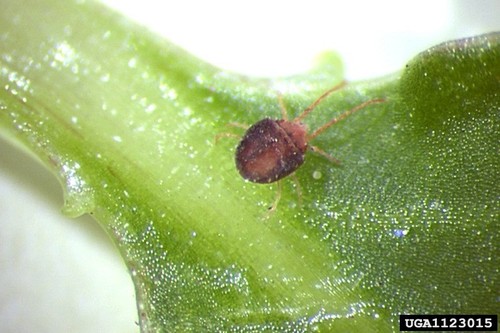
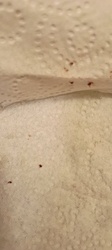
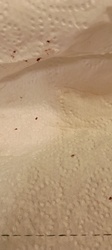
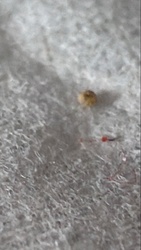
Clover Mite identified by the community
Real finds identified with Bug Identifier.

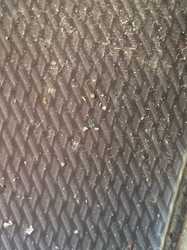
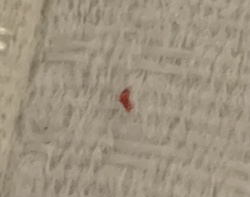
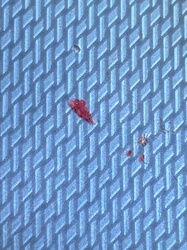
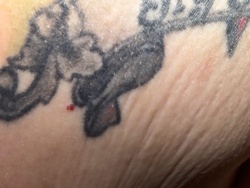
Other bugs you may enjoy
Wood Tick
Grassland, shrub-steppe, and open woodland of western North America
Yellow Scorpion
Arid scrubland, rocky slopes, and desert margins
Whip Spider
Tropical caves, rainforest leaf litter, and under bark
Water Mite
Ponds, lakes, streams, and other freshwater bodies
American Dog Tick
Grassy fields, trails, and low vegetation near woodlands
Arizona Bark Scorpion
Rocky desert terrain, tree bark, and structures in the Southwest
Tick
Tall grass, brush, woodland edges, and animal trails
Soil Mite
Soil, leaf litter, moss, and decaying organic matter worldwide
Rocky Mountain Wood Tick
Sagebrush shrublands, grasslands, and montane forest edges
Two-Spotted Spider Mite
Undersides of leaves on garden plants, crops, and houseplants
Spider Mite
Undersides of leaves on garden plants, houseplants, and field and orchard crops worldwide
Whip Scorpion
Tropical and subtropical caves, tree bark, and rock crevices worldwide