
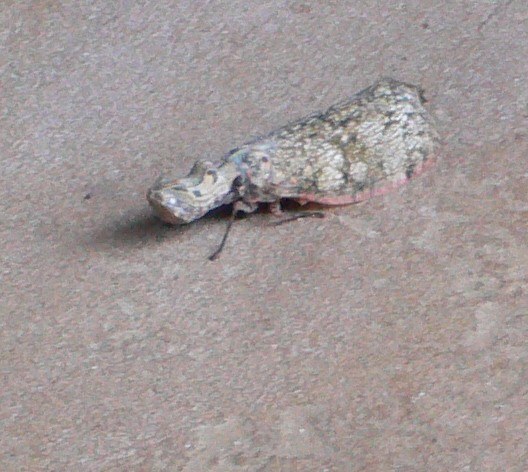
Lantern Bug (Peanut-head Bug)
Fulgora laternaria
A bizarre rainforest planthopper whose head is drawn out into a huge, hollow, peanut-shaped snout, and whose hindwings flash a pair of large eyespots resembling the face of a small reptile.
- Size
- Body about 85-90 mm including the extended head
- Habitat
- Tropical rainforests of Central and South America
- Danger
- Harmless
Spotted a bug like this?
Identify any bug or insect from a photo, free.
Overview
The peanut-head bug, also called the lantern bug or alligator bug, is a large planthopper native to the tropical forests of Central and South America, from Mexico south through the Amazon basin. It belongs to the family Fulgoridae, the same family that includes the spotted lanternfly, and is one of the most visually distinctive insects in the Neotropics due to its enormously enlarged, hollow head structure.
The common name "peanut-head bug" refers to the shape of its extended head process, which is swollen and mottled in a way that resembles an unshelled peanut, while the older name "lantern bug" comes from a historical belief, since disproven, that the head glowed in the dark. When resting, the insect is well camouflaged against bark, but if disturbed it can flash open its forewings to reveal a pair of large eyespots on the hindwings that resemble the eyes of a small reptile, a startle display thought to deter predators such as birds.
Like other planthoppers, it feeds on plant sap using piercing-sucking mouthparts and spends much of its time resting motionless on tree trunks, relying on camouflage as its first line of defence.
How to Identify
- Head extended into a large, hollow, bulbous process resembling an unshelled peanut, mottled brown and cream
- Body length including the head process can approach 9 cm, among the largest planthoppers in the Americas
- Forewings mottled grey-brown and lichen-like, providing camouflage against tree bark when at rest
- Hindwings, normally hidden, bear large yellow or orange eyespots edged in black when flashed open, resembling a vertebrate face
- Piercing-sucking mouthparts typical of planthoppers, used for feeding on plant sap rather than biting
- Distinguished from the related spotted lanternfly by its far larger, bulbous head process and different wing pattern
Habitat & Range
The peanut-head bug is found in lowland and mid-elevation tropical rainforest across Central America and the northern half of South America, including countries such as Costa Rica, Panama, Colombia, Venezuela, and parts of the Amazon basin. It typically rests on the trunks and larger branches of forest trees, where its mottled colouring blends with bark, lichen, and moss. Being a resident of humid tropical forest, it is present year-round without a strong seasonal pattern, though it is more frequently encountered at night when it becomes more active.
Behavior & Diet
The peanut-head bug spends much of the day resting motionless on tree bark, relying on cryptic colouration to avoid detection by predators, and becomes more active after dark. It feeds by inserting its needle-like mouthparts into bark or stems to draw out plant sap, in the manner typical of planthoppers, generally causing little visible damage to its host trees. When disturbed or threatened, it can suddenly open its forewings to reveal the large eyespots on the hindwings, a startle display that may briefly resemble the face of a small reptile such as an anole or gecko, intended to startle or confuse predators long enough for the insect to escape by hopping or flying away. Some regional folklore has attributed exaggerated dangers to the insect's bite or breath, though these claims have no scientific basis and the species feeds only on plant sap.
Life Cycle
Females lay eggs on bark or in crevices of host trees, and nymphs hatch resembling smaller, wingless versions of the adult with a less developed head process. Nymphs develop through several instars while feeding on plant sap, undergoing incomplete metamorphosis without a pupal stage, gradually developing the characteristic elongated head and wing patterns as they approach maturity. Because it inhabits stable tropical rainforest with little seasonal variation, breeding is not strongly tied to a single season, and generations can overlap throughout the year. Adults are relatively long-lived compared with many insects, spending extended periods resting on tree trunks between feeding bouts.
Frequently asked questions
Why is it called the peanut-head bug?
Its head is extended into a large, hollow, mottled process that closely resembles an unshelled peanut in shape and colour.
What is the eyespot display for?
The eyespots on the hindwings are a startle display used purely to confuse or deter predators; the insect itself feeds only on plant sap.
What does the peanut-head bug eat?
It feeds on plant sap, which it draws from tree bark and stems using piercing-sucking mouthparts typical of planthoppers.
Where is the peanut-head bug found?
It lives in tropical rainforests from Mexico through Central America and into the northern parts of South America, including the Amazon basin.
Lantern Bug (Peanut-head Bug) guides
In-depth guides for identifying, understanding, and living alongside Lantern Bug (Peanut-head Bug).
Other bugs you may enjoy
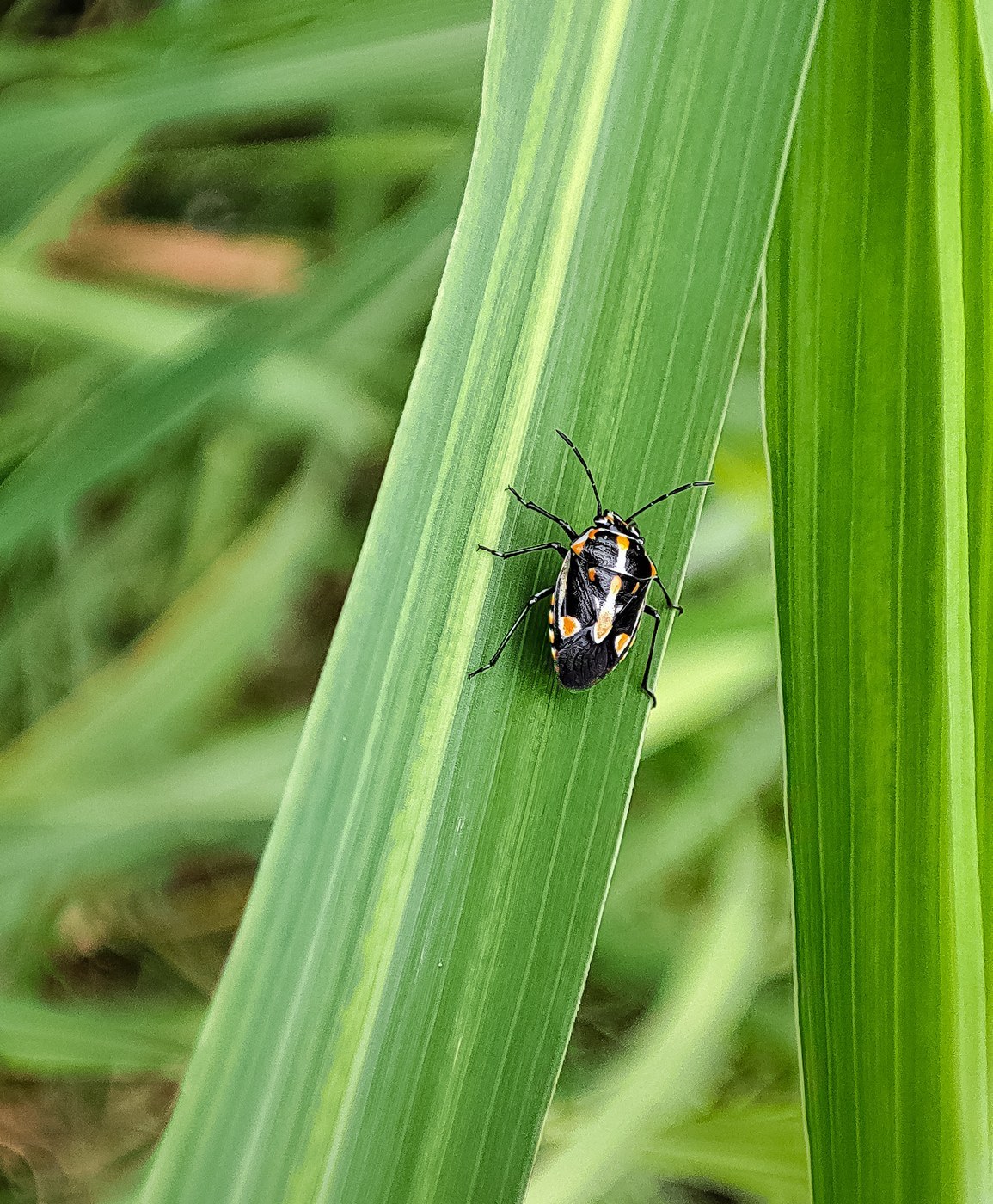
Bagrada Bug
Arid gardens, crucifer fields, desert-adjacent croplands
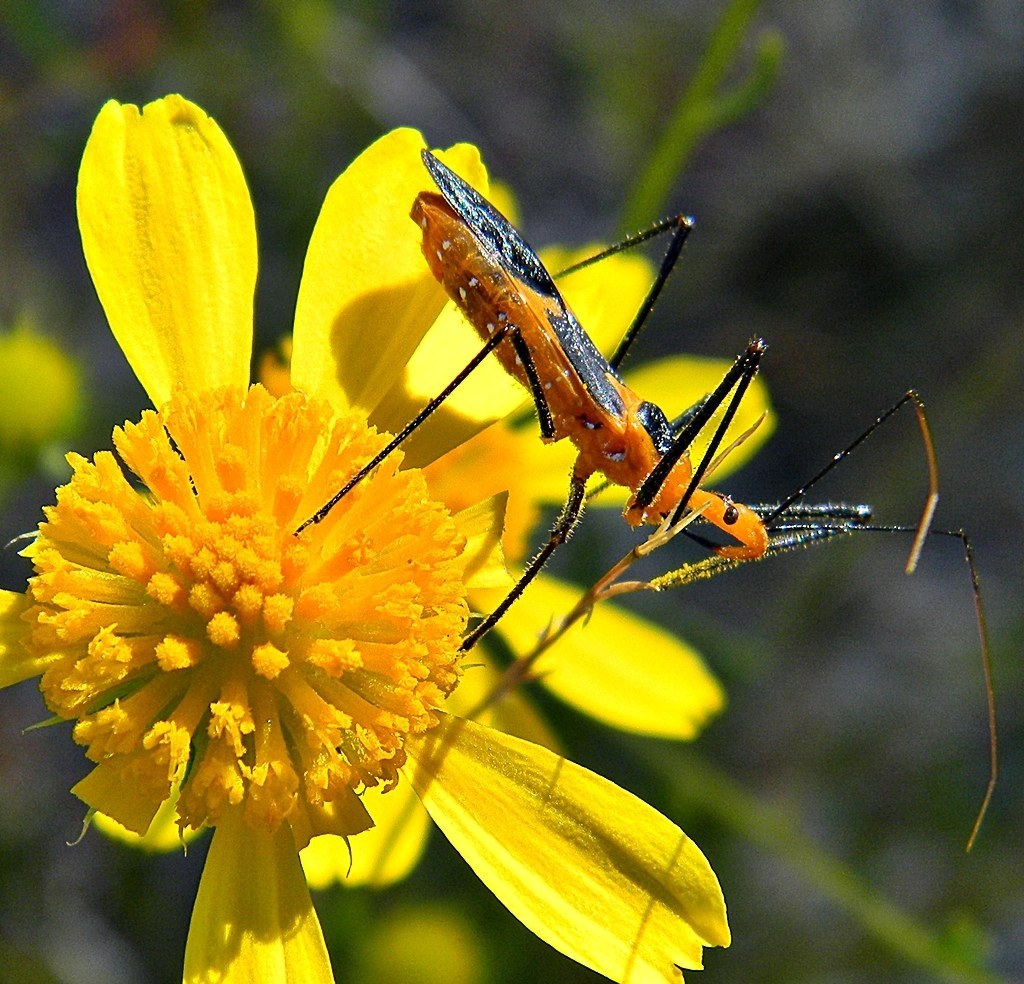
Assassin Bug
Gardens, meadows, and vegetation worldwide
Water Boatman Bug
Ponds, lakes, and slow-moving freshwater
Water Stick Insect
Still and slow-moving water with dense submerged vegetation
Rough Stink Bug
Tree bark, woodlands, orchards, and shrubby vegetation
Stink Bug
Gardens, crop fields, and woodlands across temperate and subtropical regions
Squash Bug
Vegetable gardens and farm fields growing squash, pumpkin, and other cucurbits
Aphid
On stems, leaves, and buds of a very wide range of host plants
Woolly Aphid
Bark crevices, root collars, and twigs of apple, elm, and alder trees
Whitefly
Greenhouses, gardens, and undersides of leaves on host plants
Water Measurer
Quiet edges of ponds, marshes, and slow streams
Two-Spotted Stink Bug
Gardens and fields with potato and nightshade-family plants