
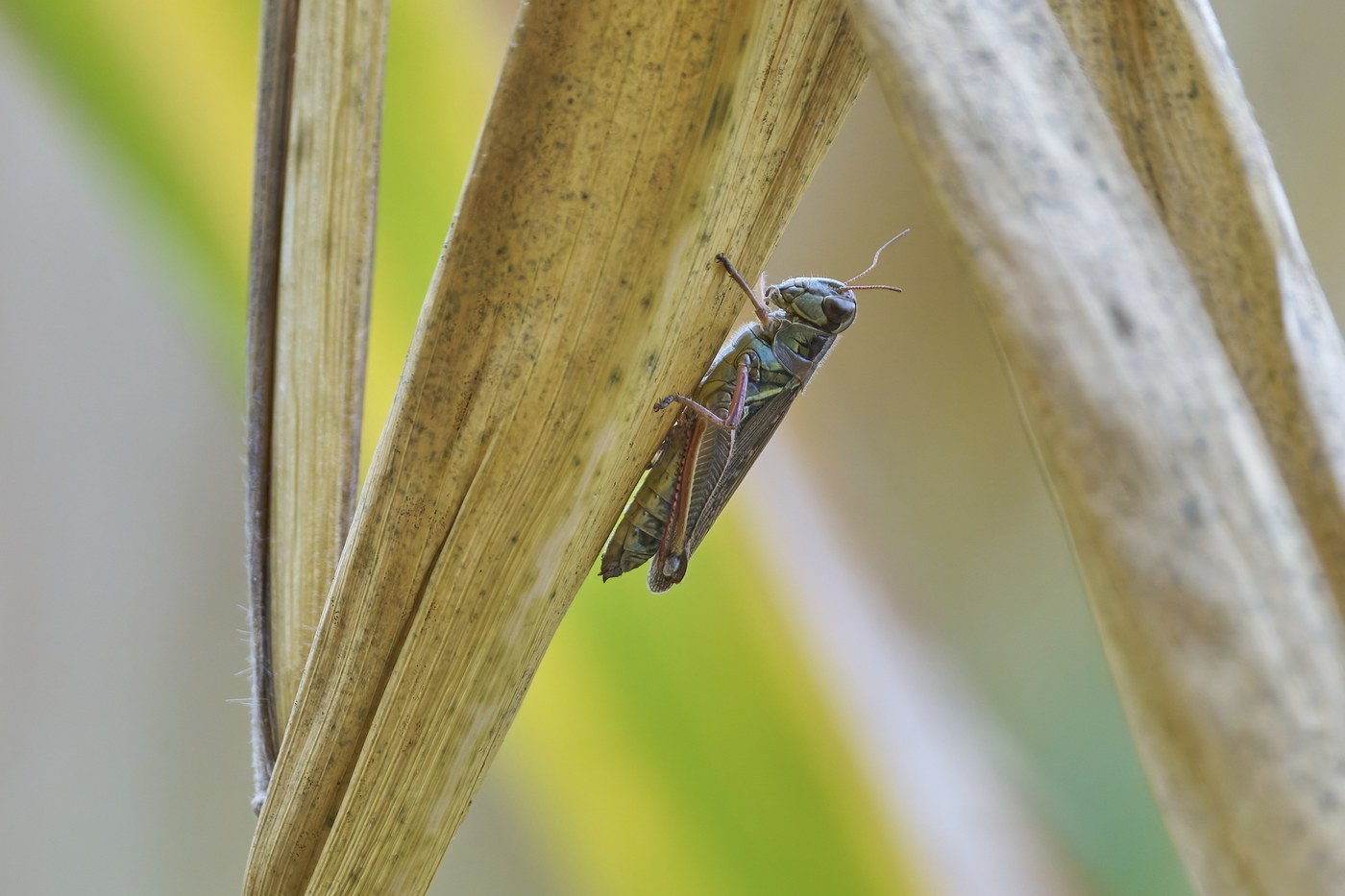
Red-legged Grasshopper
Melanoplus femurrubrum
One of the most abundant and widespread grasshoppers in North America, the red-legged grasshopper is easily spotted by its reddish hind shins flashing amid a brown, mottled body.
- Size
- 1.9–3.3 cm (0.75–1.3 in) long
- Habitat
- Meadows, pastures, field edges, and gardens across North America
- Danger
- Harmless
Spotted a bug like this?
Identify any bug or insect from a photo, free.
Overview
The red-legged grasshopper is among the most common and widely distributed grasshopper species in North America, found in nearly every state and province from coast to coast. Its adaptability to a wide range of open habitats, from natural prairies to disturbed roadsides and gardens, has made it a familiar sight to nearly anyone who spends time outdoors in late summer.
Adults are moderately sized, with a mottled brown to olive body and, as the common name suggests, reddish hind tibiae that stand out against the more muted body color. This species is a close relative of several other Melanoplus grasshoppers and can occasionally be confused with them, though the leg color combined with overall proportions helps separate it from most look-alikes.
While generally not as destructive as some of its larger relatives, red-legged grasshoppers can occasionally reach high populations in favorable years and become a noticeable presence in gardens, hayfields, and pastures, feeding alongside other grassland insects as part of a diverse community of plant-feeding species.
How to Identify
- Medium-sized body, mottled brown, gray, or olive overall.
- Reddish or rust-colored hind tibiae, the source of the common name.
- Hind femurs are typically yellow to olive underneath with darker markings above.
- Wings usually reach or slightly exceed the tip of the abdomen.
- Pronotum has a slight median keel and lacks bold markings.
- Distinguished from similar Melanoplus species mainly by leg color and subtle proportional differences; genital examination is needed for certainty in some cases.
Habitat & Range
This species occurs across nearly all of North America, from southern Canada through the United States and into Mexico, in habitats ranging from native prairie and meadow to pastures, old fields, roadsides, and vegetable gardens. It tolerates a broad range of conditions and is one of the most frequently encountered grasshoppers in late summer surveys.
Behavior & Diet
Red-legged grasshoppers are generalist herbivores, feeding on a wide variety of grasses and broadleaf plants, including many garden and crop species. They are active during the day, basking in sunlight and feeding, while sheltering in dense vegetation during cooler periods. As one of the most numerous grasshoppers across much of its range, this species is an important food source for birds, small mammals, and predatory insects, and contributes meaningfully to nutrient cycling in grassland ecosystems.
Life Cycle
Females lay egg pods in the soil in late summer and fall, and the eggs overwinter before hatching in late spring. Nymphs develop through several instars via incomplete metamorphosis over the summer months, reaching adulthood by mid to late summer. Typically one generation occurs per year across most of its range.
Frequently asked questions
How do I identify a red-legged grasshopper?
Look for a mottled brown body paired with reddish hind tibiae (shins), which give the species its name.
Is the red-legged grasshopper common?
Yes, it is one of the most widespread and abundant grasshopper species in North America.
What do red-legged grasshoppers eat?
They feed on a wide range of grasses and broadleaf plants, including many garden species.
When are red-legged grasshoppers most visible?
Adults are most commonly seen in late summer and early fall.
Red-legged Grasshopper guides
In-depth guides for identifying, understanding, and living alongside Red-legged Grasshopper.
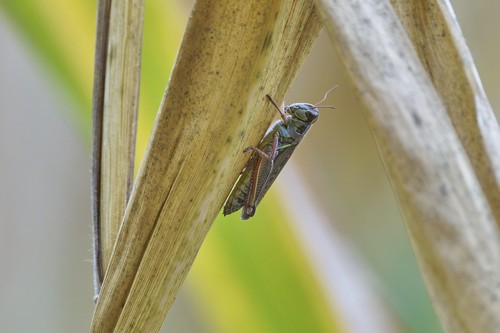
Red-legged Grasshopper identified by the community
Real finds identified with Bug Identifier.
Other bugs you may enjoy
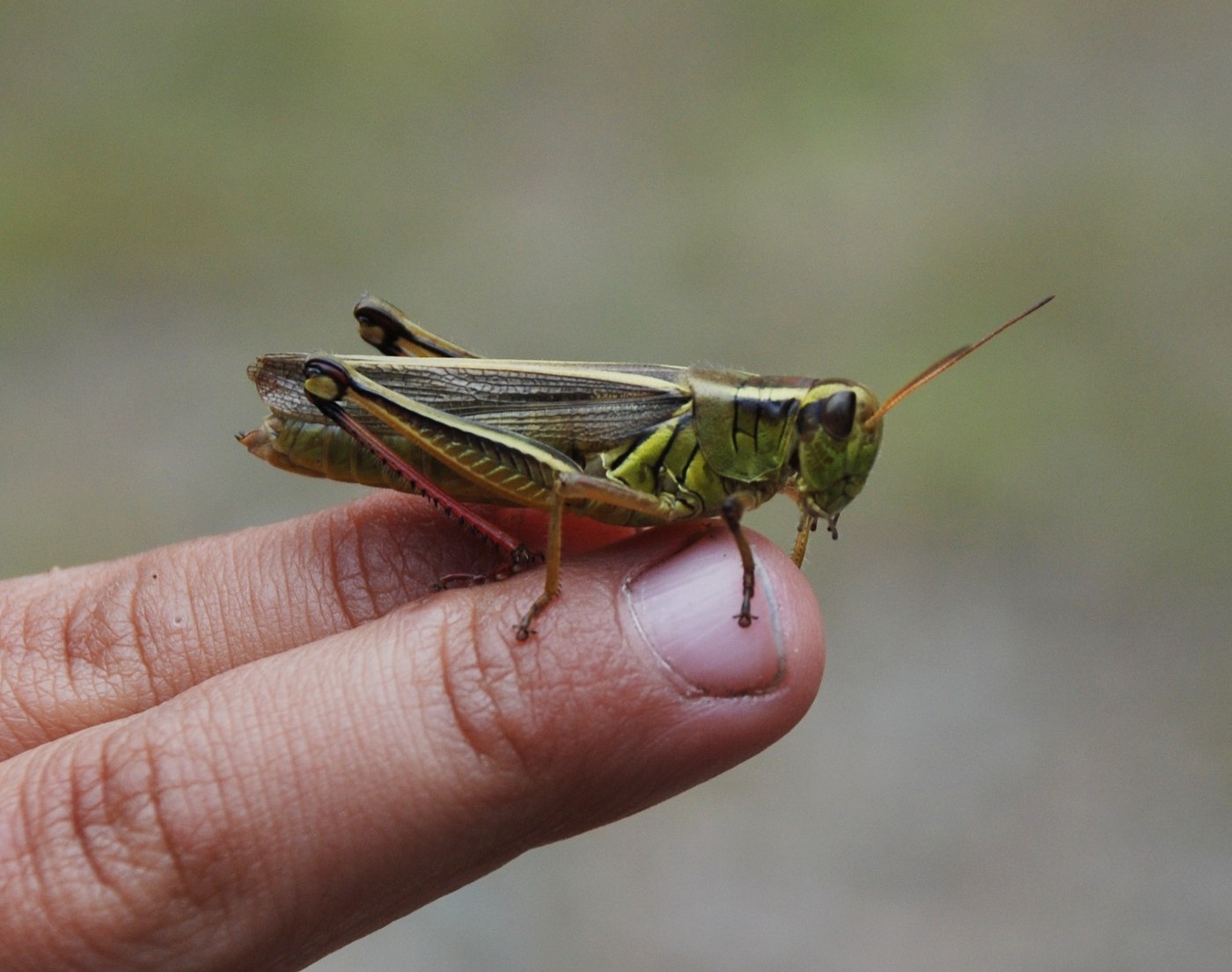
Two-striped Grasshopper
Meadows, pastures, riverbanks, and agricultural fields across North America
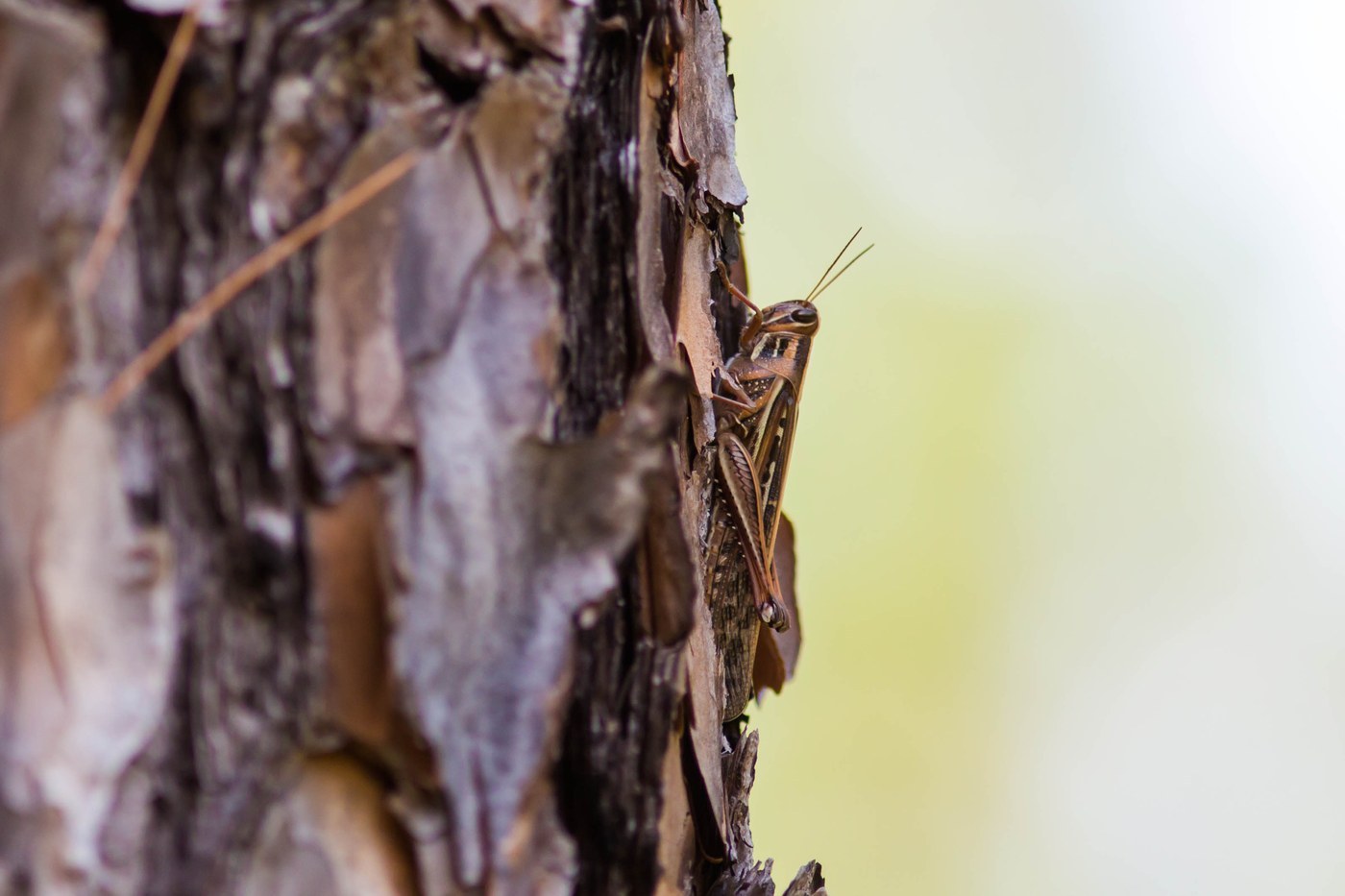
American Grasshopper
Woodland edges, citrus groves, gardens, and open fields across the southern and southeastern United States
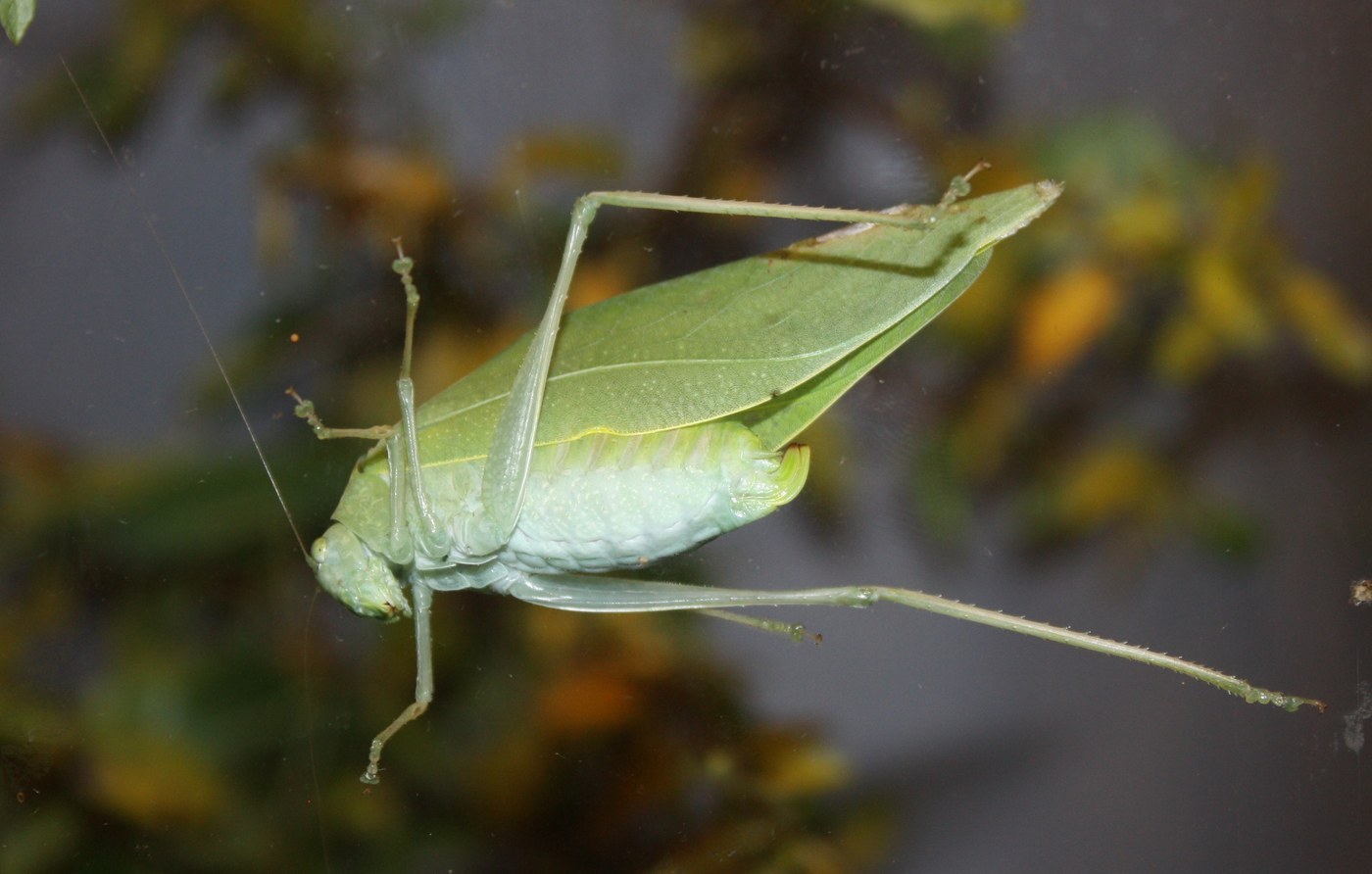
Angular-winged Katydid
deciduous trees, shrubs, and hedgerows across eastern and central North America
Spur-throated Grasshopper
grasslands, meadows, croplands, and roadsides across North America
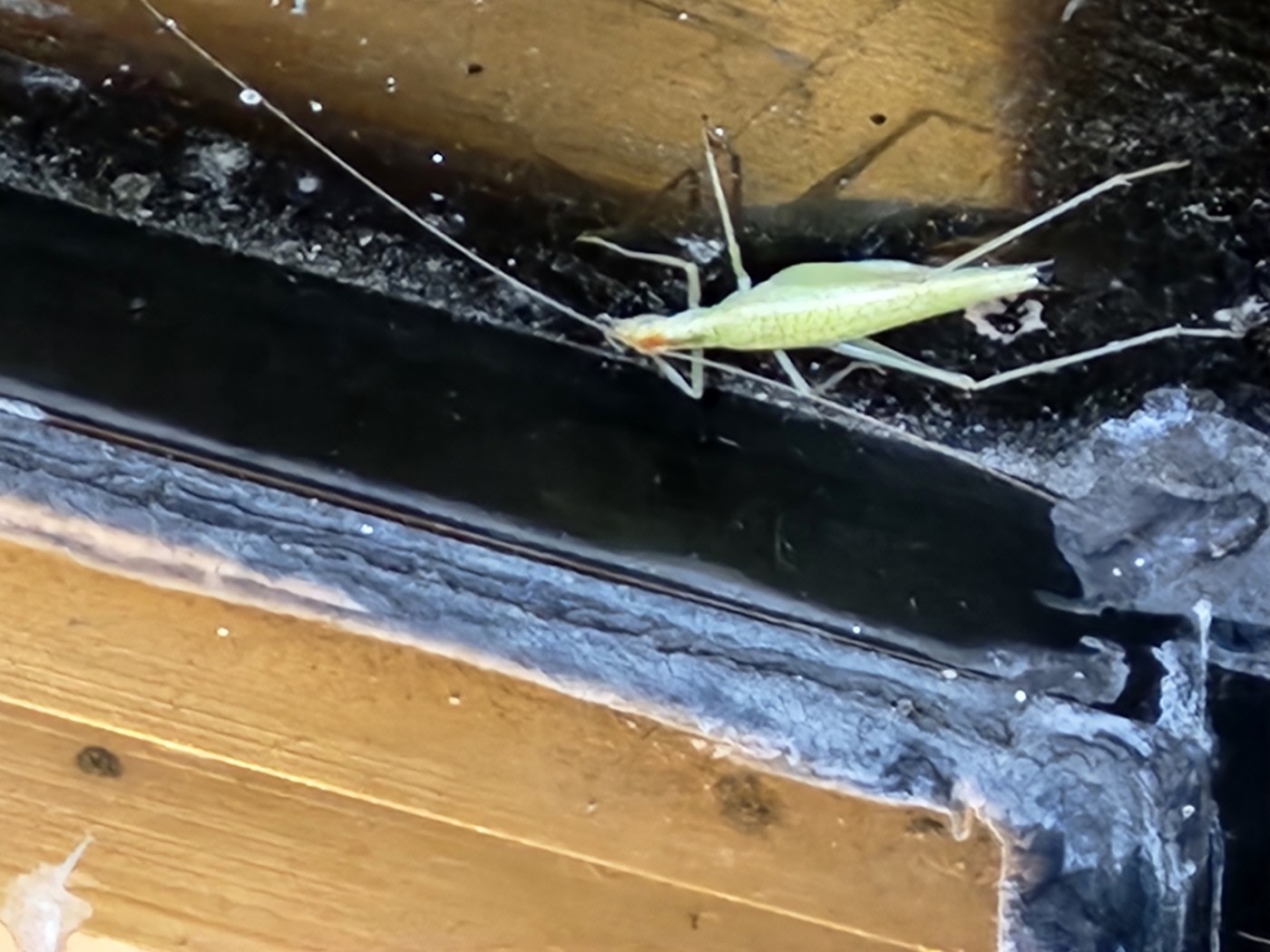
Snowy Tree Cricket
Shrubs, trees, and tall vegetation across North America
Rocky Mountain Locust
historically open grasslands and river valleys of the Rocky Mountains and Great Plains (now believed extinct)
Spotted Camel Cricket
damp caves, crawl spaces, basements, leaf litter, and rotting logs in eastern North America
Pygmy Grasshopper
damp soil, mud, and low vegetation near ponds, streams, and marshes
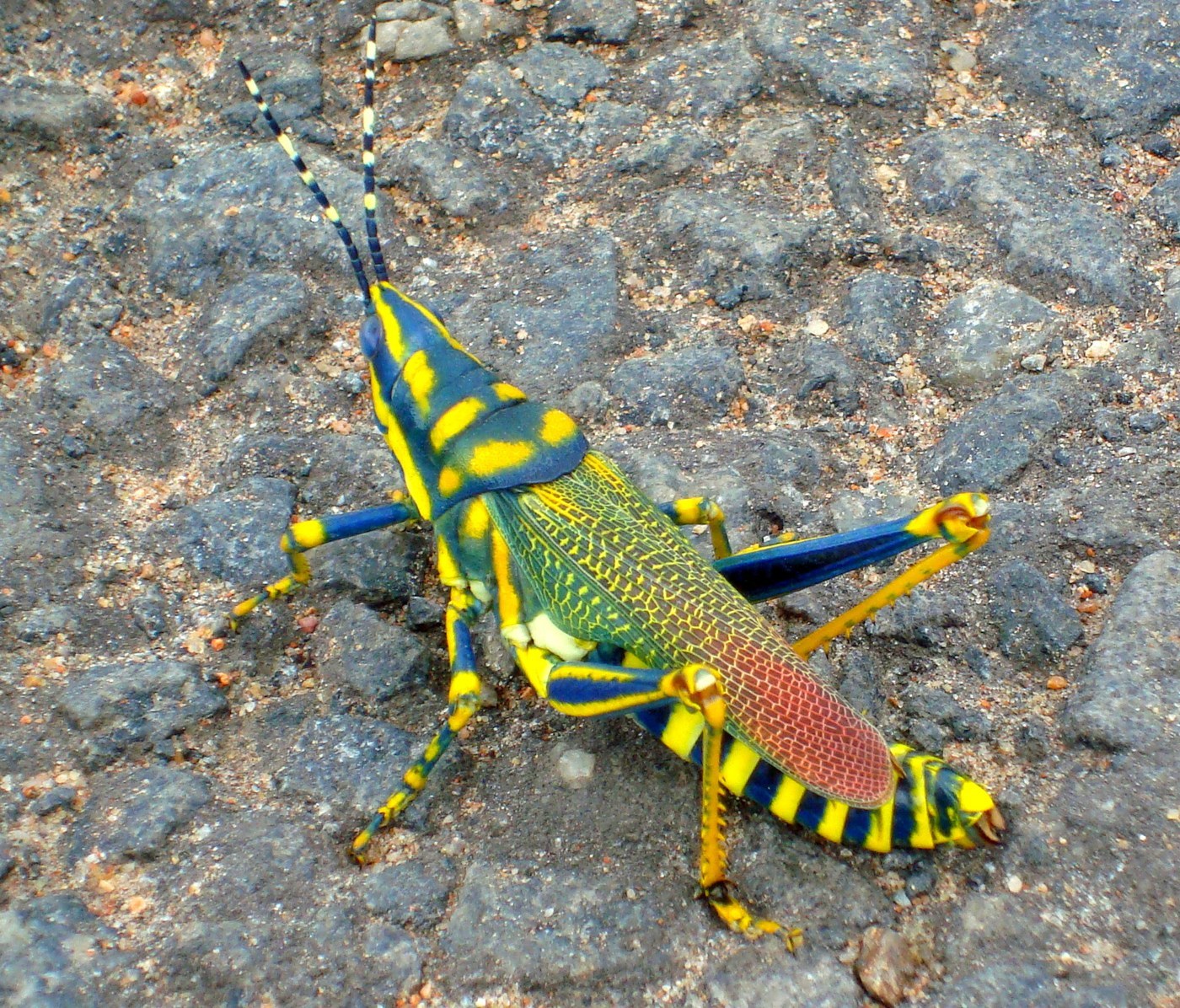
Painted Grasshopper
arid scrub, wastelands, and gardens of the Indian subcontinent, especially near milkweed plants
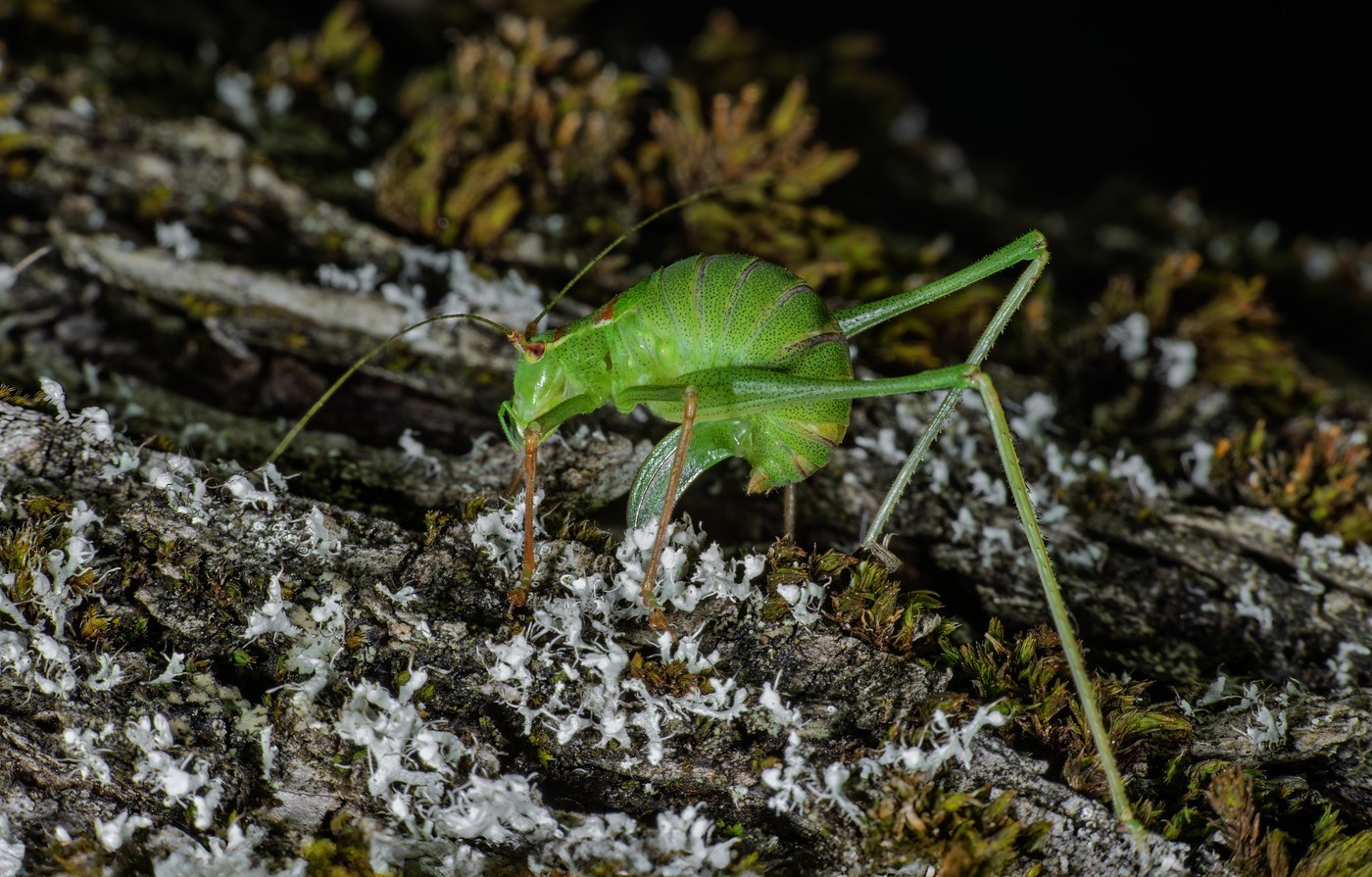
Speckled Bush Cricket
Brambles, hedgerows, nettles, and shrubby vegetation
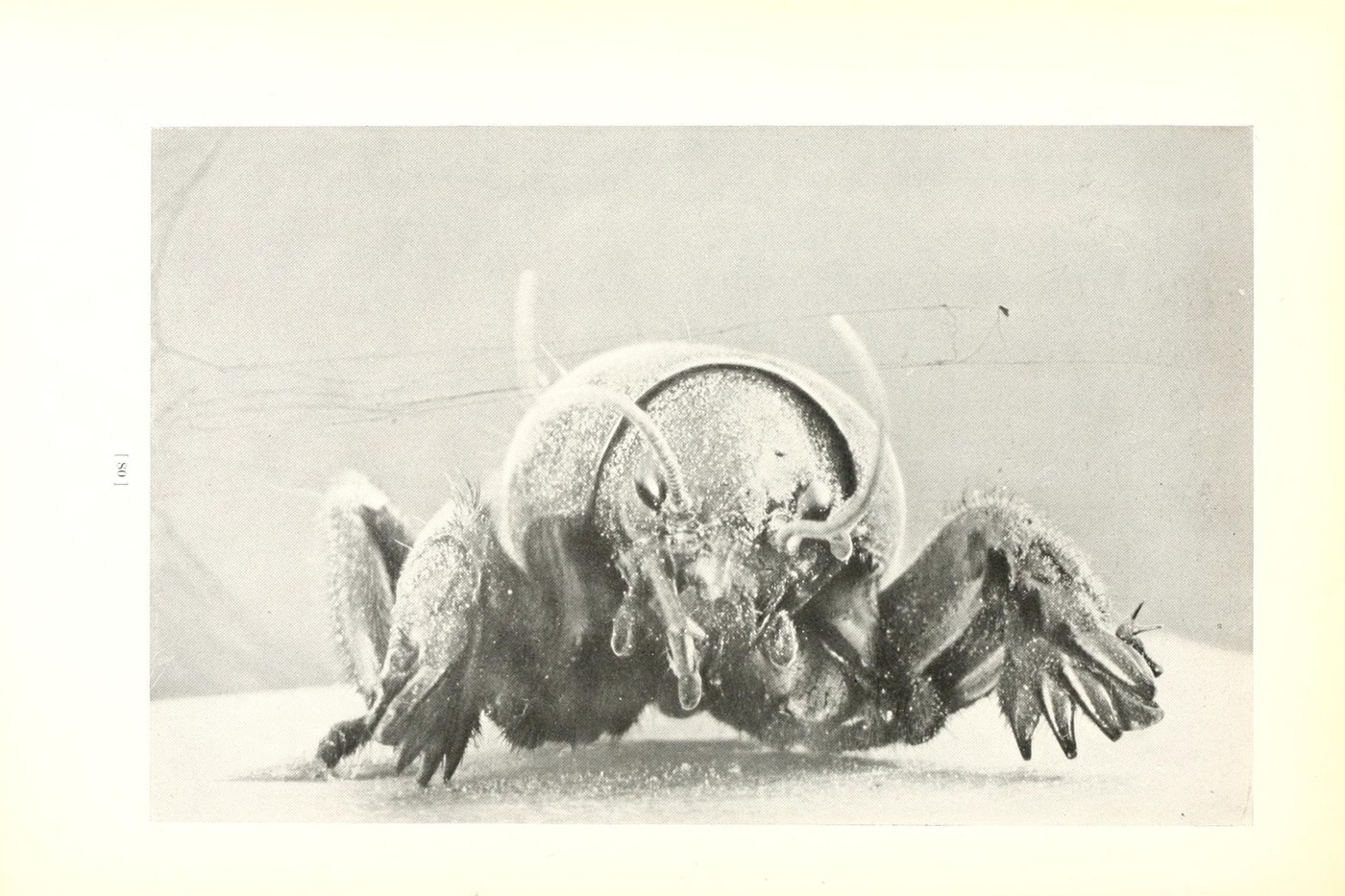
Northern Mole Cricket
wet soil, pond margins, and marshy ground across eastern and central North America
Roesel's Bush Cricket
Damp grasslands, meadows, and roadside verges