
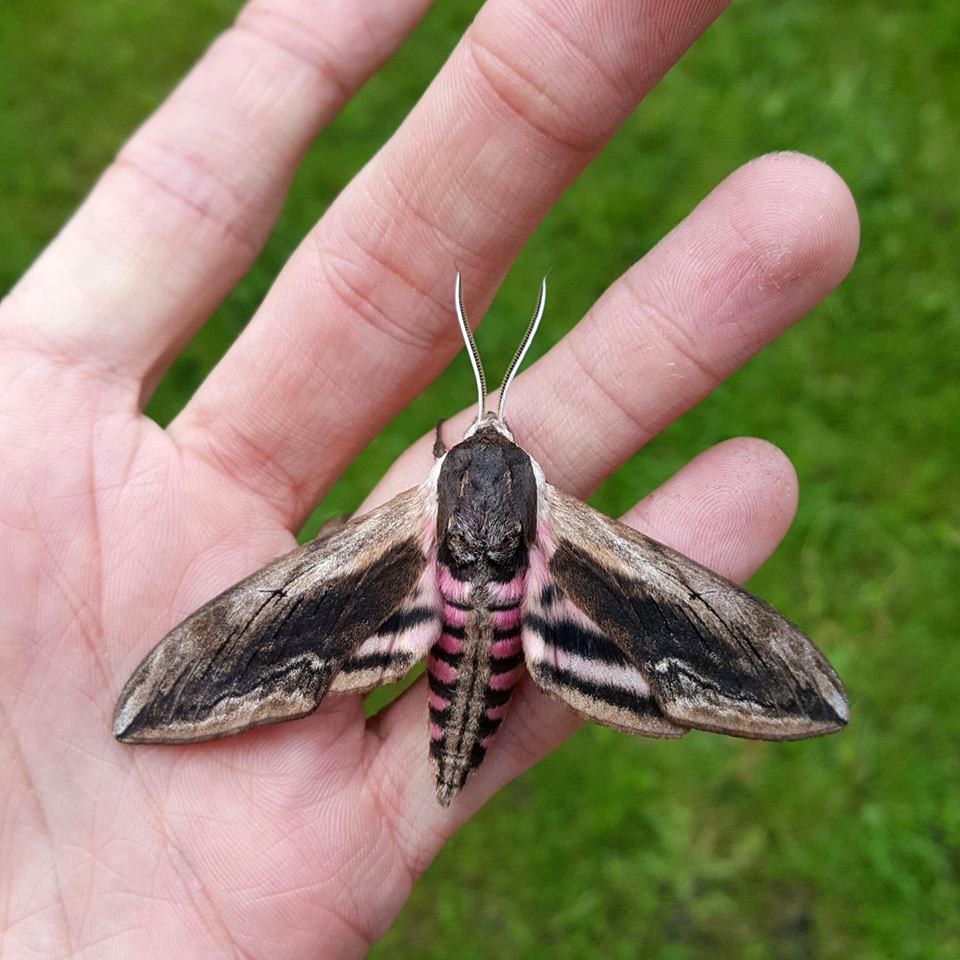
Privet Hawk-Moth
Sphinx ligustri
The largest resident hawk-moth in much of northern Europe, with streaked brown forewings and a striking abdomen banded in pink and black stripes.
- Size
- 3.5–4.7 in wingspan
- Habitat
- Gardens, hedgerows, and woodland edges across Europe and western Asia
- Danger
- Harmless
Spotted a bug like this?
Identify any bug or insect from a photo, free.
Overview
The privet hawk-moth is a large member of the family Sphingidae and one of the biggest resident moths in the United Kingdom and much of northwestern Europe. Its imposing size and boldly striped abdomen make it a memorable sight for anyone who encounters one at rest or drawn to a light at night.
The species takes its common name from privet, a frequent hedge plant that serves as one of its larval host plants, alongside lilac and ash.
Despite its size, the moth is entirely dependent on camouflage and stillness for defense, blending into bark and foliage during the day while remaining active and mobile after dark.
How to Identify
- Very large, heavy-bodied hawk-moth with elongated, streaked forewings in shades of brown, grey, and pinkish-buff.
- Abdomen is boldly marked with alternating pink and black horizontal bands, contrasting with the more subdued wing coloring.
- Hindwings are pale pink crossed with dark bands, usually hidden beneath the forewings at rest.
- Lookalikes: other large Sphingidae, but the vivid pink-and-black striped abdomen is distinctive and not shared by similarly sized European hawk-moths.
Habitat & Range
Found across much of Europe into western Asia, the privet hawk-moth favors gardens, hedgerows, scrubland, and woodland edges wherever privet, lilac, or ash grow. Adults fly mainly in early to midsummer, are strictly nocturnal, and are periodically attracted to outdoor lighting, while larvae are found on host shrubs through the summer months.
Behavior & Diet
Adults are strong, fast fliers active only at night, capable of hovering briefly while feeding at nectar-rich flowers with their long proboscis, making them effective pollinators of deep-throated blooms. By day they rest motionless on bark, tree trunks, or foliage, relying on cryptic forewing coloring for concealment despite their considerable size. Larvae are leaf-feeding herbivores of privet, lilac, and ash, and their large size makes them conspicuous prey items when discovered by birds.
Life Cycle
Eggs are laid singly on the leaves of host shrubs, hatching into large, vividly marked green caterpillars with purple-and-white diagonal stripes along the sides and a curved black tail horn. After several weeks of feeding, mature larvae burrow into soil to pupate, overwintering underground as a pupa. Adults emerge the following early summer, generally producing a single generation per year across most of the species' range.
Frequently asked questions
Is it really the largest hawk-moth in the region?
It is typically cited as the largest resident hawk-moth species in the UK and much of northwestern Europe, based on wingspan.
Does it only feed on privet as a caterpillar?
No, while privet gives the species its name, larvae also readily feed on lilac and ash.
Why does it have such a strikingly striped body?
The pink-and-black banded abdomen contrasts with its otherwise camouflaged wings, though its exact function is generally attributed to visual disruption or signaling.
When is the best time to see one?
Adults are on the wing mainly in early to midsummer and are most often encountered at night near outdoor lights.
Privet Hawk-Moth guides
In-depth guides for identifying, understanding, and living alongside Privet Hawk-Moth.
Other bugs you may enjoy
Bagworm Moth
Coniferous and deciduous trees, shrubs, hedges
Antheraea Silkmoth
Deciduous forests, woodland edges, orchards
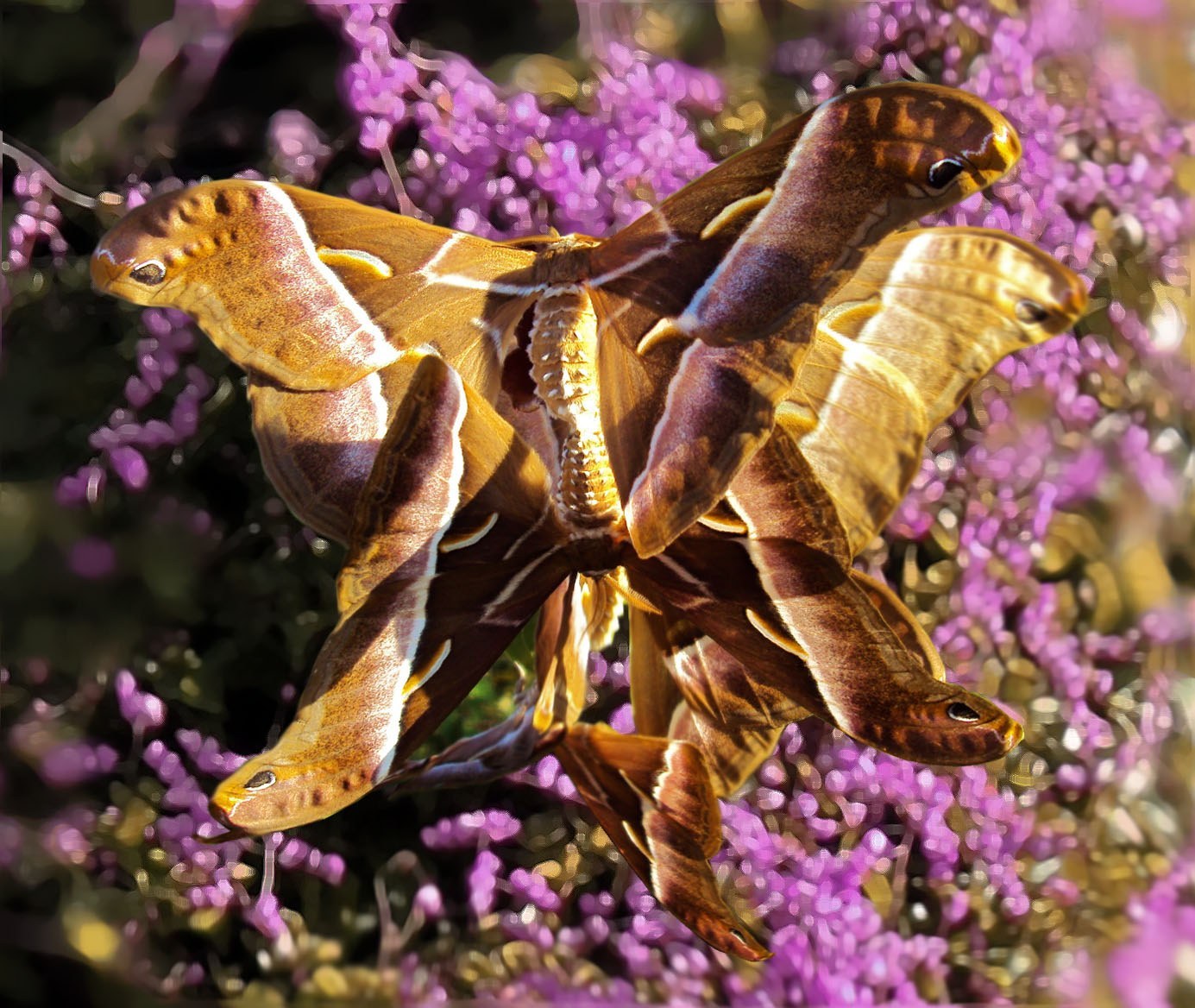
Ailanthus Silkmoth (Cynthia Moth)
Urban parks, wastelands, and woodland edges with tree-of-heaven; native to Asia, introduced in North America and Europe
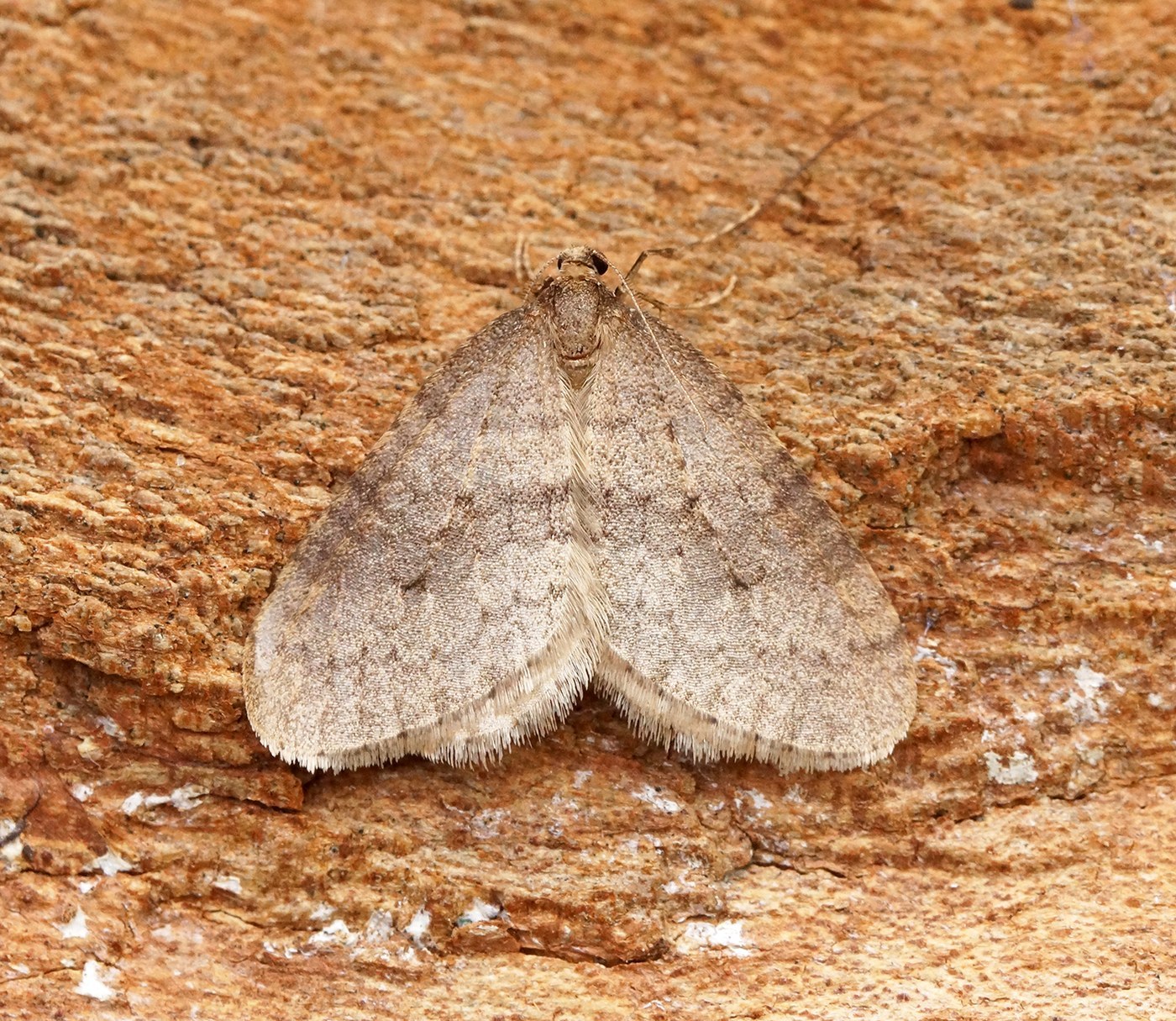
Winter Moth
Deciduous woodland, orchards, gardens, hedgerows
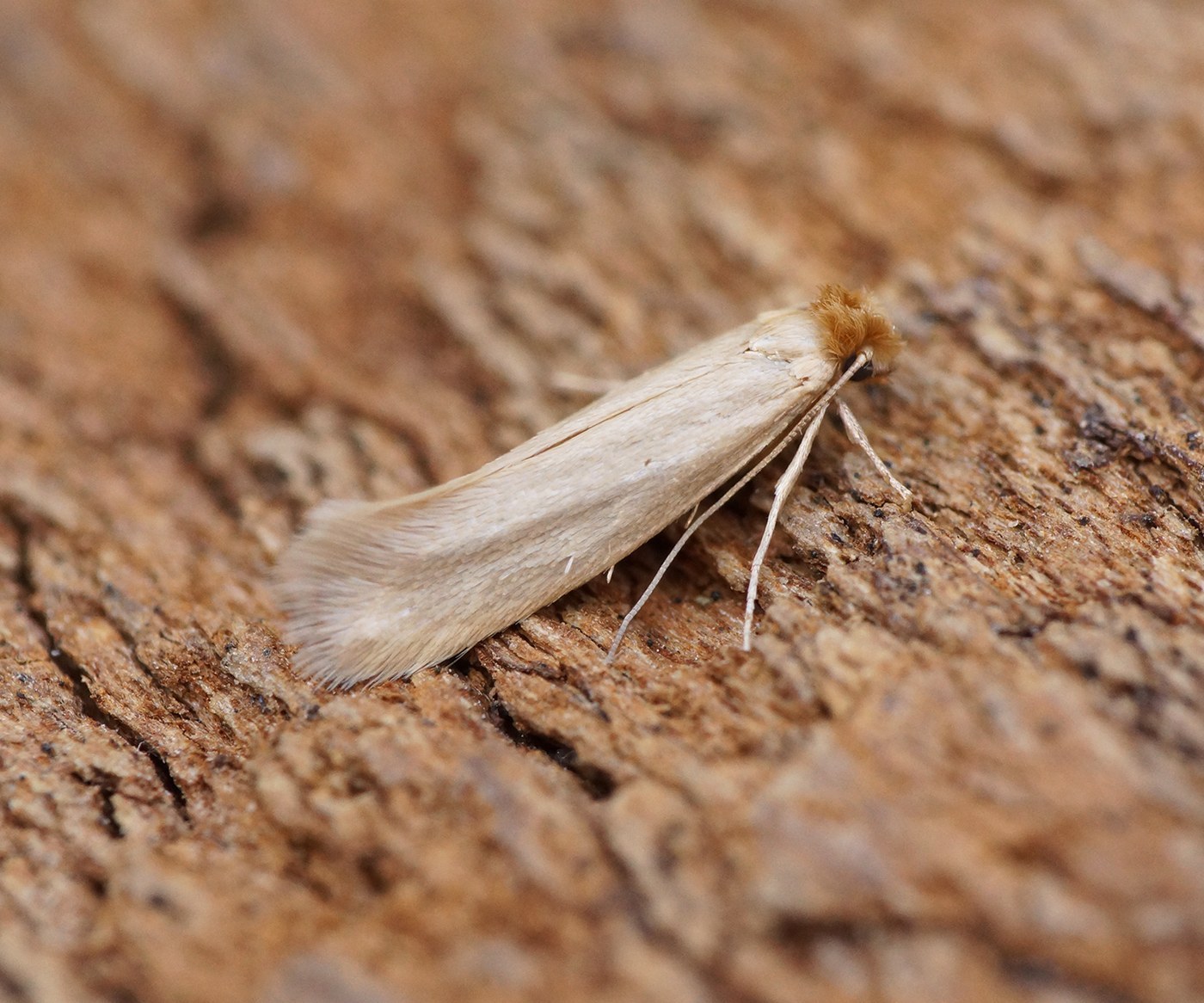
Webbing Clothes Moth
Dark closets, storage areas, and animal nests worldwide
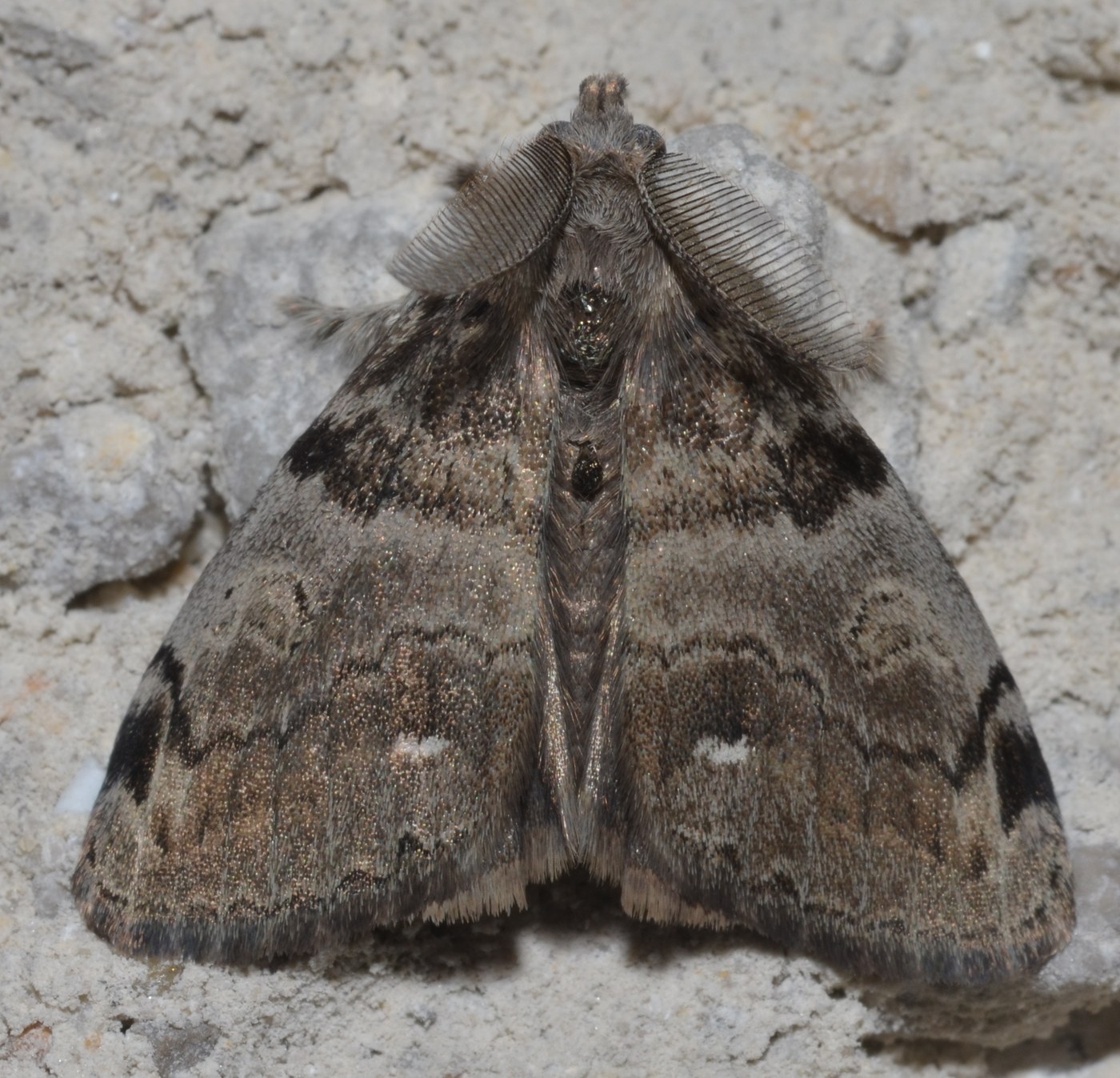
Tussock Moth
Deciduous forests, parks, gardens
Wax Moth
Beehives, apiaries, stored beeswax and comb
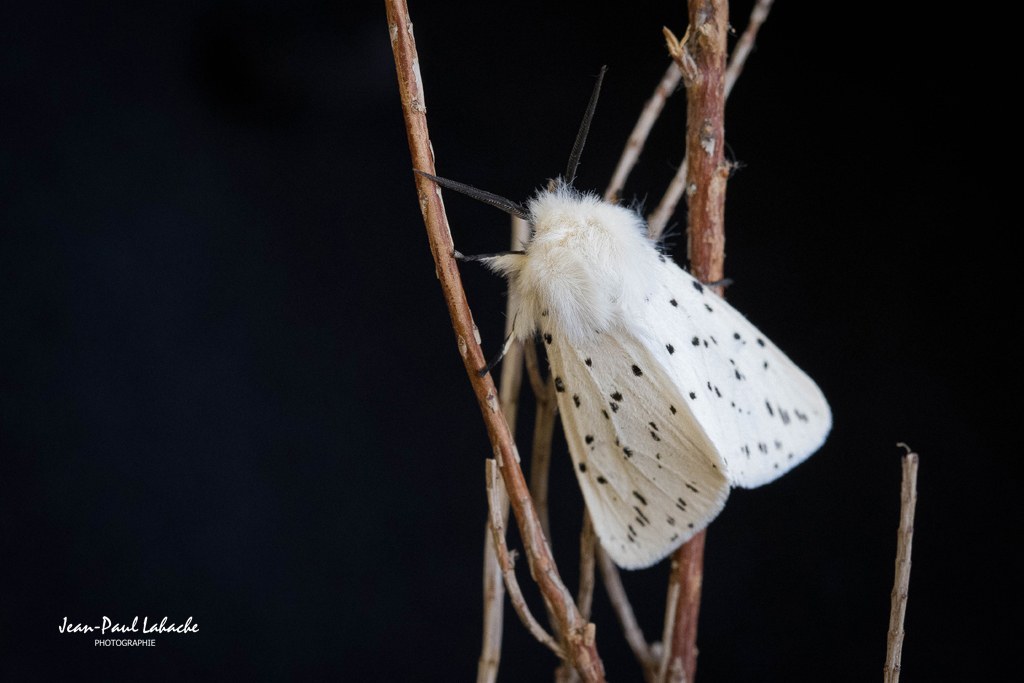
White Ermine Moth
Gardens, meadows, hedgerows
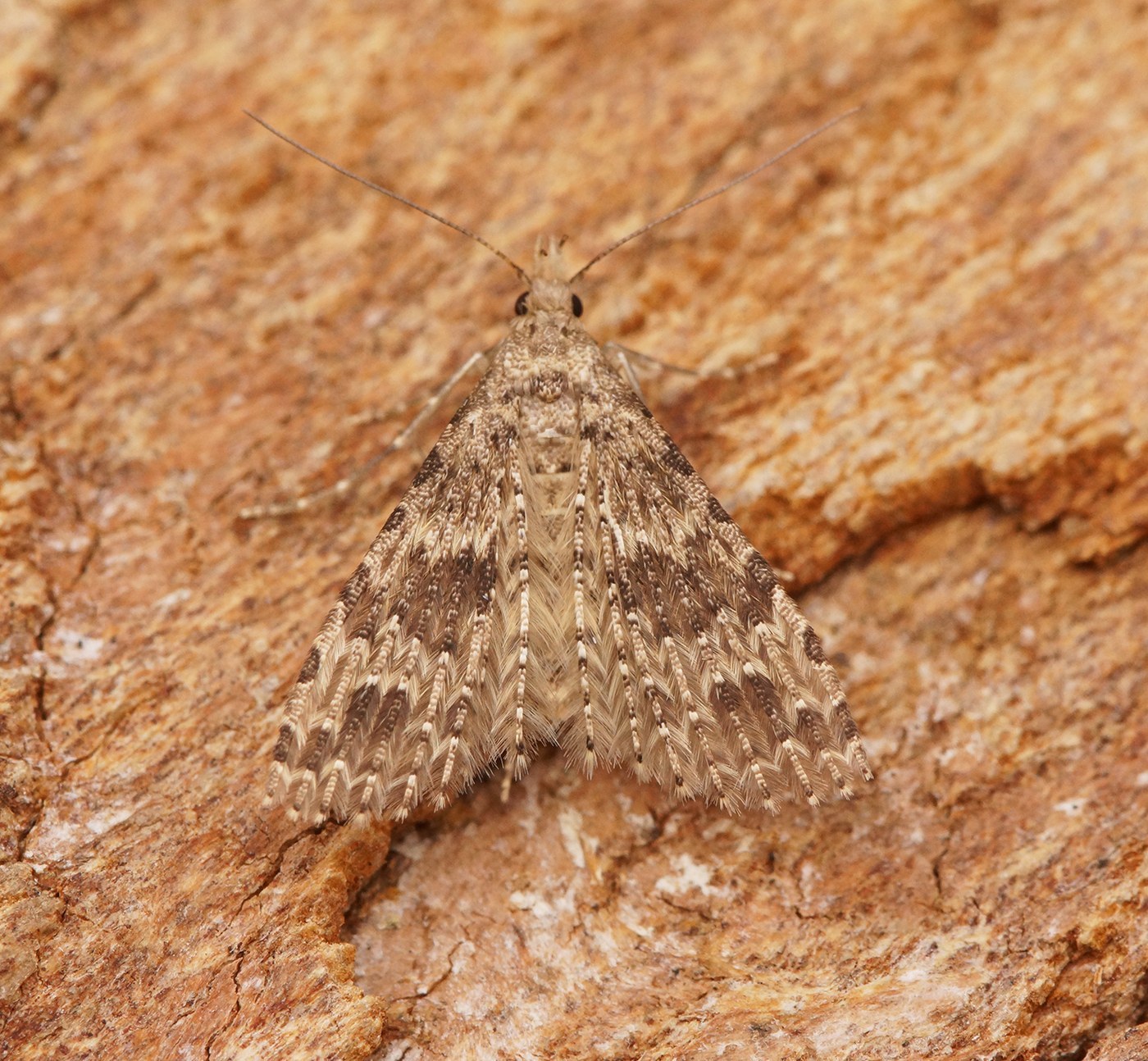
Twenty-plume Moth
Gardens, hedgerows, near honeysuckle
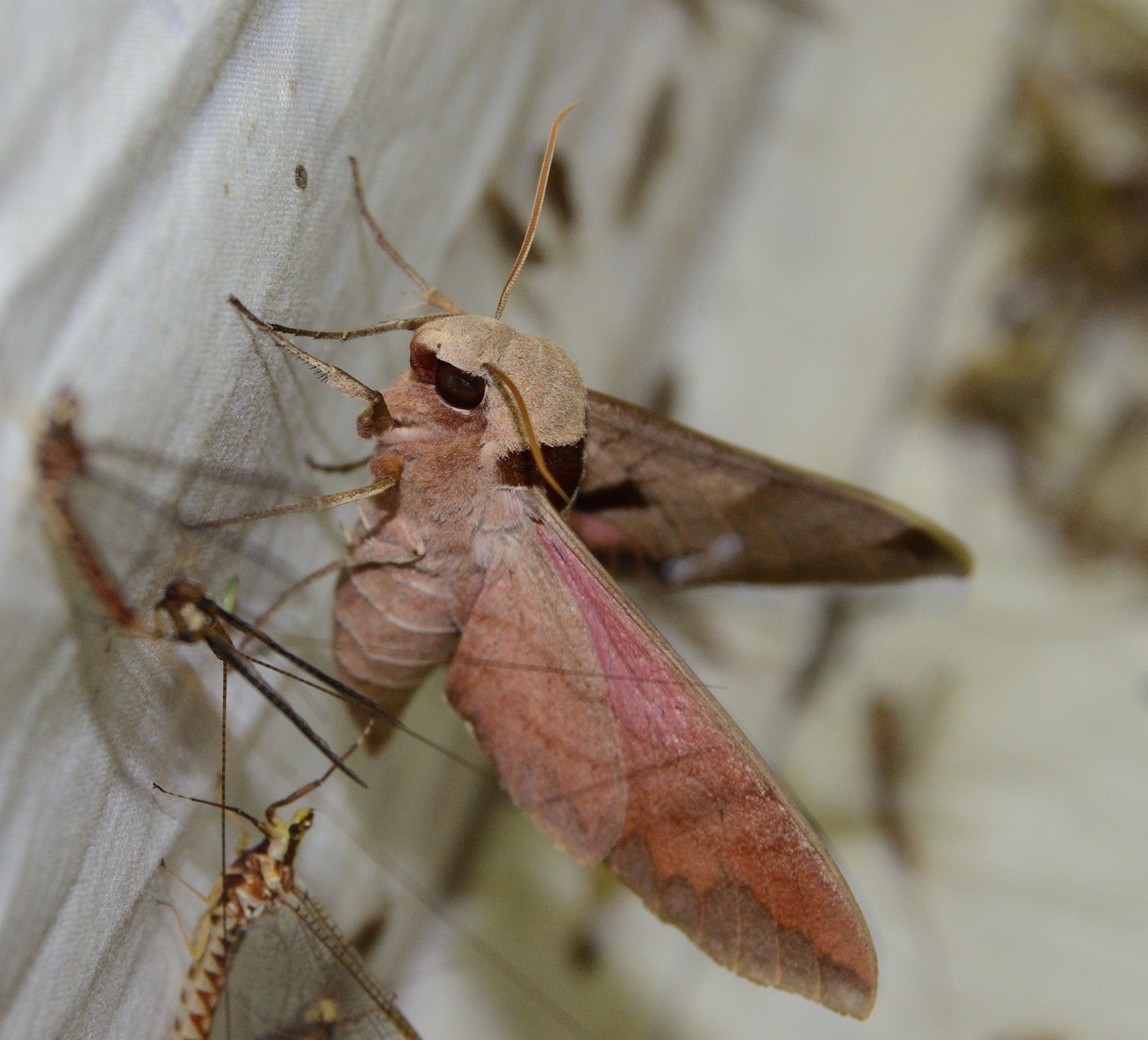
Achemon Sphinx Moth
Vineyards, woodland edges, gardens with wild grape
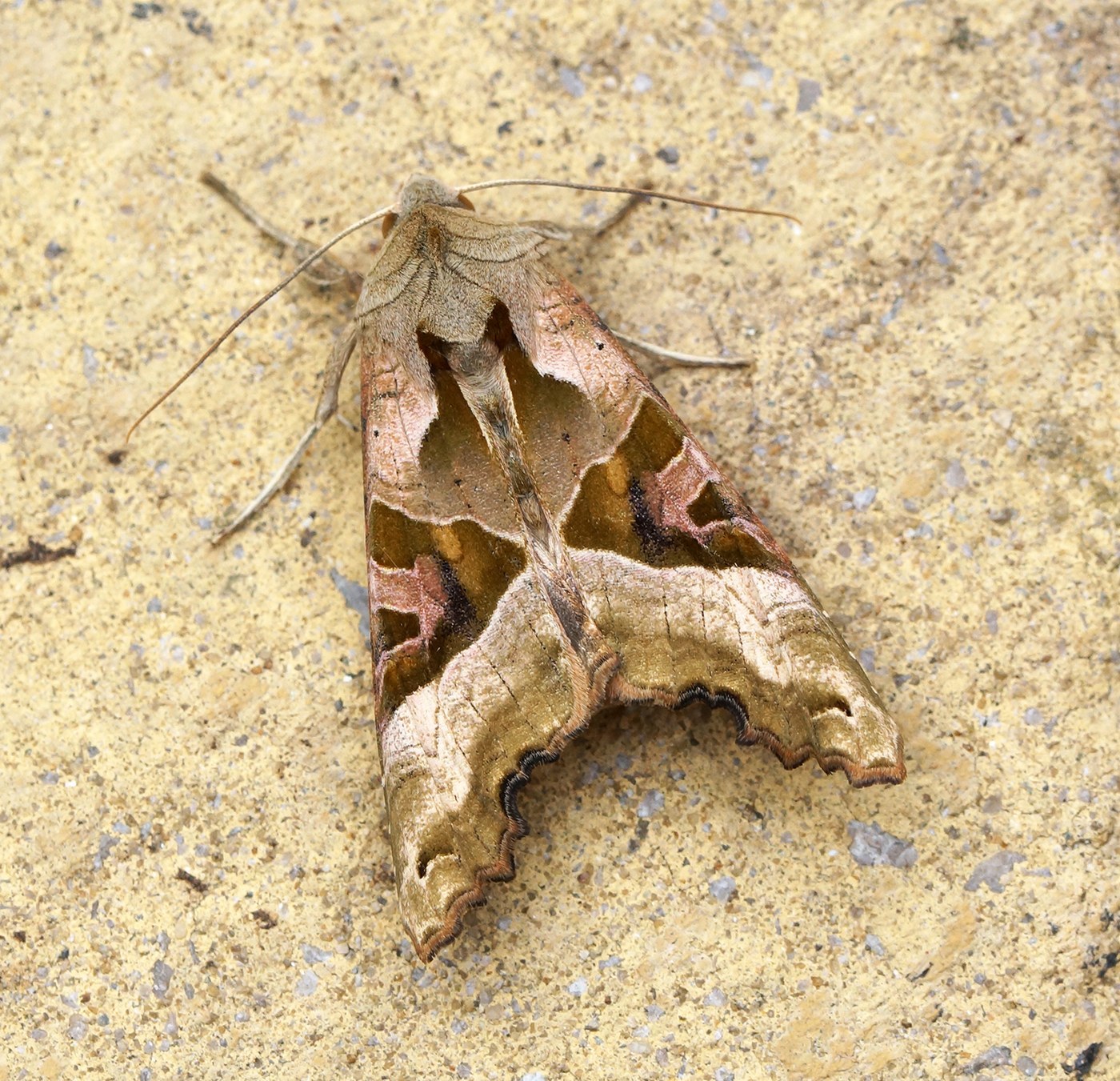
Angle Shades Moth
Gardens, hedgerows, woodland edges, urban parks
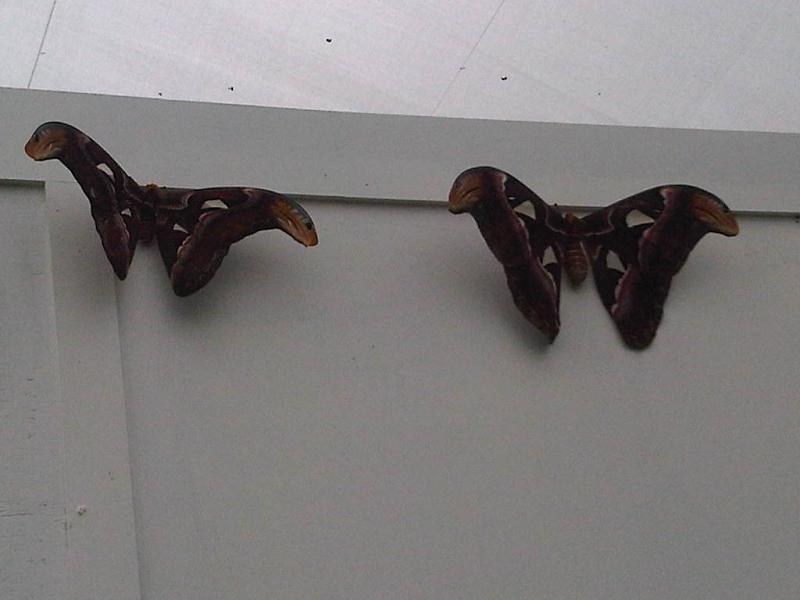
Atlas Moth
Tropical and subtropical lowland forests of Southeast Asia