
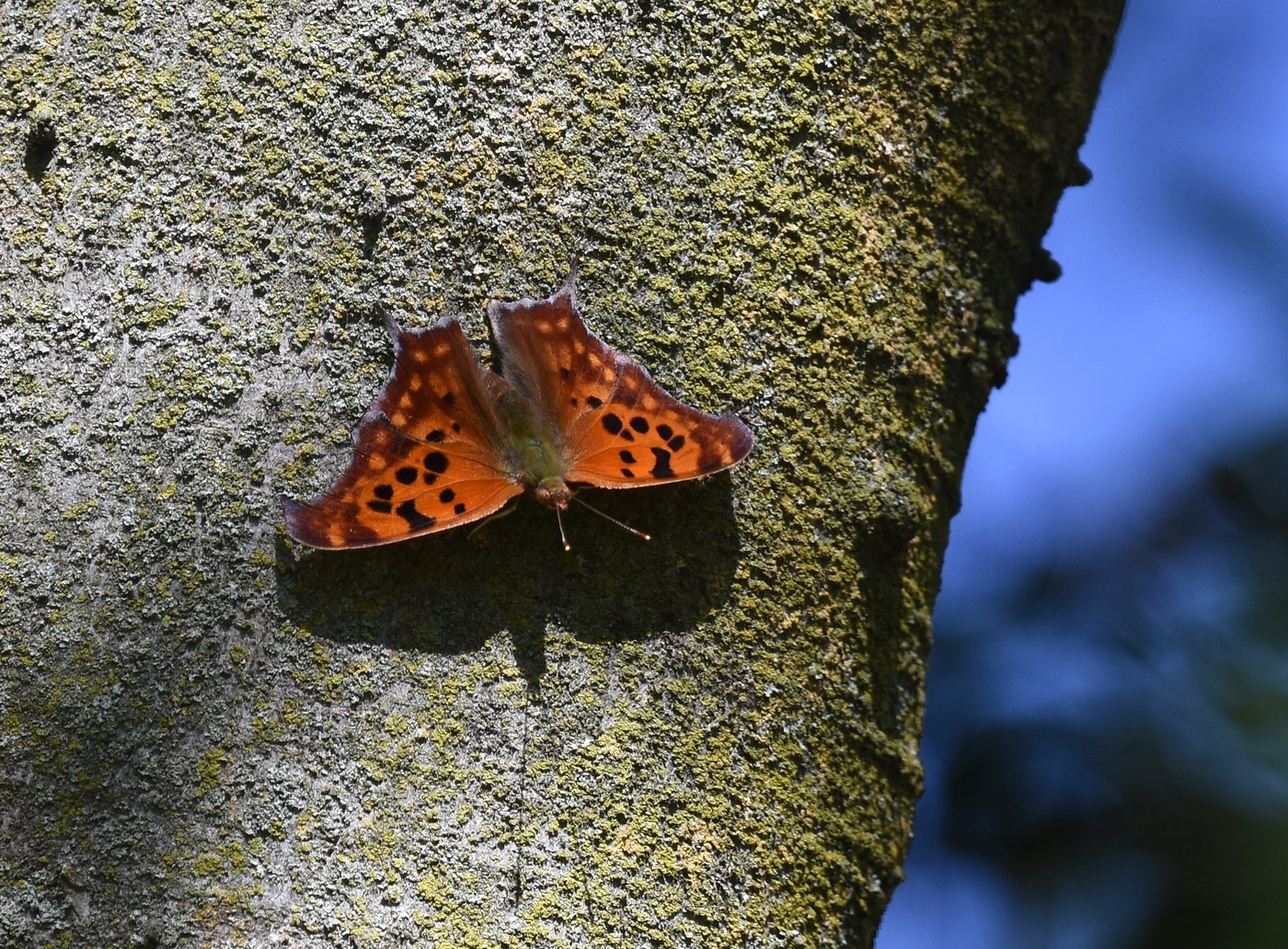
Question Mark Butterfly
Polygonia interrogationis
A ragged-edged anglewing butterfly named for the tiny silver question-mark squiggle on its mottled brown underside, with tawny-orange upperwings dotted in black.
- Size
- 1.9–3 in wingspan
- Habitat
- Woodland edges, parks, riverbanks, suburban yards
- Danger
- Harmless
Spotted a bug like this?
Identify any bug or insect from a photo, free.
Overview
The Question Mark is a member of the anglewing group within the brushfoot family, Nymphalidae, so named because its wing margins are deeply scalloped and angular rather than smoothly rounded like many other butterflies. It is one of the most widespread and familiar woodland butterflies in eastern North America, often seen basking with wings open on tree trunks, gravel paths, or bare soil.
What sets it apart from its close relatives, such as the Eastern Comma, is a small silvery mark on the underside hindwing that includes both a curved line and a separate dot — resembling a punctuation question mark when viewed closely. This underside pattern, combined with dead-leaf coloration, gives the resting butterfly excellent camouflage against tree bark and leaf litter.
As an adult that overwinters in leaf litter or bark crevices, the Question Mark is often the first butterfly seen on warm days in late winter or very early spring, making it ecologically notable as an early-season pollinator substitute that instead relies heavily on sap, rotting fruit, and dung rather than flower nectar.
How to Identify
- Upperside is bright orange-tawny with irregular black spots and dashes; wing tips are dusky, and hindwings show a violet-tinted band near the ragged outer margin (more vivid in the winter form).
- Underside is mottled gray-brown to purplish-brown, resembling a dead leaf, with a small silver "question mark" mark (a curved line plus a separate dot) in the center of the hindwing.
- Wings have distinctly angular, notched outlines rather than smooth curves, a hallmark of the anglewing group.
- Similar to the Eastern Comma (Polygonia comma), but the Comma's silver mark is a simple curved comma without the separate dot, and the Question Mark tends to be slightly larger with a violet wash on the hindwing margin.
Habitat & Range
Found throughout the eastern and central United States and southeastern Canada, ranging west to the edge of the Great Plains. It favors open woodlands, forest edges, riverine corridors, orchards, and shaded suburban gardens where host trees grow nearby.
Adults are active from early spring through fall, with the overwintering generation emerging on unseasonably warm winter days. It shelters in bark crevices, wood piles, and leaf litter during cold weather and re-emerges as one of the first butterflies of the new season.
Behavior & Diet
Adults rarely visit flowers, instead favoring tree sap, rotting fruit, animal dung, and carrion for nutrients rich in salts and amino acids. Males perch on tree trunks or in sunny clearings to watch for passing females and will investigate any moving object that enters their territory.
Caterpillars feed on the foliage of elm, hackberry, nettles, and hops, often resting on the underside of leaves. The species plays a modest role in its ecosystem as a decomposer-associated feeder and occasional prey item for birds, while its cryptic, leaf-like underside serves as its primary defense against predators.
Life Cycle
Females lay pale green eggs singly or in short stacks on the underside of host leaves such as elm and hackberry. Caterpillars are spiny and variably colored from black to greenish with pale markings, feeding through several instars before forming a mottled, angular chrysalis suspended from a leaf or twig.
The species produces two to three overlapping generations per year across most of its range, undergoing complete metamorphosis. The final-generation adults enter reproductive diapause and overwinter as adults, emerging to mate and lay eggs the following spring.
Frequently asked questions
How is the Question Mark different from the Eastern Comma?
Both are anglewing butterflies with dead-leaf undersides, but the Question Mark's silver mark includes a separate dot next to the curved line (forming a true question mark), while the Comma's mark lacks that dot.
Why does it not visit many flowers?
Like other anglewings, it feeds mainly on tree sap, rotting fruit, and dung rather than floral nectar, though it will occasionally nectar when other food sources are scarce.
Where would I see one in winter?
It overwinters as an adult in bark crevices or leaf litter and can be spotted basking on tree trunks or warm pavement on unusually mild winter or early-spring days.
What do the caterpillars eat?
They feed on elm, hackberry, nettle, and hop foliage.
Question Mark Butterfly guides
In-depth guides for identifying, understanding, and living alongside Question Mark Butterfly.
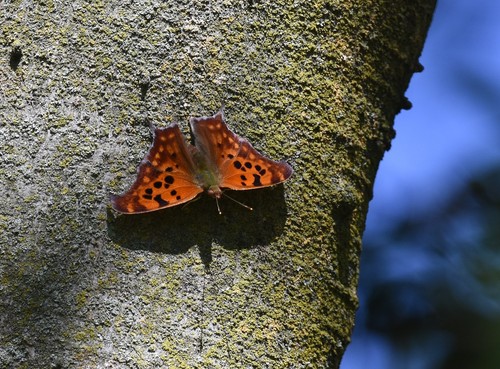
Question Mark Butterfly identified by the community
Real finds identified with Bug Identifier.
Other bugs you may enjoy
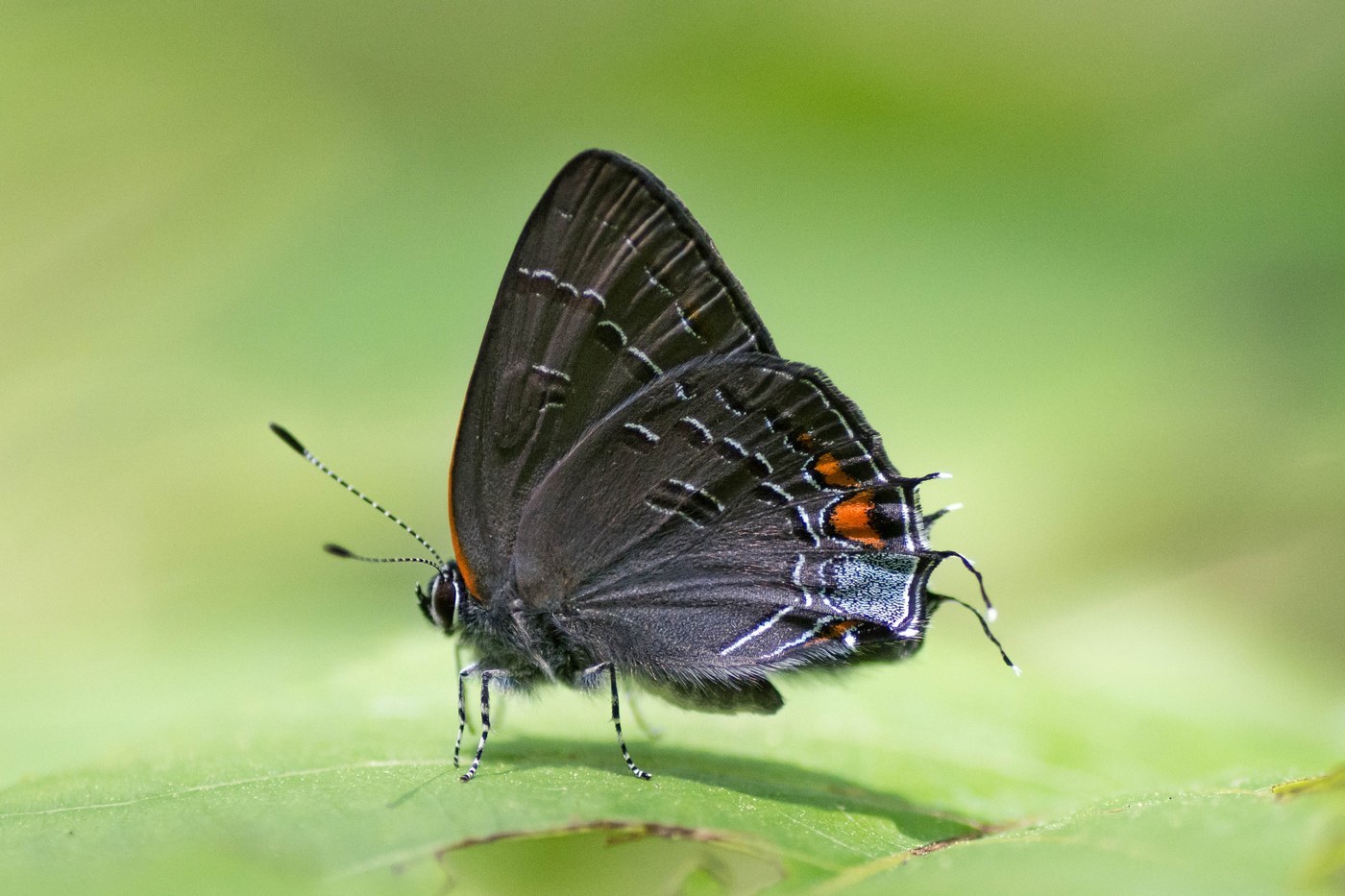
Banded Hairstreak
Deciduous woodlands and edges with oaks and hickories
American Lady
Open fields, meadows, gardens, roadsides
Zebra Longwing
Tropical hammocks, gardens, forest edges
Zebra Swallowtail
Woodlands, floodplains, forest edges near pawpaw
Variegated Fritillary
Open fields, prairies, roadsides, and disturbed ground across most of the United States
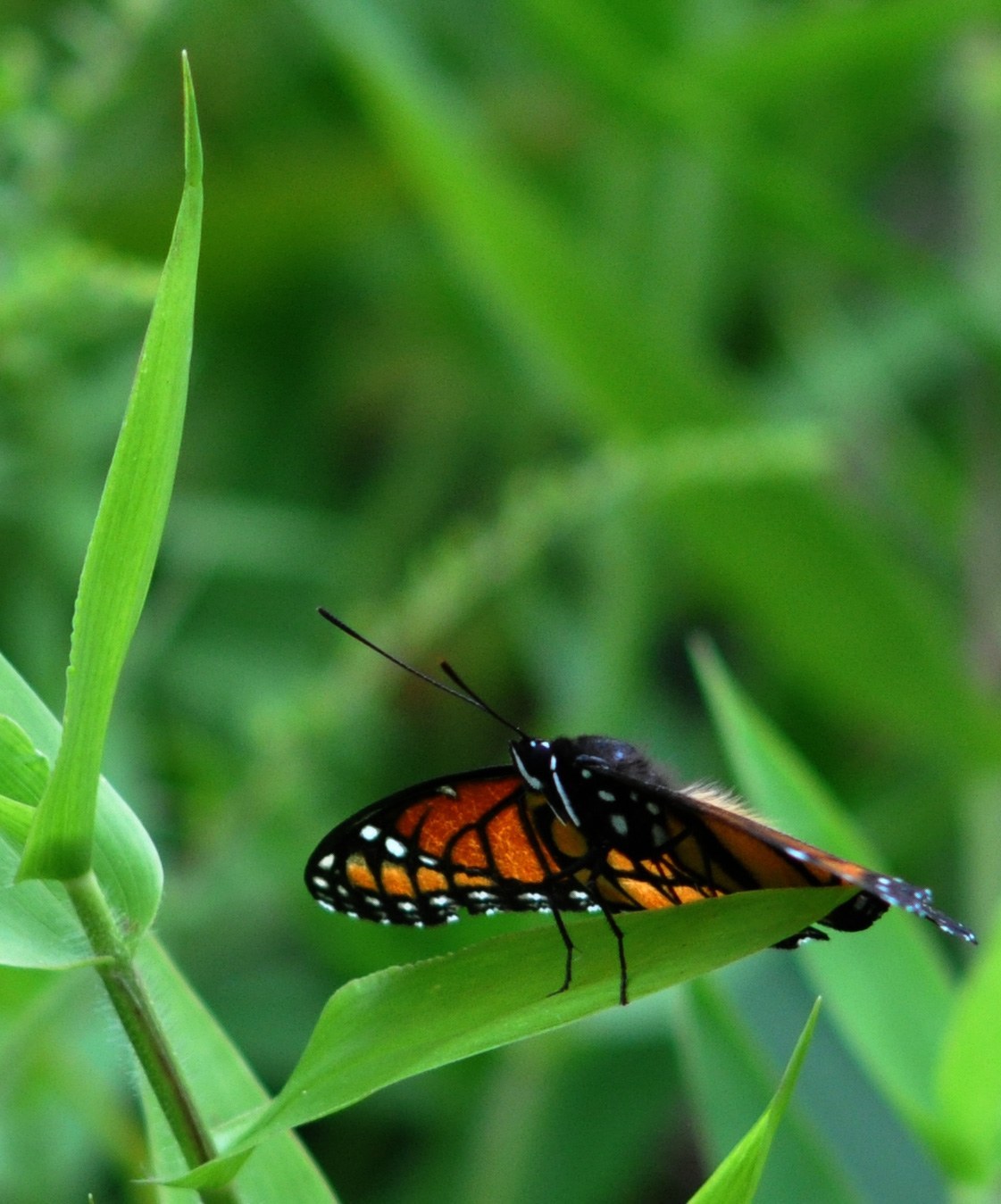
Viceroy Butterfly
Wetlands, meadows, riverbanks, willow thickets (North America)
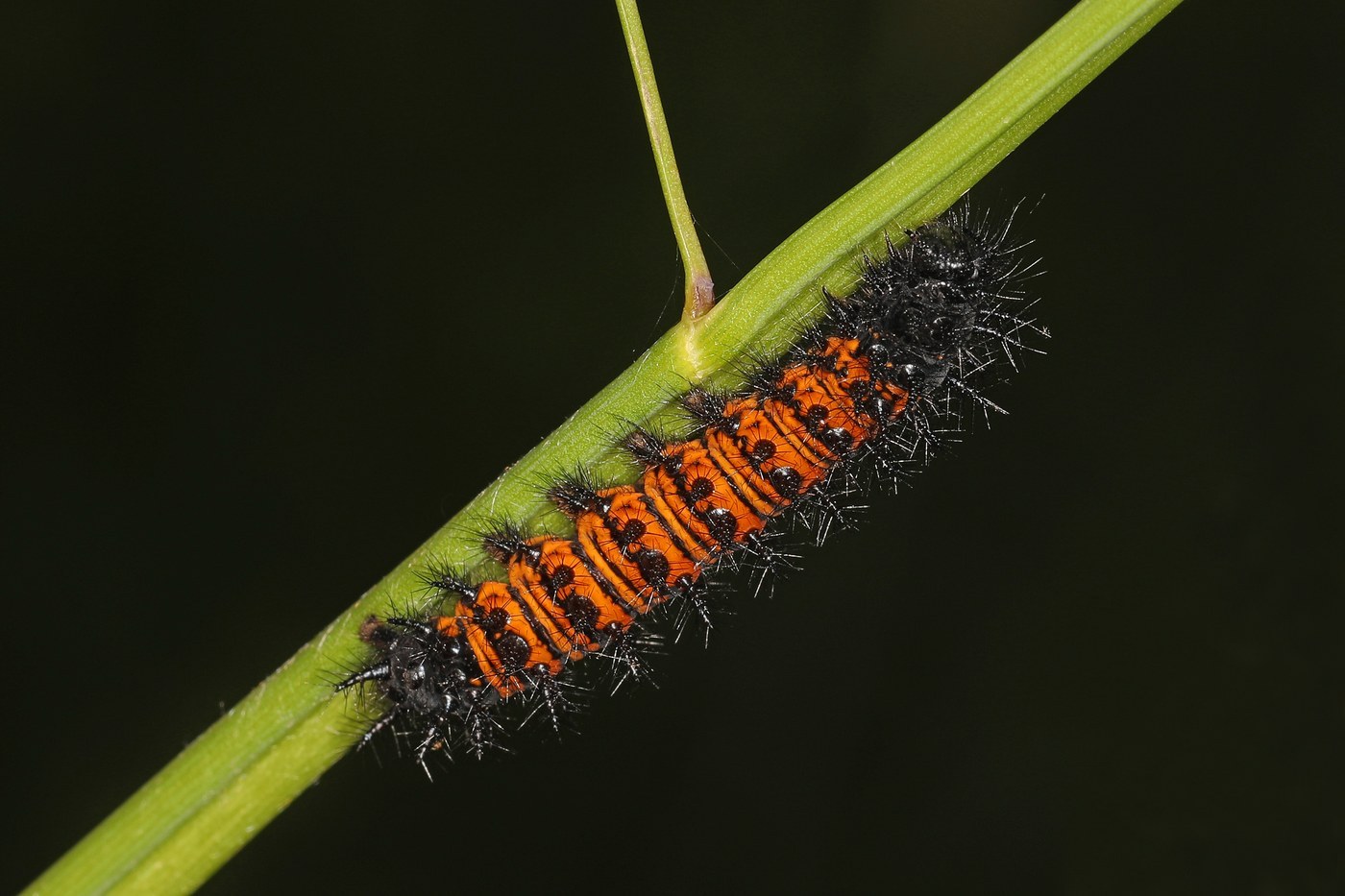
Baltimore Checkerspot
Wet meadows, bogs, and marshy fields in the northeastern and Appalachian US
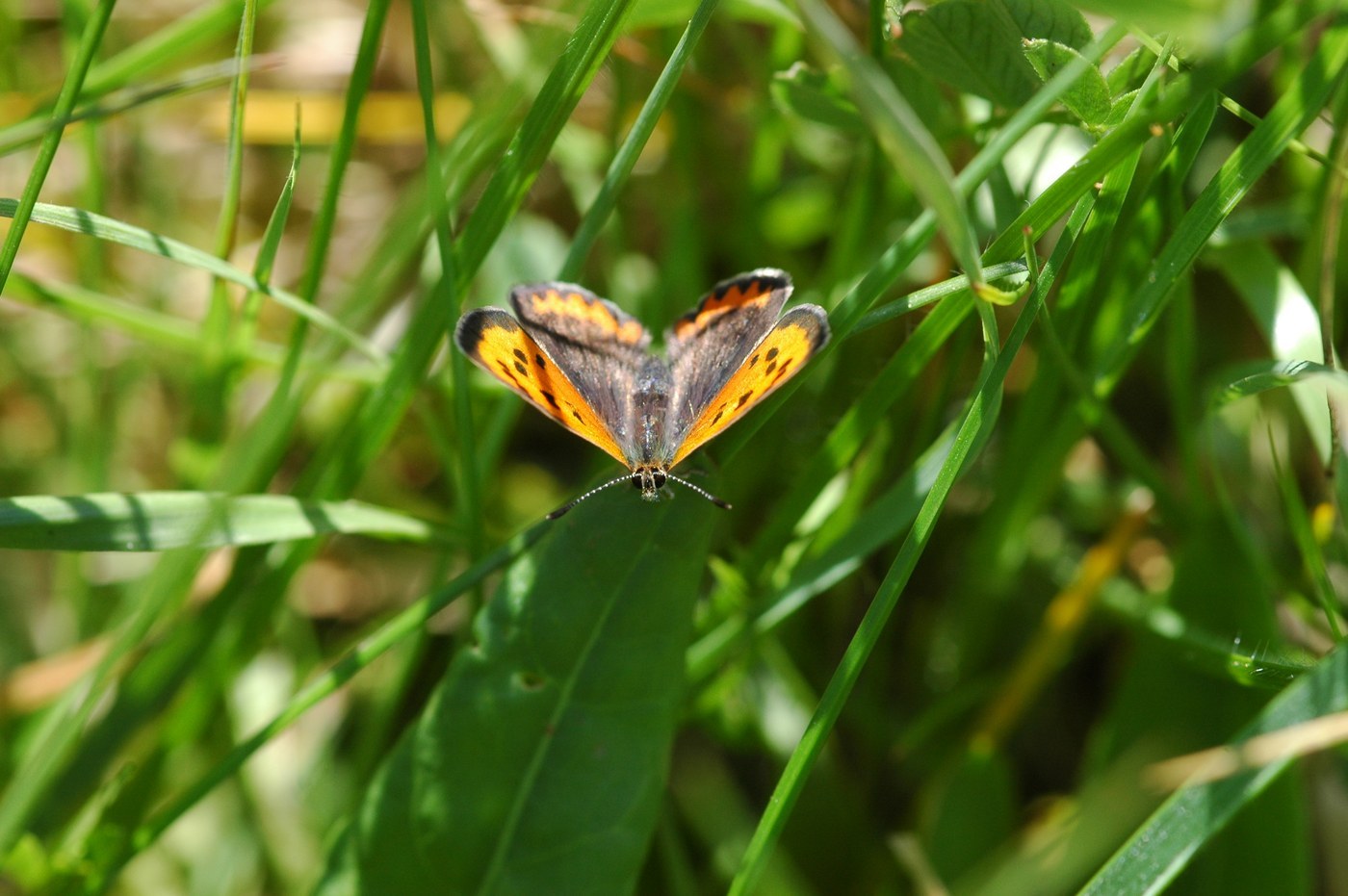
American Copper
Old fields, roadsides, and disturbed open ground with sorrel or dock
West Virginia White
Rich deciduous forest floors, especially near seeps and streams
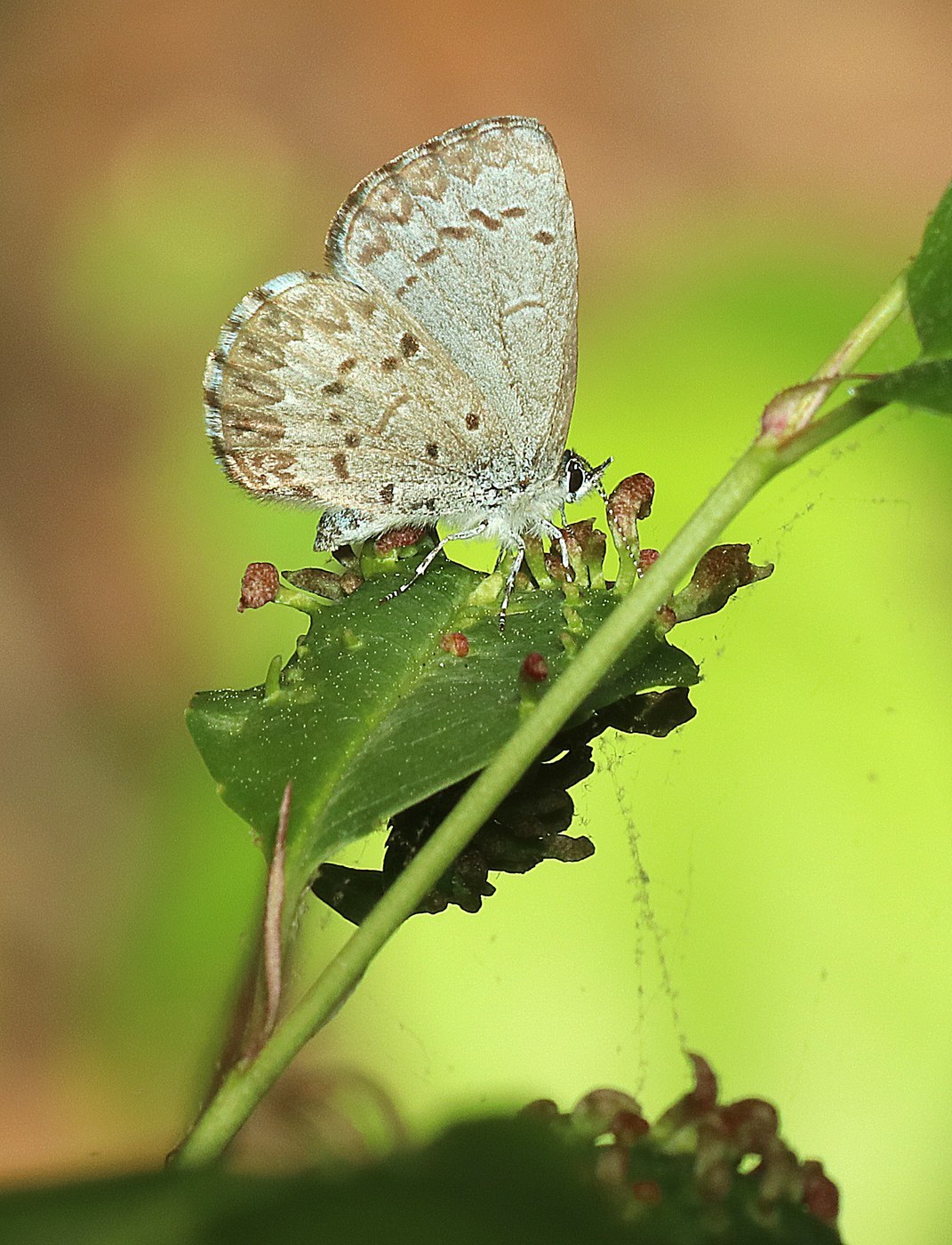
Spring Azure
Woodland edges, gardens, shrubby clearings
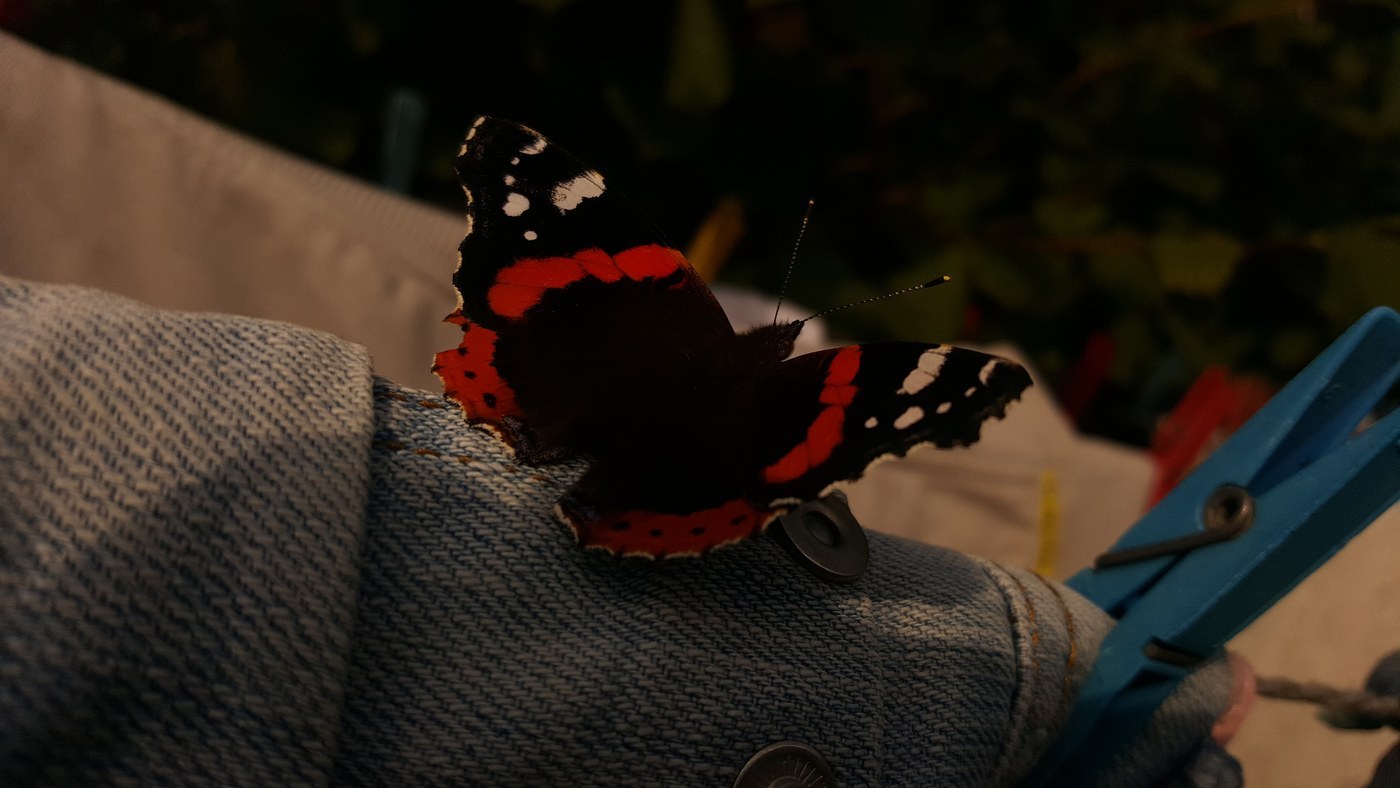
Red Admiral
Gardens, woodland edges, parks, meadows
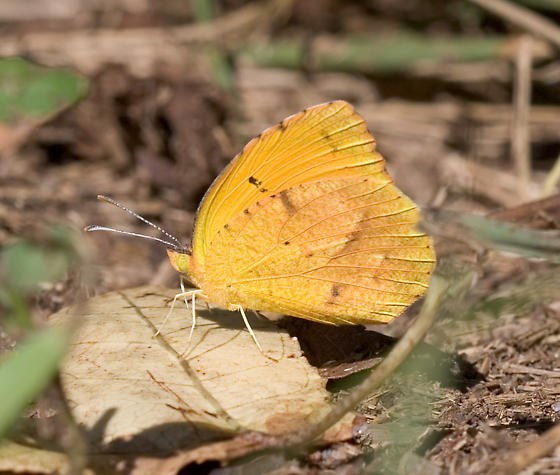
Sleepy Orange
Open woodland, fields, roadsides, and disturbed ground