
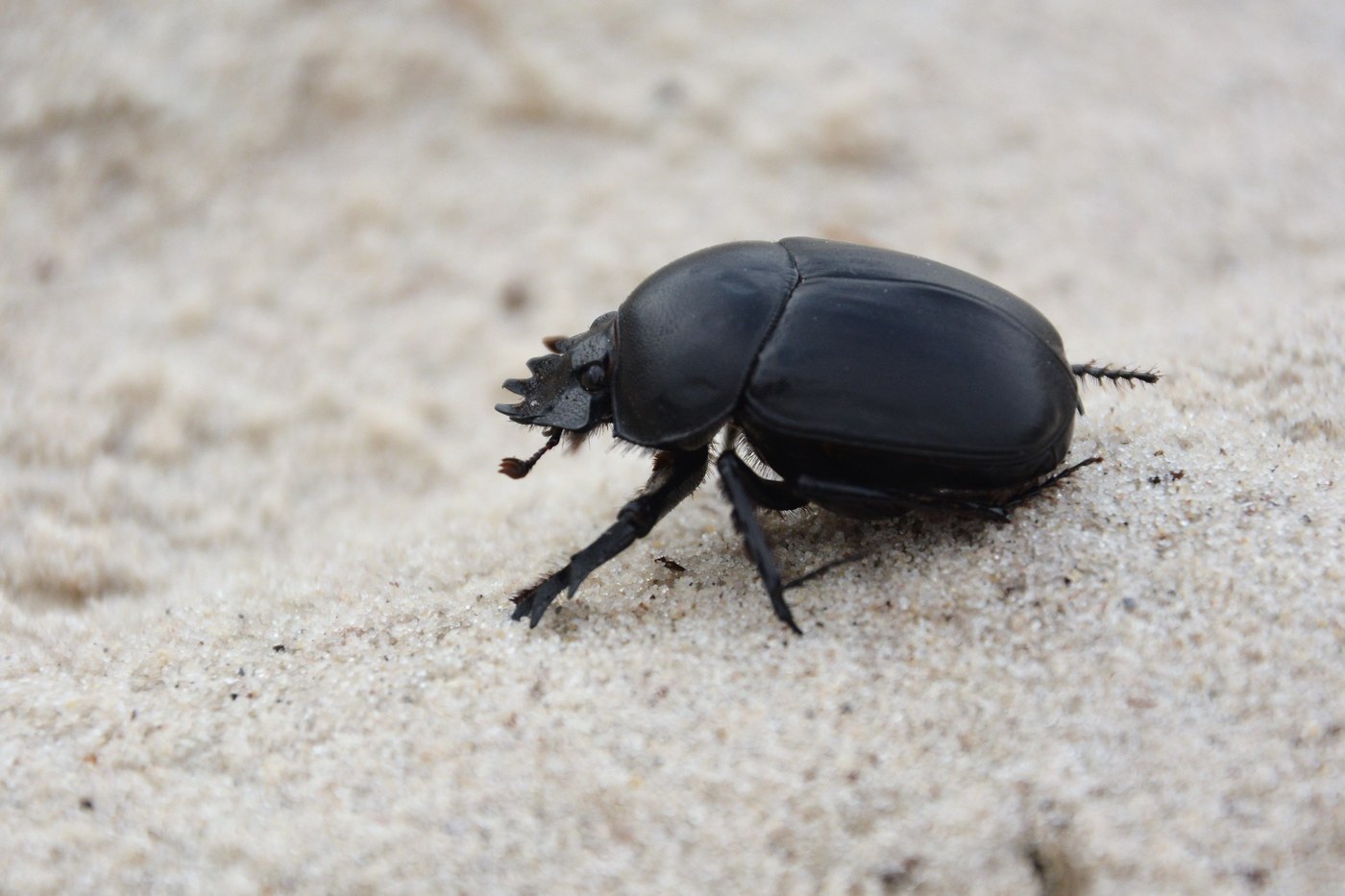
Sacred Scarab
Scarabaeus sacer
A stout, matte-black dung beetle famous for rolling balls of dung across the ground with its hind legs, and revered in Ancient Egypt as a symbol of the sun and renewal.
- Size
- 25–37 mm
- Habitat
- Arid grasslands, pastures, and dung-rich open ground across the Mediterranean, Middle East, and North Africa
- Danger
- Harmless
Spotted a bug like this?
Identify any bug or insect from a photo, free.
Overview
The sacred scarab is a true dung beetle in the family Scarabaeidae, subfamily Scarabaeinae. It is native to open, arid landscapes around the Mediterranean Basin, the Middle East, and parts of Africa, wherever grazing animals provide a steady supply of dung.
The species is best known for its distinctive dung-rolling behavior: using its broad, comb-edged head shield to cut and shape a ball of dung, the beetle then rolls it across the ground backward, using its powerful hind legs, to a burial site where it will be eaten or used to provision offspring.
This behavior gave the sacred scarab deep cultural significance in Ancient Egypt, where it was associated with the sun god Khepri and seen as a symbol of transformation and rebirth, appearing widely in Egyptian art, amulets, and seals.
How to Identify
- Robust, rounded, somewhat flattened black body with a matte (non-shiny) finish.
- Broad, fan-edged head shield (clypeus) with tooth-like projections used for cutting and shaping dung.
- Strong, toothed front legs adapted for digging and manipulating dung balls; clubbed antennae typical of scarabs.
- Lookalikes: distinguished from other dung beetles by its combination of large size, dull black color, and comb-like head shield used in dung-ball construction.
Habitat & Range
Sacred scarabs favor open, sun-exposed grasslands, pastures, and semi-arid ground where livestock or wild grazing animals are present, providing a reliable dung supply. Their range spans the Mediterranean coast, parts of the Middle East, and North Africa. Adults are most active in warm months, seeking out fresh dung soon after it is deposited.
Behavior & Diet
This beetle feeds on the dung of large herbivores, both as an adult food source and as provisioning for its offspring. After shaping a portion of dung into a compact ball with its head and legs, it rolls the ball away from the source, often walking backward and steering with its hind legs, before burying it in a chamber underground. Buried dung balls are then either consumed by the adult or, in the case of brood balls, used to nourish a single developing larva. This dung-burial behavior aids in nutrient cycling and soil aeration in grazing landscapes.
Life Cycle
Sacred scarabs undergo complete metamorphosis. A female shapes a dung ball into a brood mass, lays a single egg within it, and buries it underground where the larva develops by feeding on the surrounding dung. After completing larval development and pupating within the buried chamber, the adult beetle digs its way to the surface. Development from egg to adult generally spans a few months, with timing influenced by local climate and dung availability.
Frequently asked questions
Why is it called the 'sacred' scarab?
Ancient Egyptians associated its dung-rolling behavior with the movement of the sun and linked the beetle to the god Khepri as a symbol of renewal, giving rise to the name.
Does it eat the dung it rolls?
Yes, adults feed on dung directly, and they also bury dung balls to provision developing larvae underground.
Is it the same as other dung beetles?
It belongs to the same subfamily as many dung-rolling scarabs, but is specifically the Mediterranean and North African species historically linked to Ancient Egyptian culture.
Where would I see one in the wild?
In open grazing land or pastures across the Mediterranean region, Middle East, or North Africa, near fresh dung.
Sacred Scarab guides
In-depth guides for identifying, understanding, and living alongside Sacred Scarab.
Other bugs you may enjoy
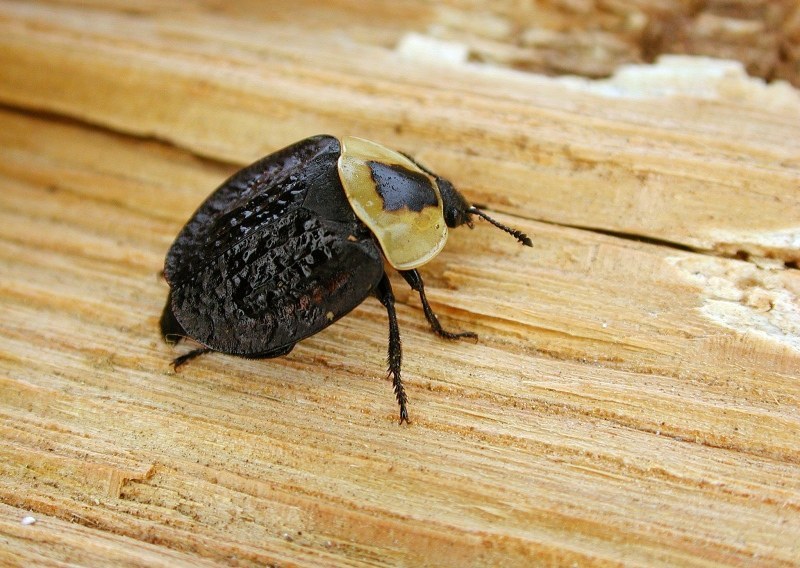
American Carrion Beetle
Forests, fields, and roadsides across North America, near decaying animal carcasses
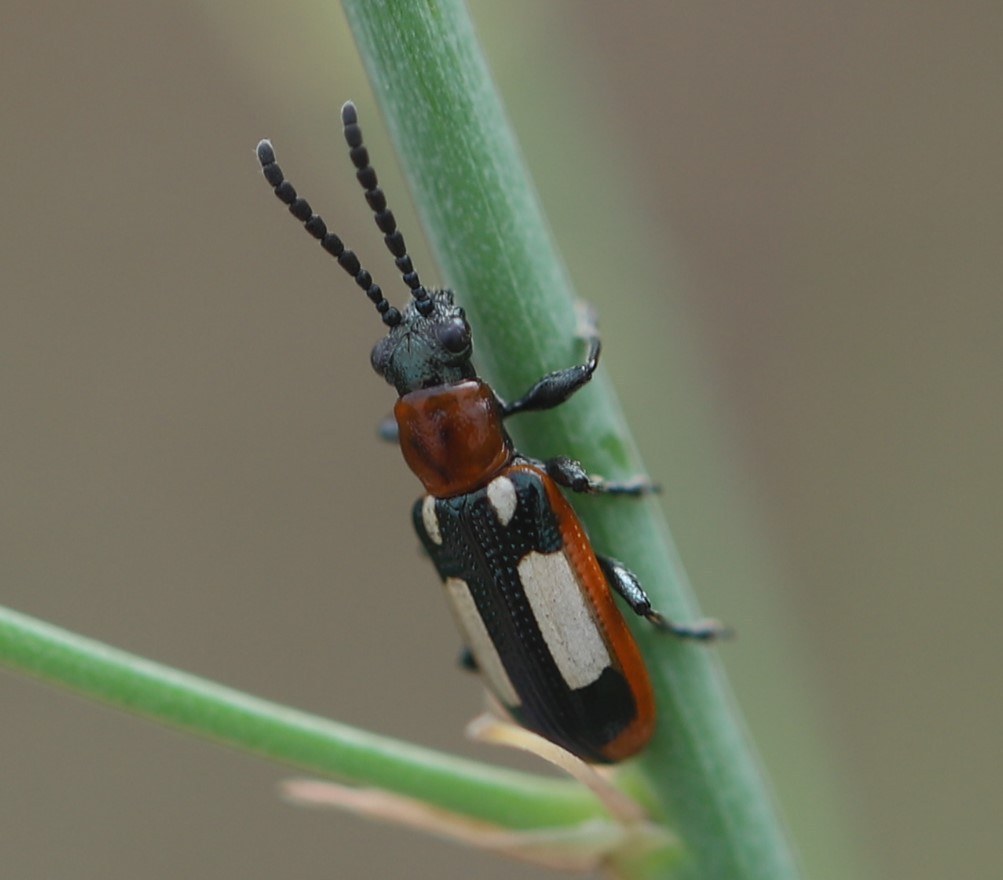
Asparagus Beetle
Asparagus patches, gardens, and farm fields
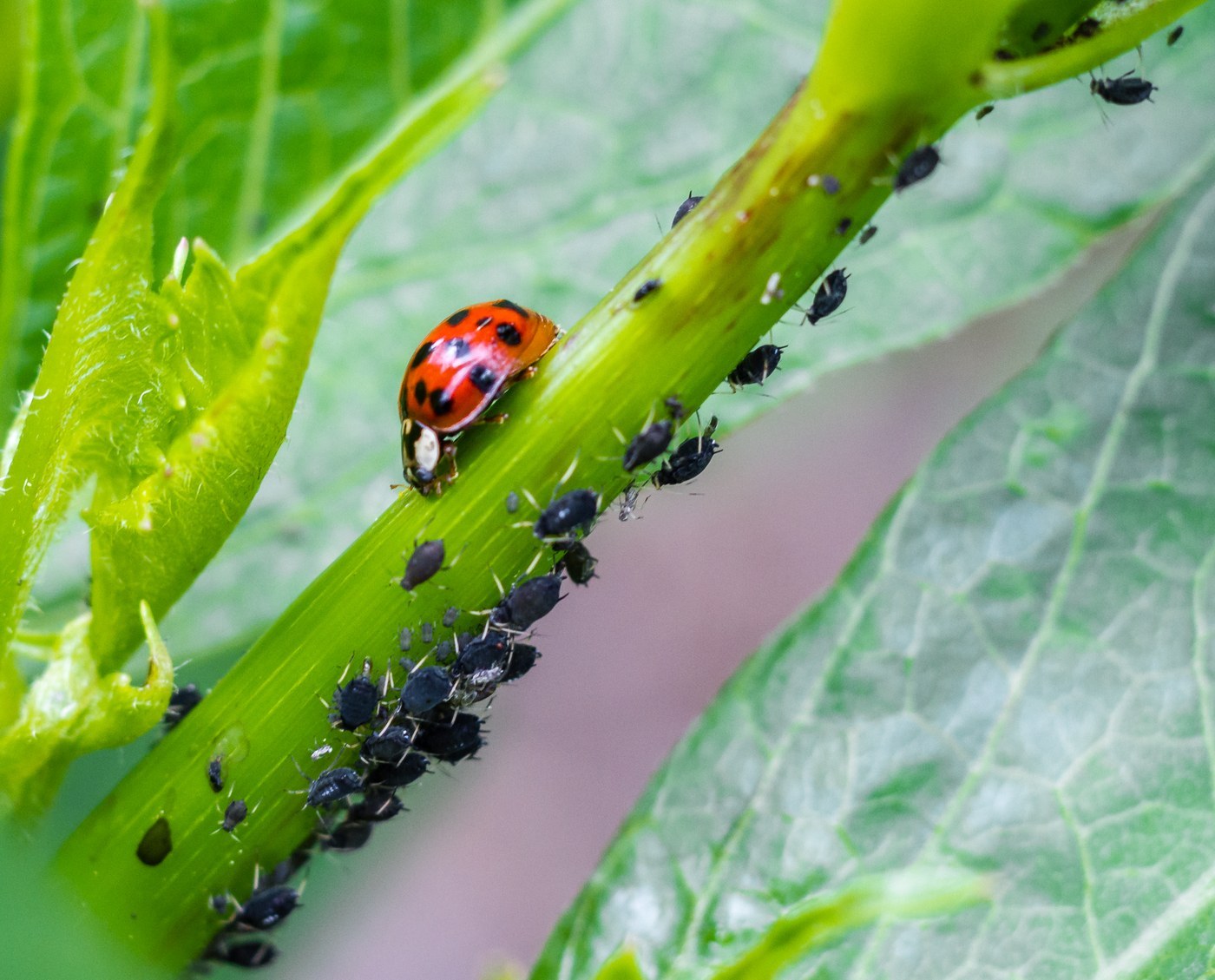
Asian Lady Beetle
Gardens, crop fields, woodlands, buildings
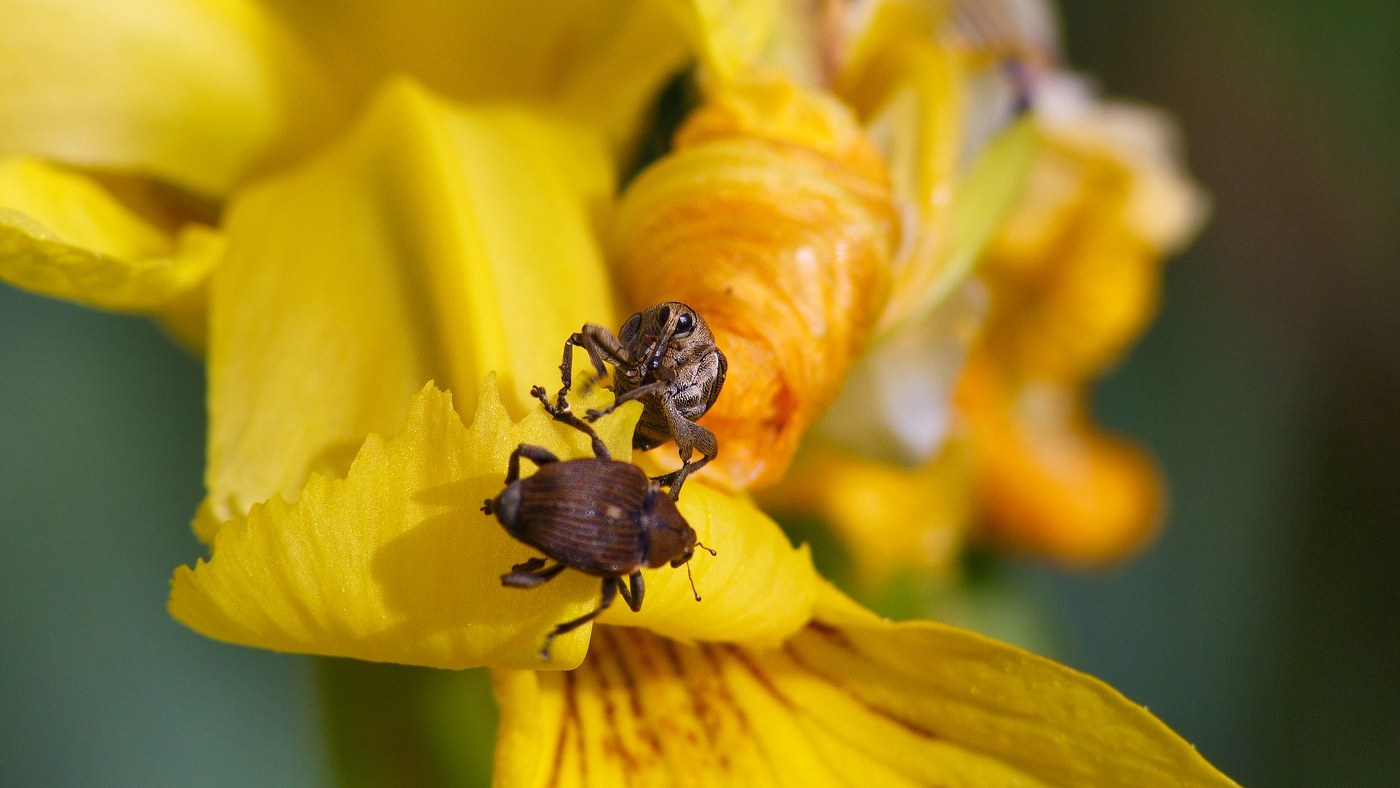
Acorn Weevil
Oak woodlands and forests, on and beneath oak trees
Wireworm
Soil of grasslands, gardens, and cultivated fields worldwide
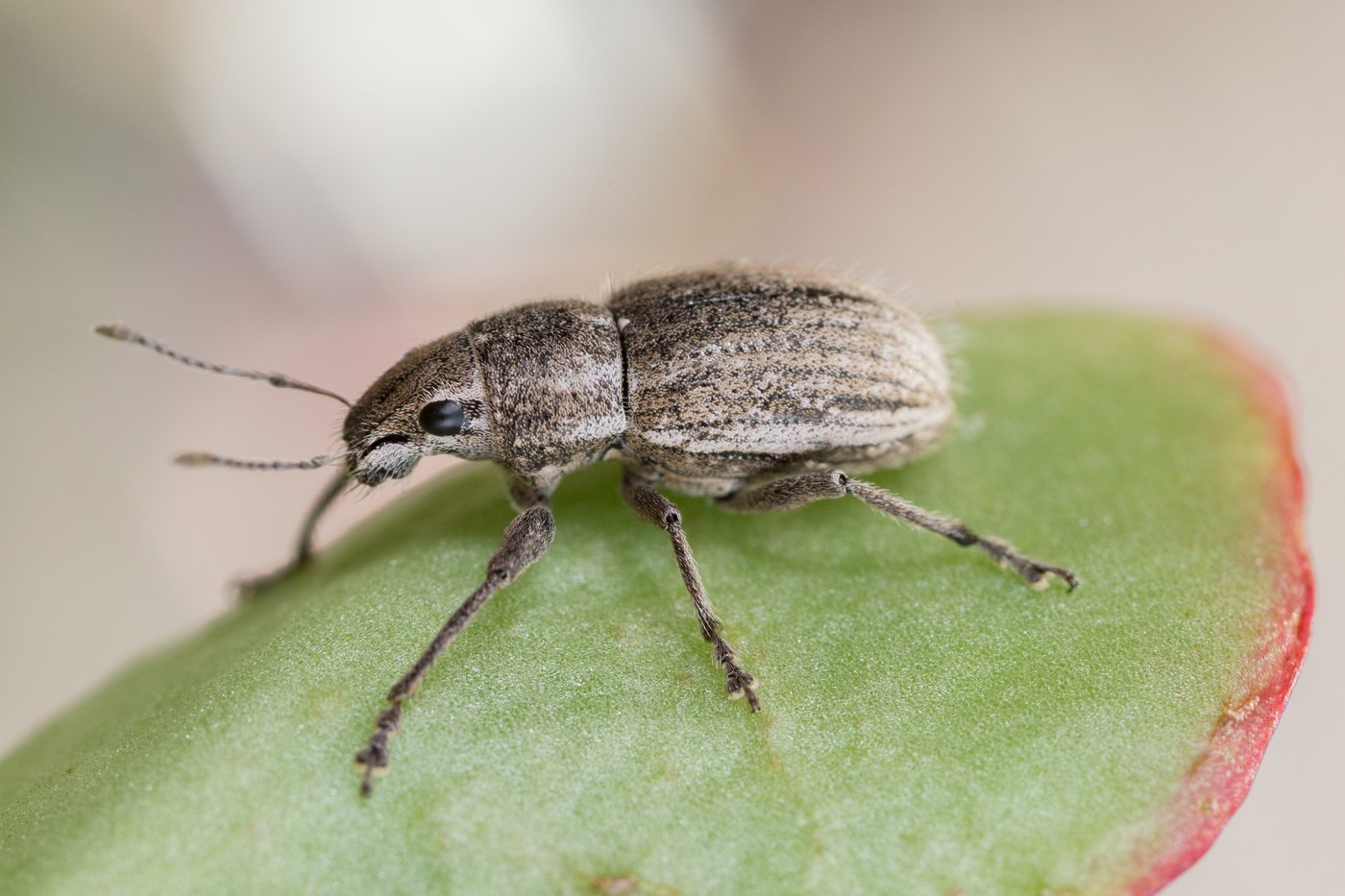
Whitefringed Beetle
Pastures, row crops, lawns, disturbed soils
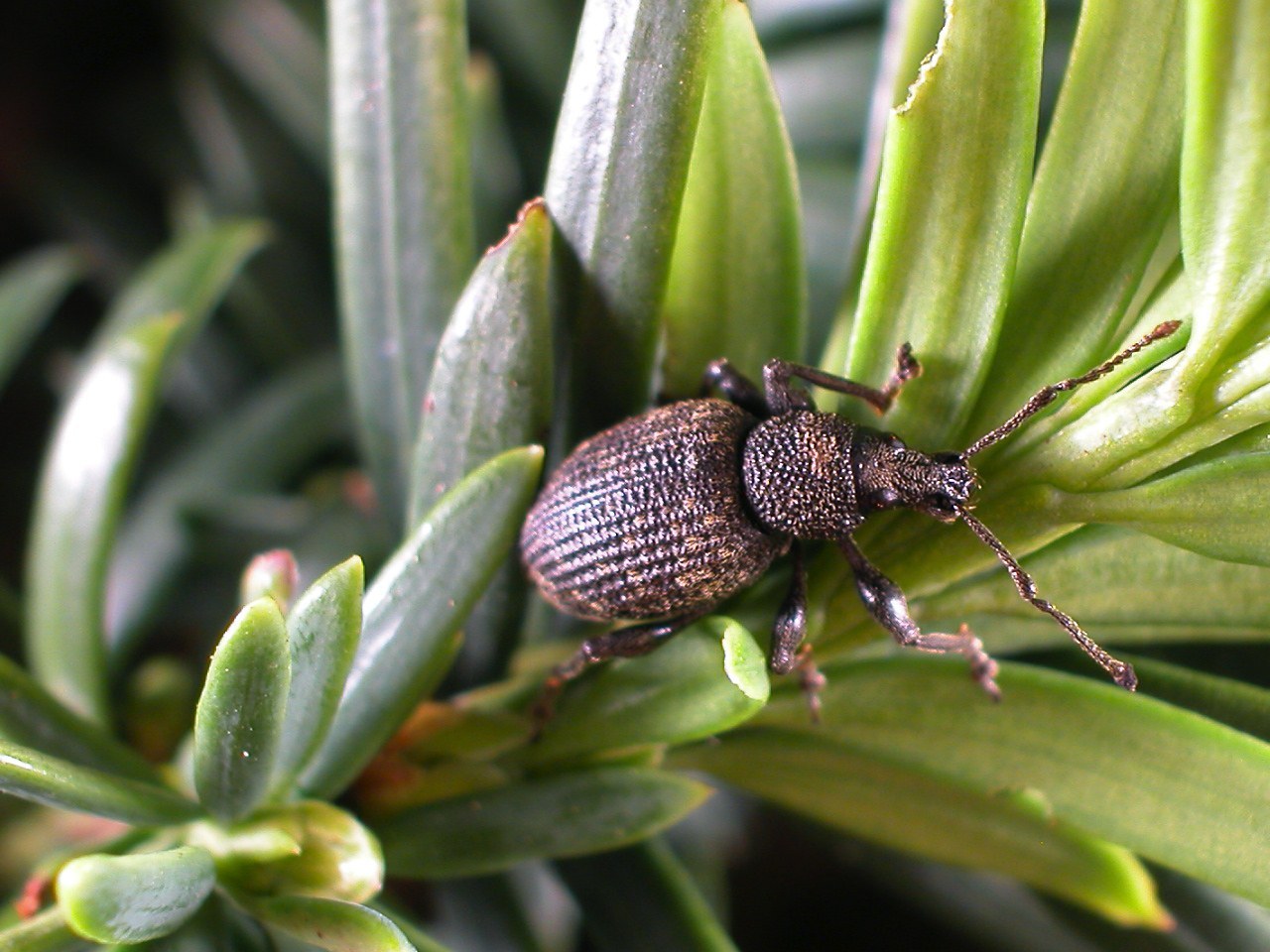
Vine Weevil
Gardens, nurseries, greenhouses, and container plantings
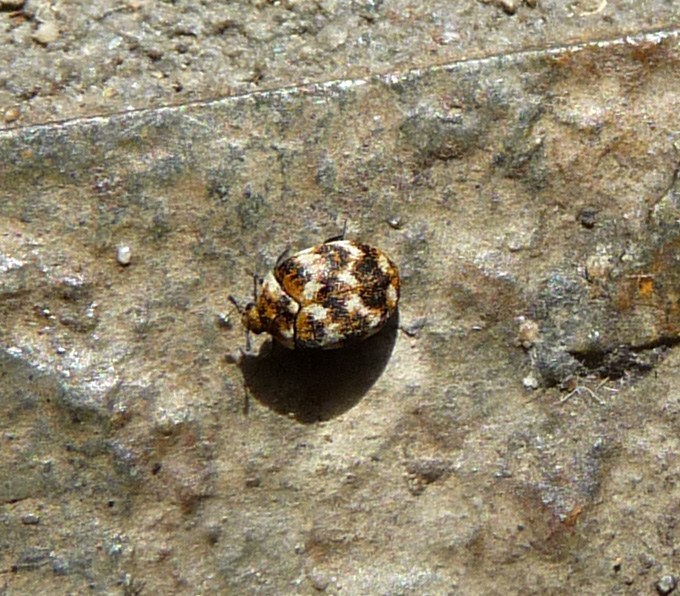
Varied Carpet Beetle
Homes, nests of birds and mammals, and flowers outdoors
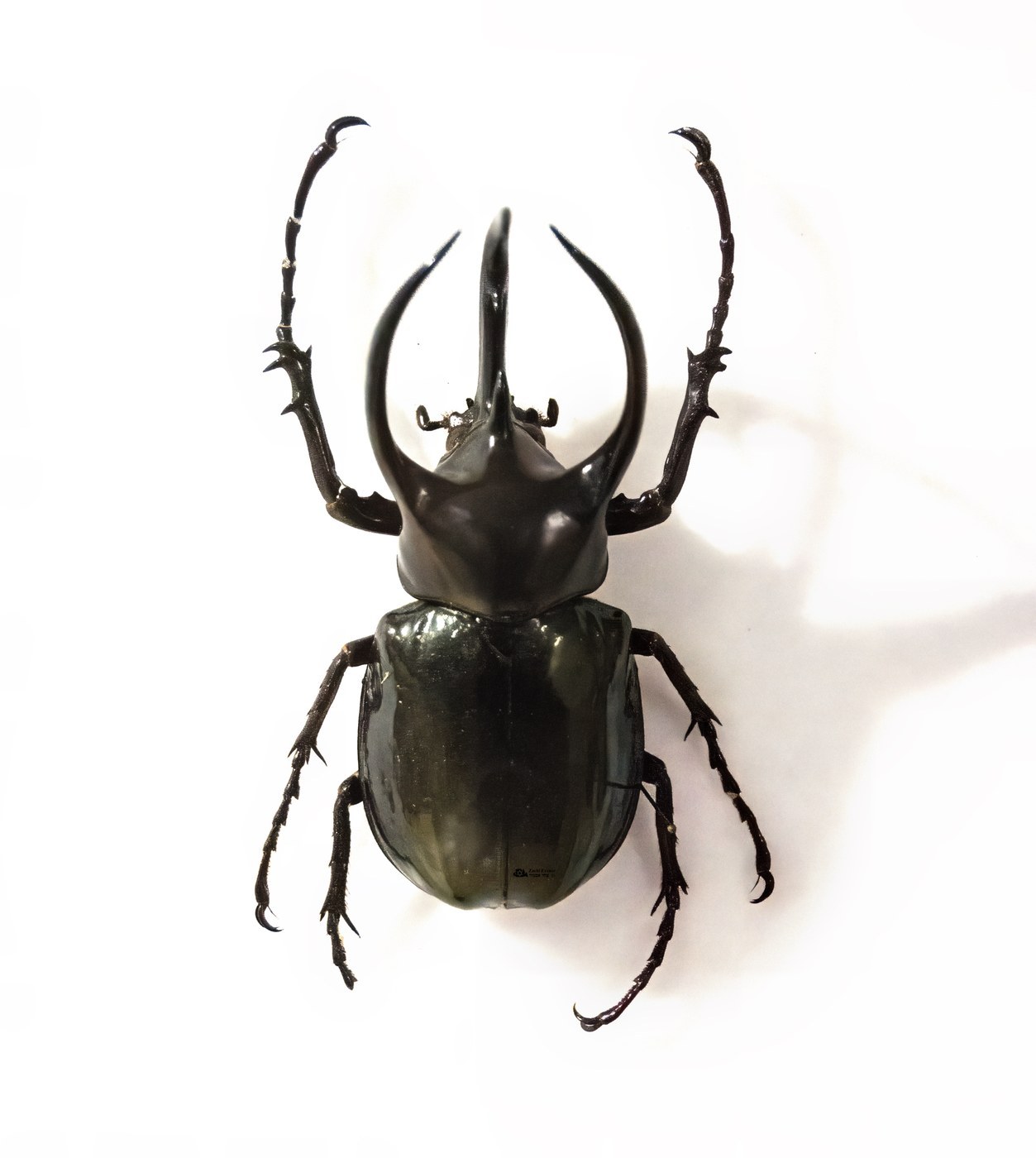
Atlas Beetle
Tropical forests of Southeast Asia
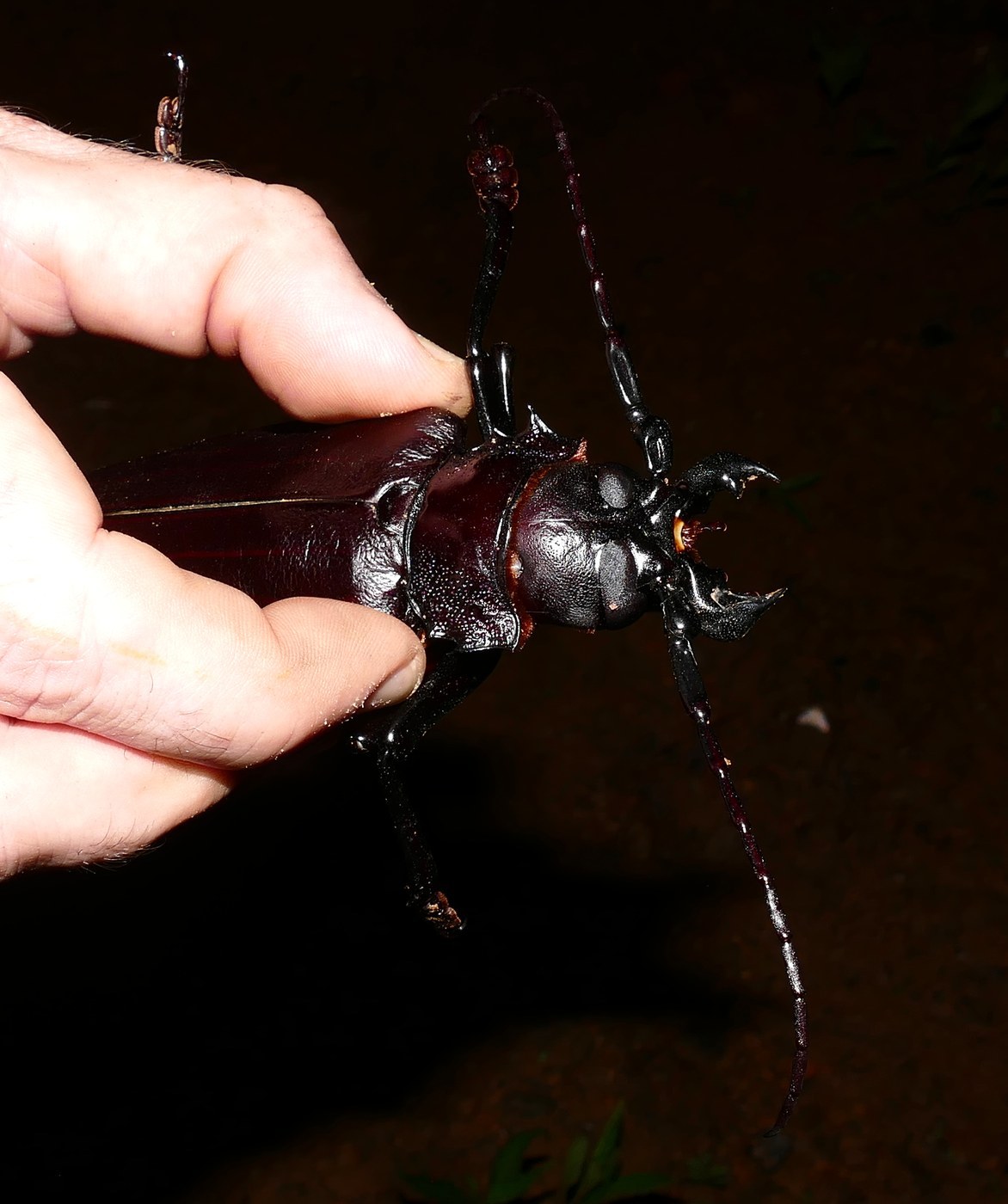
Titan Beetle
Amazon rainforest of South America
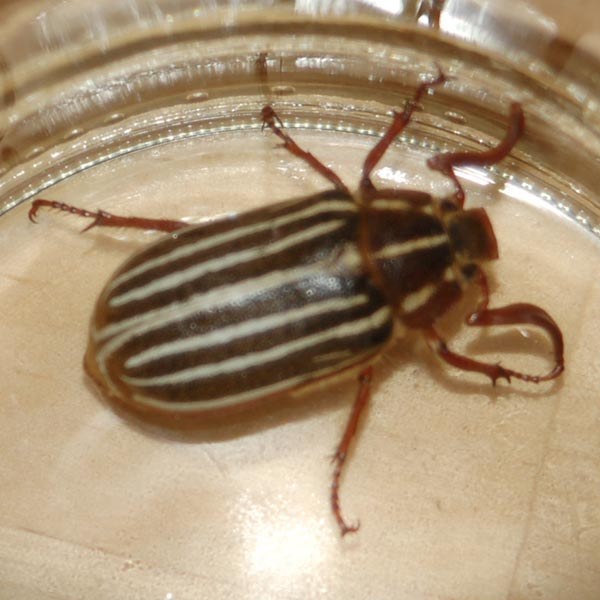
Ten-lined June Beetle
Sandy soils, pine forests, and orchards of western North America
Squash Beetle
Vegetable gardens and fields growing squash, pumpkin, and other cucurbits